
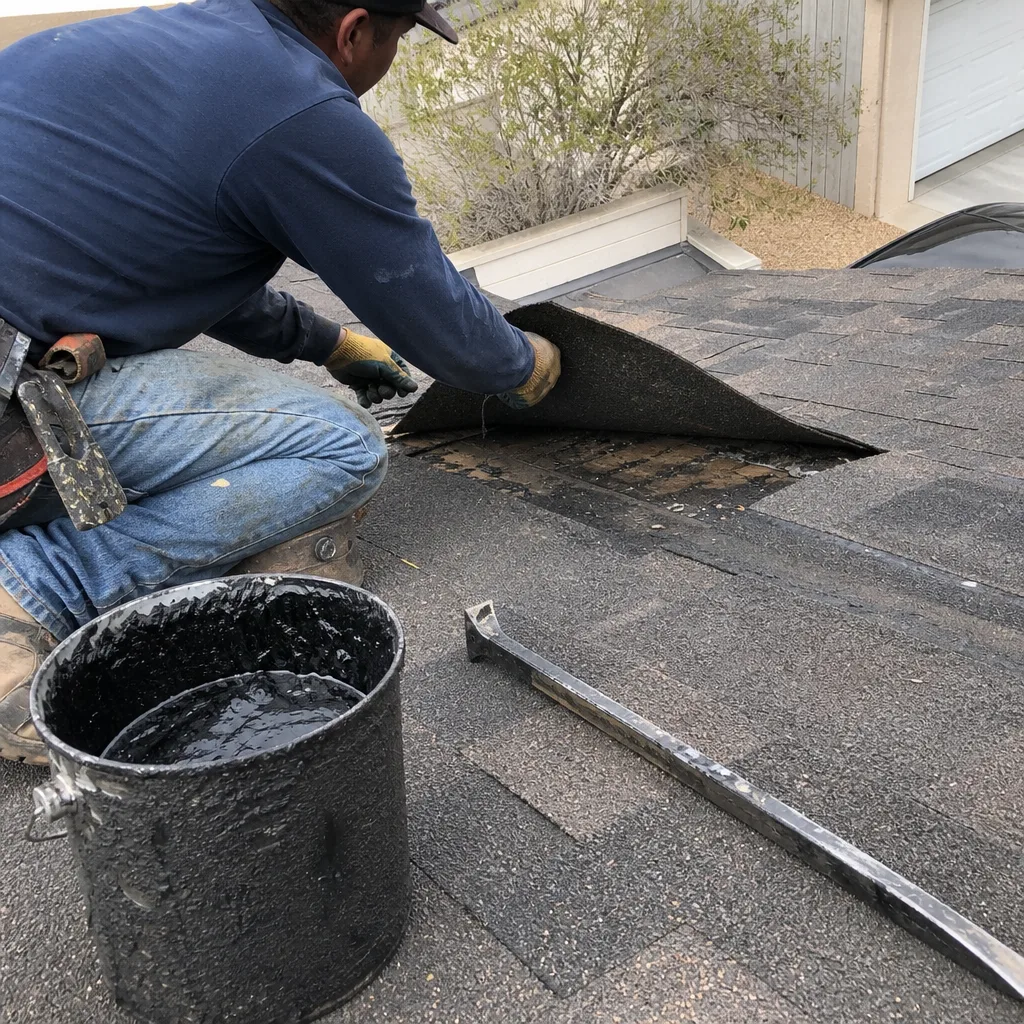
Last updated November 18, 2026
 Architectural shingles
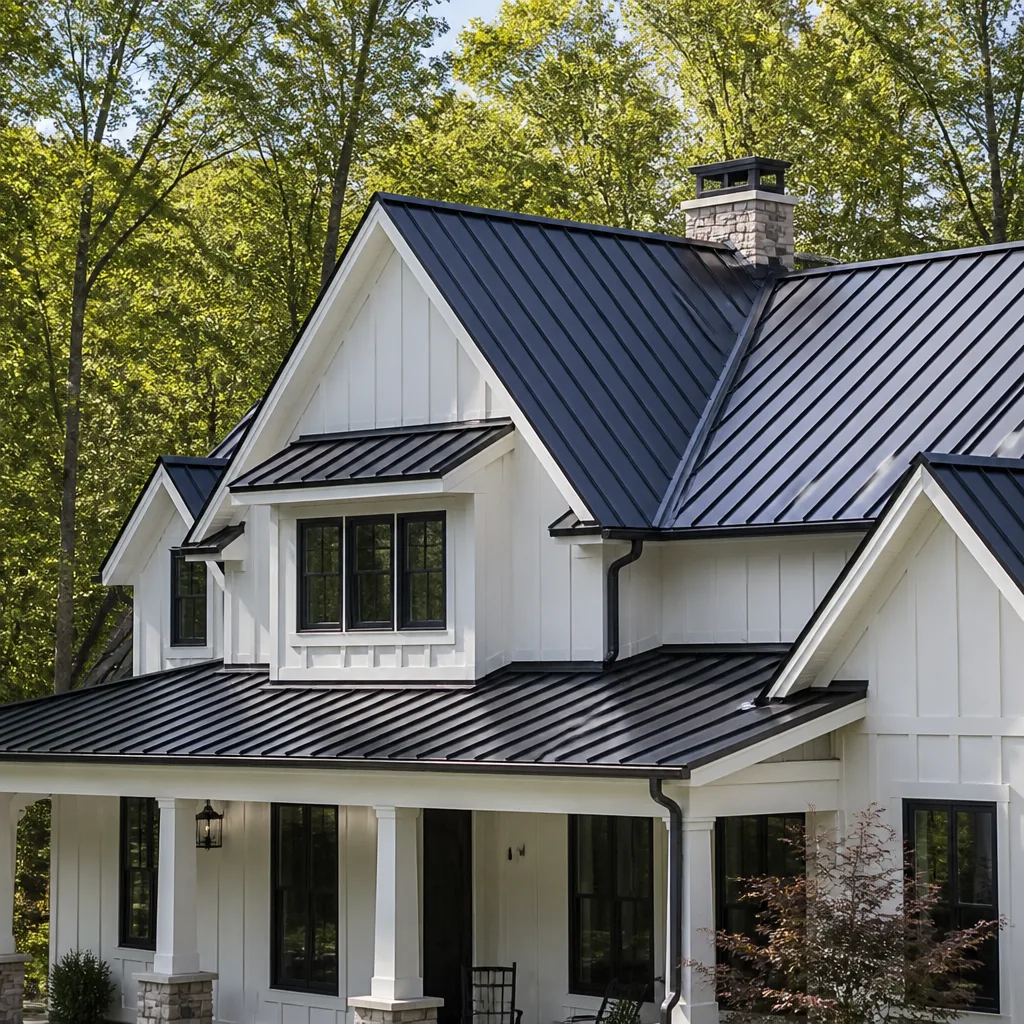 Metal roofing
 Tile roofing
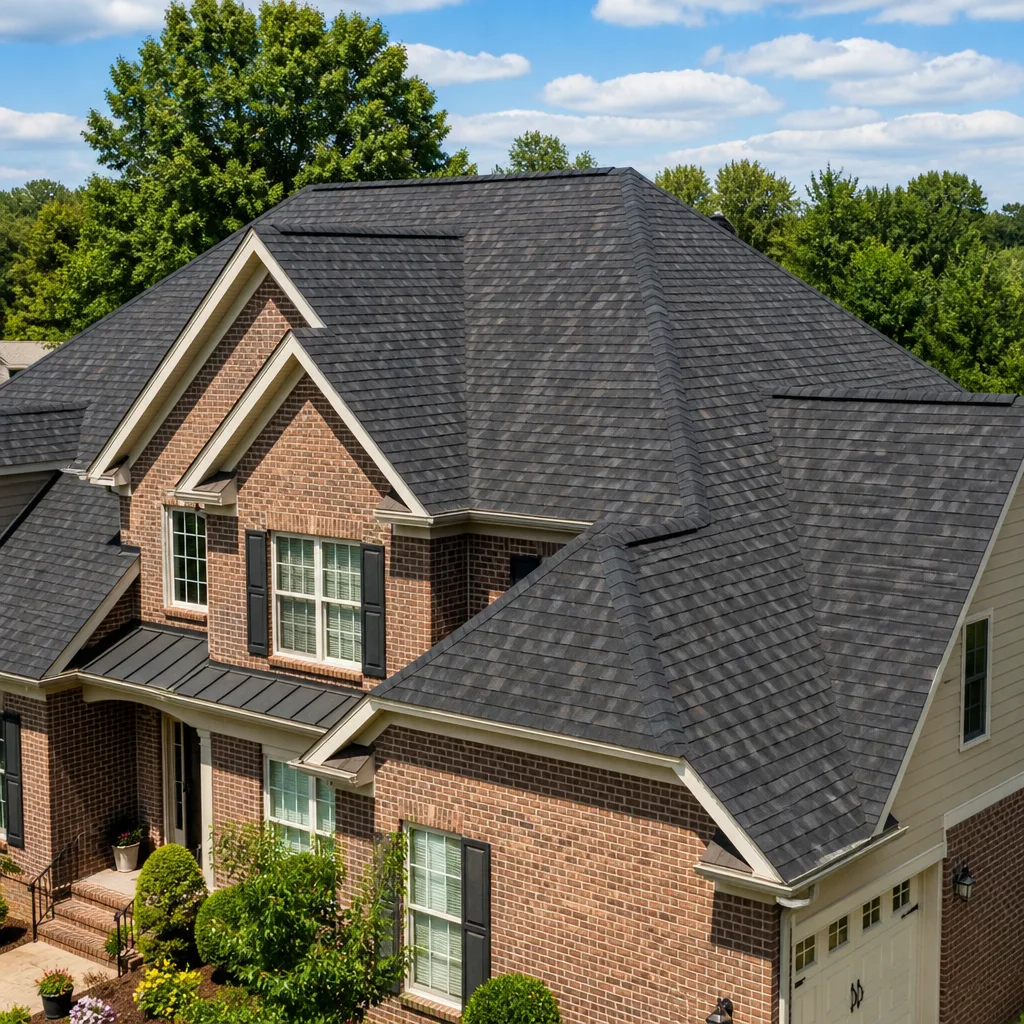 GAF
 Owens Corning
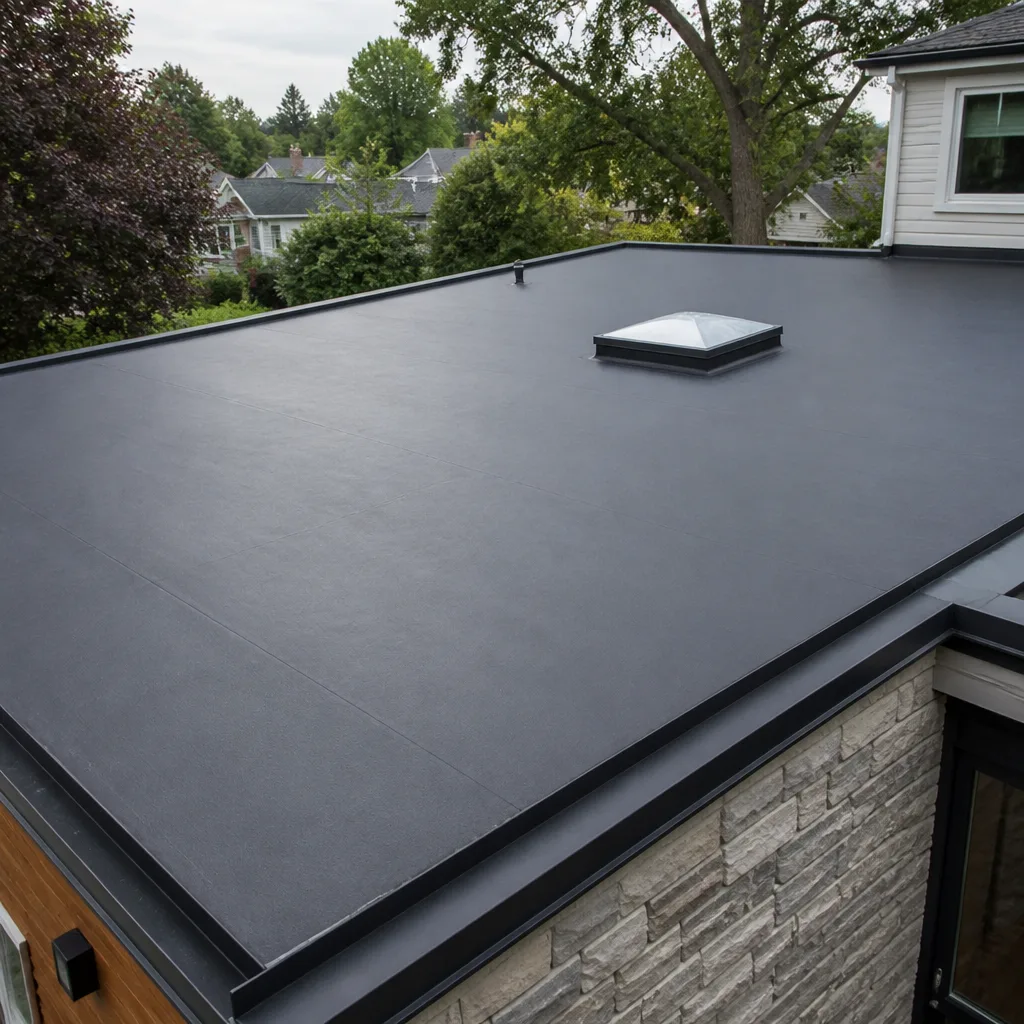 Flat & low-slope
Free roof inspection with deck photos before we talk money - GAF and Owens Corning certified installation
Roof Repair Maintenance Checklist for Sunrise Manor Homeowners
Homeowners who inspect their roofs only after a storm are solving last season’s problem. In Sunrise Manor, the damage that causes next summer’s leak is happening right now, on a clear day, in direct sunlight. The desert doesn’t wait for rain to work on your roof. UV radiation bakes the oils out of asphalt shingles from March through October, and by the time a monsoon finally arrives in July, the shingles are already brittle, curled, and ready to let water in. This checklist is sequenced around that reality: heat first, monsoon second, cooldown third. You’ll learn what to check each month, how to spot heat-accelerated aging before it becomes a leak, and how to keep a paper trail that holds up if you ever file an insurance claim.
Quick Answer
A roof maintenance checklist for Sunrise Manor should prioritize the March – June UV window first, pre-monsoon prep in May, and post-monsoon inspection in October. The single most important task is checking shingle granule loss every spring, since heat-accelerated aging causes more Sunrise Manor roof failures than rain does. Photograph the same five roof zones twice a year to build an insurance-ready record.
Styles & brands we work with
- Architectural shingles
- Metal roofing
- Tile roofing
- GAF
- Owens Corning
- Flat & low-slope
Table of Contents
- Why Sunrise Manor Roofs Age Differently
- The Month-by-Month Maintenance Calendar
- Granule Loss: Reading the Signs of Heat-Accelerated Aging
- Clearing Oleander and Palm Debris Safely
- Three Flat-Roof Seam Checks Before July 1
- The Five-Zone Photo Habit That Protects Your Claim
- Gutters and the Monsoon Drainage Path
- When to Call a Professional
Why Sunrise Manor Roofs Age Differently
Most roof maintenance advice you’ll find online was written for a four-season climate with a wet spring, a hot summer, and a cold winter. Sunrise Manor doesn’t work that way. We get roughly two hundred days of clear sky a year and summer temperatures that push past 110°F for weeks at a stretch. Between the relentless sun and the fact that we sit at about 1,800 feet with almost no tree canopy over most neighborhoods, roofs here take a UV hit that roofs in greener, cooler climates never see.
The practical consequence is that shingle aging in Sunrise Manor is driven by heat and sunlight more than by water. Asphalt shingles are made with oils that keep the mat flexible. UV exposure breaks those oils down, and once they’re gone the shingle can’t flex. It curls at the edges, cracks along the tabs, and loses granules at an accelerated rate. A shingle that would last twenty years in a wet, cloudy climate might show real distress in Sunrise Manor by year fifteen.
Then monsoon season arrives in a narrow window, usually July through September, and delivers weeks of rain into a roof that’s already been baked dry. That’s the setup for the leaks we see every August. The damage wasn’t caused by the storm. The storm just found the spot where the heat had already done its work.
If you live in a Sunrise Manor neighborhood with older construction and you suspect that heat has already taken a toll, our Roof Repair in Sunrise Manor team can assess what’s still serviceable and what needs replacement before the next monsoon.
The Month-by-Month Maintenance Calendar
Here’s the calendar we recommend for Sunrise Manor homeowners. It’s built around climate events, not seasons, and it assumes you’re doing the walk-around checks yourself and calling a professional for anything that requires getting up on the roof.
- January – February: Cool-weather inspection window. Walk the perimeter and check the attic for daylight or moisture stains. Note any shingles you can see from the ground that look lifted or curled.
- March – April: Peak UV onset. This is the season when heat-accelerated aging accelerates. Check granule loss and look for shingle edges starting to lift.
- May: Pre-monsoon prep. Clear gutters, check flashing around chimneys and vents, and confirm downspouts carry water away from the foundation.
- June: The last clear-weather window before the rains. If you’re going to schedule an inspection or repair, do it now. June is the busiest month for roof work in Sunrise Manor for good reason.
- July – September: Monsoon watch. After each significant storm, look for granules in the gutters, water stains on ceilings, and any debris buildup.
- October: Post-monsoon inspection. This is the ideal time to check for storm damage while it’s fresh and before the record gets fuzzy.
- November – December: Cool-season catch-up. Handle any repairs noted in the fall inspection and clear winter debris.
If you’d rather have this done properly and photographed, our Roof Replacement & Installation in Sunrise Manor team offers full inspections with photo documentation as part of every visit.
Granule Loss: Reading the Signs of Heat-Accelerated Aging
Granules are the ceramic-coated mineral layer on top of asphalt shingles. They shed slowly over the life of the roof, which is normal. What’s not normal is the rate at which they disappear in Sunrise Manor. Heat and UV accelerate granule loss, and once granules are gone, the asphalt underneath is exposed to even more sun, and the cycle speeds up.
Here are the benchmarks we use to distinguish normal wear from heat-accelerated aging:
- Light granule loss (normal): A few granules in the gutter after a rain, occasional granules on the driveway. This is consistent with normal aging on a roof that’s a decade old.
- Moderate loss (watch): Visible bare patches on the shingle surface where the asphalt layer shows through gray or black. Granules accumulating heavily in gutters after every rain. This is the point where heat has started to outrun normal wear.
- Severe loss (act now): Large bare patches, shingles that look like a worn path, and granules washing off the roof in visible amounts during any rain. At this point the shingle is no longer protecting the underlayment, and a monsoon leak is likely.
One trick that works well in Sunrise Manor’s bright sun: stand at the base of the roof on a clear day and look across the plane of the shingles. Bare spots show up as dull, flat areas against the sun. If a sizable area looks matte instead of grainy, you’ve got a heat-aging problem worth a professional look.
We install shingles from GAF, CertainTeed, and Owens Corning, and the manufacturer warranties on those lines often depend on documented maintenance. Our Specialty Roofing in Sunrise Manor team can walk you through what your specific shingle line requires.
Clearing Oleander and Palm Debris Safely
Sunrise Manor yards are full of oleander hedges and palm trees, and both shed year-round. Oleander leaves are tough and waxy and they don’t break down quickly. Palm fronds are heavy, they hold water, and they can tear flashing or trap moisture against the roof surface. This debris is the most common cause of blocked roof drains and valleys in Sunrise Manor.
You can clear what’s reachable from a ladder or from the ground, but the roof surface itself should be handled carefully. Here’s how to do it without creating a warranty problem:
- Never use a pressure washer on asphalt shingles. The force strips granules and can void the manufacturer’s warranty. Use a leaf blower on low, or a soft-bristle broom.
- Keep debris off the valleys and the lower roof edge. Debris that sits in the valley traps moisture and is the single most common source of underlayment damage we find.
- Don’t scrape shingles with metal tools. A plastic scoop works for the worst of it; anything metal can gouge the shingle surface.
- Check under palm-heavy sections after every wind event. Fronds can wedge under the first course of shingles and lift them.
If a palm has dropped a heavy frond on the roof and you’re not sure what it damaged, don’t wait for the next rain to find out. That’s the kind of repair that’s cheap now and expensive in September.
Three Flat-Roof Seam Checks Before July 1
Many Sunrise Manor homes have a low-slope addition: a carport enclosure, a back patio cover, or a small flat section over a garage. Flat roofs fail at the seams before they fail anywhere else, and monsoon season is when seams that were merely stressed in June become active leaks in July.
Before July 1, check these three seam areas:
- The field seams: the long lines where the roofing membrane laps. Look for lifting edges, bubbling, or visible separation. Any gap wider than a credit card is a candidate for repair before the rains.
- The parapet seams: where the flat roof meets the raised edge wall. This is where water pools during monsoon and where the most common failure occurs.
- The penetration seams: around vents, drain openings, and any pipe or post that comes through the roof. These seams get stressed by heat expansion and cold contraction all year, and they’re the first to crack.
A quick visual check is worth doing yourself. Anything that looks lifted, cracked, or soft underfoot is worth a professional look, but keep your weight off the roof surface while you check. If you’re not comfortable on a low-slope roof, that’s a reasonable instinct; our Ridgeline Roofing Co. Sunrise Manor home team handles flat-roof inspections as part of a standard visit.
The Five-Zone Photo Habit That Protects Your Claim
This is the section most roof maintenance guides skip, and it’s the one we think saves Sunrise Manor homeowners the most money over time. If you ever file an insurance claim after a monsoon event, the strongest evidence you can have is a documented baseline: photos of your roof taken before the damage, showing it was in good condition. Without that baseline, the insurance adjuster is working from the post-storm condition only.
The habit: pick five fixed zones on your roof and photograph each one every six months, ideally in April and October. The five zones that give the best overall record:
- Zone 1: The front-facing roof plane, taken from the ground at a fixed spot.
- Zone 2: The back roof plane, taken from the backyard at a fixed spot.
- Zone 3: The ridge line, close enough to see shingle condition on both sides.
- Zone 4: Every flashing point (chimney, vents, skylights), one photo each.
- Zone 5: Any flat-roof section or low-slope addition, showing the seams.
Keep the photos in a dated folder on your phone or cloud storage. Take them from the same spot every time so the comparison is clean. If you ever need to prove the roof was intact on a given date, that six-month chain does the work. Photo-documented roof inspections are a standard part of what we do on every service call, and we’re always glad to show a homeowner how the process works.
Gutters and the Monsoon Drainage Path
A roof’s job doesn’t end at the shingle edge. During monsoon season, the gutters and downspouts handle enormous water volumes in short bursts, and a system that drains fine in April can fail in July. In Sunrise Manor, the drainage path matters more than in most places because the ground here doesn’t absorb water quickly. If a downspout dumps water against the foundation, it pools and works its way back toward the slab.
Check your gutters in May, before the first storm, and again in October. Look for granules from the shingles (see the granule section above), palm debris, and any place where the gutter has pulled away from the fascia. Confirm every downspout extends at least four feet from the foundation. Our gutter and accessories service covers hangers, guards, and resealing, and it’s often paired with an inspection at the same visit.
Common Mistakes to Avoid
- Waiting for a leak to inspect. By the time you see a ceiling stain, the roof has been failing for a season or more. Inspect on the schedule, not on the leak.
- Power-washing the shingles. The pressure strips granules and exposes the asphalt mat, and it can void the manufacturer’s warranty on GAF, CertainTeed, or Owens Corning shingles.
- Hiring a storm-chasing crew that shows up after a monsoon. The truck that appears with a “storm damage special” is usually the truck that won’t be in town next spring. Local crews plan to be here.
- Trimming oleander down to the roof line and leaving the trimmings on the roof. Oleander sap and leaves trap moisture and stain the shingles. Haul everything off.
- Skipping the flat-roof seams because the flat roof “looks fine.” Flat roofs fail at the seams first, and the failure usually starts months before it shows water inside.
- Not documenting roof condition before filing an insurance claim. The photo habit is the strongest evidence you have. Skip it and you’re relying on the adjuster’s snapshot.
- Ignoring small repairs because the monsoon is months away. In Sunrise Manor, June is the busiest month for roof work. Small repairs get done in April, not the week before the rain.
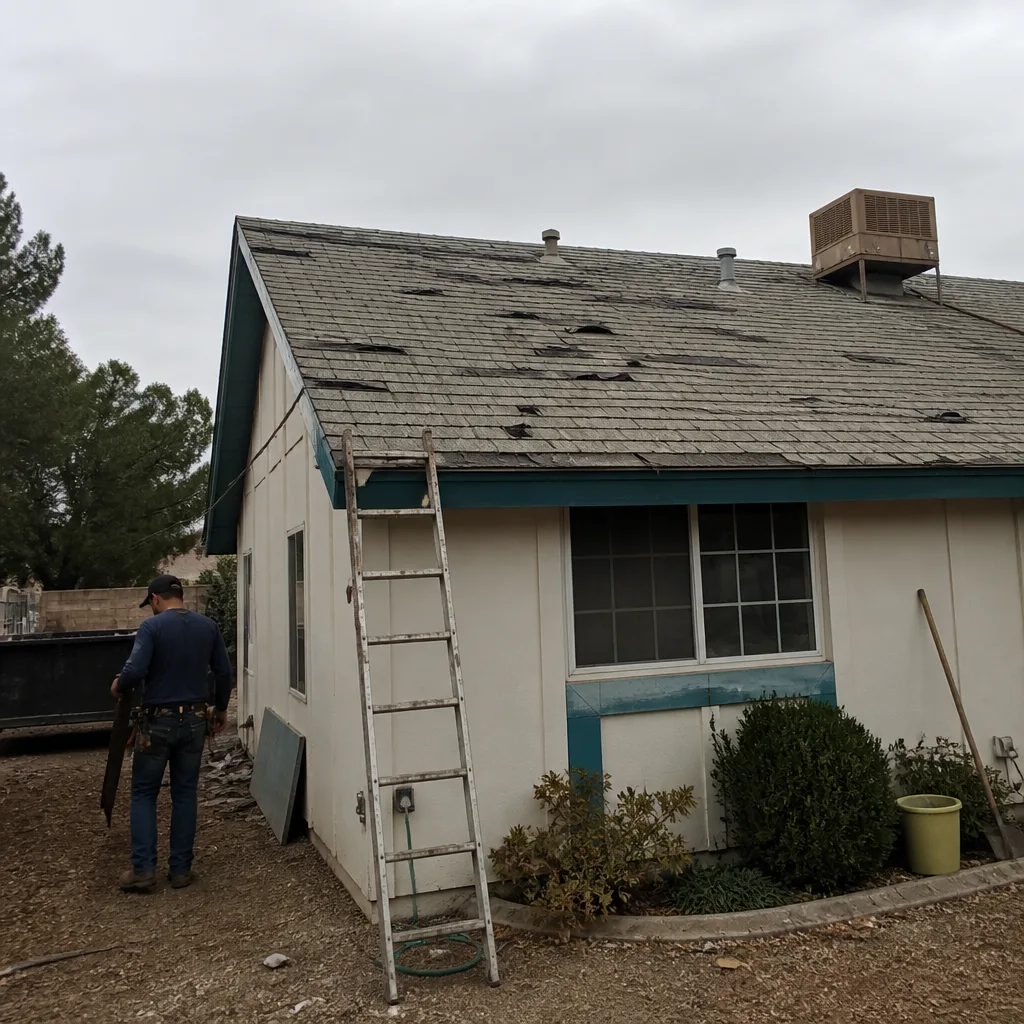
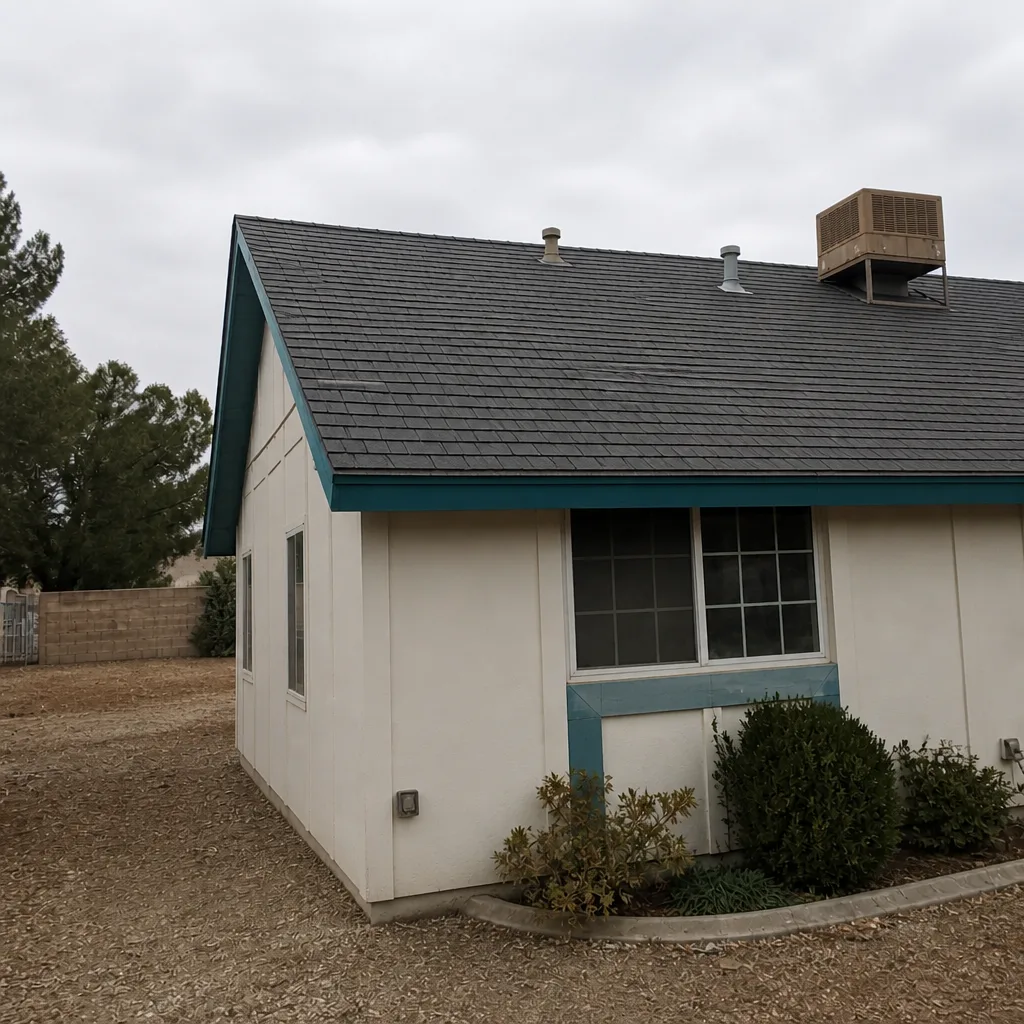
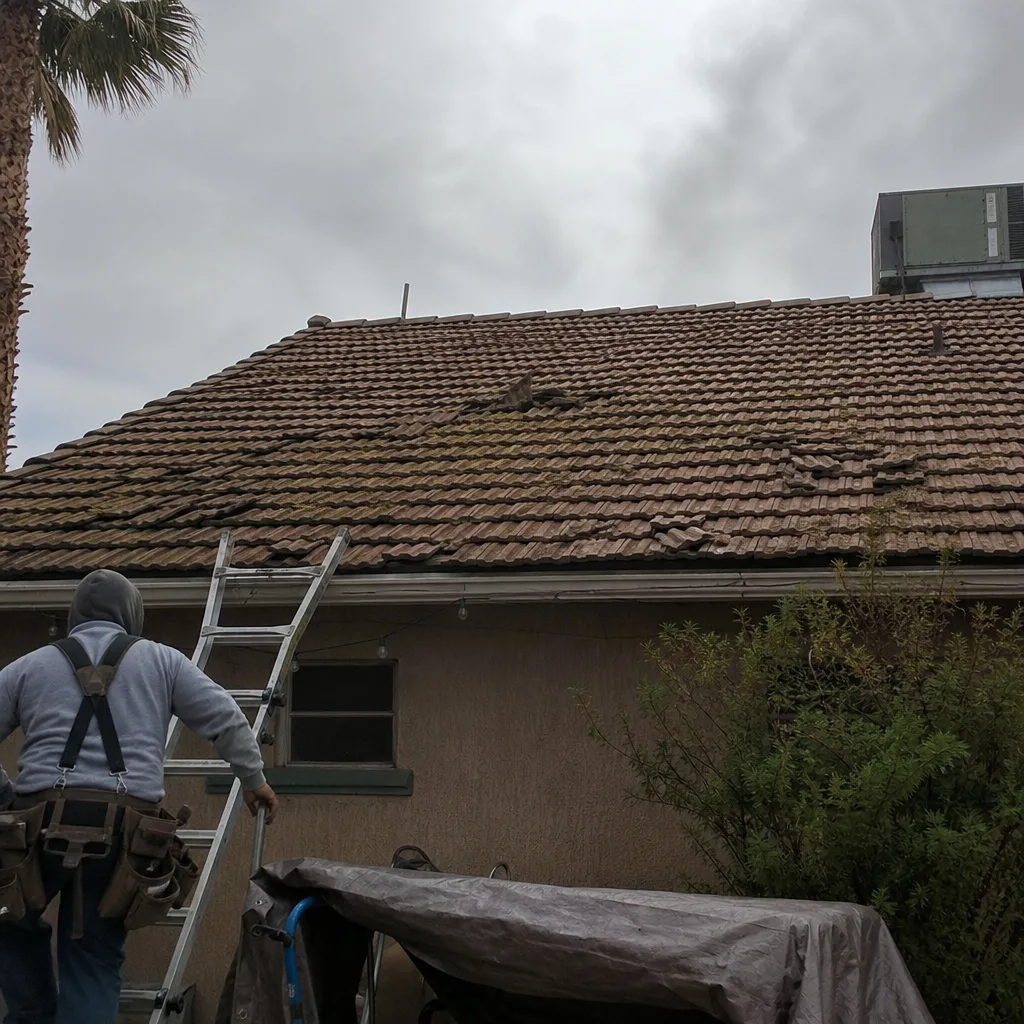
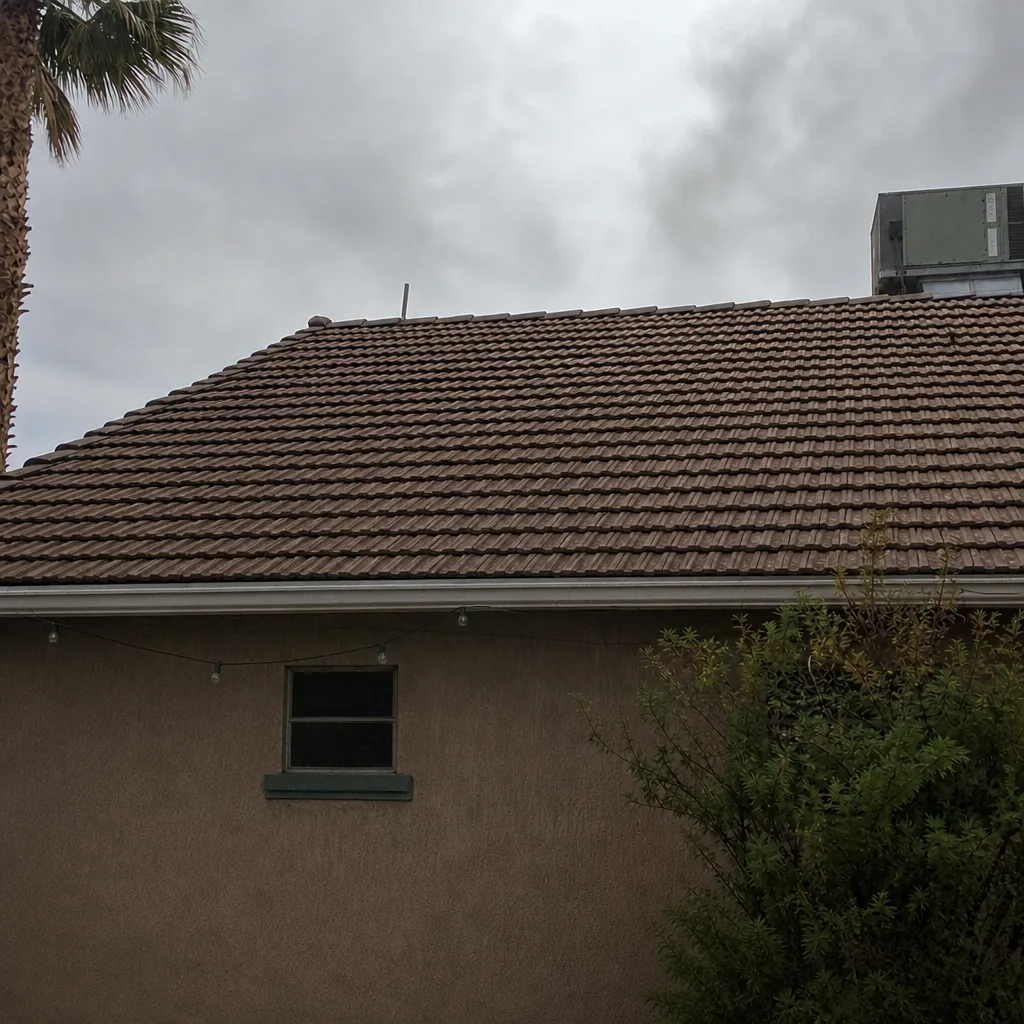
See the difference
 Before
 After
 Before
 After
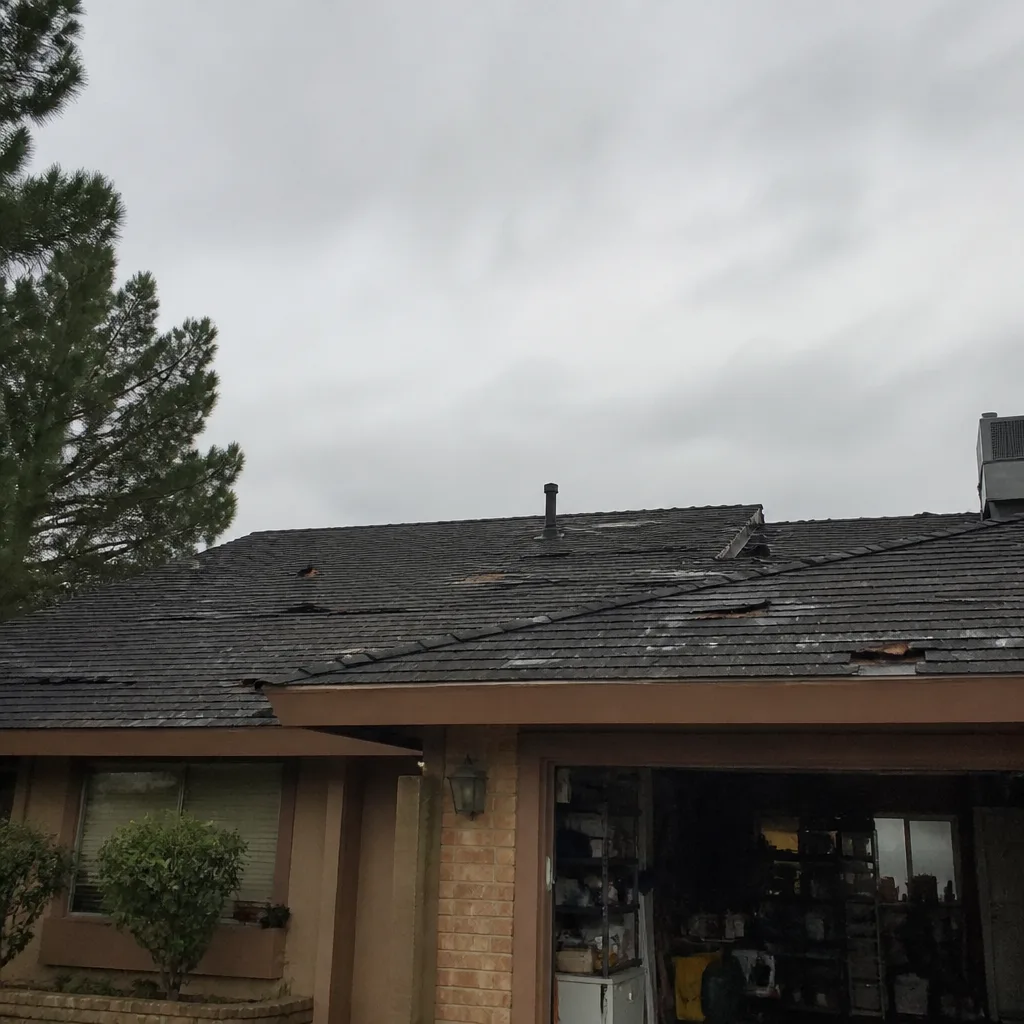 Before
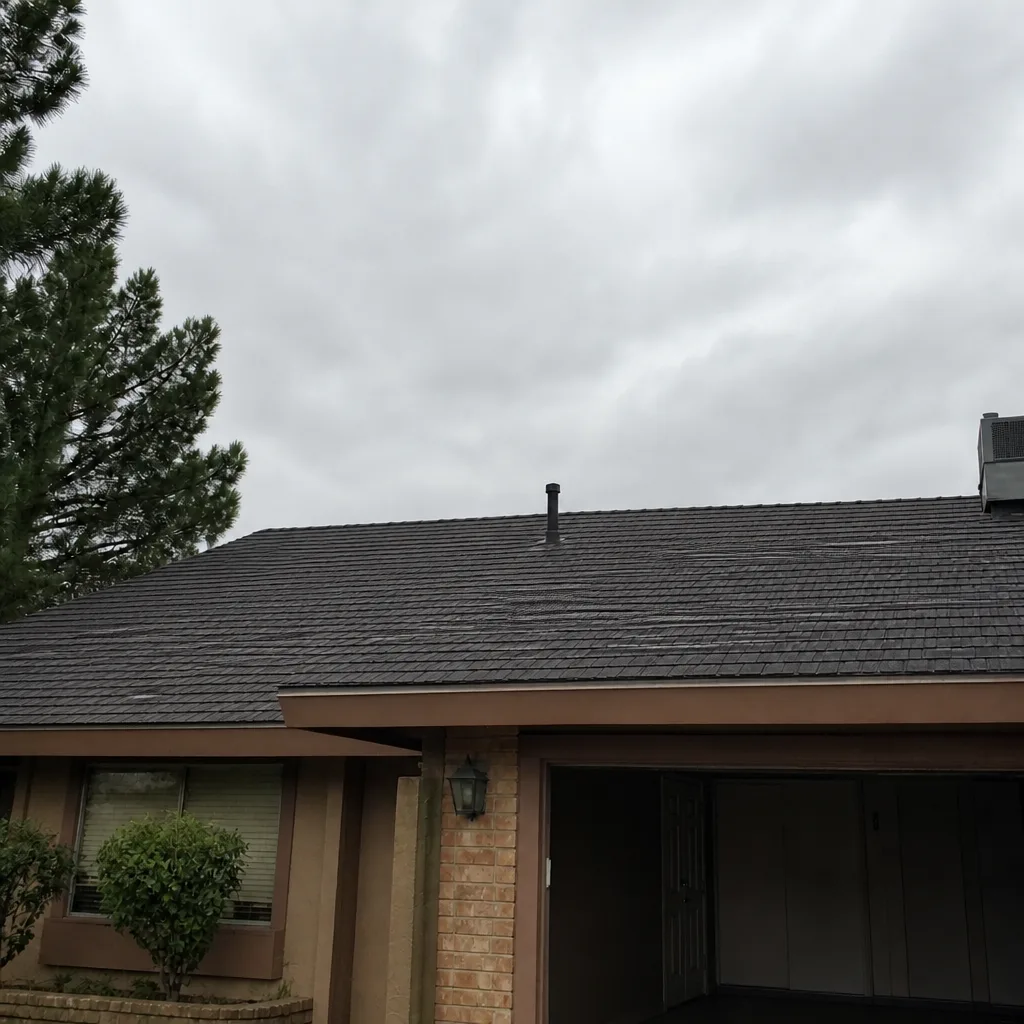 After
When to Call a Professional
Some of this checklist is homeowner work. Some of it isn’t. Call a professional when you see any of the following: shingles that are curling, cracked, or missing granules over more than a small area; any water stain on a ceiling or attic rafter; a flat-roof seam that’s lifted or soft underfoot; flashing that’s pulled away from the chimney or a vent; or a roof that’s more than fifteen years old without a documented inspection. Also call if you’re just not comfortable on a roof, which is a sensible instinct at any age. Ridgeline Roofing Co. Sunrise Manor offers free estimates in Sunrise Manor: call (844) 941-3509 and we’ll get you on the schedule.
Frequently Asked Questions
Twice a year, once in the spring before the UV window peaks and once in the fall after monsoon season. Sunrise Manor roofs face heat and UV stress year-round, so a single annual inspection misses the season where most damage happens.
Small repairs like flashing or a few shingles typically run a few hundred dollars; larger repairs involving a flat-roof section or multiple valleys can run higher. Call (844) 941-3509 for an exact quote: estimates are free, and the number on the estimate is the number on the invoice.
No. Power-washing strips the protective granules and exposes the asphalt, and it can void the manufacturer’s warranty on common shingle brands. Use a leaf blower on low or a soft brush instead, and let a professional handle anything that’s stuck.
Yes. Every repair is covered by our written 90-Day Done Right Promise. If the work isn’t right, we come back and make it right with no paperwork and no arguing. All of our technicians are background-checked and arrive in uniform, and have up to 10 years of experience.
April, May, or October. Those are the cool-weather windows before peak UV and after monsoon, and the crews are less booked than in June, which is the busiest month for roof work in Sunrise Manor.
Yes, a documented baseline makes the claim much stronger. Photograph five fixed roof zones every six months, taken from the same spot each time, and keep them in a dated folder. Without a baseline, you’re relying on the adjuster’s post-storm snapshot alone.
The Bottom Line
The best roof maintenance checklist for Sunrise Manor isn’t built around four seasons. It’s built around the desert’s actual clock: the UV window from March through June, the monsoon from July through September, and the two cool-weather windows when real repairs can get done. Check granule loss every spring, clear oleander and palm debris every time it drops, look at your flat-roof seams before July 1, and photograph the same five zones twice a year. Do those things on a schedule and you’ll catch the damage the sun is doing now, on a clear day, before the next storm turns it into a leak. Ridgeline Roofing Co. has served local homeowners since 1984 and backs every job with the 90-Day Done Right Promise. We’re a licensed and insured local crew, an authorized installer of GAF, CertainTeed, and Owens Corning, and we answer the phone with a live person around the clock, including during storms. Call (844) 941-3509 for a free estimate and a photo-documented inspection of your Sunrise Manor roof.
Written by the team at Ridgeline Roofing Co. Sunrise Manor.