
Last updated November 18, 2026
 Architectural shingles
 Metal roofing
 Tile roofing
 GAF
 Owens Corning
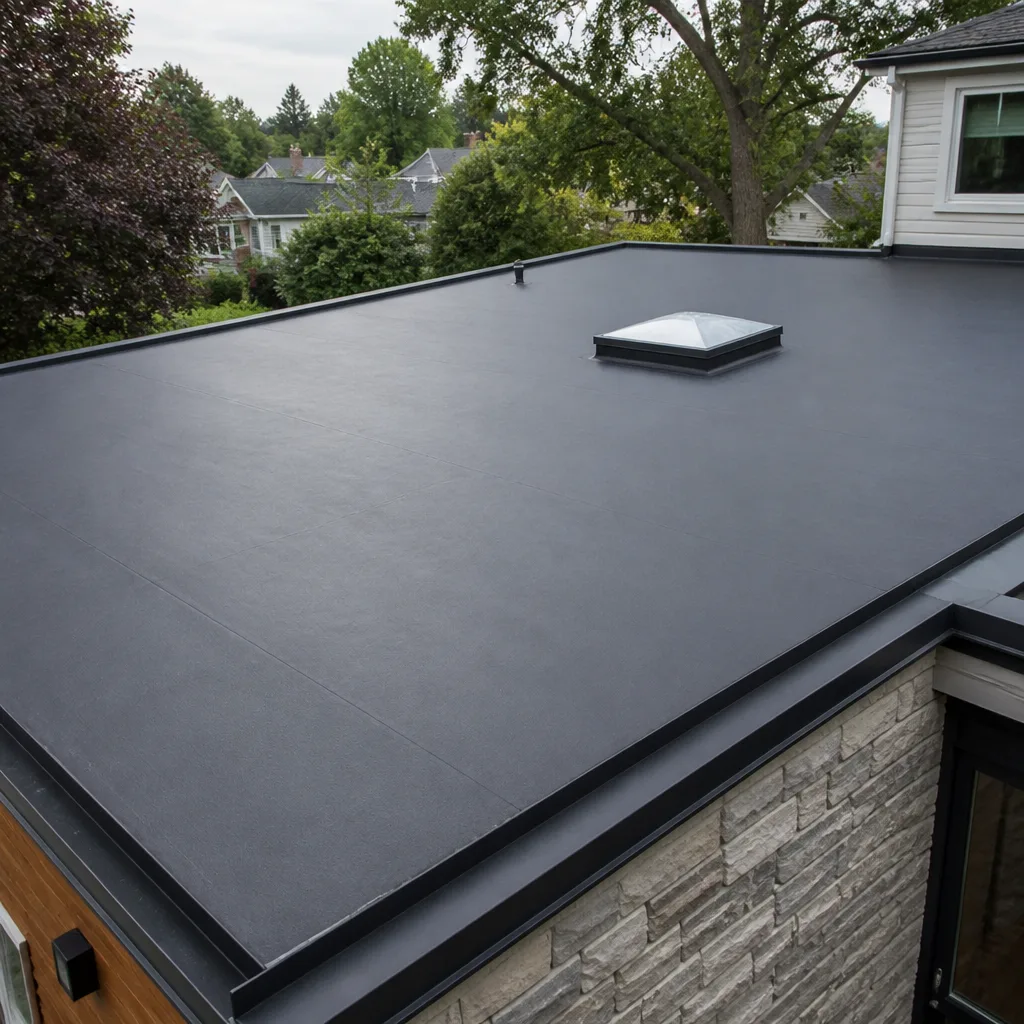 Flat & low-slope
Free roof inspection with deck photos before we talk money - GAF and Owens Corning certified installation
Roof Repair Warning Signs Every Homeowner Should Know
By the time you see a water stain on your ceiling, the roof has usually been failing at that spot for close to 18 months. The stain is the last chapter, not the first. The signs that matter appear a year or two earlier, when a repair still costs a few hundred dollars instead of a few thousand. We’re writing this guide for Sunrise Manor homeowners who plan to stay in their houses, because those are the people who benefit most from catching a problem early. Below you’ll learn the subtle, early-stage warnings that show up long before an emergency, how our desert climate puts its own spin on them, and a simple 10-minute walk-around you can run twice a year.
Quick Answer
The most important roof repair warning signs are early-stage ones: granule deposits in gutters, caulk that has cracked at pipe boots and vents, rust streaks on attic nail heads, and daylight showing through decking. These appear 12 to 24 months before a roof leak becomes serious, and fixing them is far cheaper than waiting. In Sunrise Manor, pay extra attention to edge flashing, since the extreme day-to-night temperature swing stresses it harder than in milder climates.
Styles & brands we work with
- Architectural shingles
- Metal roofing
- Tile roofing
- GAF
- Owens Corning
- Flat & low-slope
Table of Contents
- 1. Granule Loss in Gutters and Scuppers
- 2. What to Check at Roof Penetrations (No Ladder Needed)
- 3. The Attic Warnings Most Homeowners Never Check
- 4. Why Sunrise Manor’s Thermal Cycling Stresses Edge Flashing
- 5. A 10-Minute Walk-Around You Can Do Twice a Year
- 6. How to Photograph and Track Changes Over Time
- 7. Flashing, Sealant, and the Small Leaks That Hide
- 8. Why Early Repairs Cost a Fraction of Late Ones
1. Granule Loss in Gutters and Scuppers
Roof shingles are coated with mineral granules, and those granules are supposed to stay on the shingle for its whole life. When we find a coarse, sand-like pile of granules collecting in a gutter or at a downspout scupper, we read it as a countdown. It’s telling us the mat underneath is aging faster than the shingle surface, and a repair window is opening. In our experience, significant granule accumulation often precedes shingle failure by one or two seasons.
The trick is knowing what’s normal. A handful of loose granules after a new roof, or a few after a hailstorm, is ordinary. What matters is the pattern:
- Heavy deposits in one gutter and not the others. That points to a localized age or heat problem, not general weathering.
- Granules in the color of your shingles pooling at downspout outlets or in rain splash zones below a downspout.
- Granule loss on a slope that faces the afternoon sun. In Sunrise Manor, west and south slopes take the worst of it.
Granules do more than look nice. They shield the asphalt underneath from UV. Once they’re gone in an area, the asphalt dries and cracks, and water finds its way into the mat. A shingle that has gone bald in patches is already on borrowed time. If your gutters are shedding sand two or three times a year, it’s worth a professional look. This is the kind of trend we capture on Roof Repair in Sunrise Manor, because the earlier someone acts on granule loss, the smaller the repair.
2. What to Check at Roof Penetrations (No Ladder Needed)
Most roof leaks start at a penetration, not in the middle of a shingle field. Penetrations are the places where something cuts through the roof: plumbing vent pipes, exhaust vents, skylights, chimney flashing, and satellite mounts. Each is sealed with flashing or a boot, and every one of them has a shorter lifespan than the shingles around it. The good news is you can inspect many of them from the ground.
Stand in your yard and look up at each roof plane with a pair of binoculars. You’re checking for these specific things:
- Pipe boots: the rubber collar around plumbing pipes should be snug and pliable. If it looks cracked, torn, or loose at the base, it’s a future leak.
- Vent flanges: the metal or plastic frame around exhaust vents should sit flat against the shingle with no gaps.
- Skylight frames: look for lifting caulk lines or rust streaks running downslope from the frame.
- Chimney flashing: check the metal step flashing where it meets the chimney wall; lifting edges catch the eye even from below.
- Satellite and antenna mounts: any lag bolt into the roof surface needs sealant that hasn’t cracked.
In Sunrise Manor, UV exposure dries out rubber boots and caulk faster than most homeowners expect. A boot that a builder installed may look fine at three years and brittle at six. We see these fail often on the tract homes built through the 1990s and 2000s around the valley, where the penetration count on a single roof is high. A cracked boot is usually a small repair now, and water into the attic later.
3. The Attic Warnings Most Homeowners Never Check
The attic is the roof’s diary. It tells you what’s getting in long before a ceiling tells you. Most people never look. We recommend a quick attic visit twice a year, in spring and fall, with a flashlight. You’re not there to fix anything. You’re there to spot changes.
Here’s what to look for, and why each one matters:
- Rust streaks on nail heads. The nails that hold your roof deck from below will rust if moisture is getting past the shingles. Shiny nails are normal. Rusty nails with trails below them are a warning that water is finding a path.
- Daylight gaps. Look at the underside of the roof deck. If you see pinpricks of light or a soft glow between boards, look closer at what’s above that spot; it can be a gap in flashing or a missing shingle.
- Moisture on insulation. Damp or matted insulation in one area, while the rest is dry, points to a leak directly above it. Dark staining on the paper facing of insulation is the same message.
- Stains on the rafters and sheathing. Old water marks can be harmless history. Fresh ones, still slightly dark, mean an active problem.
- Mold or a musty smell. In our climate, this is more often a ventilation issue than a leak, but both need a look.
An attic that runs hot and stuffy in summer is also a ventilation signal. Sunrise Manor attics reach punishing temperatures, and poor airflow shortens the life of the entire roof assembly, not just the shingles. If you spot any of these attic warnings, it’s time for a professional inspection.
4. Why Sunrise Manor’s Thermal Cycling Stresses Edge Flashing
Sunrise Manor’s climate does something to roofs that milder parts of the country don’t have to deal with. In summer, a roof surface can hit 160°F or higher on a 100°F day, then drop to the 70s overnight. That swing expands and contracts the metal flashing, the sealant, and the shingle tabs every single day. The parts that move the most are the edges, and the edges are where water gets in first.
Edge flashing is the metal that runs along the rakes and eaves, and it’s the first line of defense at the perimeter of the roof. After a few seasons of thermal cycling, you may see:
- Lifted or curled shingle edges along the rake, where shingles can’t sit flat against the metal anymore.
- Cracked or peeling sealant along the eave line, where the caulk has lost its elasticity.
- Wavy or buckled fascia board just below the roofline, which can indicate moisture is getting behind the edge flashing.
- Blistering paint or peeling stain on the fascia and soffit, which often signals moisture escaping from the wrong place.
Water that gets behind edge flashing travels up under the shingles by capillary action and shows up inside, sometimes a foot or more from where it entered. In our experience, many interior leaks in Sunrise Manor trace back to a gap at the edge, not a hole in the middle. When we look at a Sunrise Manor roof, we check the perimeter first. It’s the part this climate punishes most.
5. A 10-Minute Walk-Around You Can Do Twice a Year
This is the routine we suggest to homeowners who want to stay ahead of repairs. It won’t replace a professional inspection, but it’ll help you spot trends before they become surprise invoices. Do it twice a year: spring and fall. Ten minutes, no ladder, no tools.
- Walk the perimeter of the house. Look up at the roofline. Check for missing or lifted shingles, especially at the ridge and the rakes.
- Check the gutters from below. Are they hanging straight, or sagging? Are they full of granules? Are there rust streaks down the fascia?
- Binocular check of penetrations. Stand back and look at pipe boots, vents, and skylights. Look for cracked caulk, gaps, or torn rubber.
- Look at the ceiling inside. Walk every room and scan the ceiling and upper walls for new marks. Take a photo with your phone for reference.
- Visit the attic. Flashlight in hand, check for rust streaks, daylight gaps, and damp insulation.
- Review your photos. Compare this year’s shots with the ones from six months ago. Trends tell you more than a single snapshot ever will.
This walk-around doesn’t replace the trained eye. But it gives you a picture of your roof over time, and it gives a professional a starting point. When we do a photo-documented inspection, we’re checking far more than this list covers, but we’re always happy when the homeowner has already noticed something. It makes the conversation honest.
6. How to Photograph and Track Changes Over Time
The single most useful habit for a homeowner over 55 who plans to stay in their house is to keep a roof file. A folder, physical or digital, with dated photos and notes. It’s how you spot the slow creep of a problem instead of the sudden shock of a leak.
What to document:
- Six dated photos per year: two perimeter angles, one at a ridge, one at a penetration cluster, one in the attic, one of the gutters from below.
- A one-line note on each visit: “No change.” or “Noticed a crack in the pipe boot seal.”
- A record of any professional inspection and its findings. Future contractors will thank you.
When a roofer can see a two-year photo history, it changes the conversation. Instead of guessing whether a shingle looked like that last year, we can compare. It also helps when filing with an insurer, if the day comes. Ridgeline Roofing Co. does photo-documented inspections from the actual roof, so you have images to compare with your own year over year.
7. Flashing, Sealant, and the Small Leaks That Hide
Flashing is the metal work at valleys, walls, chimneys, and edges that directs water away from the places it would otherwise get in. Sealant is the caulk used around the small gaps. Together, they are the most likely origin of a hidden leak, and the hardest to spot from the ground.
Some things to look for during your walk-around:
- Caulk that has pulled away from a frame, a pipe, or a wall joint. A hairline gap is all water needs.
- Rust on flashing, which means the galvanized coating is worn and the metal may be pitted.
- Lifted edges at valley flashing, where the metal no longer shingles over properly.
- Staining on the fascia and soffit, which may indicate a leak that has run down the trim board on its way out.
Small leaks that hide are the ones that cause the biggest surprises. Water can travel along a rafter for several feet before showing up inside. By the time a stain appears, the leak may have been running for a year or two, quietly softening the sheathing and framing. If you’re seeing caulk gaps you didn’t see last year, have someone look. Our products include IKO and Atlas shingles and Boral trim and soffit materials, and a proper repair usually means matching existing materials with the right grade.
8. Why Early Repairs Cost a Fraction of Late Ones
Why does timing matter so much? Because the cost of a roof problem doesn’t rise in a straight line. It accelerates. A small repair, caught early, is usually a few hundred dollars and a single visit. Once the leak reaches the interior, you’re paying for roof work plus interior repair, and the costs compound.
Here’s the difference in rough terms:
- Cracked pipe boot, caught early: a small repair, often handled in a single visit.
- Cracked pipe boot, ignored: sheathing damage, interior ceiling repair, insulation replacement, and possibly framing work.
- Missing shingle, caught early: a straightforward patch.
- Missing shingle, ignored: water into the attic, mold risk, damaged drywall.
- Lifted edge flashing, caught early: resealing and a small repair.
- Lifted edge flashing, ignored: fascia rot and interior damage that can climb into the thousands.
In our experience, the early repair is usually about a tenth of the eventual cost. That’s why we push for the inspection before the stain appears. It’s also why we offer a free second opinion on any written estimate, so you don’t have to guess whether the repair is really necessary. If your roof is nearing the end of its service life, an honest conversation about Roof Replacement & Installation in Sunrise Manor may save more than a series of patches.
Common Mistakes to Avoid
- Waiting for a stain. By the time the ceiling stains, the leak has often been active for more than a year. Watch for the earlier signs.
- Caulking over a problem. Sealant is not a fix. A boot or flashing that has failed needs replacement, not another tube of caulk.
- Ignoring one gutter full of granules. That single gutter is a warning, not a coincidence. It points to a specific slope that needs a look.
- Skipping the attic. The attic is the most useful diagnostic space in the house, and most homeowners never go up. A ten-minute flashlight visit twice a year is worth more than a dozen outward looks.
- Hiring a storm-chaser. Sunrise Manor sees its share of door-to-door roofers after summer storms. A truck that isn’t local won’t come back. Ask for a local, licensed company with a written workmanship guarantee.
- Not keeping photos. A roof file with dated photos will save you money when you finally need a repair. Trends matter, snapshots don’t.
- Assuming “30-year shingles” means 30 years in Sunrise Manor. Our heat and sunlight are hard on asphalt. Actual service life in the valley is often shorter than the label suggests.
See the difference
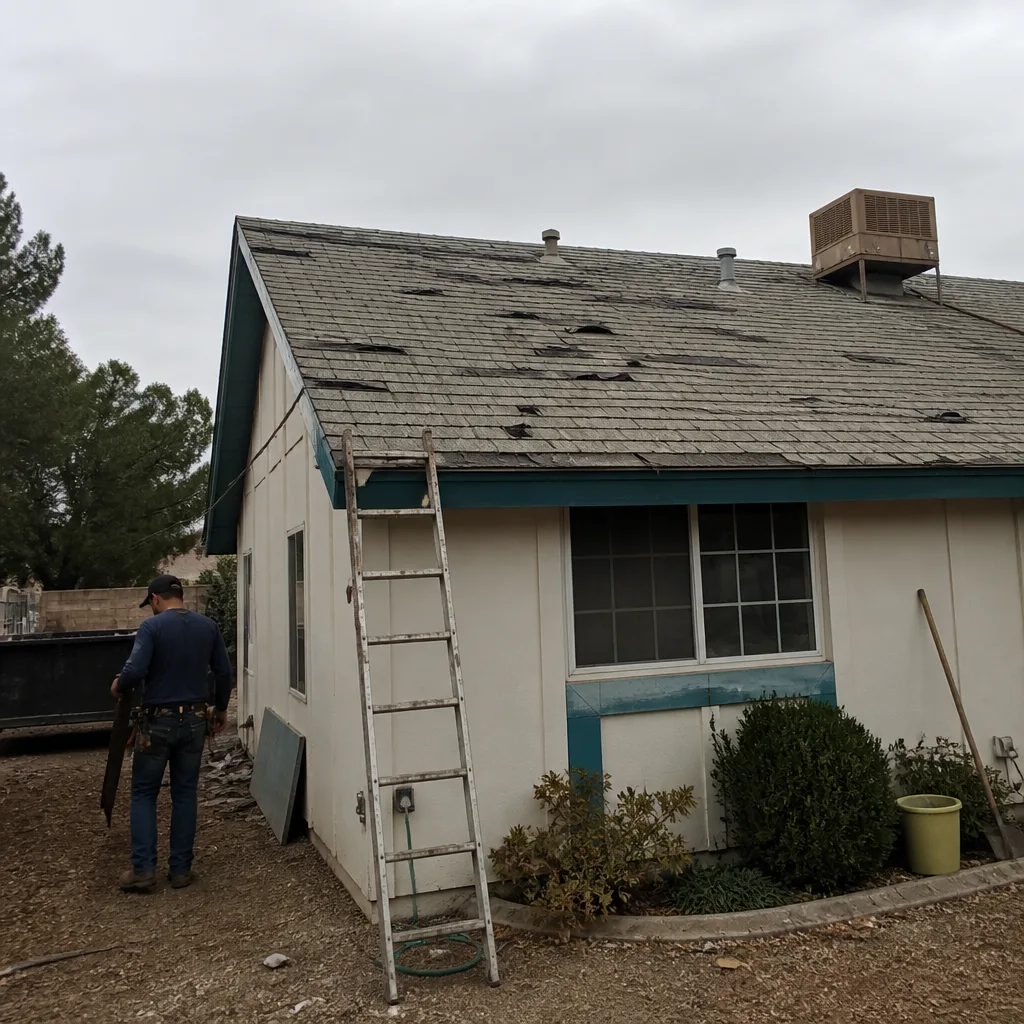 Before
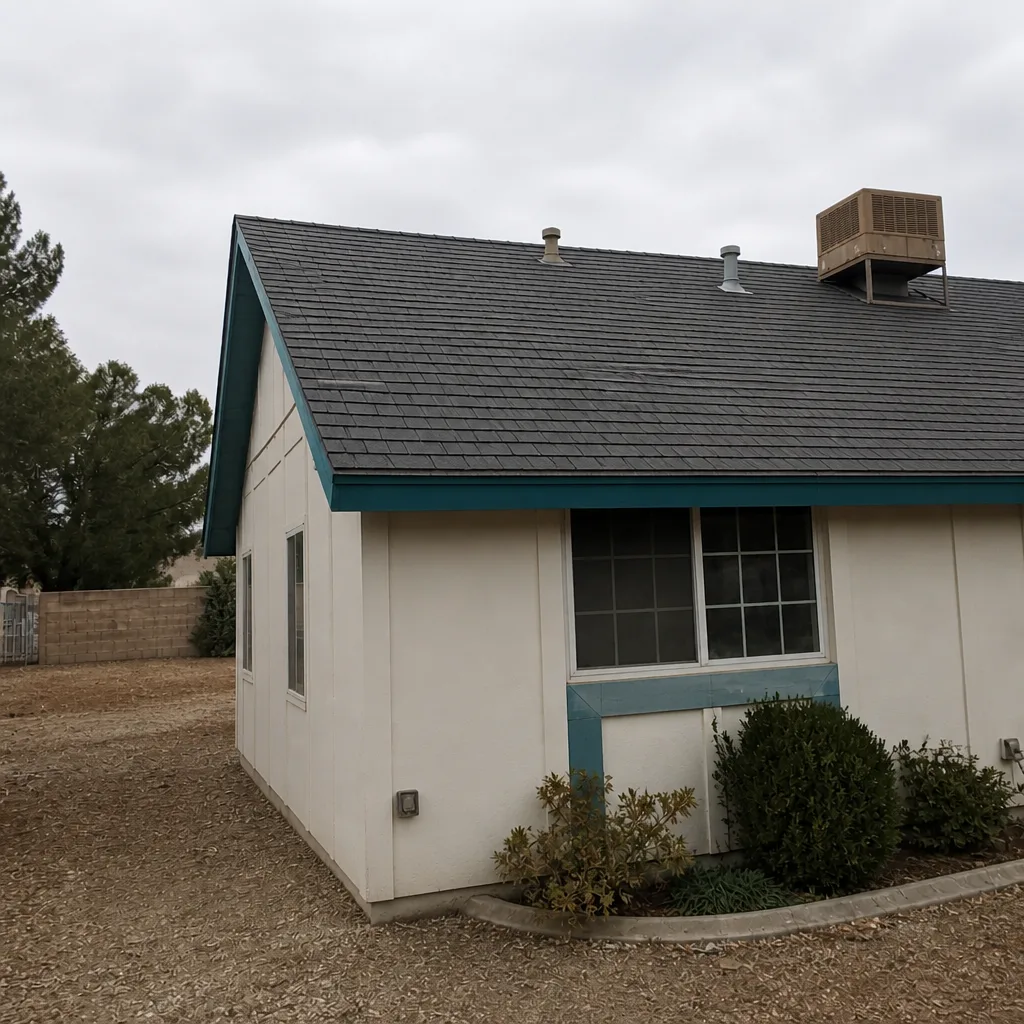 After
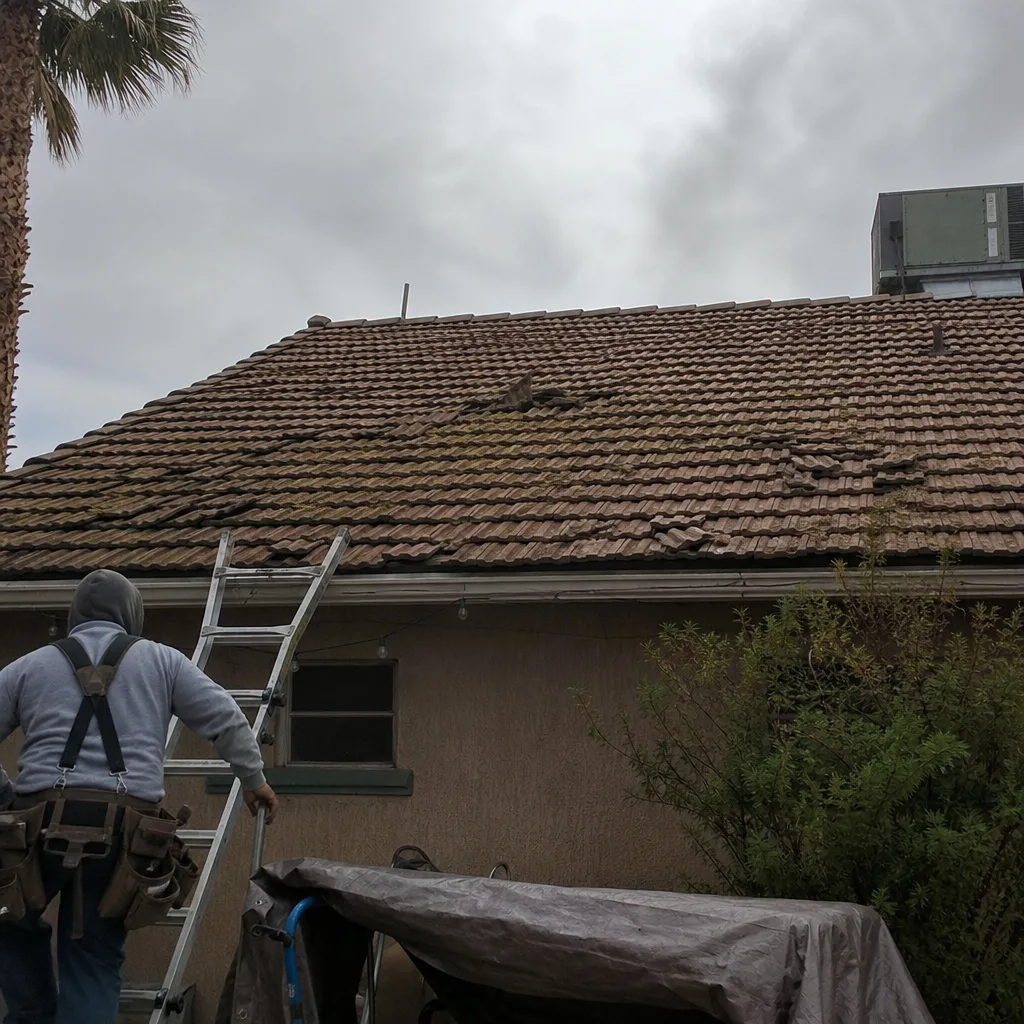 Before
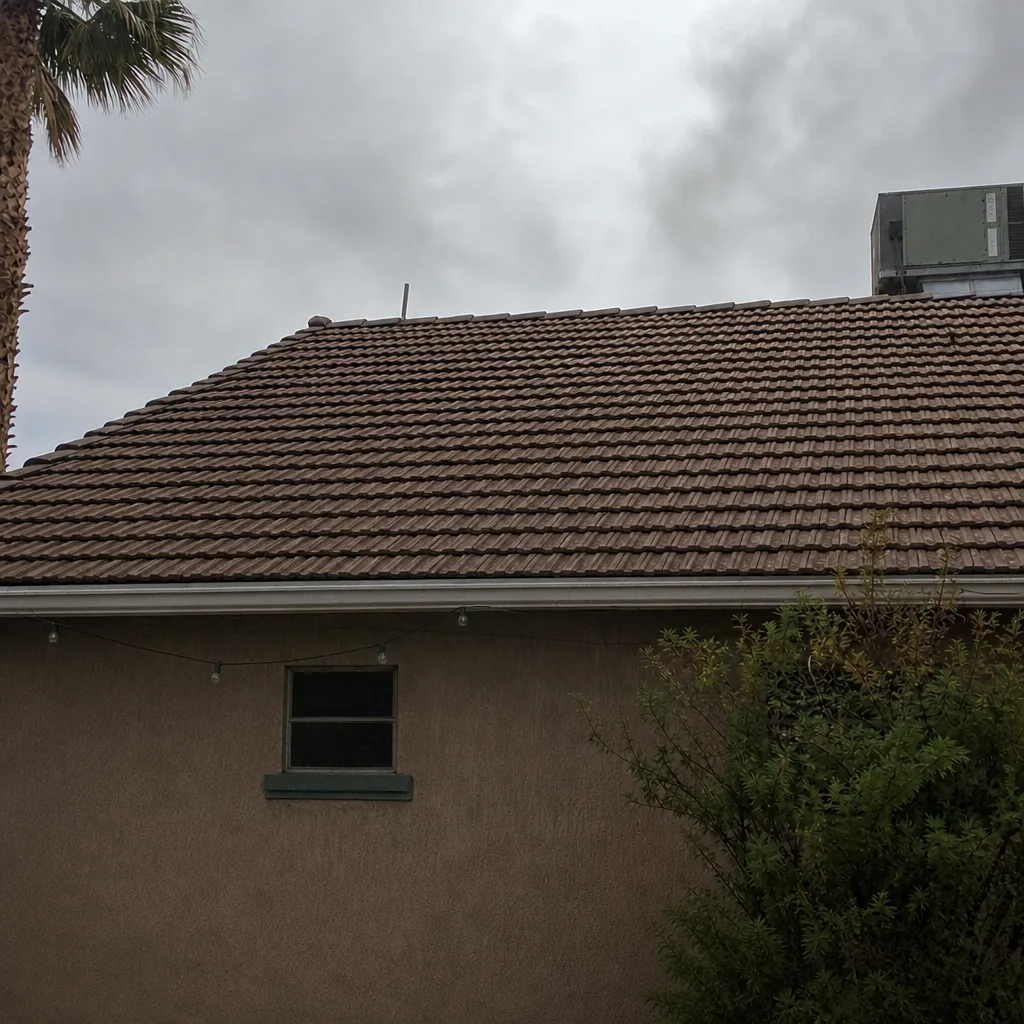 After
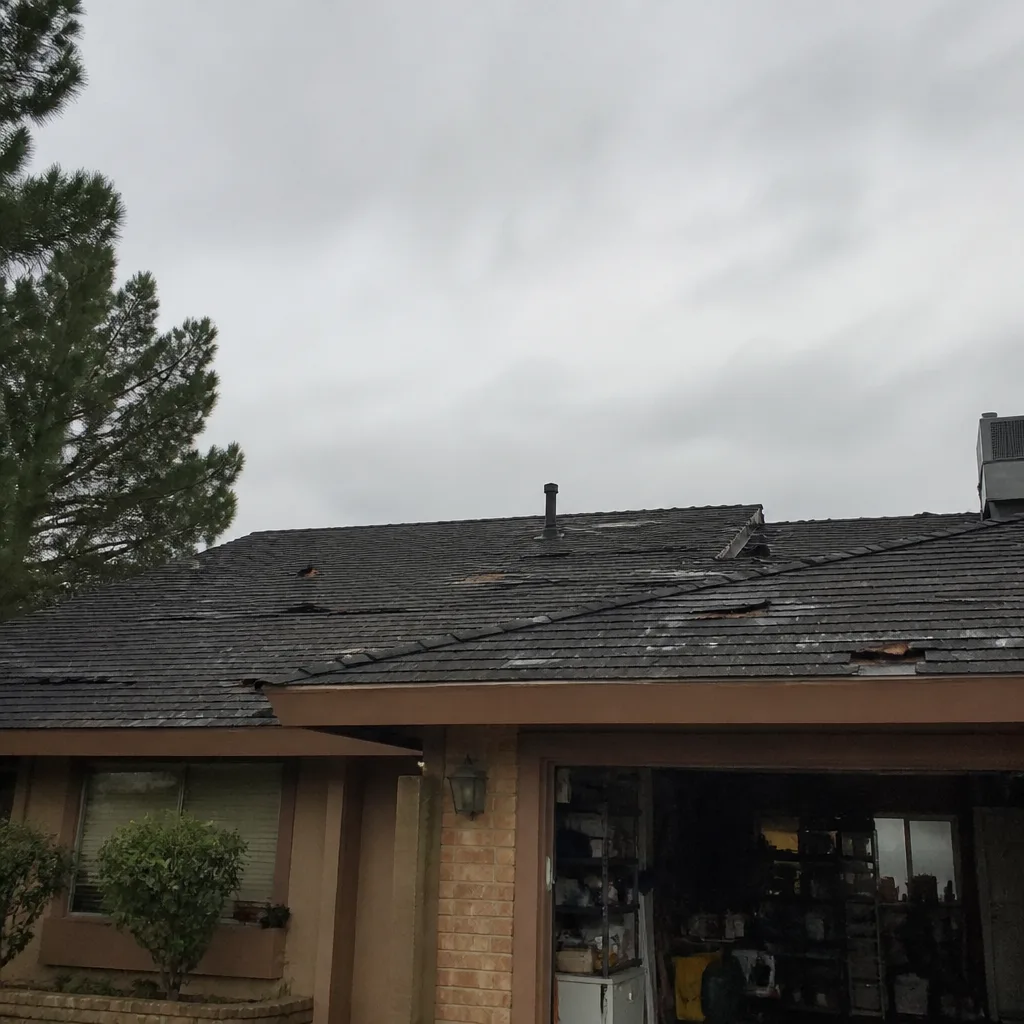 Before
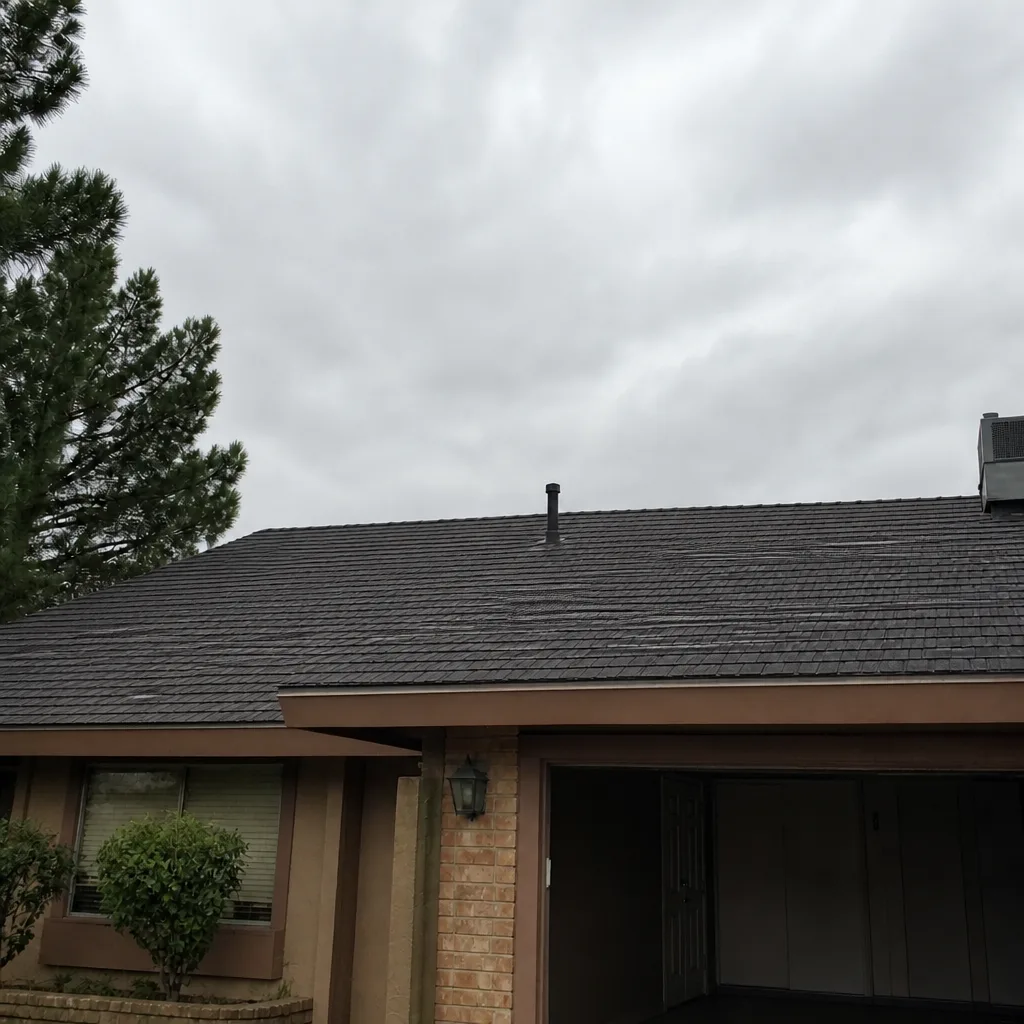 After
When to Call a Professional
Some warning signs deserve a professional inspection, not a homeowner’s DIY attempt. Call us if you spot any of the following: daylight visible in the attic from the underside of the roof deck, fresh water stains on the ceiling or upper walls, rusted nail heads with trailing streaks, missing or lifted shingles after a storm, or caulk that has failed at multiple penetrations. Any one of these signals that water is finding a path. Don’t stand in the driveway and guess; get a photo-documented inspection and a written estimate. Ridgeline Roofing Co. Sunrise Manor offers free estimates in Sunrise Manor. Call (844) 941-3509 and a live person will answer, any hour of the day.
Frequently Asked Questions
The first reliable sign is usually granule loss in the gutters and at downspouts, followed closely by cracked caulk at pipe boots and vents. These appear 12 to 24 months before a leak reaches the interior, which is why they matter so much. If your gutters are filling with shingle grit, get an inspection before a repair becomes an emergency. Call (844) 941-3509 for a free estimate in Sunrise Manor.
You can check most of it from the ground using binoculars. Look at the roofline, gutters, pipe boots, vents, and skylight frames from the yard. Then go into the attic with a flashlight and check for rust on nail heads, daylight gaps, and damp insulation. That combination covers the most common warning signs without anyone on a ladder. For anything that needs a closer look, our photo-documented inspection does the climbing.
In our experience, a leak can run for 18 months or more before it appears on the ceiling. Water travels along the deck and framing, so the stain often shows up well away from the actual gap. That’s why we push homeowners to look at the roof and attic directly, not just watch the ceilings.
Sunrise Manor’s UV exposure and thermal swings are harder on asphalt shingles than most climates. A roof surface can reach 160°F during the day and cool to the 70s overnight, and every cycle shrinks and stretches the shingle. That accelerates granule loss, and it’s why roofs here often age faster than the shingle label implies.
It depends on the age of the roof and how many signs are showing. A single cracked boot is a repair. Widespread granule loss, multiple lifted shingles, and daylight in the attic usually means the roof is at the end of its service life. We’ll give you an honest read, and a written estimate that separates repair from replacement so you can decide.
Our roof repair estimates are free, and we offer a free second opinion on any written estimate you already have. Call (844) 941-3509 to schedule. A live person answers around the clock, and the technician who comes out will be background-checked and in uniform, with photos from your actual roof. For specialty items like flat or low-slope areas, see Specialty Roofing in Sunrise Manor.
The Bottom Line
Most roof emergencies start as small, quiet warnings a year or two earlier. Granules in the gutter, cracked caulk at a pipe boot, rusty nail heads in the attic, and daylight through the deck are the real early signals, and in Sunrise Manor, so is edge flashing stress from our daily temperature swing. Run the 10-minute walk-around twice a year, keep a dated photo file, and get a professional inspection at the first sign that something has changed. The early repair costs a fraction of the late one, which is why we built our business around catching problems while they’re still small. We’re not a storm-chasing outfit. We’re named for the ridge, the line where a roof proves itself, and we plan to keep standing behind roofs in this town for a long time. Every repair is backed by our 90-Day Done Right Promise: if it’s not right, we come back and make it right. From the Ridgeline Roofing Co. Sunrise Manor home page to our repair crews, a square deal is the standard.
If something on your roof caught your eye this year, don’t wait for a stain. Call Ridgeline Roofing Co. Sunrise Manor at (844) 941-3509 for a free estimate. We’ll send a background-checked technician, take photos from your actual roof, and give you a written, upfront repair or replacement quote. The price on the estimate is the price on the invoice, and if it’s not right, we make it right. A live person answers every call, 24 hours a day. That’s the way we’ve done it here in Sunrise Manor, and that’s how we’ll keep doing it.
Written by the team at Ridgeline Roofing Co. Sunrise Manor.