
Last updated November 18, 2026
 Architectural shingles
 Metal roofing
 Tile roofing
 GAF
 Owens Corning
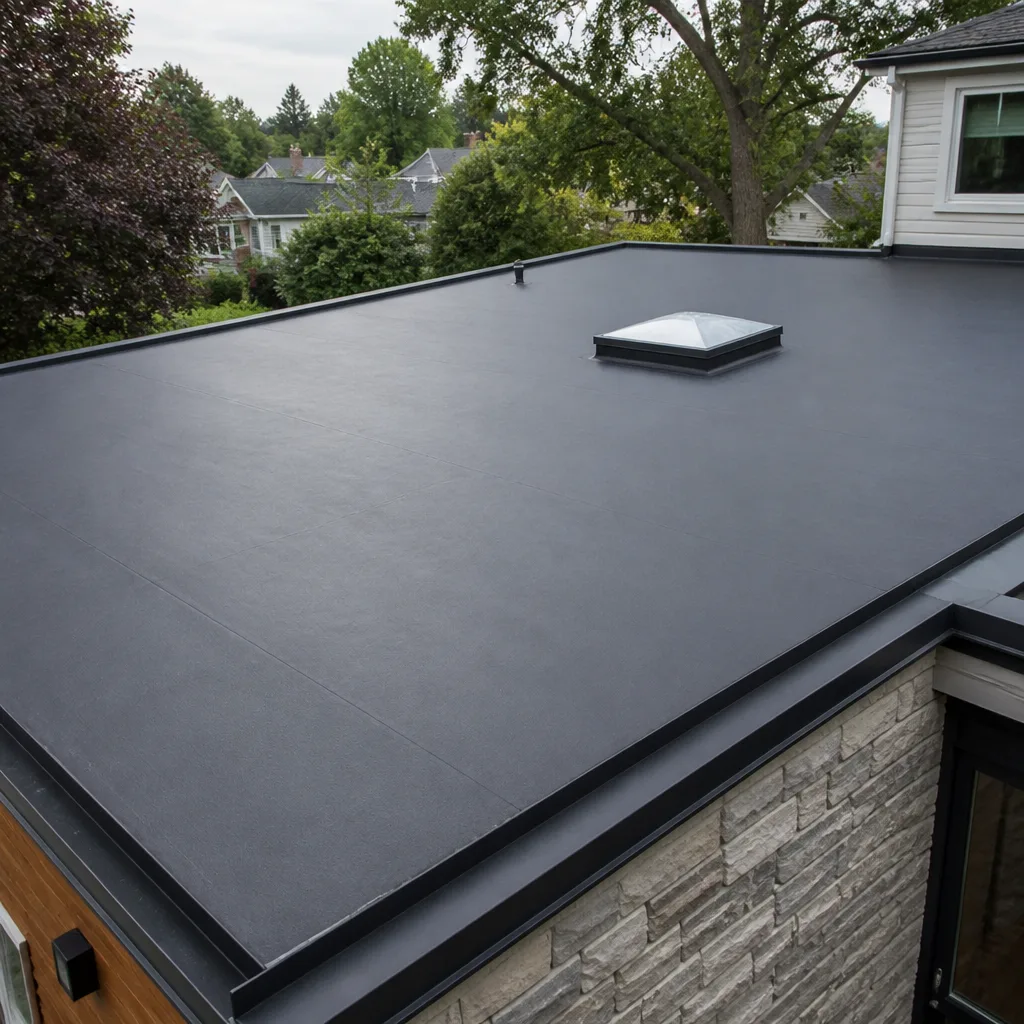 Flat & low-slope
Free roof inspection with deck photos before we talk money - GAF and Owens Corning certified installation
Gutters & Accessories Troubleshooting: Common Problems and How to Fix Them
A gutter that overflows in a hard rain is almost never clogged. That is the counterintuitive part most homeowners learn the expensive way: they pay for a cleaning twice a year for five years, and the gutters still spill over the edge every time the sky opens. In our experience across Sunrise Manor, the real culprit is usually a system installed with improper slope, outlets too small for the roof area they serve, or seams held together with sealant instead of proper fasteners. This guide gives you a symptom-to-cause diagnostic tree, tells you which fixes you can do from a stable ladder and which ones you should not touch, and defines the point where repairing an aging system stops making financial sense. Three installation errors explain roughly nine of every ten gutter failures we look at, and you can learn to spot all three.
Quick Answer
Overflowing, leaking, or sagging gutters are usually caused by one of three installation flaws: a slope flatter than 1/4 inch per 10 feet, undersized downspout outlets, or seams sealed with caulk that has given way. Cleaning fixes a true clog, but slope, size, and joint problems require re-pitching, larger outlets, or a system replacement rather than another cleaning. In Sunrise Manor, the swing between cool desert nights and hot afternoons works those sealed joints loose on its own over three to five years, whether the work was done well or not.
Styles & brands we work with
- Architectural shingles
- Metal roofing
- Tile roofing
- GAF
- Owens Corning
- Flat & low-slope
Table of Contents
- The Symptom-to-Cause Diagnostic Tree
- Overflow During Rain: Slope or Size
- Dripping at Seams: Sealant Failure or Joint Separation
- Sagging Between Hangers
- Water at the Foundation: The Downspout Extension Problem
- How Sunrise Manor’s Temperature Swings Work Gutters Loose
- Why Gutter Guards Can Make Monsoon Surge Worse
- How to Re-Pitch a Sagging Section Safely
- Repair or Replace: Finding the Break-Even Point
- Common Mistakes to Avoid
- When to Call a Professional
- Frequently Asked Questions
The Symptom-to-Cause Diagnostic Tree
Start with what you see during a storm, not with whether the gutter is full of leaves. The symptom points to the cause faster than any inspection does, and it saves you from paying for a cleaning that will not solve the problem. Here is the tree we use:
- Water sheeting over the front lip during heavy rain, no visible clog: the section is pitched wrong or the downspout outlet is too small to carry the volume. Cleaning will not help.
- Drips or streaks at the seam between two sections: the sealant joint has failed or the sections have separated. Look for a gap between the metal faces, not just a stain.
- The gutter sags in the middle of a run between two hangers: hanger spacing is too wide, or the fascia behind the gutter has rotted or pulled free.
- The gutter is straight but the water pools at the corner: the corner outlet is undersized or the downspout elbow is partly blocked.
- Water at the foundation instead of at the curb: a missing or too-short downspout extension, or the discharge point is blocked.
- Water stains on the fascia behind the gutter: the gutter is holding water and pulling away from the fascia, which usually means the fasteners are backing out.
In Sunrise Manor, the fascia check matters more than it does elsewhere because the dry heat makes wood and fasteners work at different rates. A run of gutter that looked tight three summers ago can show a quarter-inch gap at the fascia by now, and that gap is the beginning of a sag. A careful roof inspection often catches this before you notice anything from the ground, because the roofline and the fascia are where the stress shows first.
Overflow During Rain: Slope or Size
Overflow with no clog means one of two things: the water is not reaching the outlet because the slope is too flat to move it, or the outlet is too small to carry what arrives. A properly pitched gutter slopes toward the outlet at roughly 1/4 inch per 10 feet, which is a very gentle grade. Anything flatter, and standing water sits in the channel until the next rain, then spills over the front during a heavy downpour. A standard 2×3 downspout will carry the runoff from roughly 600 square feet of roof in a moderate rain; a long run of sloped gutter feeding a single outlet on a larger roof area is the second most common installation error we see.
Two conditions make this worse in Sunrise Manor. The first is the flat-roof and low-pitch construction common in neighborhoods built before the 1990s, where a single gutter run collects water from a much larger roof area than the outlet was sized for. The second is that heavy monsoon rain arrives with intensity rather than duration, so the gutter has to move a large volume in a short window rather than a steady trickle. If your gutter overflows on the heavy storms but handles a light rain, the problem is capacity or slope, not clogging. Oversizing the outlets and adding a second downspout, or re-pitching the run to move the water faster, is the correct fix, and neither is a cleaning job. For a run that also shows roof-edge wear or shingle loss, a specialty roofing review can tell you whether the roof edge and gutter need to be handled together.
Dripping at Seams: Sealant Failure or Joint Separation
A drip at the seam between two gutter sections is either a sealant that has let go or two sections that have separated. The difference matters. If the two sections still meet cleanly and the water is weeping through a thin caulk line, a sealant repair can last several years. If there is a visible gap between the metal faces, sealant alone will fail again the first hot afternoon, and the joint needs a proper hanger, a splice, and a mechanical fastener. The failure pattern in Sunrise Manor is almost always the sealant type: the standard caulk used on homes built in the 1990s was not designed for a roof surface that reaches 150°F in the sun and then cools to 70°F overnight.
Replacing the sealant on a dry day is a reasonable homeowner repair, but inspect the joint first. Clean the seam back to bare metal, dry it fully, and use a gutter-grade sealant rated for high temperatures rather than general-purpose caulk. If the seam has a gap wider than a credit card is thick, or the sections have pulled apart end to end, the joint has separated and needs a splice plate or a new hanger, not sealant. When we install gutters, we use the proper splice fasteners and a manufacturer-specific sealant, and we hang the run on hangers spaced close enough that a hot summer afternoon cannot pull a section loose from its neighbor. Most of the seam leaks we repair on homes built before 2000 were never installed with high-temperature sealant at all.
Sagging Between Hangers
A gutter that sags between two hangers is either hung too far apart or pulling away from a fascia that has softened behind it. Hangers should be spaced no more than 24 inches apart, and closer than that in an area with heavy rainfall or long runs. When a run is hung at 30 or 36 inches, a hot afternoon is enough to let the section bow between the fasteners, and the sag becomes a place for water to sit and for the fasteners to loosen further. The repair is to re-hang the section with proper spacing and a fastener that bites into solid lumber rather than the fascia skin.
If the fascia behind the gutter is soft or has pulled away, the sag will return after any hanger repair until the fascia is repaired. That is the pattern we find on older Sunrise Manor homes with long, sun-exposed runs: the gutter is fine, but the fascia behind it has dried, checked, and loosened the fasteners. A gutter replacement that simply reuses the old fasteners will fail on the same timeline as the original. The right approach is to pull the section, inspect the fascia and roof edge, repair or replace the damaged fascia, then re-hang the gutter on new fasteners. On a home where the roofline has been repaired more than once, it is often worth a full roof replacement and installation review to make sure the fascia and decking under the gutter are sound before re-hanging.
Water at the Foundation: The Downspout Extension Problem
Water pooling at the foundation is the most expensive gutter problem you can ignore, because the cost moves from the gutter to the foundation. The cause is almost always simple: the downspout stops at the wall instead of carrying water at least three to five feet away from the house. The fix costs very little and protects a great deal.
- Check the discharge point. Walk the house in a light rain or run a hose into the downspout and watch where the water goes. If it lands within a foot of the foundation, the extension is missing or too short.
- Add a proper extension. A buried extension, or a flexible splash block that angles water away from the wall, solves most of it. The extension needs to discharge into a slope, not a flat spot against the wall.
- Check the grade at the discharge point. In Sunrise Manor, where the ground can be packed hard and slow to absorb water, the extension should discharge into a graded area rather than against the house.
- Clear the outlet before the next rain. A downspout full of leaves will back up, and the water goes over the front of the gutter instead of out the bottom.
If the discharge point is blocked and the water is pooling at the wall through several storm seasons, tint the fascia, foundation, and interior wall for moisture, because the fix needs to reach the discharge point before it reaches the living room. Gutter and roof-edge work on a Sunrise Manor home typically runs from a small repair to a full replacement, and the right response depends on how much of the run has failed.
How Sunrise Manor’s Temperature Swings Work Gutters Loose
Sunrise Manor’s biggest gutter failure driver is not rain. It is the daily temperature swing, which can run from the low 70s overnight to the high 90s and beyond by mid-day in summer. Aluminum gutter sections expand and contract with that swing, and over three to five years the movement works sealant joints loose and backs fasteners out of the fascia. A joint that was tight when installed will show a hairline gap after a few summers of that cycle, and a hanger that was snug will be a quarter inch loose.
This is why a gutter that was installed with care in other climates can fail here on a predictable schedule even if it never sees an extreme storm. The typical life of a caulked seam in this environment is roughly three to five years, and the typical life of a hanger run is longer but still finite. When we inspect gutters in Sunrise Manor, we look for the thermal signature: sealed seams with hairline cracks along the edge, hangers with a gap between the fastener head and the gutter back, and a run that is straight on a cool morning but visibly bowed on a hot afternoon. That is not wind damage. It is the local climate working on the system, and the correct response is to replace the failed sealant, re-hang on proper spacing, and use fasteners rated for the movement. It is also why the Ridgeline Roofing Co. Sunrise Manor home approach pairs a gutter inspection with a roof-edge review, so the repair does not repeat on the same timeline as the original.
Why Gutter Guards Can Make Monsoon Surge Worse
Gutter guards sold in wetter climates are often not the right solution for Sunrise Manor’s rain pattern. The reason is the shape of the storm: monsoon rain arrives in a surge, with a large volume in a short window. A fine mesh guard that directs water over the top of the guard and into the gutter works well for a steady rain, but in a surge the water sheets across the guard and over the front lip of the gutter instead of into it. A homeowner who installs the wrong guard then believes the gutter is the problem when the guard is the problem.
- Fine mesh guards: good for leaf and debris exclusion in a steady rain, prone to sheeting over the front in a hard desert downpour if the mesh is too fine for the roof slope.
- Screen guards: lower restriction, but they let small debris through and require cleaning inside the gutter anyway.
- Reverse-curve guards: designed for steady rainfall, not a surge; water can overshoot the gutter lip entirely in a heavy rain.
- The right choice: a guard sized for the roof pitch and the storm pattern, with the gutter pitched to move surge water quickly to a properly sized outlet.
Before you buy a guard, check that the gutter is correctly pitched and the outlet is sized for the roof area. A guard on a poorly pitched gutter makes the overflow worse, not better. In Sunrise Manor, where the rain is occasional but intense, the correct guard is the one that lets surge water in fast and keeps debris out, and the installation should start with a proper slope check.
How to Re-Pitch a Sagging Section Safely
Re-pitching a sagging gutter section is a repair many homeowners can do from a stable ladder, provided they take the ladder safety seriously and do not attempt it on a wet or windy day. The target is 1/4 inch of drop per 10 feet of run, toward the downspout. The steps:
- Work from a stable ladder on firm ground. Do not lean a ladder against the gutter itself; lean it against the fascia or use a ladder stabilizer, and have someone foot the ladder.
- Mark the target drop with a string line. Run a string from the high end of the run to the outlet, set the string 1/4 inch lower per 10 feet at the outlet end, and use it as your reference for the gutter bottom.
- Loosen the hangers, not the fasteners. Release the hangers on the sagging section so the gutter can be moved to the string line without fighting the fasteners.
- Re-hang the section to the string line. Fasten new hangers at no more than 24 inches apart, with the gutter bottom following the string.
- Check the slope with a level and a measuring tape, not by eye. A 1/4 inch drop over 10 feet is small enough that the eye will not catch it, so measure.
- Run water through the section and watch the outlet. If the water stands in the channel, the slope is still too flat; re-check the string.
Do not attempt this on a second-story run without a stable platform or a professional. The ladder is the risk in this job, not the gutter. If the fascia behind the section is soft, stop and address the fascia first. And when the run has been re-pitched twice and still sags, the system is telling you the gutter is undersized or the fascia is failing, and a replacement is the better answer. Our technicians are background-checked and arrive in uniform, with up to 10 years of experience on jobs like this, and we are glad to handle the ladder work and check the roofline while we are up there. A roof repair in Sunrise Manor visit is the right moment to look at the fascia and roof edge before re-hanging the gutter.
Repair or Replace: Finding the Break-Even Point
The threshold between a repair and a full replacement is a simple cost comparison, and most homeowners find they are already past it. Start with the age of the system and the number of failures. A gutter system that needs a seam repair every year, a re-pitch every other year, and a hanger repair every third year is costing more in labor and time than a replacement would over the same window. Add up the repairs over five years, then compare that to a replacement quote. When the repairs reach roughly 40 to 50 percent of the replacement cost, the replacement is the better financial decision, and it is also the better decision for the home because the replacement comes with a written workmanship guarantee.
Here is the quick checklist we use:
- One isolated leak in an otherwise solid system: repair.
- Two or more seam failures in different sections within a year: the sealant is failing system-wide, so replace.
- Sagging in more than two runs, even after re-pitching: hangers and fascia are past their service life, so replace.
- Gutter sections that are too small for the roof area: replace with properly sized sections and outlets.
- Fascia that is soft in more than one place: the gutter replacement should include a fascia repair, so plan for both.
- System older than 20 years with mixed repairs: replace.
When the replacement is the right call, we install gutters and accessories as part of a full roof-edge package, and we use products from manufacturers we are authorized to install, including GAF, CertainTeed, and Tamko, so the system is matched to the roof rather than patched with whatever fits. The specialty roofing page explains how the gutter and roof-edge work are handled together on a Sunrise Manor home.
Common Mistakes to Avoid
- Cleaning twice a year when the problem is slope. If the gutter is empty after a cleaning and still overflows on the next hard rain, the problem is slope or outlet size, and no amount of cleaning will fix it.
- Using general-purpose caulk on a seam. Standard caulk fails in the Sunrise Manor heat within a season or two; use a gutter-grade high-temperature sealant, and replace the splice if the gap is wide.
- Hanging gutters at 30 inches or more. The section will bow on a hot afternoon; keep hangers at 24 inches or closer, especially on long sun-exposed runs.
- Installing the wrong gutter guard for the local rain pattern. A fine mesh guard sized for steady rain can sheet monsoon surge water over the front lip, making the overflow worse.
- Ignoring the downspout discharge point. Water that lands a foot from the foundation is water in the basement or crawl space; add an extension and grade the discharge point away from the wall.
- Re-hanging on old fasteners and soft fascia. The sag will return on the same schedule as the original; pull the section and check the fascia first.
- Repairing an aging system one section at a time. Each repair looks cheap on its own, but the five-year total often exceeds a replacement quote, and the replacement comes with a written guarantee.
When to Call a Professional
Call a professional when the work is above the first story, when the fascia behind the gutter is soft, when a section has pulled fully away from the house, when water has reached the foundation or interior wall, or when the repair budget has reached roughly half the replacement cost. A professional can also tell you whether the gutter problem is actually a roof-edge problem, which is common on Sunrise Manor homes where the fascia and roof edge have taken decades of sun. We work from the roof with photos so you can see exactly what we see, and we quote the repair in writing before any work starts. Ridgeline Roofing Co. Sunrise Manor offers free estimates in Sunrise Manor. Call (844) 941-3509 to schedule one. Our phones are staffed by a live person around the clock, and the number on the estimate is the number on the invoice. Every job is backed by our 90-Day Done Right Promise: a written guarantee with no paperwork and no runaround. If it is not right, we come back and make it right.
Frequently Asked Questions
Because the slope is too flat or the downspout outlet is too small for the roof area, not because of a clog. A properly pitched gutter drops 1/4 inch per 10 feet, and a standard outlet carries roughly 600 square feet of roof; a long run feeding one small outlet will spill over the front in a hard rain. Re-pitch the run and size the outlets for the roof area. Call (844) 941-3509 for a free estimate on the repair.
A caulked seam typically lasts three to five years in Sunrise Manor because of the daily temperature swing between cool nights and hot afternoons. The expansion and contraction works the sealant loose, which is not a sign of poor installation so much as a local climate effect. High-temperature gutter sealant and proper splice fasteners extend the life of the joint. Call us for an inspection and a written quote.
Only if the guard matches the local storm pattern and the gutter is correctly pitched first. Fine mesh guards can sheet monsoon surge water over the front of the gutter, making overflow worse, so the guard choice has to follow a slope and outlet check. Guards reduce debris but do not replace a properly pitched system. Call (844) 941-3509 and we will check the slope before recommending a guard.
Not without a stable platform. The ladder is the real risk in a re-pitch, and working above the first story from a leaning ladder is how homeowners get hurt. A ground-floor run on a stable ladder is fine for a careful homeowner; anything higher should be handled by a professional. Call us for a free estimate if the run is above the first story.
When the repair cost reaches roughly 40 to 50 percent of a replacement quote, or when failures are appearing in more than one section within a year. A system that needs sealant, re-pitching, and hanger work on a repeating schedule has reached the end of its service life. A replacement also comes with a written workmanship guarantee. Call (844) 941-3509 for a free estimate.
It should, whenever the fascia is soft or the fasteners have pulled free. Re-hanging on damaged fascia only delays the same sag, so the replacement scope should include a fascia inspection and repair where needed. We check the roof edge while the gutter is down and quote the full scope in writing. Call us for a free estimate in Sunrise Manor.
The Bottom Line
Most gutters that overflow, leak, or sag are failing because of slope, outlet size, or sealant, not because of a clog. The diagnostic tree in this guide tells you which one you are looking at, and in Sunrise Manor the daily temperature swing is usually the villain behind the sealant and hanger failures. Re-pitch at 1/4 inch per 10 feet, size the outlets for the roof area, add a downspout extension, and pick a guard that suits the local storm pattern rather than one built for a steady rain. Repair when the problem is isolated; replace when the repairs are adding up past the break-even point. For a free estimate in Sunrise Manor, call (844) 941-3509. We quote the work in writing, stand behind it with the 90-Day Done Right Promise, and answer the phone when you call.
Written by the team at Ridgeline Roofing Co. Sunrise Manor.
See the difference
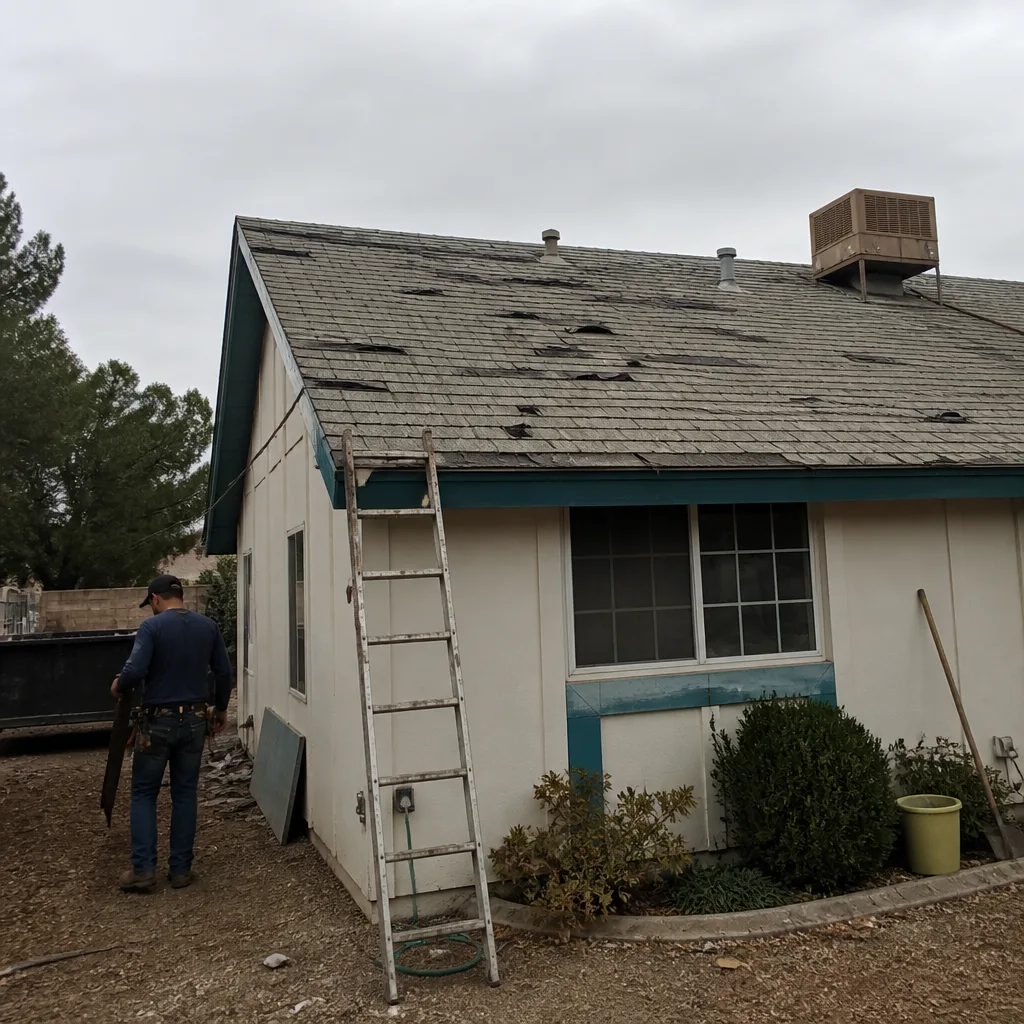 Before
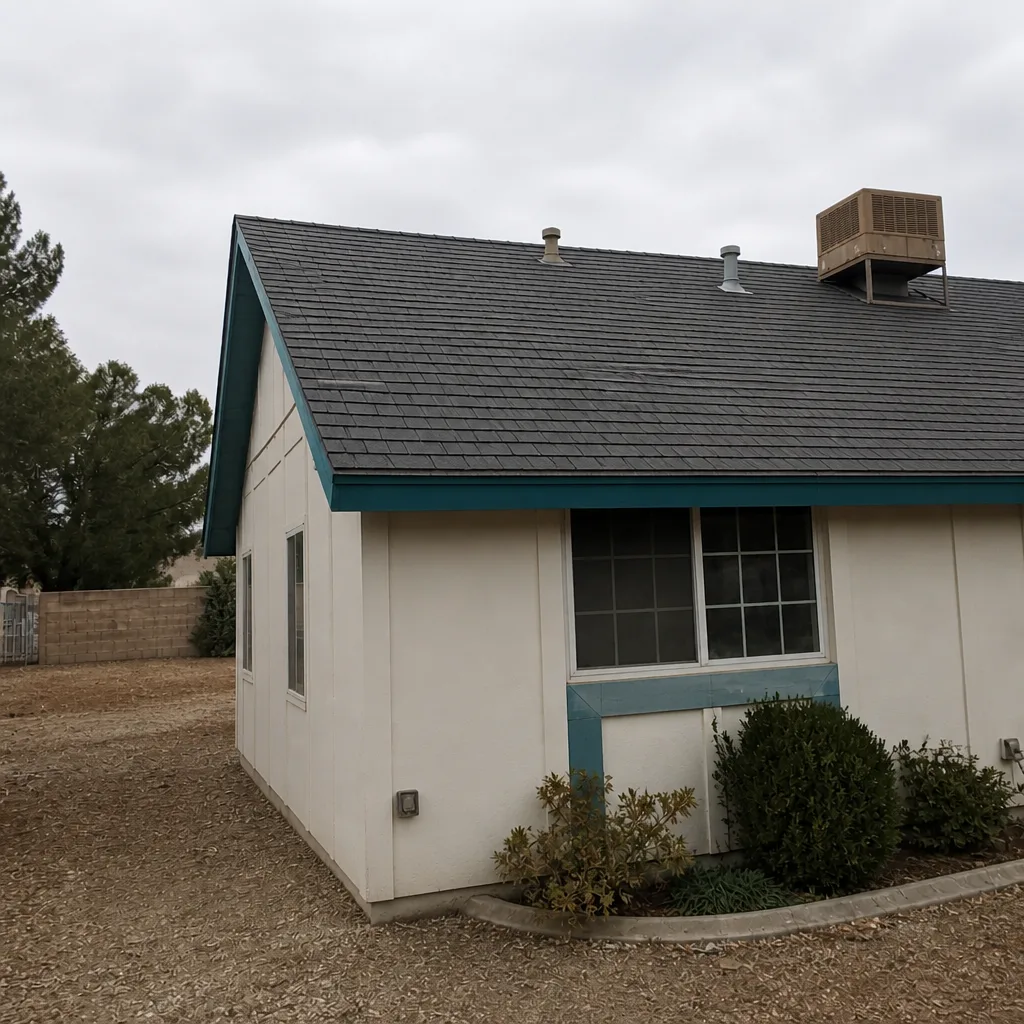 After
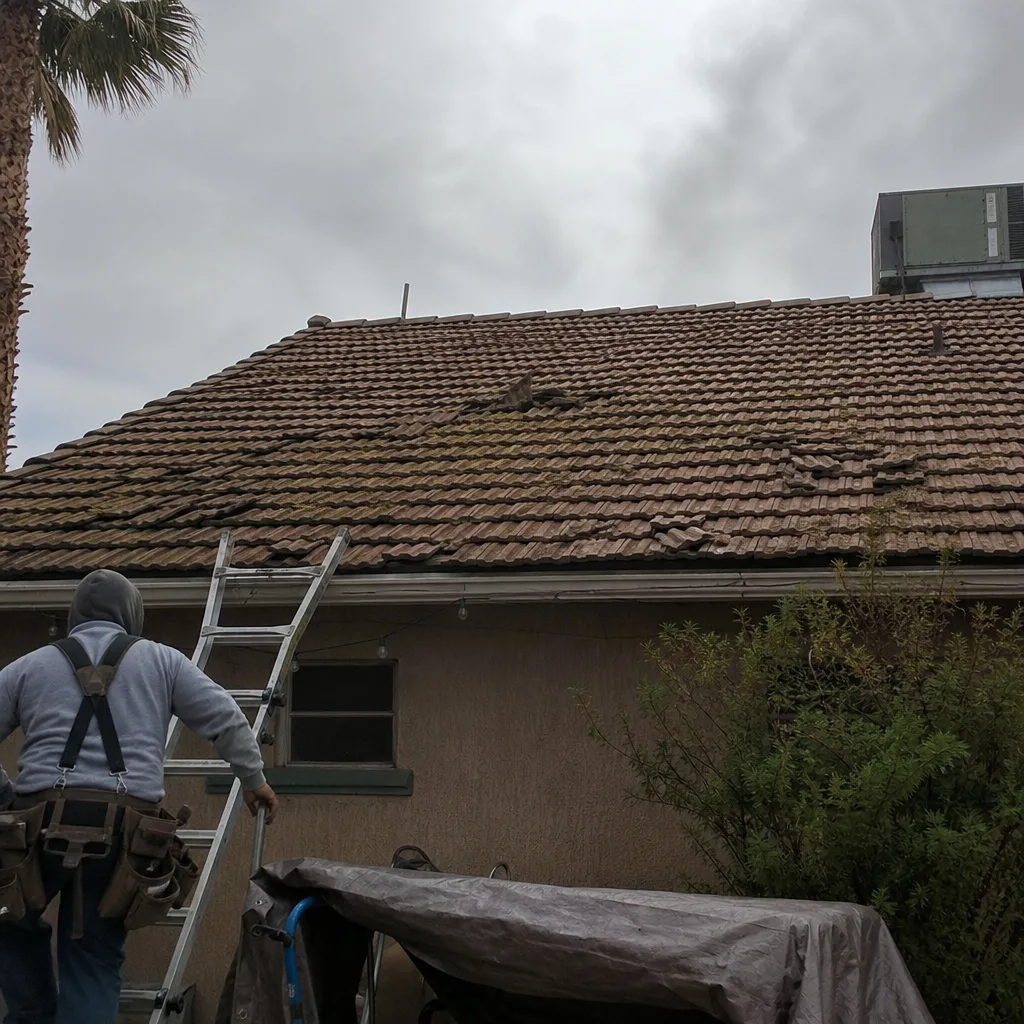 Before
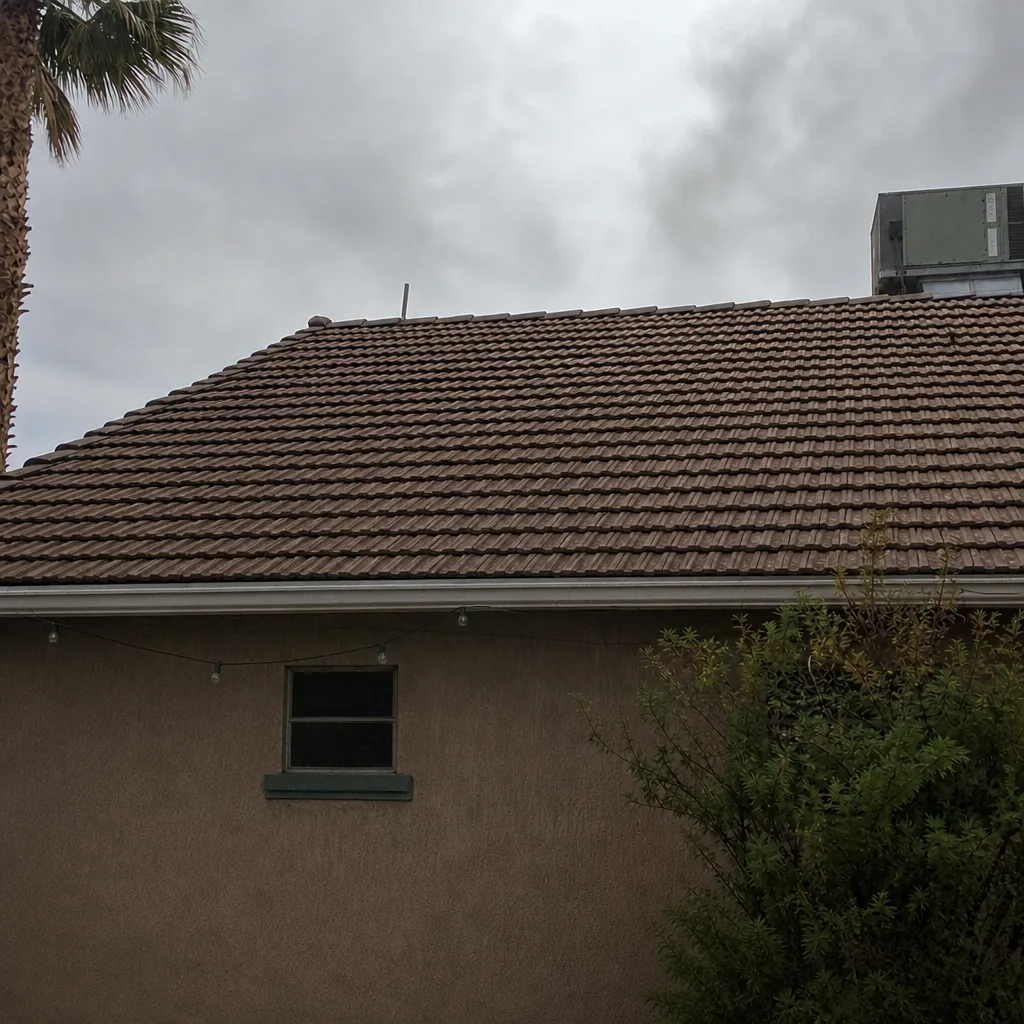 After
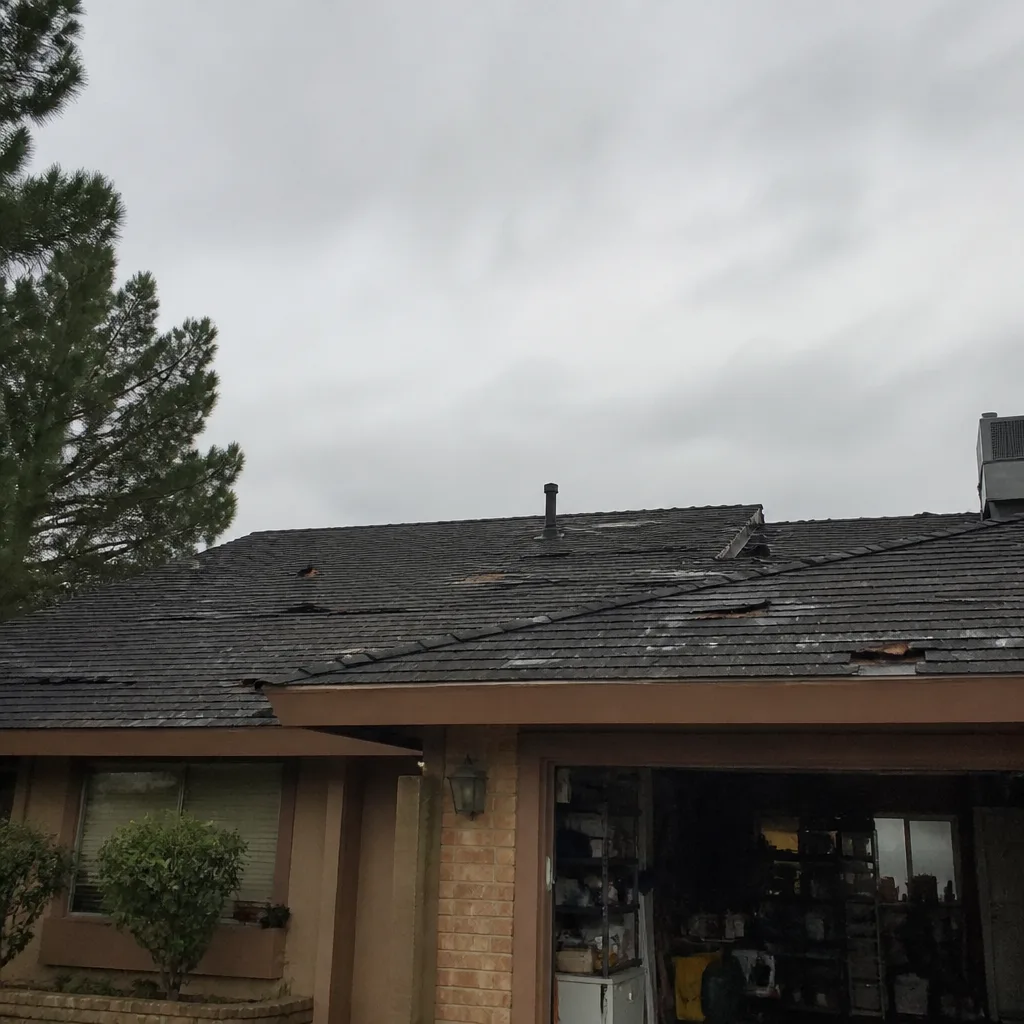 Before
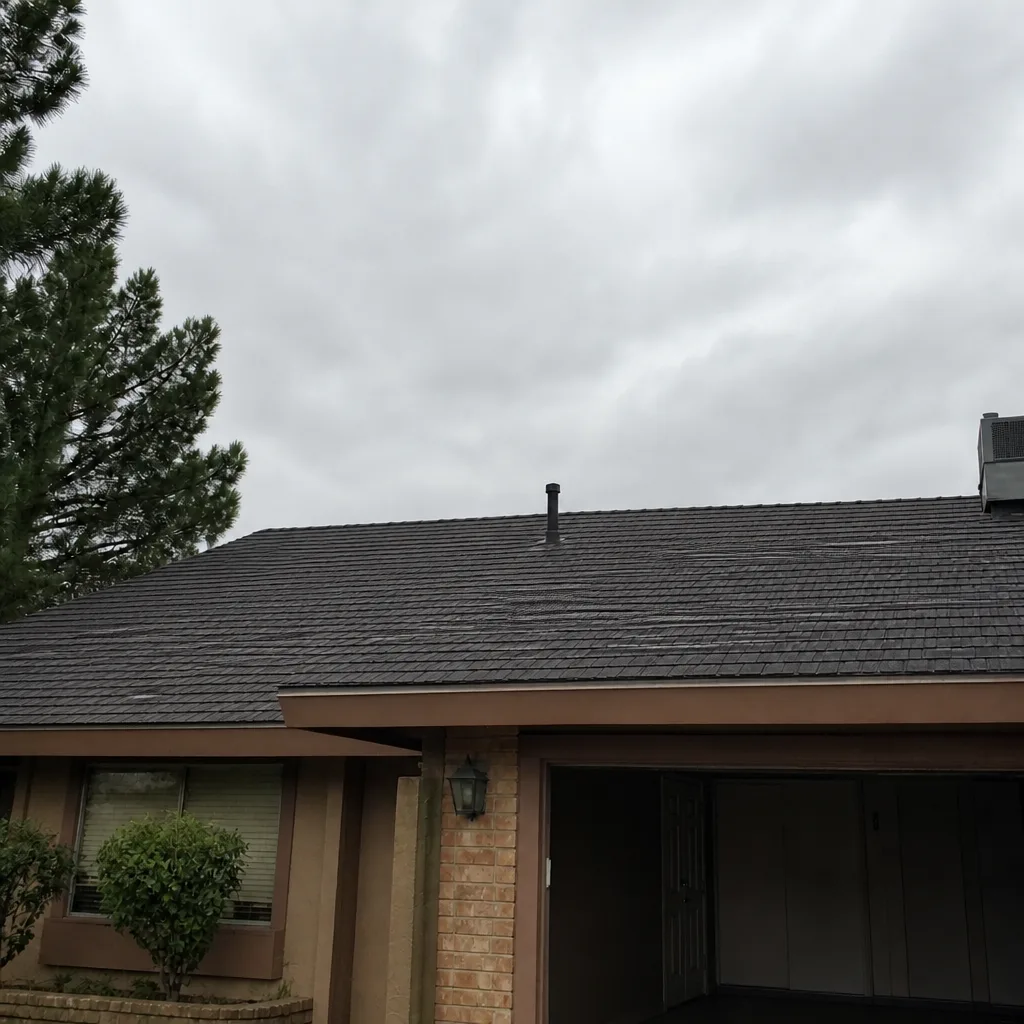 After