

Last updated November 18, 2026
 Architectural shingles
 Metal roofing
 Tile roofing
 GAF
 Owens Corning
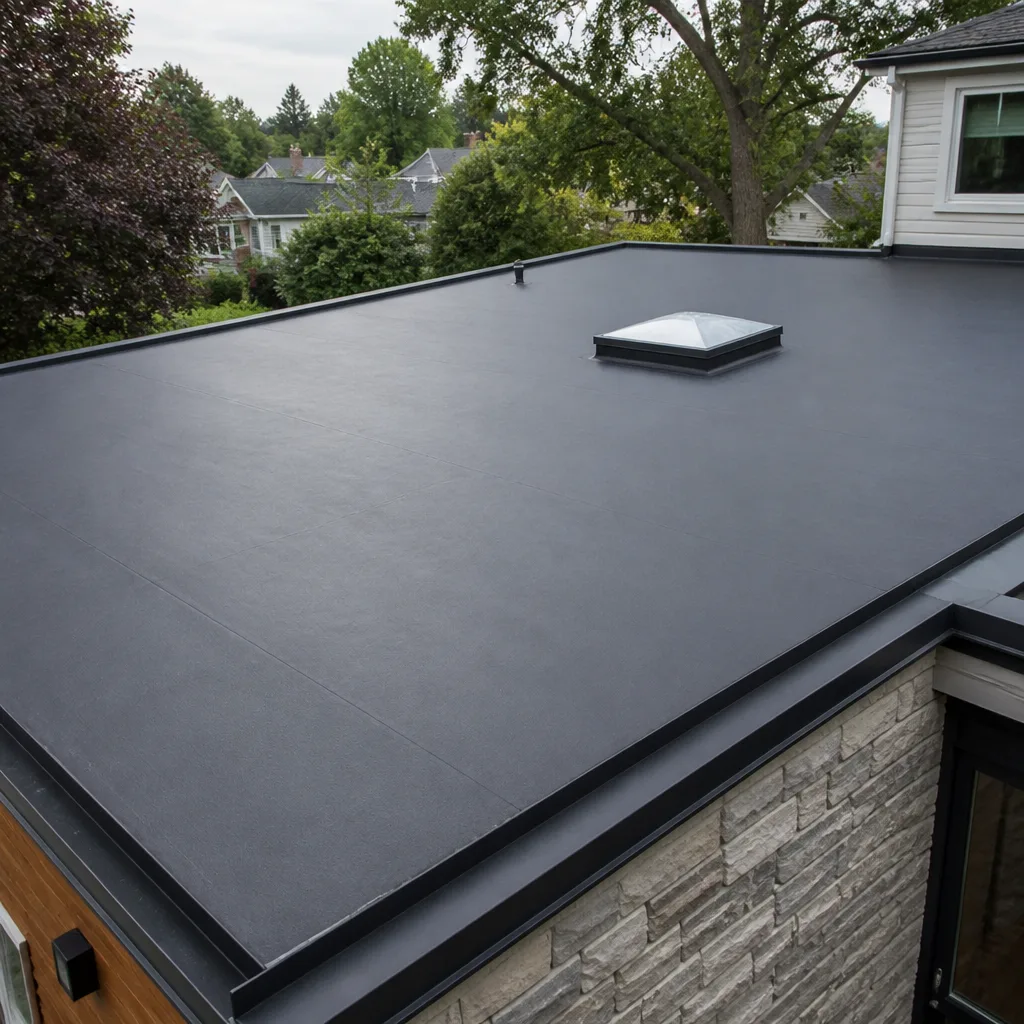 Flat & low-slope
Free roof inspection with deck photos before we talk money - GAF and Owens Corning certified installation
Gutters & Accessories Maintenance Schedule: What to Do and When
Sunrise Manor averages about 4 inches of rain a year. That number is why most homeowners here never think about their gutters until a single monsoon surge rips a downspout off the fascia and sends it clattering into the gravel. The truth about gutters in the Mojave is that rain is not the main enemy. It’s the months of baking sun and blowing caliche dust in between the storms that warp hangers, crack sealant, and pack downspout elbows full of grit. This guide lays out a maintenance schedule built for Southern Nevada’s two-season weather reality, not the spring-and-fall checklist written for Oregon. You’ll learn when to look up, what to check, and which accessories need their own inspection intervals.
Quick Answer
In Sunrise Manor, the single most important gutter inspection window is late May, right before monsoon season, followed by a secondary check in late October. Between those two dates, your main job is keeping debris and caliche dust out of the system. Every three to four years, budget for resealing gutter joints and checking hanger tightness, because UV and thermal cycling wear them down even when the troughs look clean.
Styles & brands we work with
- Architectural shingles
- Metal roofing
- Tile roofing
- GAF
- Owens Corning
- Flat & low-slope
Table of Contents
- Why Mojave Gutters Fail Differently Than Anywhere Else
- The Late-May Pre-Monsoon Inspection: The Window That Matters Most
- UV Degradation and Thermal Cycling: The Invisible Damage
- Caliche Dust and Blown Aggregate in Your Downspouts
- Accessories: Splash Blocks, Gutter Guards, and Hangers
- A Month-by-Month Schedule for Southern Nevada
- How Much Does Gutter Maintenance Cost in Sunrise Manor?
Why Mojave Gutters Fail Differently Than Anywhere Else
Gutter systems on most American homes are designed around a simple assumption: water falls often enough to flush debris through the system before it becomes a problem. In Sunrise Manor, that assumption doesn’t hold. Six to nine months can pass between meaningful rains, and during those dry months, everything the wind carries settles into the trough and stays there.
What settles is not the wet leaf mat you’d see in Portland. It’s a fine, alkaline dust – caliche soil broken down and blown across the valley – mixed with aggregate particles off the shingle surface and the desert scrub that grows around older Sunrise Manor lots. This mix behaves like fine sand. It doesn’t decompose. It accumulates, compacts, and turns into a hard crust that most homeowners never see until water backs up under the fascia.
Add the heat. Roof surfaces around the valley regularly hit 150°F or more on an August afternoon, then drop 60 degrees overnight. That thermal swing is repeated thousands of times across a gutter’s life, and it works on every joint, every hanger, every seam. The seals most installers use on aluminum gutters are not formulated for that cycle long-term. Even brands that hold up well elsewhere – we install gutter systems matched to CertainTeed and Owens Corning roof packages – will show sealant fatigue here on a shorter clock than in cooler climates.
In our experience on Sunrise Manor roofs, a gutter system that would last 20 years in the Midwest often needs its first reseal around year six or seven here. That’s not a knock against any installer. It’s the climate, and any schedule that doesn’t account for it will fail a homeowner eventually.
The Late-May Pre-Monsoon Inspection: The Window That Matters Most
Monsoon season in Southern Nevada runs roughly from late June through September. The most important gutter maintenance task on your calendar is the inspection you do between May 20 and May 31, because it’s your last chance to catch a problem before the first hard rain hits. A gutter system that fails during a monsoon surge doesn’t fail gracefully. A loaded trough with a partially clogged downspout can carry 60 or more pounds of water at the first burst and pull hangers straight out of the fascia board.
Here’s what the late-May inspection should include, in order:
- Walk the full perimeter of the roofline from the ground with binoculars first, looking for visible sags, separation at joints, or downspouts hanging away from the wall.
- Check every downspout outlet by pouring a few gallons of water down the top from a ladder. If water doesn’t exit the bottom in a steady flow within 10 to 15 seconds, the elbow or run is partially blocked.
- Inspect the fascia behind the gutter for water staining. Any staining means water has been getting behind the trough, which signals loose fasteners or failed sealant.
- Confirm splash blocks are still in position at every downspout. Caliche dust blown across a driveway can bury or shift a splash block over a dry season, and a missing block is a foundation problem waiting to happen.
- Look at hanger spacing. Grab a straight section of gutter and give it a firm downward pull with your hand. If it flexes and pulls away from the fascia more than a quarter inch, hangers need attention.
If you’re having the roof inspected anyway before monsoon season – and you should be, for any roof over 10 years old – the gutter inspection is easy to fold in. Our roof repair in Sunrise Manor team includes a gutter check with every roof inspection at no additional charge, because the two systems fail together.
UV Degradation and Thermal Cycling: The Invisible Damage
You can have a completely clean gutter system in Sunrise Manor and still have one that’s about to fail. This is the point most maintenance checklists miss entirely. The failure mode you can’t see is the sealant at each joint and the hanger brackets working their way loose simply from thousands of expansion and contraction cycles.
What to look for that isn’t debris:
- Sealant cracking at joints. Look along the inside seam of every gutter run. A line of fine cracks or a gap between the sealant and the aluminum means water is already getting behind the seal. Reseal in cooler weather – spring or late October – never in the heat of the day, because sealant applied over 90°F cures unevenly here.
- Fastener pull-out. Every hanger is driven into fascia board. Over years, the screw holes in the wood enlarge from thermal movement. A hanger that once held tight can be walking out a quarter inch a year. Check every third hanger with a screwdriver to confirm it’s still biting.
- Downspout screw separation. The screws that hold downspout elbows to the straight run loosen as the aluminum expands and contracts. A loose elbow is the first part to fly off in a monsoon.
- Paint or finish checking on the outside trough face. Once the finish breaks, the aluminum starts oxidizing, and oxidized aluminum is a lubricant that invites rust once the surface fails.
UV degradation on vinyl and plastic gutter components is real in Sunrise Manor. A plastic downspout elbow that looks fine after two years may be brittle enough to crack with a firm grip by year five. In our experience, any plastic component on a Sunrise Manor roof should be considered a replacement item on a five-to-seven-year clock. Aluminum and steel systems with proper finish last much longer.
Caliche Dust and Blown Aggregate in Your Downspouts
Ask any homeowner in Sunrise Manor what clogs a downspout and they’ll say leaves. Ask a roofer and you’ll hear a different answer: caliche dust and shingle aggregate. The two combine into a mortar-like mix that packs into elbows like concrete, and by the time water can no longer get through, the damage is often already done.
Here’s how the process goes:
- Dry season (October through May). Wind blows caliche dust and fine aggregate off the roof surface into the trough. In troughs with even a slight low spot, this settles into a thin layer.
- First rain of the season. The dust washes down and begins to accumulate at the first elbow – typically at the top of the downspout where the trough transitions.
- Grit compacts. As water pushes against the accumulating grit, the material compacts into a hard plug. Once formed, a garden hose at house pressure won’t budge it.
- Rain event. Water backs up into the trough, finds the joint with the weakest sealant, and starts working behind the fascia board.
The fix is straightforward but must be done on a schedule: check every downspout for grit in the elbow during the late-May inspection and again in late October. This is one area where a professional inspection genuinely earns its cost, because a clogged elbow at the top of a two-story wall is not safely reachable from a step ladder. Our specialty roofing in Sunrise Manor team regularly clears interior downspouts that haven’t been touched in years.
Accessories: Splash Blocks, Gutter Guards, and Hangers
Gutter accessories are often the first things to fail and the last things to get inspected. Each one has its own maintenance interval, and treating them all as part of “gutter maintenance” is how homeowners end up with a foundation problem they didn’t detect.
Splash Blocks and Downspout Extensions
Inspect splash blocks every three months. In Sunrise Manor, wind blows caliche dust and yard debris across driveways and walkways, and a block that was perfectly positioned in May can be off its mark by September. Splash blocks should sit at least a foot from the foundation, angled away. Any block that’s cracked, shifted, or buried needs to be reset or replaced. Downspout extensions – the flexible metal or plastic tubes that carry water further from the house – should be checked for splits at the same interval, because the sun makes short work of the plastic versions.
Gutter Guards
Gutter guards are worth considering in Sunrise Manor specifically because caliche dust is fine enough to pass through most screens while leaf debris doesn’t. That means a guard cuts the debris load without eliminating the dust load. Inspect guards twice a year – late May and late October – and clean any buildup that has settled on top of the screen. If your guard system is more than seven years old, look for seam separation where the screen meets the frame. Micro-mesh screens are the only type that holds up to caliche in our experience; standard perforated guards clog from below within a few seasons.
Hangers and Brackets
Hangers carry the entire weight of a water-loaded trough. In this climate, the fascia board they’re driven into dries and shows checking over years of heat. Inspect hanger tightness three times a year in Sunrise Manor, and check hanger spacing against manufacturer spec – typically one hanger for every 24 inches, closer on the sharp inside corners where water concentrates. If more than one hanger is pulling loose within a 10-foot run, the fascia behind the run should be inspected by a professional.
A Month-by-Month Schedule for Southern Nevada
This schedule is calibrated to Southern Nevada’s actual two-season weather pattern – a long dry season that stresses materials and a short, violent wet season that tests them. It’s not a generic spring/fall list.
January and February (dry season, mild) – Freeze risk is low but real. Check for any gutter sections that held standing water through the winter and ice-expanded at the joints. Clear any leaf debris from the two or three rare winter storms.
March and April (warming season) – This is the right window for resealing. Temperatures are warm enough for sealant to cure properly but not so hot the sealant skins before it grabs. Have any loose hangers retightened or replaced during this window.
Late May (pre-monsoon inspection) – The most critical inspection of the year. Full inspection of the system, flush test on every downspout, splash block check. Any repair identified here must be completed before June 20. Call us at (844) 941-3509 if you’d like the pre-monsoon inspection added to a roof service.
June through September (monsoon season) – After the first significant storm, walk the perimeter of your home and look for downspouts that have pulled away or splash blocks that have shifted. Any staining on the wall below a downspout means the system failed somewhere upstream. Document with photos.
October (post-monsoon inspection) – The second-most critical window. Check for any damage done during the monsoons and clear downspout elbows of grit the storms carried down. Replace any splash blocks that shifted.
November and December (cool-down) – Final reseal window if needed. If you’re considering gutter guards before the next summer, this is the right time to install – not June. Any full-system replacement should happen here, before the next monsoon season starts. Our roof replacement & installation in Sunrise Manor page covers how we typically tie gutter replacement into a new roof installation.
How Much Does Gutter Maintenance Cost in Sunrise Manor?
Gutter maintenance and repair pricing in Sunrise Manor varies by scope, but the ranges below reflect what we see in the local market. Line-item quotes are the only reliable way to compare numbers.
- Gutter cleaning (single-story home, 150 linear feet): $150-$250
- Gutter cleaning (two-story, 150 linear feet): $225-$350
- Downspout clearing (per run, includes elbow): $60-$120
- Reseal all joints on a full run: $200-$400
- Hanger replacement (per hanger, includes labor): $15-$30
- Full hanger respacing (per 10-foot section): $75-$140
- Splash block replacement (per block, includes materials): $15-$35
- Gutter guard installation (per linear foot, materials and labor): $8-$16
- Downspout replacement (per run): $110-$220
- Full gutter replacement (per linear foot, aluminum): $7-$14
The exact number depends on roof pitch, access, story height, and how much damage accumulated between inspections. In our experience, a Sunrise Manor homeowner who commits to the pre-monsoon inspection every year keeps their total gutter spend under $300 annually – well under what a single post-monsoon emergency repair typically costs.
Our written quote is a square deal – the number on the estimate is the number on the invoice. Any work we complete is backed by the 90-Day Done Right Promise: if it isn’t right, we come back and make it right, no argument. Estimates are free. If you’ve had another contractor out for a written estimate and you’d like ours alongside, we’ll provide a free second opinion on it. Call (844) 941-3509 to schedule.
Common Mistakes to Avoid
- Assuming “no rain means no maintenance.” Most Sunrise Manor homeowners skip gutter checks entirely because rain is rare. But caliche dust, UV, and thermal cycling do their work in the dry months. By the time rain arrives, the damage is already set.
- Skipping the pre-monsoon inspection. The last two weeks of May are the only window to fix a problem before monsoon season hits. An inspection moved to mid-June is an inspection that turns into an emergency call the first week of July.
- Resealing in the heat of summer. Sealant applied to metal over 90°F skins before it can bond into the seam. In Sunrise Manor, that means resealing in spring or late October, not June.
- Ignoring downspout elbows. The elbow at the top of a downspout is where caliche dust compacts. It’s the first part of the system to clog and the hardest part for a homeowner to reach safely.
- Installing gutter guards and forgetting about them. Guards are a maintenance reduction, not a maintenance elimination. They still need to be checked twice a year for buildup on top and separation at the frame.
- Using a pressure washer on aluminum gutters. The finish that protects the metal from UV here will strip off under a pressure washer. Grit stuck in troughs should be lifted by hand or flushed with a garden hose, never blasted.
- Letting a splash block disappear. A missing splash block means water runs onto the foundation instead of away from it. On the caliche-heavy soils around Sunrise Manor, that water can pool aggressively – and the foundation damage shows up years after the cause.
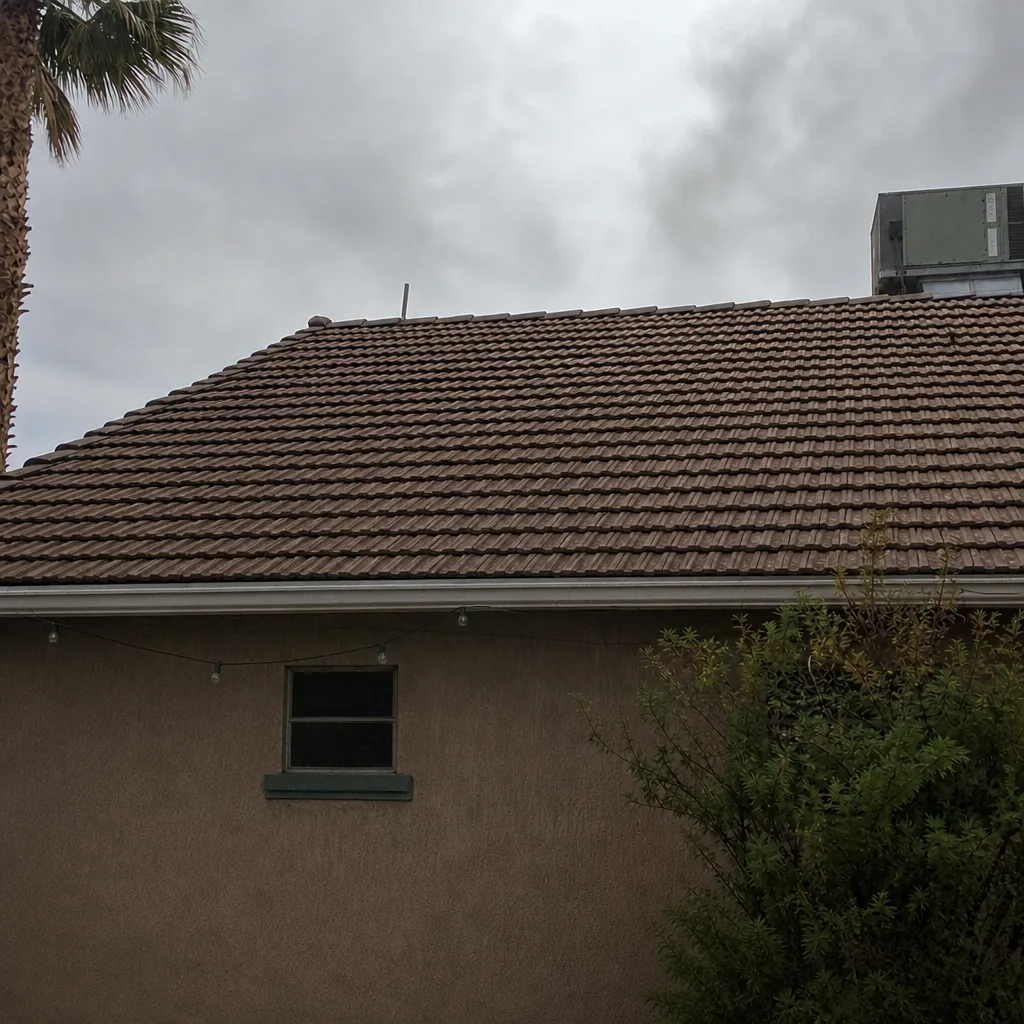
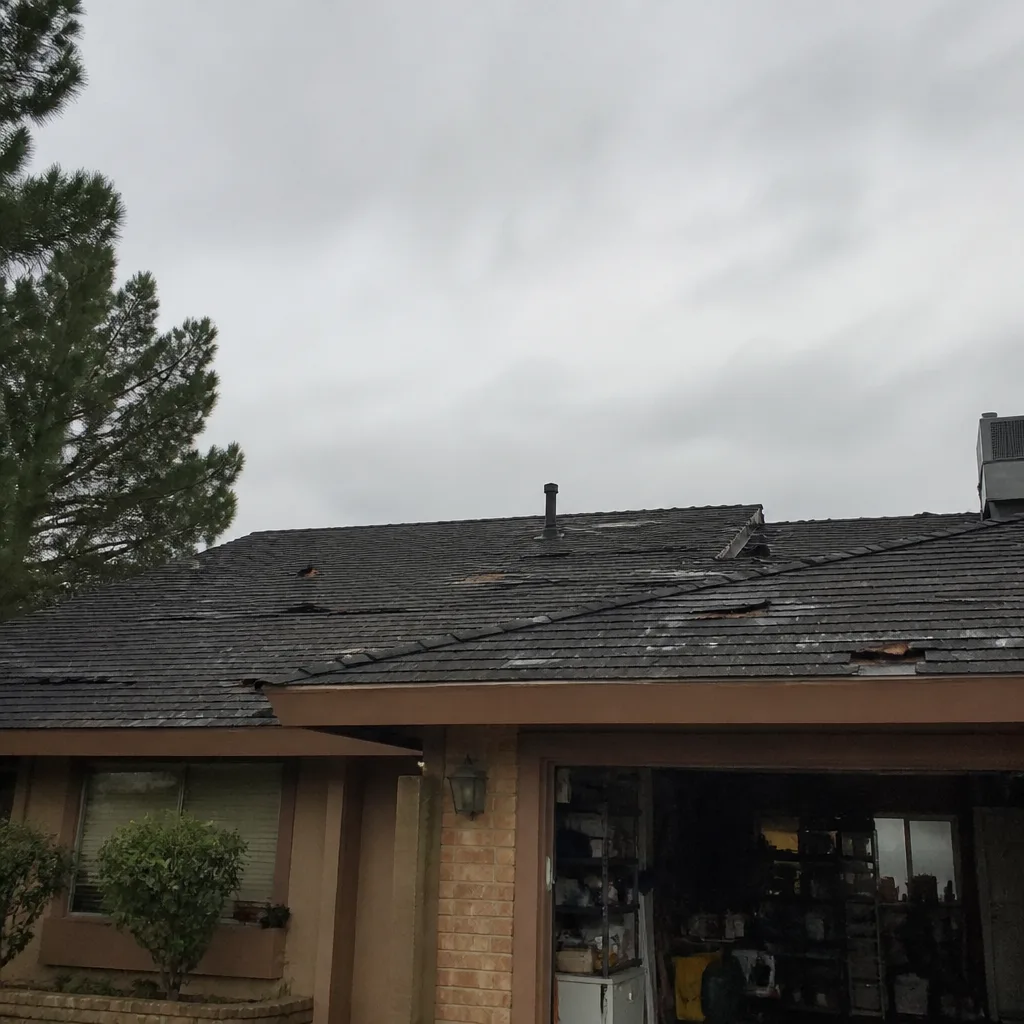
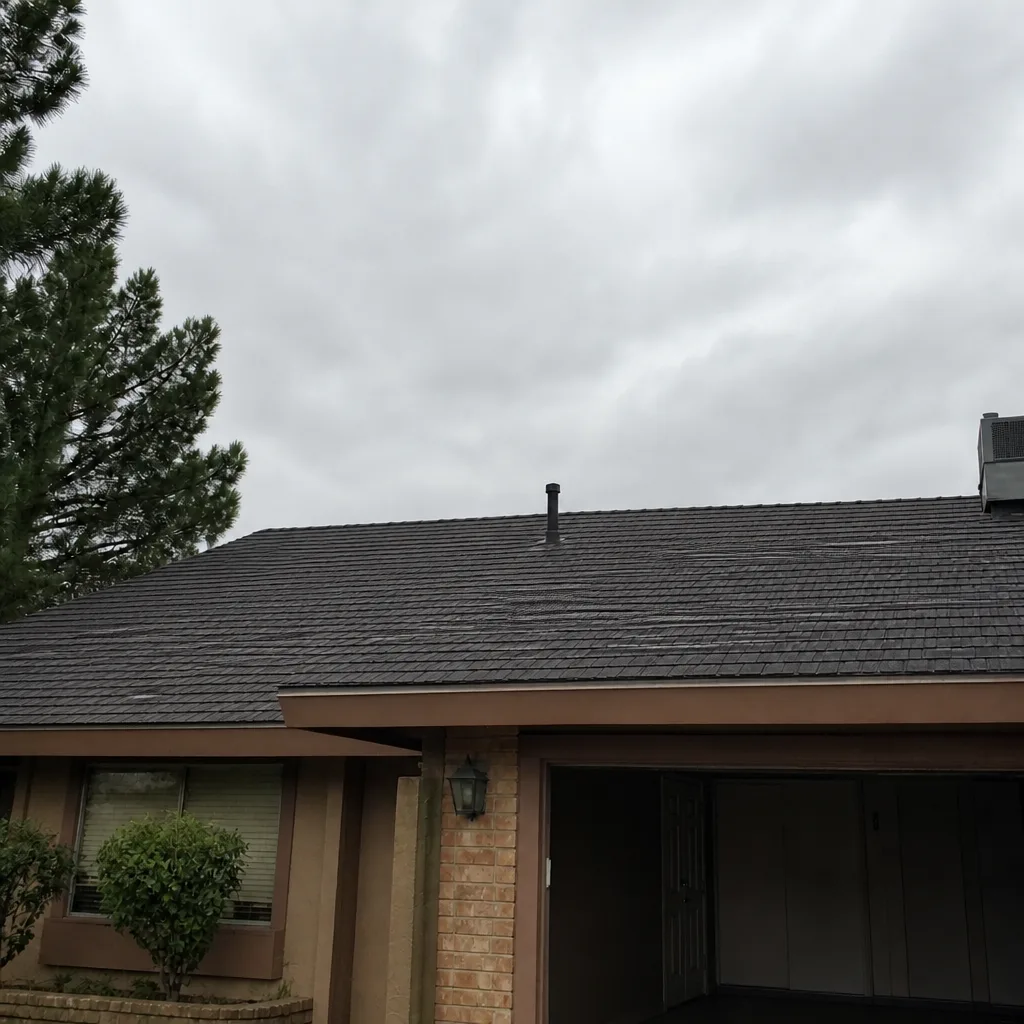
See the difference
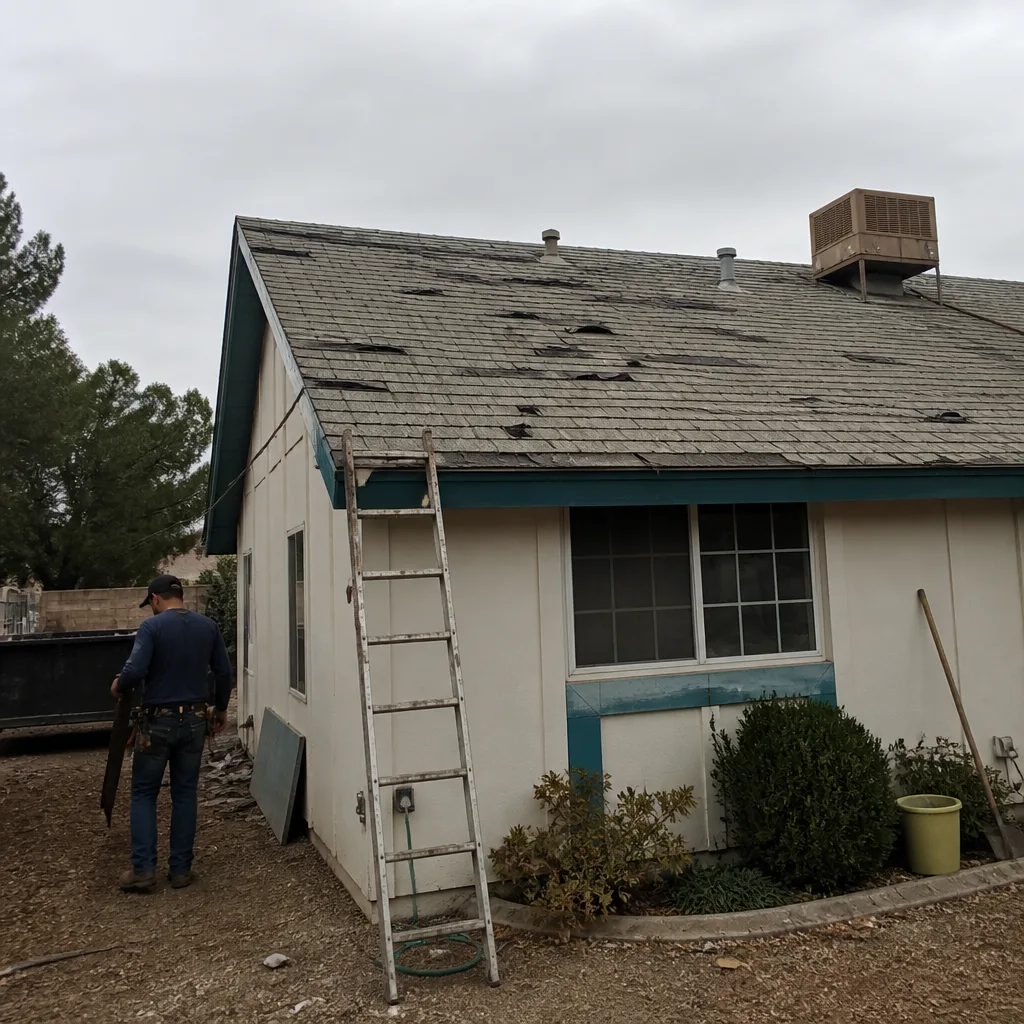 Before
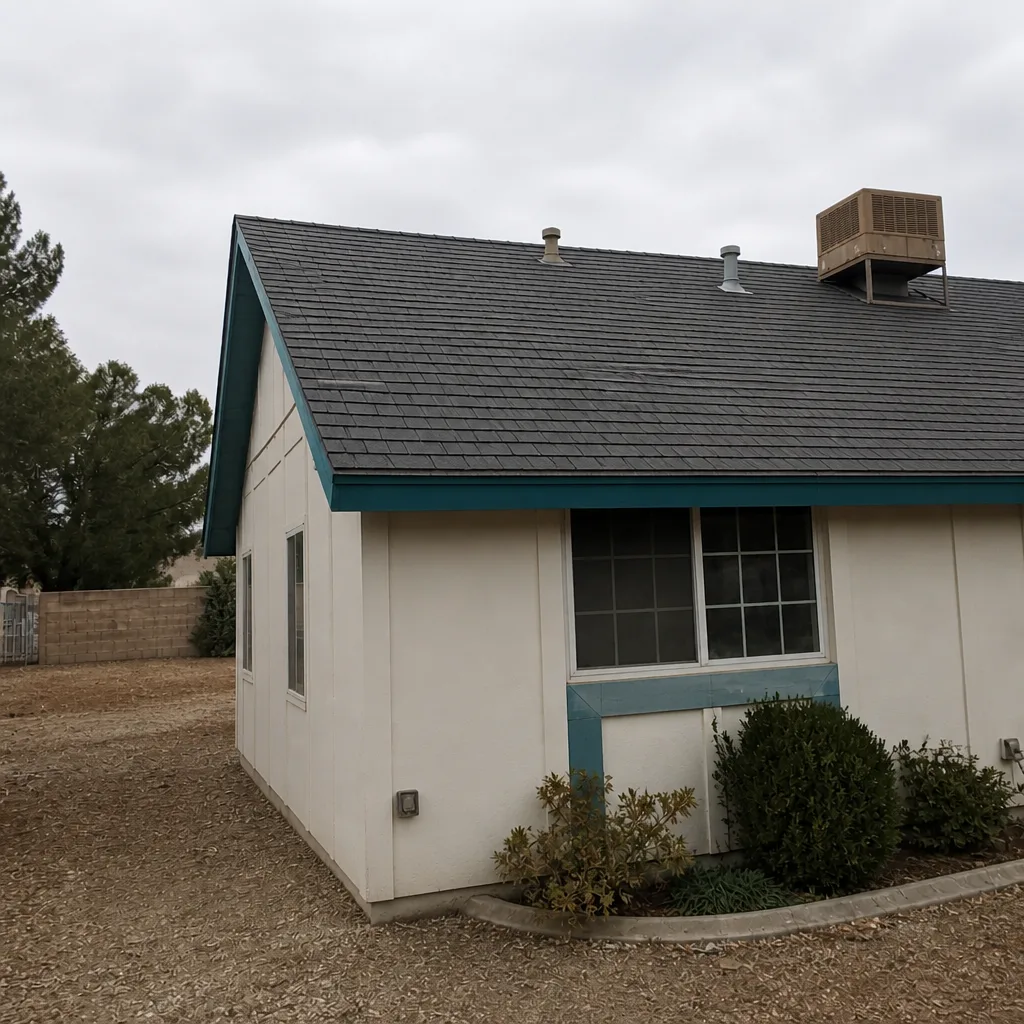 After
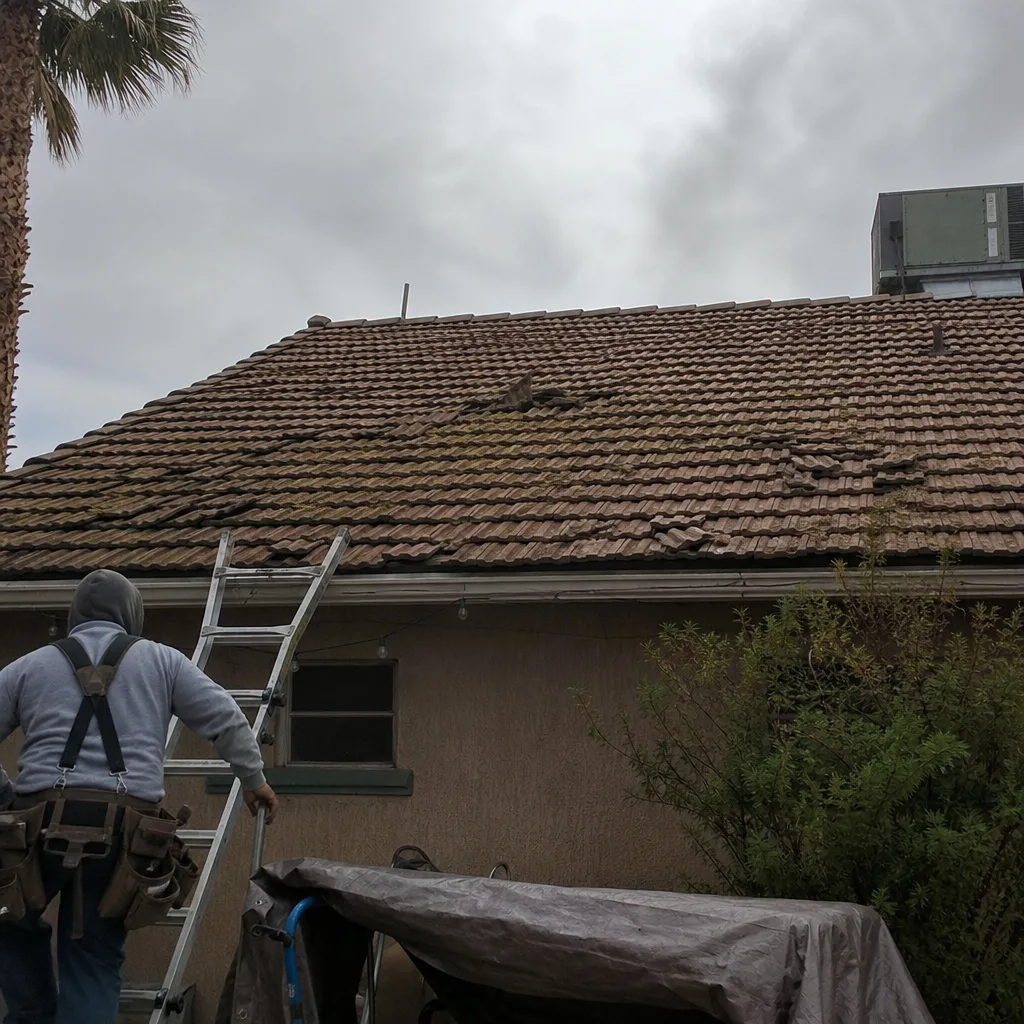 Before
 After
 Before
 After
When to Call a Professional
Some gutter work is reasonable for a careful homeowner to tackle. But certain situations call for a trained eye on the roof, both for safety and for the quality of the diagnosis. Call us if you see any of these:
A gutter section has pulled away from the fascia by more than a half inch. Water is staining the wall or fascia below the trough. A downspout carries water slowly or not at all after a flush test. You’ve got a two-story home or steep pitch that makes ladder work unsafe. The gutter system is 10 years or older and has never been professionally inspected. Or the latest monsoon season left visible damage you’re not sure how to assess.
Ridgeline Roofing Co. Sunrise Manor offers free estimates in Sunrise Manor – call (844) 941-3509 and we’ll schedule a photo-documented inspection. Every inspection includes photos taken from your actual roof, so you see what we see. Background-checked, uniformed technicians. A live person answers every call, including nights and weekends. We’ve been in this community since 1984 and we plan to be here in thirty more.
If you haven’t yet, start with Ridgeline Roofing Co. Sunrise Manor home for a full view of what we do – gutter work is one part of a full roof maintenance plan.
Frequently Asked Questions
Twice a year minimum – once in late May before monsoon season and once in late October after it. If your home has cottonwood trees nearby, add a third cleanout in late summer. But the more important answer is that “cleaning” and “inspecting” are different jobs, and the inspection interval should be at least twice a year in this climate.
Yes. Sunrise Manor gets about 4 inches of rain a year, and that’s exactly why maintenance matters. A gutter system that sits neglected for months and takes a hard monsoon hit is far more likely to fail catastrophically than one that’s been routinely checked. The dust and thermal damage accumulate whether it rains or not.
March or April, or late October. You want ambient temperatures between 65°F and 85°F so the sealant cures evenly. June through September is the wrong time – the metal is too hot, and the sealant will skin before it bonds.
They can be, with the right product. Standard perforated guards clog from below when caliche dust cakes through the holes. Micro-mesh screens are the only type that handles the fine dust in Sunrise Manor without clogging within a couple of seasons. Expect to pay $8-$16 per linear foot installed, and inspect them twice a year regardless.
With a proper maintenance schedule, expect 20 to 25 years from well-installed aluminum gutters here. Without maintenance – no resealing, no inspection – that drops to 12 to 15 years because of the joint failures and hanger pull-out that go unnoticed through the dry season.
A full perimeter walk of the roofline, a flush test at every downspout, a fascia staining check, splash block verification, hanger tightness spot check, and a written report with photos. Call (844) 941-3509 for a free estimate – we’ll schedule it before June 15 in most seasons.
The Bottom Line
Gutters in Sunrise Manor don’t fail because of rain. They fail because of everything that happens between rains – the dust, the UV, and the heat cycles that quietly wear out the hangers and seam seals most homeowners never think to look at. The two dates that matter most on your calendar are late May and late October. Everything in between is about keeping the troughs and elbows clear and watching for the accessories to drift out of position. A little attention twice a year prevents almost every major gutter repair we see on Sunrise Manor roofs. If it’s been a few seasons since your system was last looked at, we’re glad to come out and take a look.
Written by the team at Ridgeline Roofing Co. Sunrise Manor.