
Last updated November 18, 2026
 Architectural shingles
 Metal roofing
 Tile roofing
 GAF
 Owens Corning
 Flat & low-slope
Free roof inspection with deck photos before we talk money - GAF and Owens Corning certified installation
How Long Does Emergency & Storm Damage Take? Timelines and What to Expect
Here’s the part nobody tells you after a storm: the roofing crew might be on your house for two days, but the whole event – from the first call to the final inspection – usually runs closer to three or four weeks. Not because the work is slow, but because two clocks start ticking at the same moment. One is your contractor’s schedule. The other is your insurance adjuster’s. Homeowners in Sunrise Manor who understand both clocks, and who work them in parallel instead of one after another, tend to get back under a sound roof weeks ahead of their neighbors who wait for each step to finish before starting the next. This guide lays out the honest timeline, phase by phase, and shows you where the waiting happens and how to shrink it.
Quick Answer
Storm damage roof repair in Sunrise Manor typically takes 2 to 5 days of actual labor on the roof, but the full process – emergency tarping, adjuster inspection, estimate approval, material delivery, and scheduling – runs about 2 to 4 weeks end to end for a straightforward claim. Complex claims, or repairs during a heavy storm season across the Las Vegas valley, can stretch to 6 weeks. The single biggest variable is not the roofing: it’s how quickly the insurance side moves, and how much of that work you do in parallel.
Styles & brands we work with
- Architectural shingles
- Metal roofing
- Tile roofing
- GAF
- Owens Corning
- Flat & low-slope
Table of Contents
- The Two Clocks: Your Contractor and Your Adjuster
- The Phase-by-Phase Timeline, Week by Week
- Emergency Stabilization: Why a Tarp Is a Phase, Not a Fix
- When a Big Storm Hits the Whole Valley
- What You Can Do in Parallel to Save Weeks
- How Long a Tarp Actually Lasts in Sunrise Manor Heat
- How Photo Documentation Shortens the Adjuster Cycle
- Common Mistakes to Avoid
- When to Call a Professional
- Frequently Asked Questions
The Two Clocks: Your Contractor and Your Adjuster
Most homeowners think of storm repair as one job with one schedule. It’s actually two separate processes running side by side, and they only sync up at a few points.
The contractor’s clock is short and mostly predictable: inspect, stabilize, quote, order materials, install. The adjuster’s clock is longer and less predictable: open the claim, schedule the visit, document the damage, approve or negotiate the scope, release funds. If you treat these as sequential – wait for the roof to be fixed, then deal with insurance – you’ll add weeks you didn’t need to. If you run them at the same time, you compress the whole thing.
In our experience across Sunrise Manor, the homeowners who move fastest do three things at once: they get the roof stabilized and photographed immediately, they file the claim the same day, and they hand the adjuster a photo-documented inspection before the adjuster ever sets foot on the property. That last step alone can cut a week out of the approval cycle. When the adjuster arrives already knowing what’s damaged and where, the visit becomes verification instead of discovery.
The core truth for a homeowner who plans to stay in this house for another twenty years: the goal isn’t the fastest repair, it’s the correct one done once. A rushed scope of work that misses hidden damage costs you a second claim, a second adjuster visit, and another three weeks. A complete scope costs you a few extra days up front and nothing afterward. For a closer look at how a proper repair gets scoped and executed, see our page on Roof Repair in Sunrise Manor.
The Phase-by-Phase Timeline, Week by Week
This is the realistic sequence for a typical storm damage claim in Sunrise Manor, from the day the storm passes to the day the job closes out. Your numbers will vary, but the order rarely does.
- Day 0 to Day 2 – Damage and first call. You notice missing shingles, granules in the gutter, or a ceiling stain. You call for an inspection. If water is actively entering, emergency stabilization happens in this window.
- Day 1 to Day 3 – Claim filed. You open the claim with your insurer, ideally the same day you notice the damage. Filing early starts the adjuster’s clock while the contractor is still assessing.
- Day 3 to Day 10 – Adjuster visit. Scheduling depends on claim volume. In a quiet period it’s often within a week. After a valley-wide storm, it can be two weeks out.
- Day 7 to Day 14 – Estimate approval. Once the adjuster documents the damage and your contractor’s written scope matches it, approval usually comes within a few business days. Mismatches are where the delays live.
- Day 10 to Day 21 – Material lead time. Standard shingles from GAF or CertainTeed lines are typically days away, not weeks, if ordered early. Specialty profiles or out-of-stock colors can add a week or more.
- Day 14 to Day 25 – Repair scheduled and completed. Most residential repairs are done in one to three days once materials are on site.
- Day 25 to Day 30 – Final inspection and closeout. A walk-through, a final photo set, and the paperwork that lets your claim close cleanly.
Add it up and you land at roughly three to four weeks, most of which is waiting, not working. That’s the honest answer. Anyone who tells you a full storm repair and a clean insurance closeout happens in a weekend is either not counting the insurance side or hoping you won’t notice.
Emergency Stabilization: Why a Tarp Is a Phase, Not a Fix
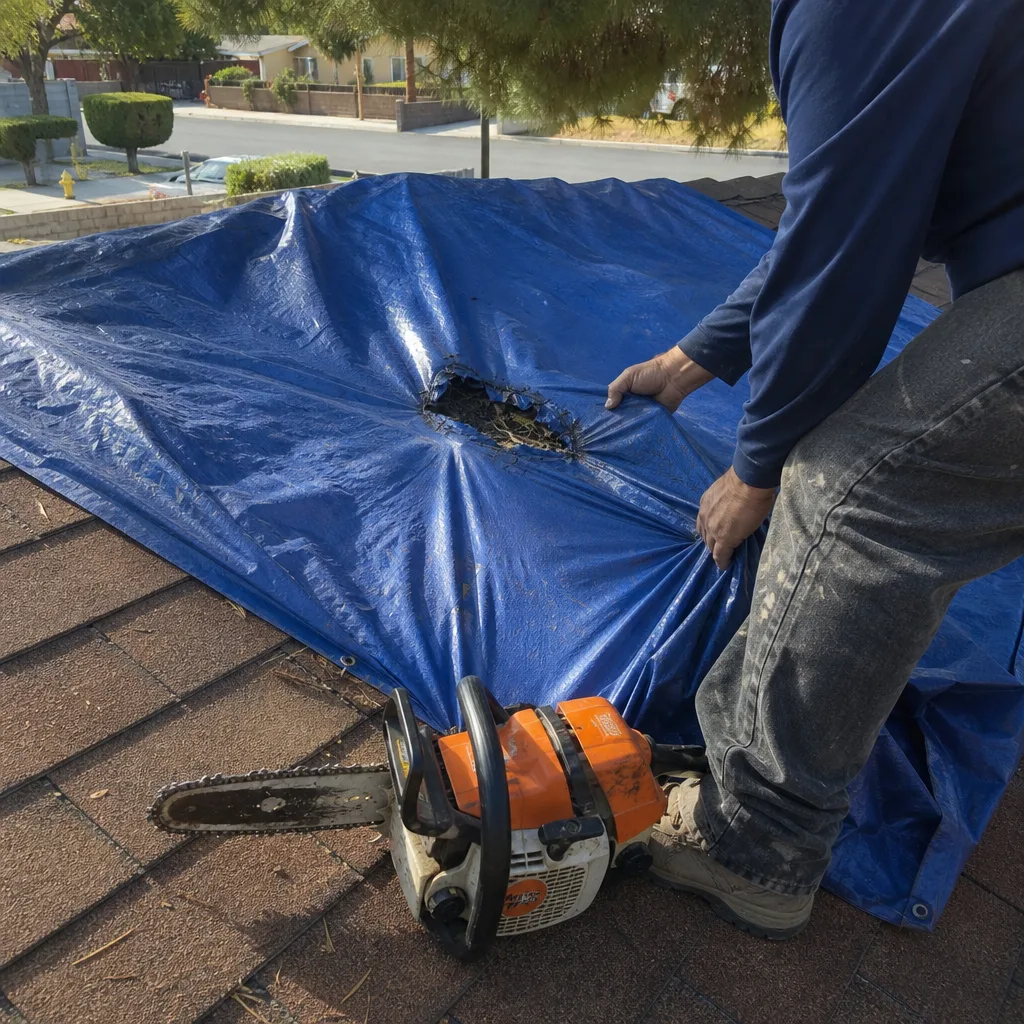
Emergency tarping exists to stop active water intrusion and protect the interior until permanent repairs can happen. It is a temporary measure, and it should be treated as one. A tarp reduces further damage and buys you the time to do the real repair correctly – it does not restore the roof.
Here’s what a sound stabilization phase includes:
- Securing any loose or displaced roofing material so it can’t become a projectile in the next wind event.
- Covering the damaged area with a properly weighted, secured tarp that sheds water rather than pooling it.
- Photographing the damage before, during, and after tarping for the insurance file.
- Checking the attic and interior for water entry so the claim captures everything, not just what’s visible from the ground.
- Scheduling the permanent repair while the tarp is still fresh, not after it fails.
Homeowners who treat the tarp as the finish line are the ones who call back two months later with a stained ceiling and a mold question. Sunrise Manor summers are hard on tarps and harder on the homes under them. Get the temporary cover, then get on the calendar for the permanent repair. If you’re weighing repair against replacement, our Roof Replacement & Installation in Sunrise Manor page explains where that line usually falls.
When a Big Storm Hits the Whole Valley
This is the factor that catches people off guard. After a major weather event across the Las Vegas valley, two things get scarce at exactly the same time: contractors and adjusters. Every homeowner with a damaged roof is calling both on the same morning. The result is a backlog that hits both clocks at once.
What that looks like in practice:
- Inspections that normally happen in a day are quoted a week or more out.
- Adjuster visits get scheduled in batches, sometimes two weeks after the claim opens.
- Material suppliers see a run on common shingle colors, and standard stock can go on backorder.
- Repair scheduling backs up as crews work through a queue instead of individual jobs.
The homeowners who come out ahead in this environment do two things. First, they call early – the day of the storm, not the week after. Second, they prefer a local contractor who was already in town and already has crews, over a storm-chasing outfit that arrived with the weather and leaves with it. A company that hires local crews and trains apprentices into journeymen has a reason to still be here next spring. That’s the kind of stability that matters when the whole valley is calling at once, and it’s a large part of why Ridgeline Roofing Co. Sunrise Manor home has been around since 1984.
What You Can Do in Parallel to Save Weeks
The single most effective thing you can do is stop treating the contractor and the insurance process as a relay race. Run them at the same time. These are the tasks that can, and should, happen concurrently:
- Document everything yourself, immediately. Photograph the damage from the ground, inside the attic, and any interior water stains. Date-stamp your photos. This is your backup to the adjuster’s file.
- File the claim the same day you call for an inspection. Don’t wait for the contractor’s written estimate to open the claim. The two processes start together.
- Get a written, photo-documented inspection to the adjuster early. Handing the adjuster a documented scope before the visit turns it into a verification, not an investigation.
- Pre-approve materials while the estimate is pending. Pick your shingle line and color early so the order can be placed the moment approval lands. Waiting to choose until after approval adds days.
- Ask for a supplement if the scope misses something. If hidden damage surfaces once work begins, a supplemental claim request is normal and expected. Raising it early keeps the claim open and avoids a second round.
- Confirm the schedule in writing. Get the install dates and the material delivery date in writing so nothing sits in limbo between steps.
Run these in parallel and you can realistically pull a week to ten days out of the total. That’s the difference between three weeks and five, and for a homeowner who’s already been through one bad storm, those days matter.
How Long a Tarp Actually Lasts in Sunrise Manor Heat
A standard emergency tarp in the Sunrise Manor summer is good for roughly a few weeks to a couple of months before the sun and heat start breaking it down. That’s not a comfortable margin – it’s a deadline. Between the intense UV and the heat cycling the material, a tarp that would last a season in a milder climate can start to degrade and lose its seal much sooner here.
What that means for your timeline: the permanent repair should already be scheduled before the tarp has a chance to fail. If the insurance process is dragging past a few weeks, that’s your signal to push for status and keep the temporary cover inspected. A tarp that’s tearing or pooling water is no longer doing its job, and every day it stays that way is a day the interior is at risk.
This is also why “we’ll tarp it and get to it when we get to it” is not a plan. The tarp buys time; it doesn’t buy unlimited time. On a specialty or complex roof profile, the window can be even tighter, which is worth keeping in mind when you read about Specialty Roofing in Sunrise Manor and the materials involved.
How Photo Documentation Shortens the Adjuster Cycle
The adjuster communication cycle is where most of the hidden delay lives, and it’s the part most homeowners never think to shorten. Every back-and-forth between contractor and adjuster – a question, a missing photo, a scope that doesn’t match – adds days. Photo-documented inspections cut those trips.
When a technician documents the damage with photos taken from your actual roof, and that file goes to the adjuster before the visit, three things happen. The adjuster knows the scope in advance. The estimate that follows matches what the adjuster sees, so there’s less negotiation. And if a supplement is needed, the photos are already in hand instead of requiring a return visit.
The other half of this is reachability. A live person answering every call, around the clock, means a question from your adjuster or your contractor gets resolved the same day instead of sitting in a voicemail. No callback windows, no phone trees, no homeowner left waiting for a ring-back after a storm. That responsiveness is part of the 90-Day Done Right Promise – a written workmanship guarantee behind every job, no arguing, no paperwork runaround. If something isn’t right on the finished roof and it falls within that window, we come back and make it right.
Every inspection is backed by background-checked, uniformed technicians who document what they find with photos – not a scary speech in the driveway. The estimate you get is a no-hassle upfront number, and the number on the estimate is the number on the invoice. That same standard applies whether you’re looking at repair, replacement, or a specialty job.
See the difference
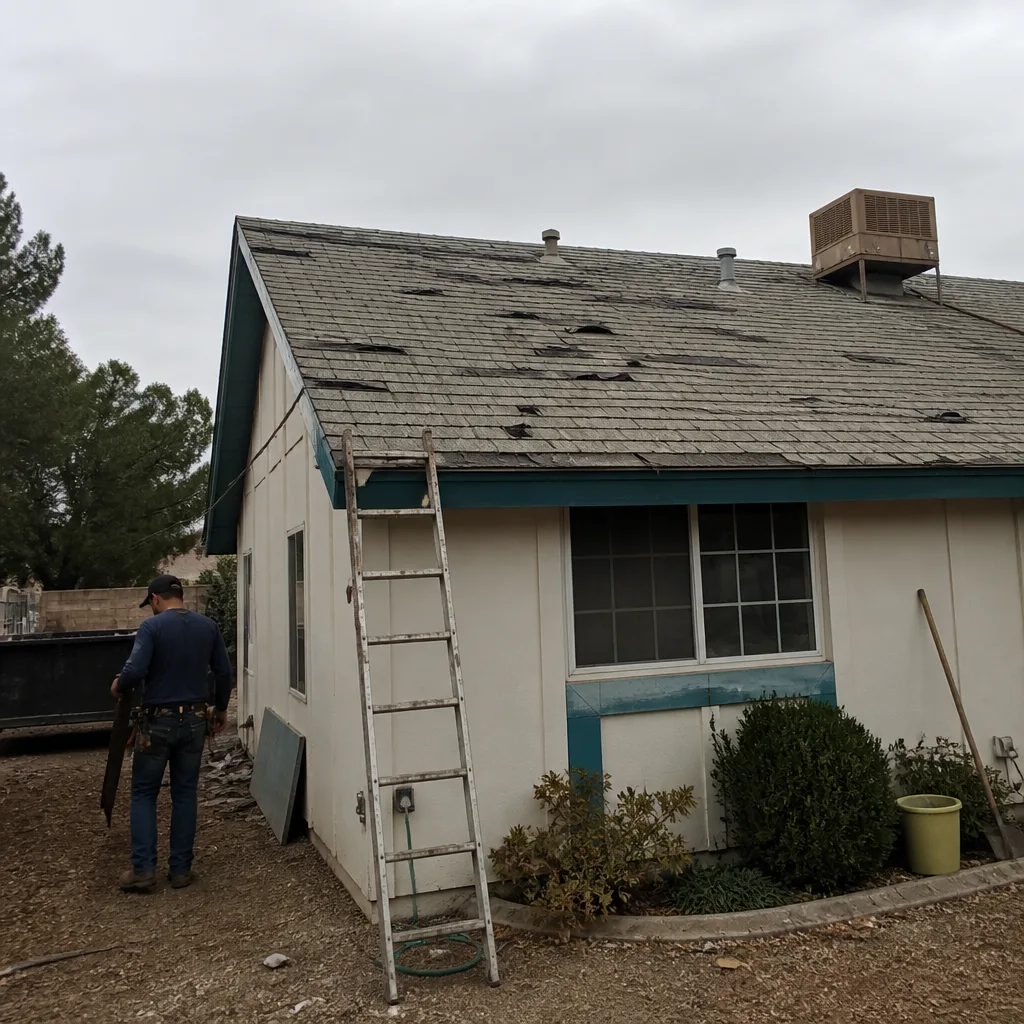 Before
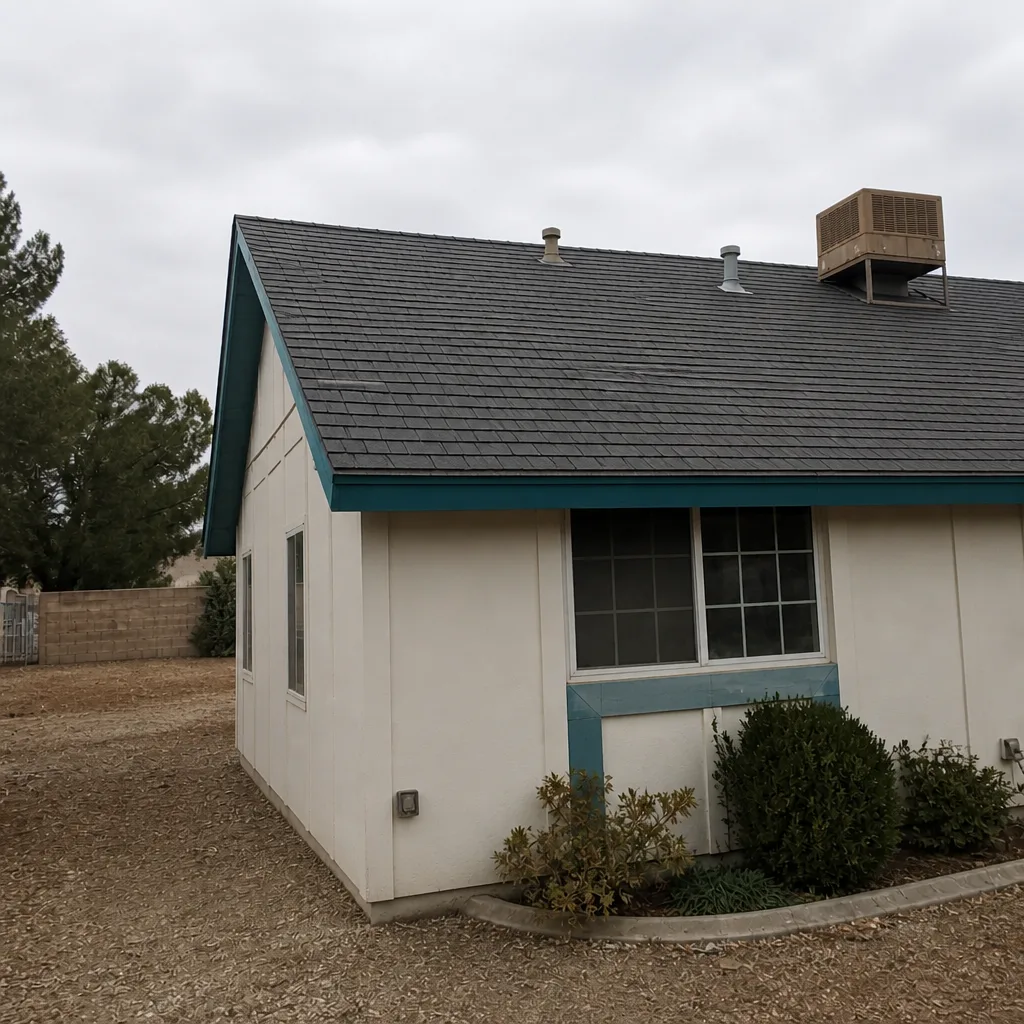 After
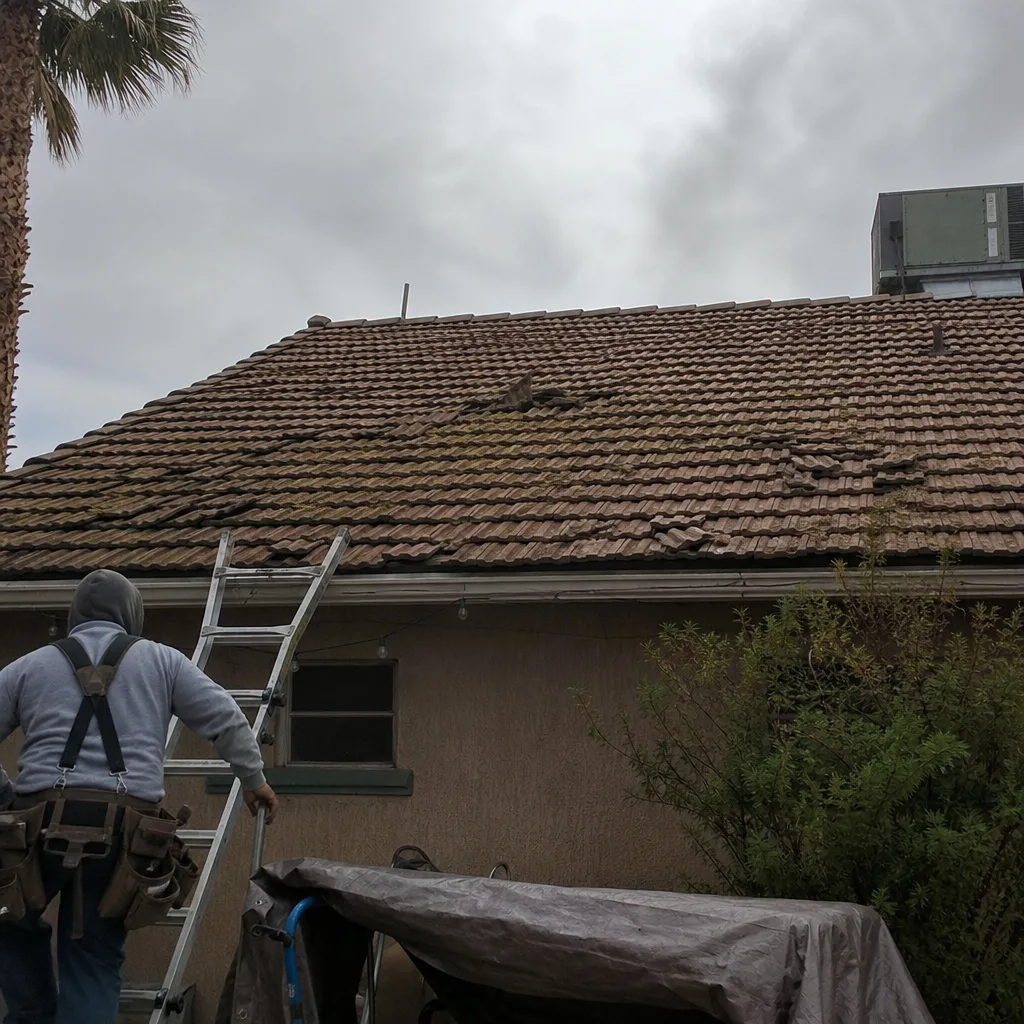 Before
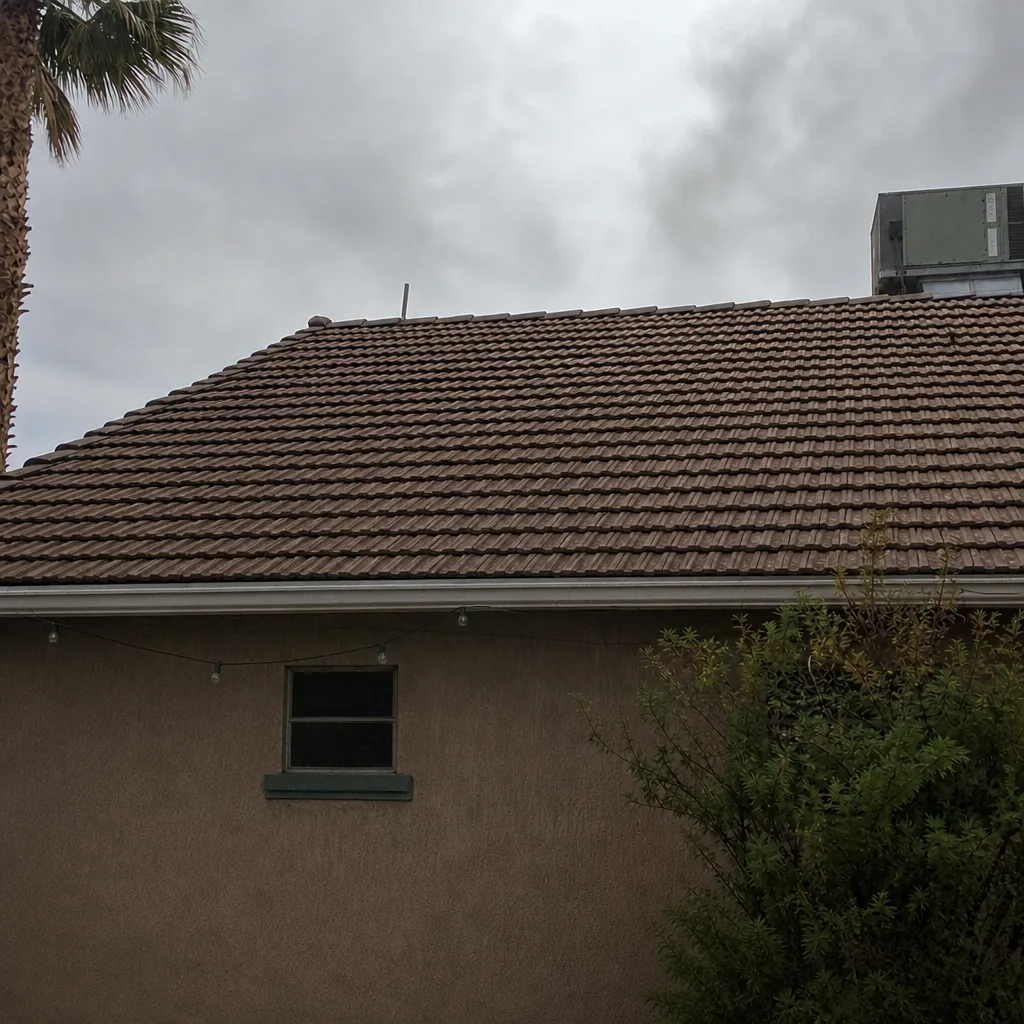 After
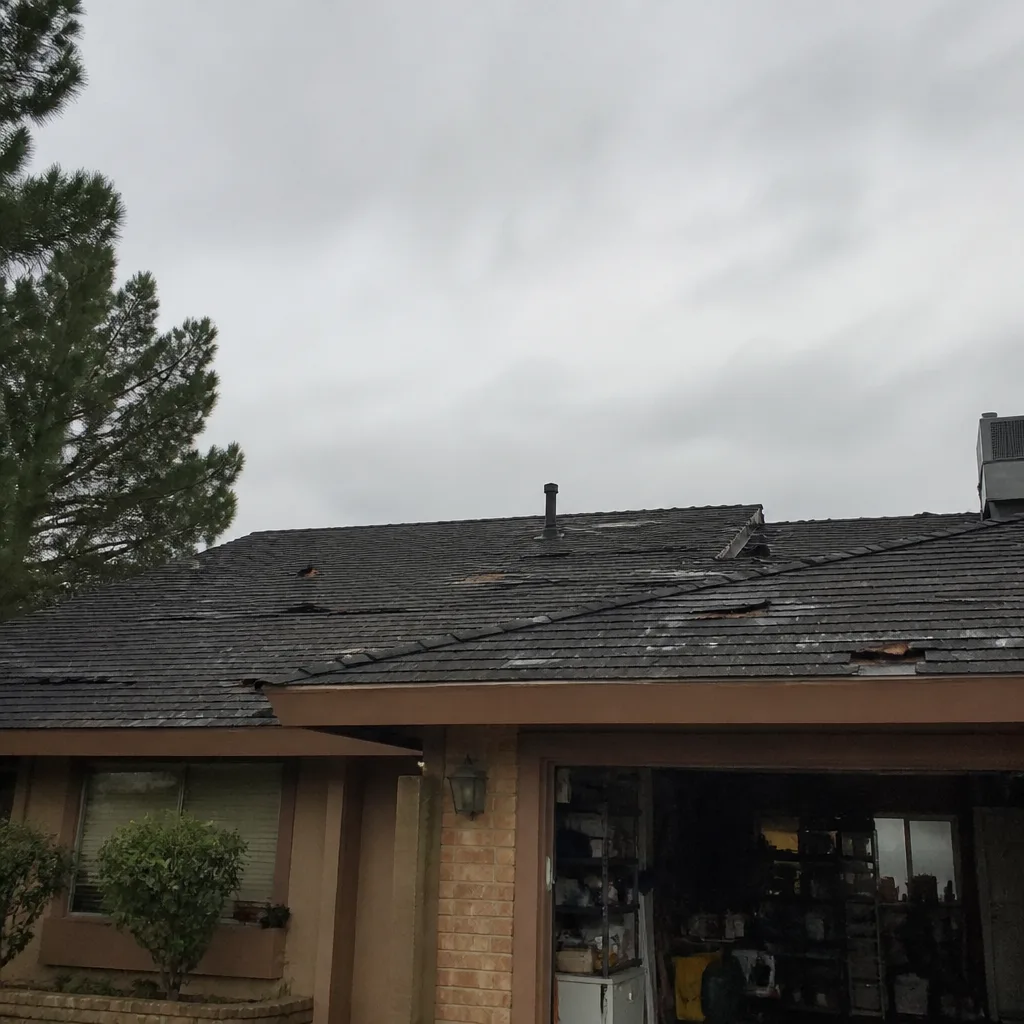 Before
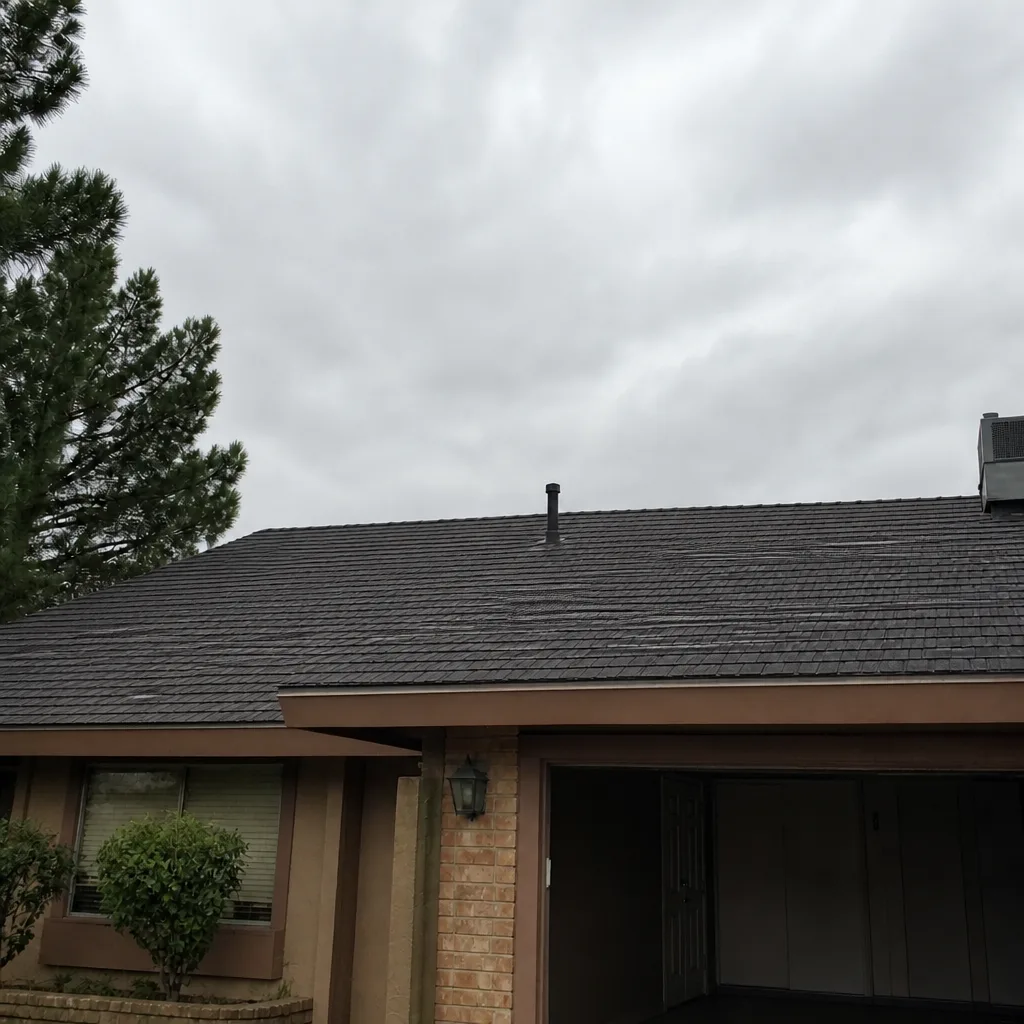 After
Common Mistakes to Avoid
- Waiting to file the claim until the contractor’s estimate is done. You’ve just made the two clocks run in sequence instead of parallel. File the day you call for the inspection, and let both processes start together.
- Treating the tarp as the permanent repair. A tarp is a phase, and in Sunrise Manor heat it degrades in weeks, not seasons. Get on the permanent repair calendar before the temporary cover fails.
- Hiring a storm-chaser who arrived with the weather. A truck that won’t be in town next spring can’t honor a workmanship guarantee. Prefer a contractor with local crews who has a reason to still be here.
- Skipping the interior and attic check. Damage that isn’t photographed and documented won’t make it into the claim. A visible shingle problem often hides water entry you can’t see from the ground.
- Not choosing materials until after approval. Picking your shingle line and color early lets the order go out the moment the estimate is approved, saving days of lead time.
- Ignoring a scope mismatch instead of requesting a supplement. If the adjuster’s scope misses hidden damage, a supplement is normal. Raising it early keeps the claim open and avoids a second round.
- Leaving the schedule verbal. Get install dates and material delivery in writing so nothing sits in limbo between steps.
When to Call a Professional
Some roof damage can wait for a scheduled visit. Some can’t. Call right away if water is actively entering the home, if shingles or flashing have been displaced and the next storm is coming, if you can see daylight through the roof deck from the attic, or if a tarp has started to tear or pool water. After a valley-wide storm, the backlog forms fast, so the earlier in the day you call, the earlier you’re in the queue.
If you’re not sure whether your situation is urgent, that’s a fair reason to call too – a documented inspection settles the question either way. Ridgeline Roofing Co. Sunrise Manor offers free estimates in Sunrise Manor – call (844) 941-3509. A live person answers every call, around the clock, including nights, weekends, and the middle of a storm.
Frequently Asked Questions
Expect about 2 to 4 weeks end to end for a straightforward claim: 2 to 5 days of actual roof work, plus the insurance and material lead time around it. Complex claims or repairs during a heavy storm season across the Las Vegas valley can run closer to 6 weeks. Most of that time is waiting on the insurance side, not labor. Call (844) 941-3509 for an exact quote – estimates are free.
No – the number on the estimate is the number on the invoice. If hidden damage surfaces once work begins, that’s handled through a supplemental insurance request, not a surprise bill to you. Ask for the scope in writing up front and confirm what’s included before the crew arrives. Call (844) 941-3509 to schedule your free estimate.
Permit requirements depend on the scope of the repair and the local code that applies to your property; a full replacement usually requires a permit while a minor repair may not. We confirm what’s needed for your job before work begins so nothing is left half-finished with the city. Call (844) 941-3509 to talk through your situation.
A standard emergency tarp typically holds for a few weeks to a couple of months in Sunrise Manor summer heat before UV and heat cycling start to break it down. Treat it as a deadline, not a fix, and have the permanent repair scheduled before it fails. Call (844) 941-3509 for a free inspection and estimate.
You can, by filing the claim the same day you call for an inspection and handing the adjuster a photo-documented scope before the visit. That turns the visit into a verification rather than an investigation and often shaves a week out of approval. The rest depends on claim volume in the valley. Call (844) 941-3509 for a documented inspection to get started.
It depends on the age of the roof, how much of the surface is damaged, and whether the damage is isolated or widespread. A localized repair on a roof with years of life left usually makes sense, while widespread damage on an older roof often points toward replacement. A photo-documented inspection settles it. Call (844) 941-3509 for a free estimate.
The Bottom Line
The repair is fast; the process is slow, and almost all the delay lives on the insurance side. Compress it by running both clocks in parallel: file the claim the day you call for an inspection, hand the adjuster a documented scope before the visit, choose your materials early, and request a supplement if the scope misses hidden damage. A tarp buys you weeks in Sunrise Manor heat, not months. Get the temporary cover, then get the permanent repair on the calendar with a contractor who will still be here next spring. Done right – and if it’s not, we make it right.
Call (844) 941-3509 to schedule your free estimate. A live person answers every call, around the clock, and the number on your estimate is the number on your invoice.
Written by the team at Ridgeline Roofing Co. Sunrise Manor.