
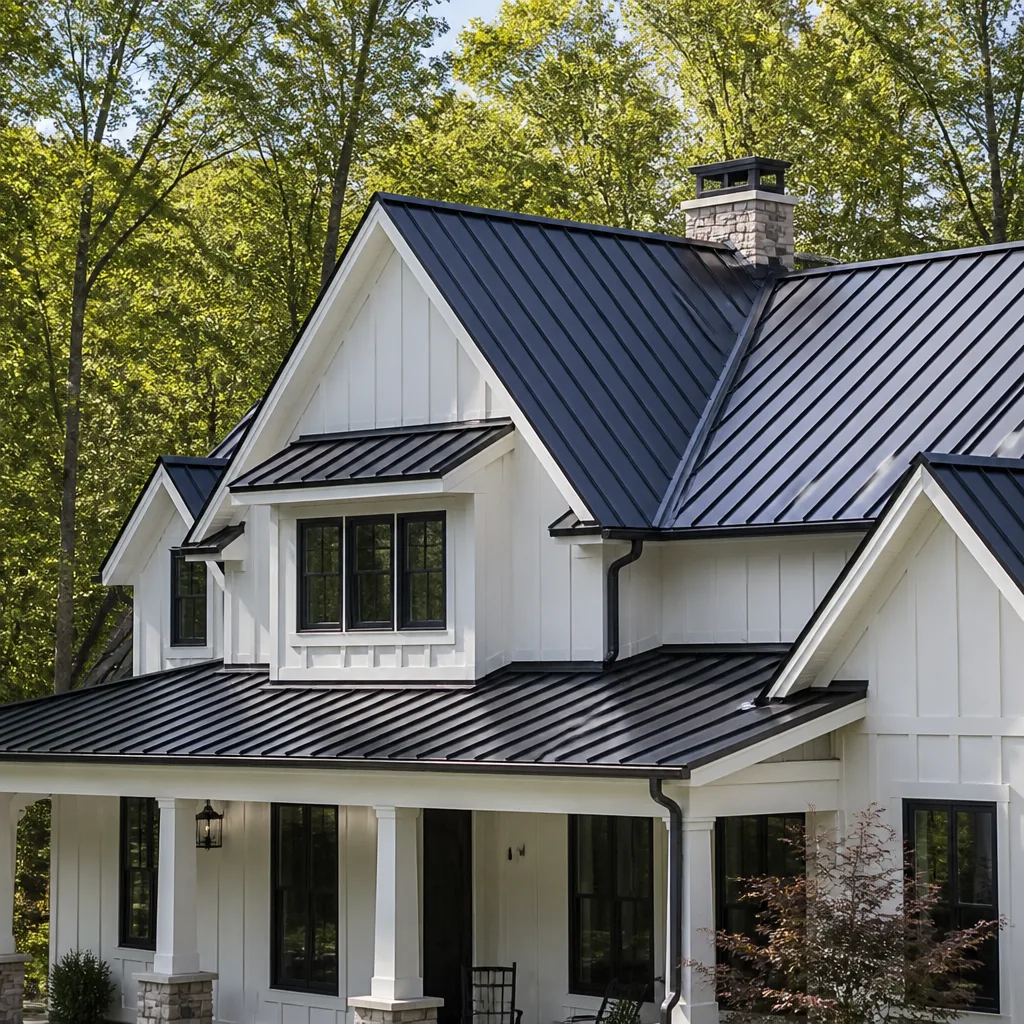
 Metal roofing
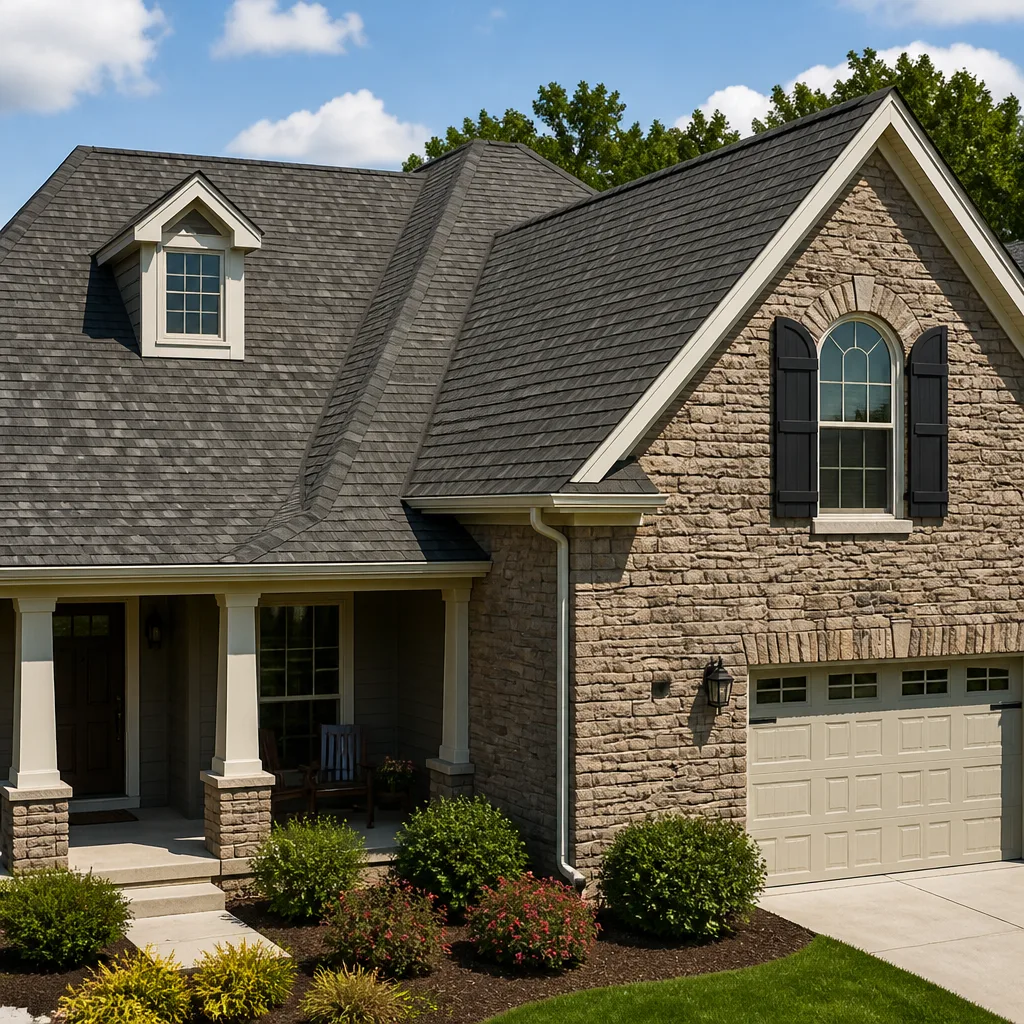 Architectural shingles
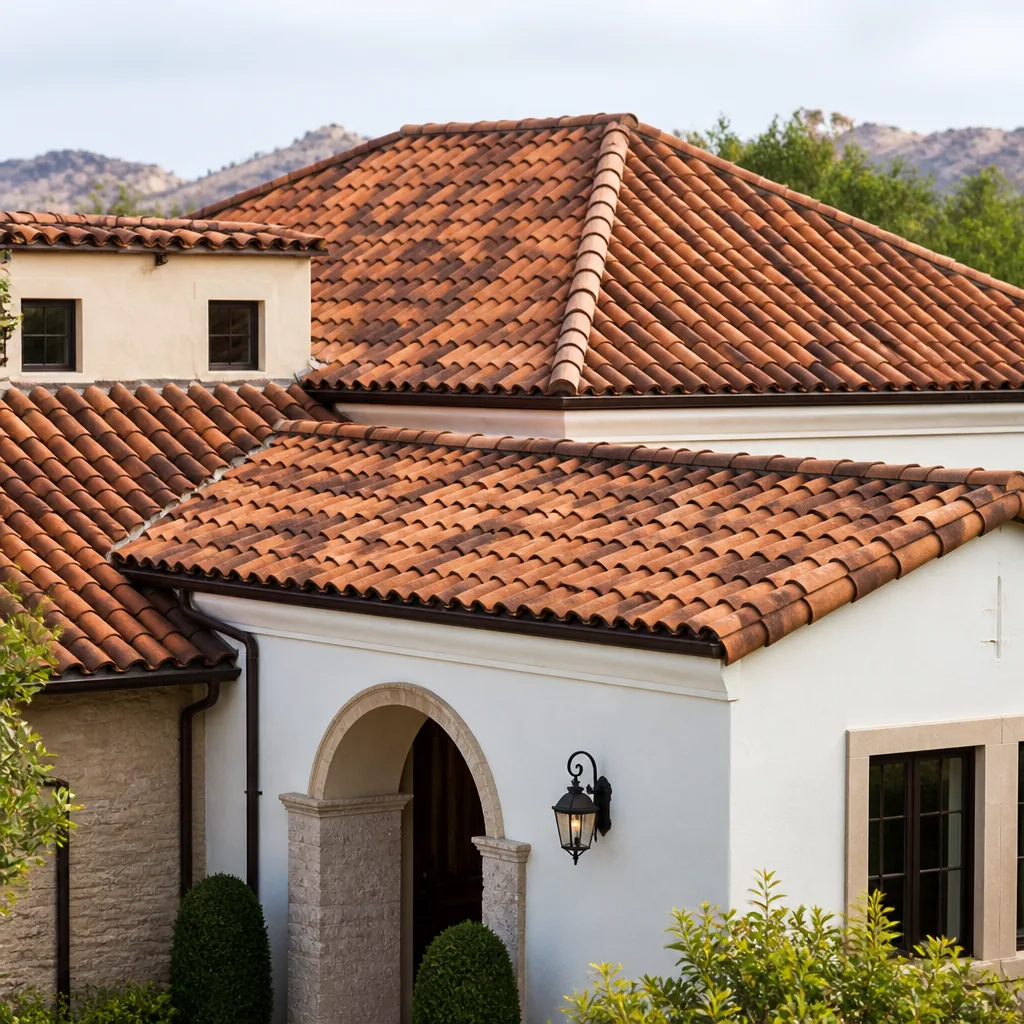 Tile roofing
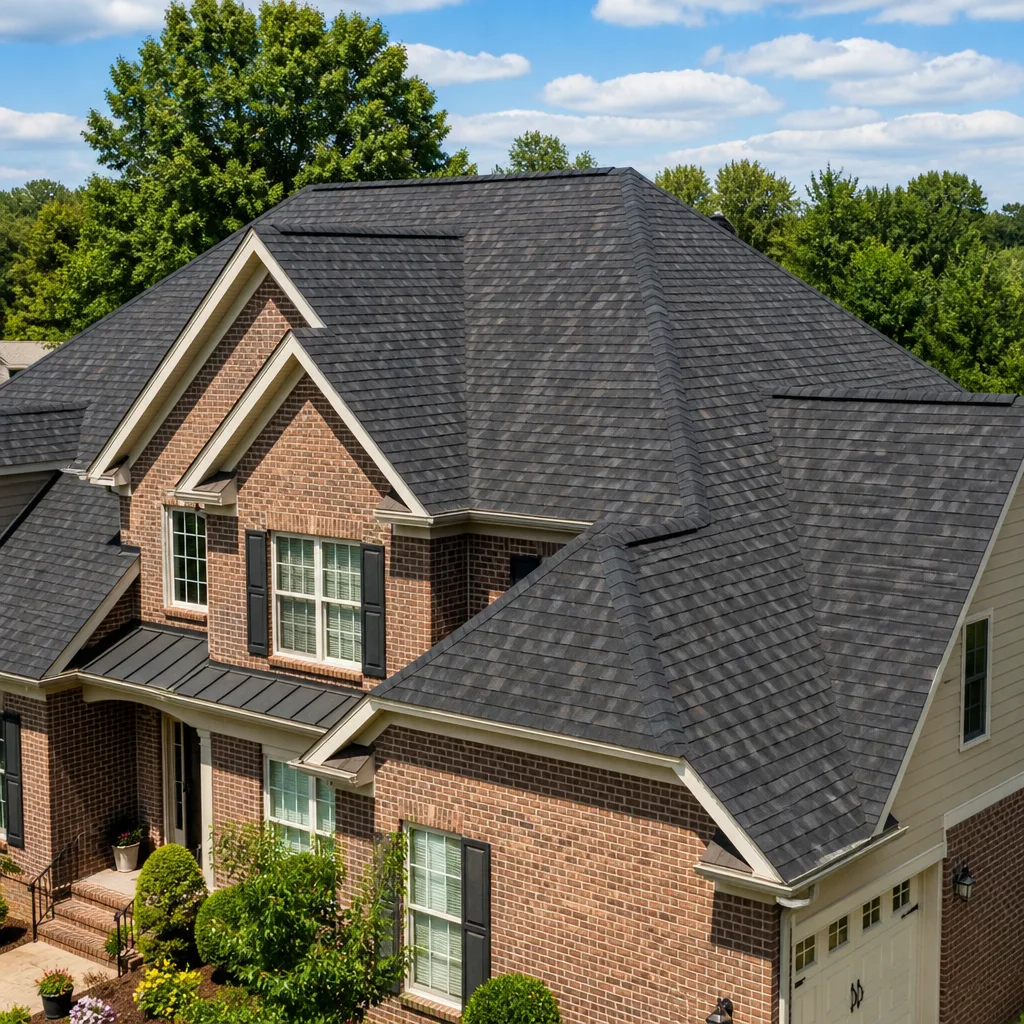 GAF
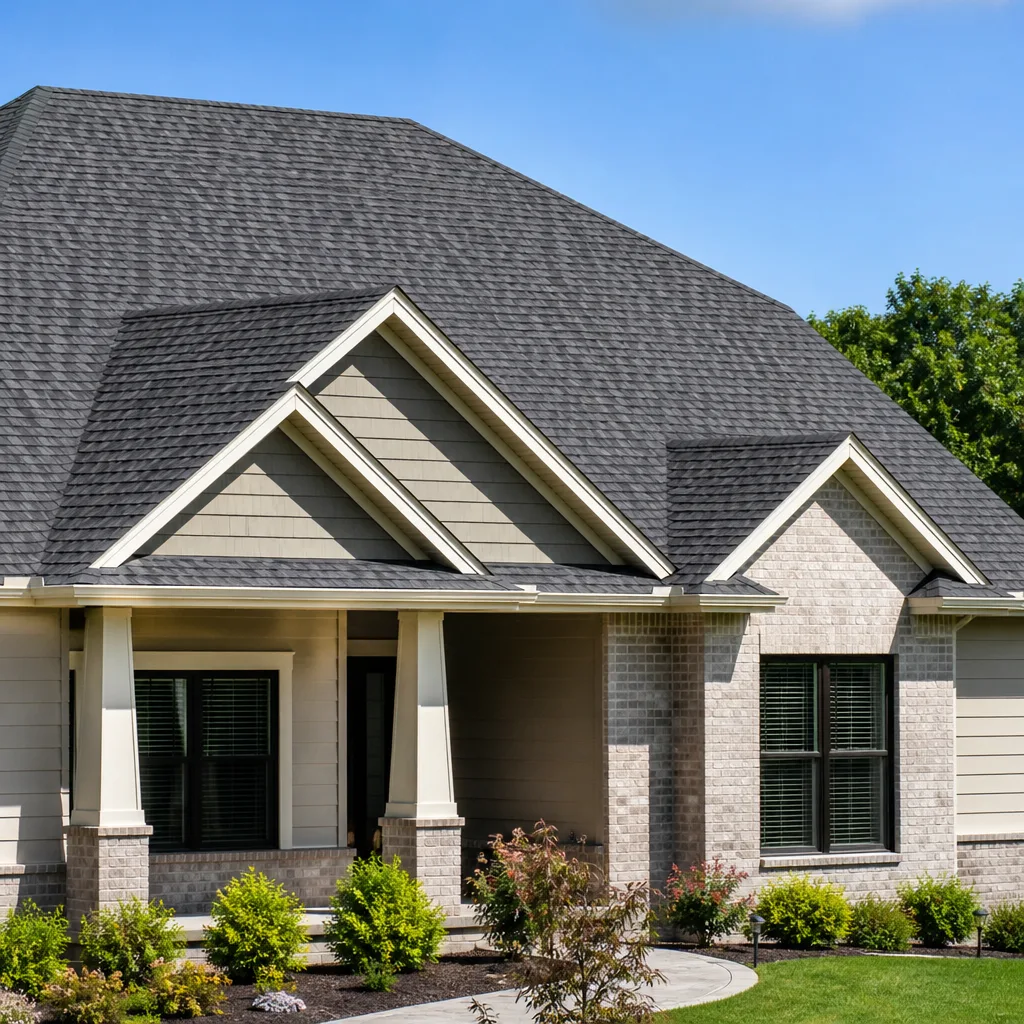 Owens Corning
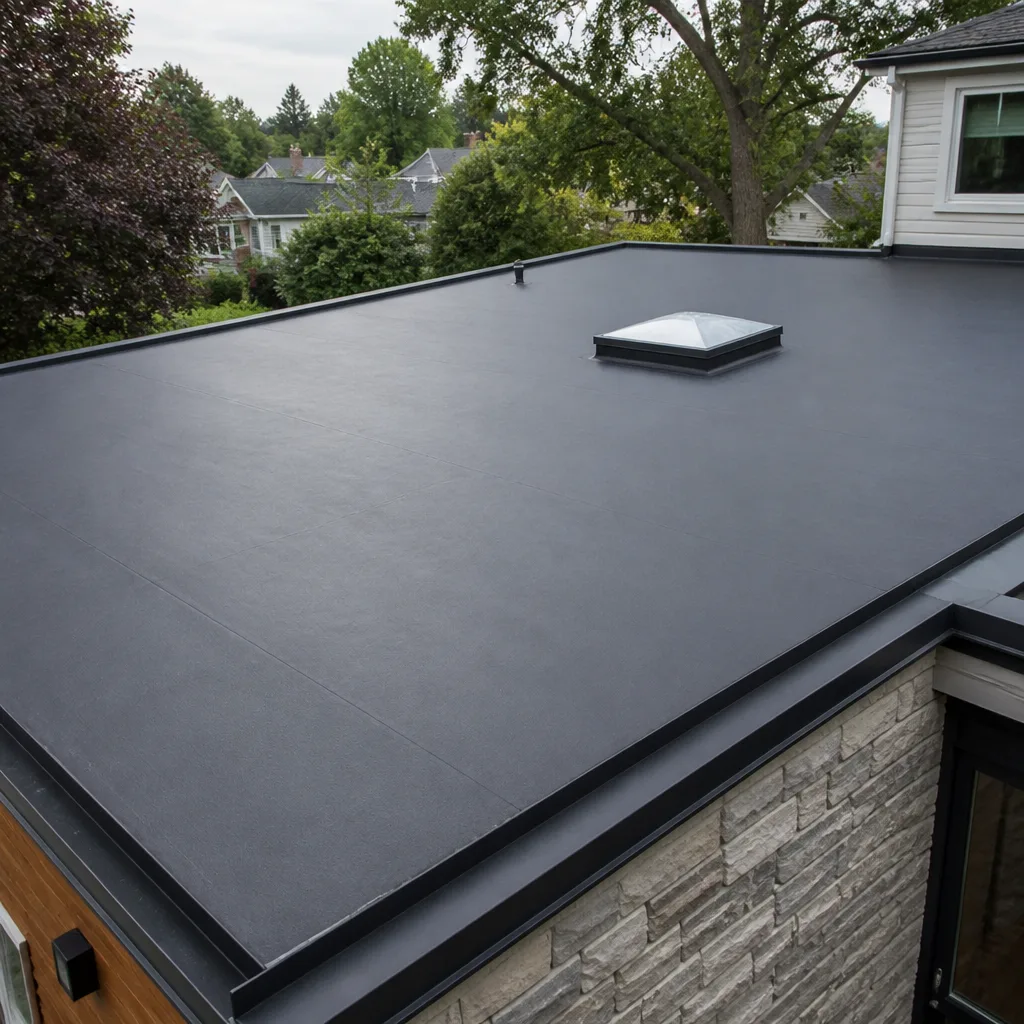 Flat & low-slope
Free roof inspection with deck photos before we talk money - GAF and Owens Corning certified installation
Styles & brands we work with
- Architectural shingles
- Metal roofing
- Tile roofing
- GAF
- Owens Corning
- Flat & low-slope
See the difference
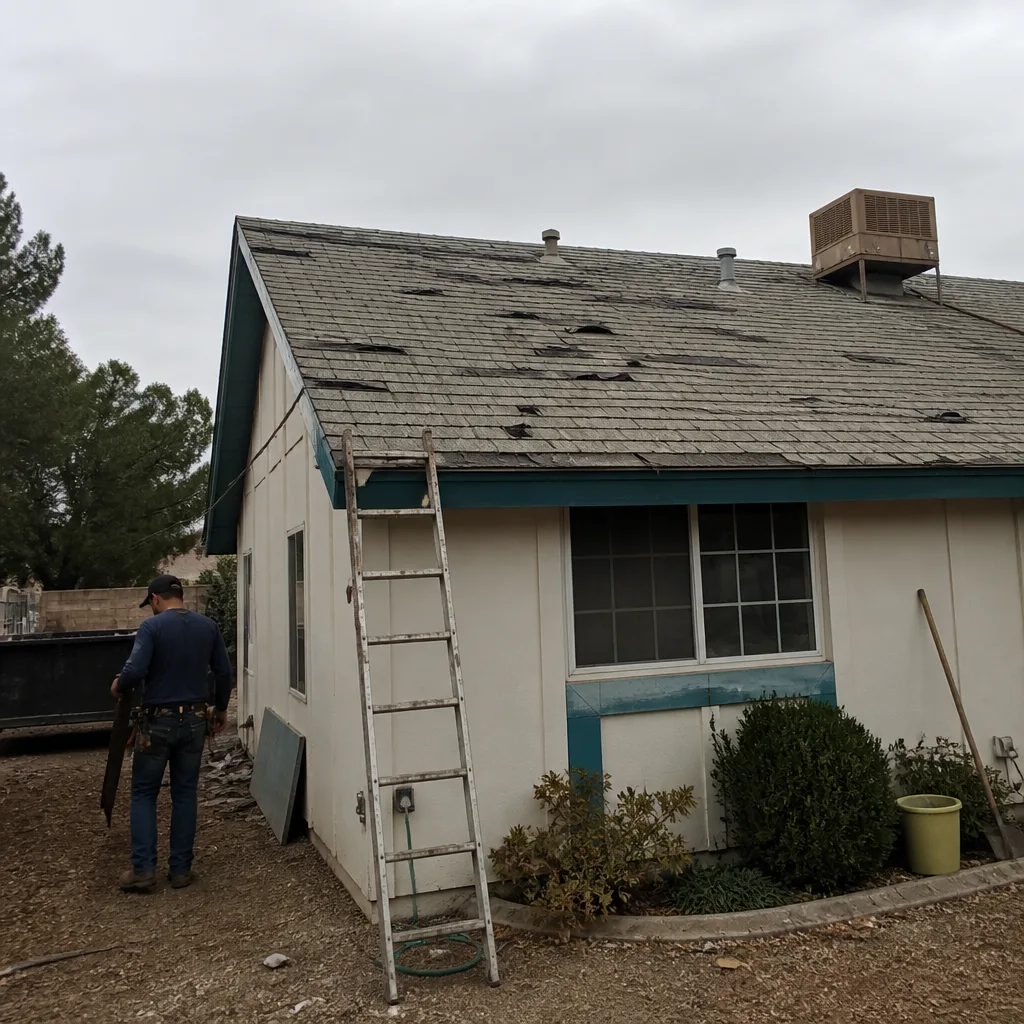 Before
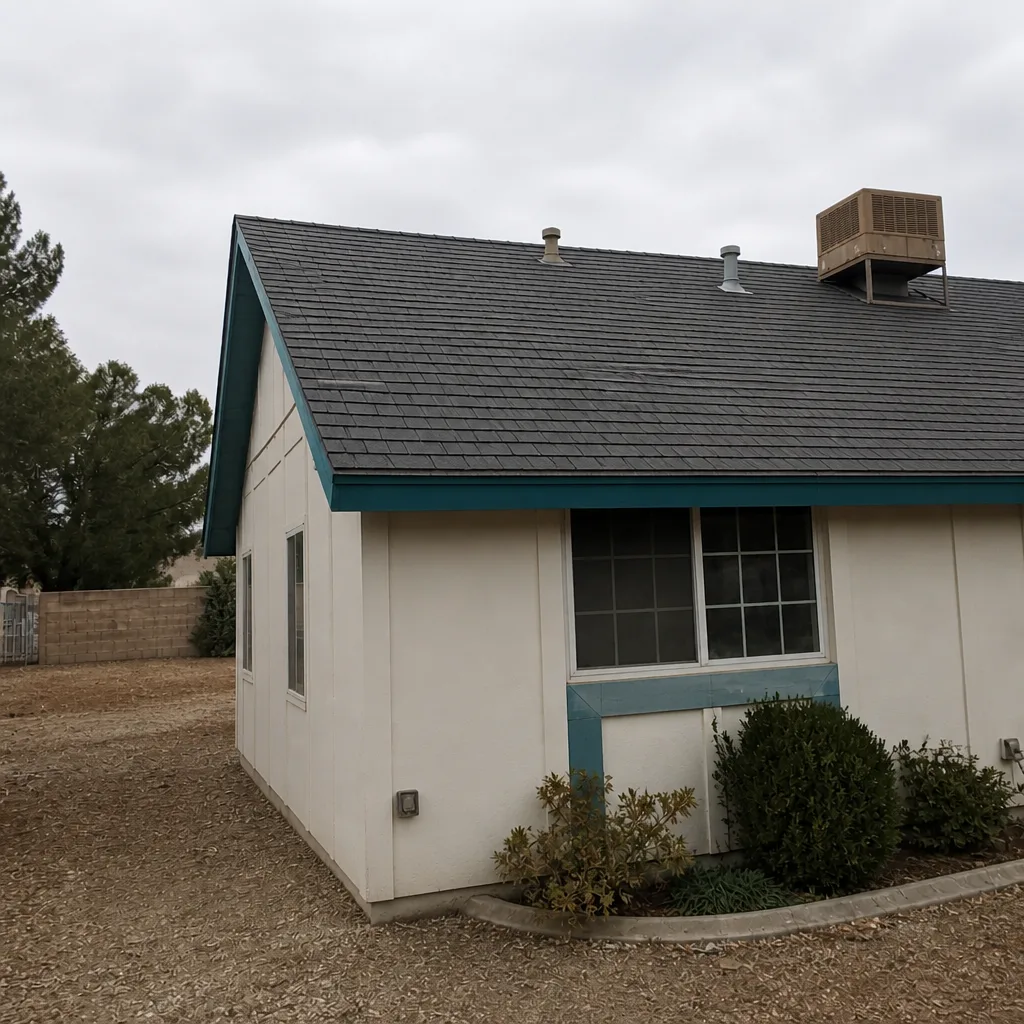 After
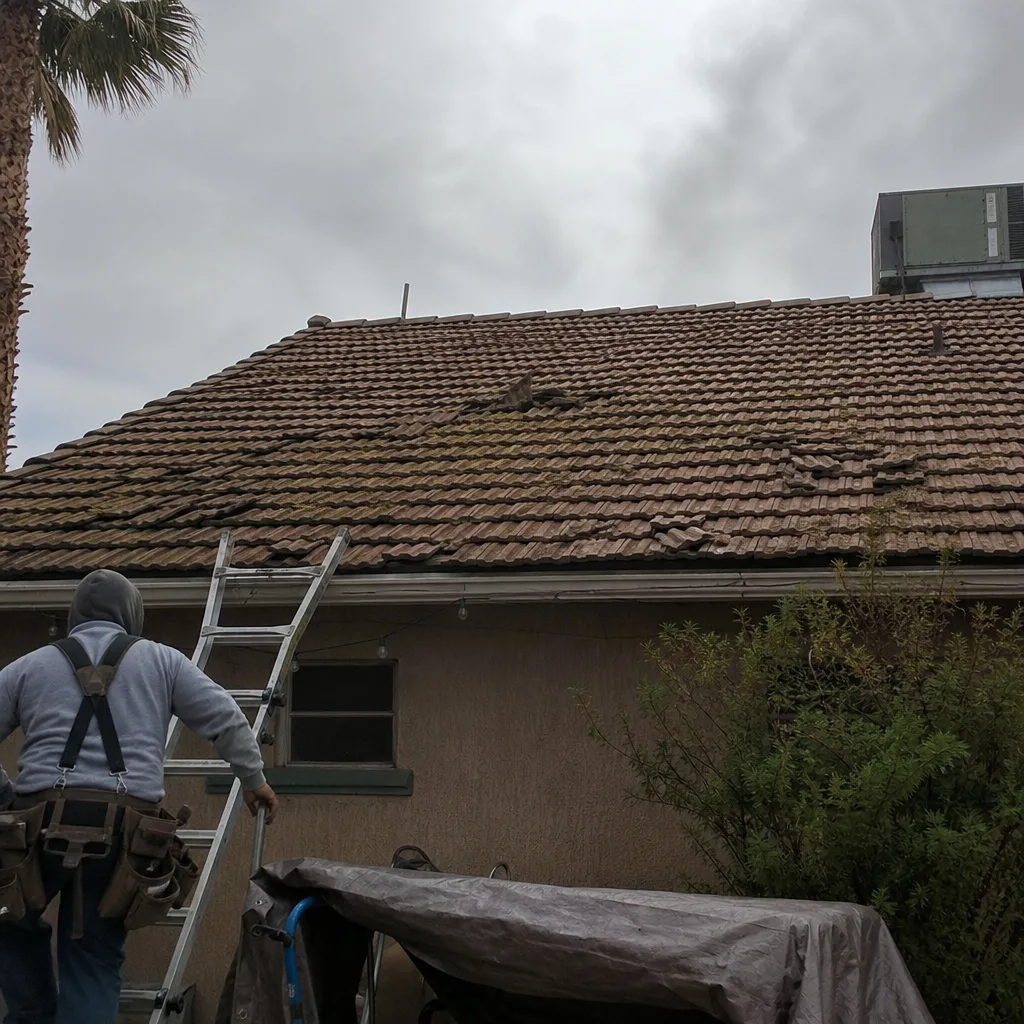 Before
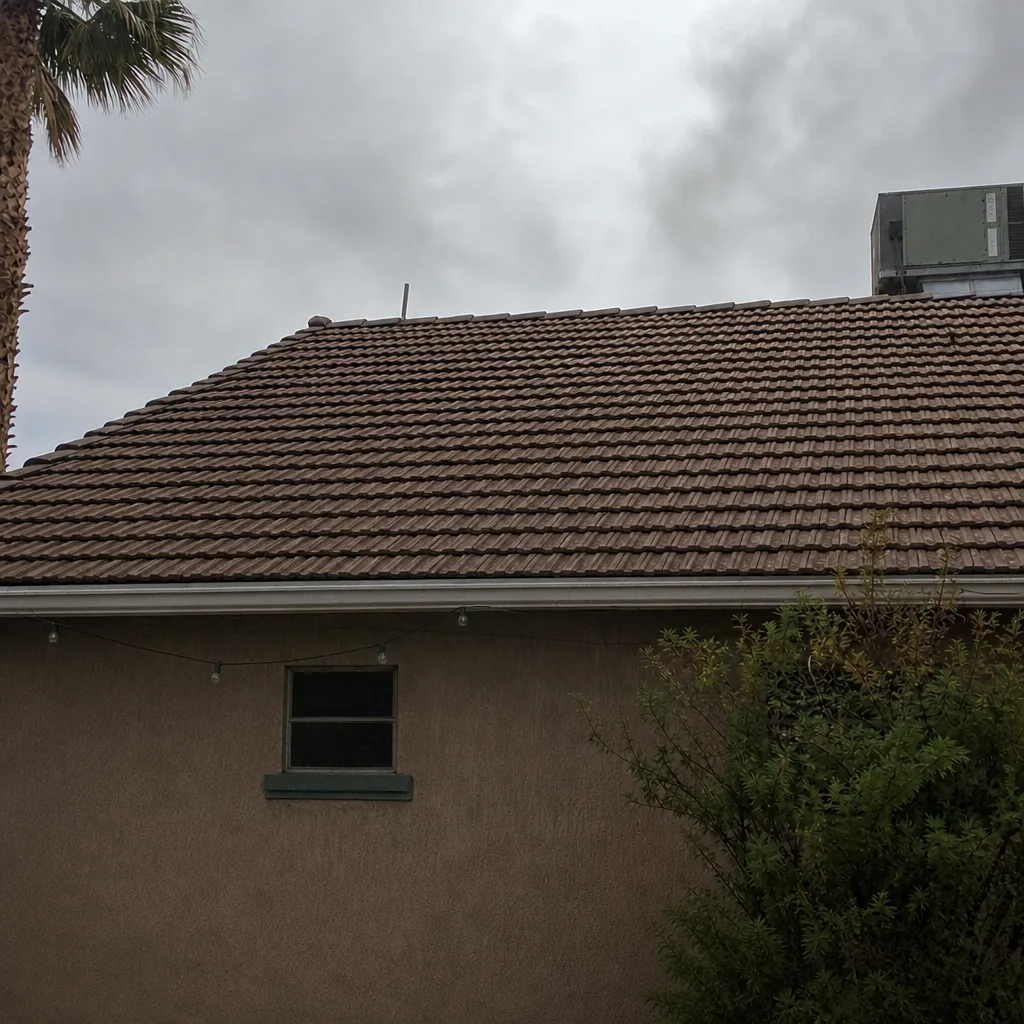 After
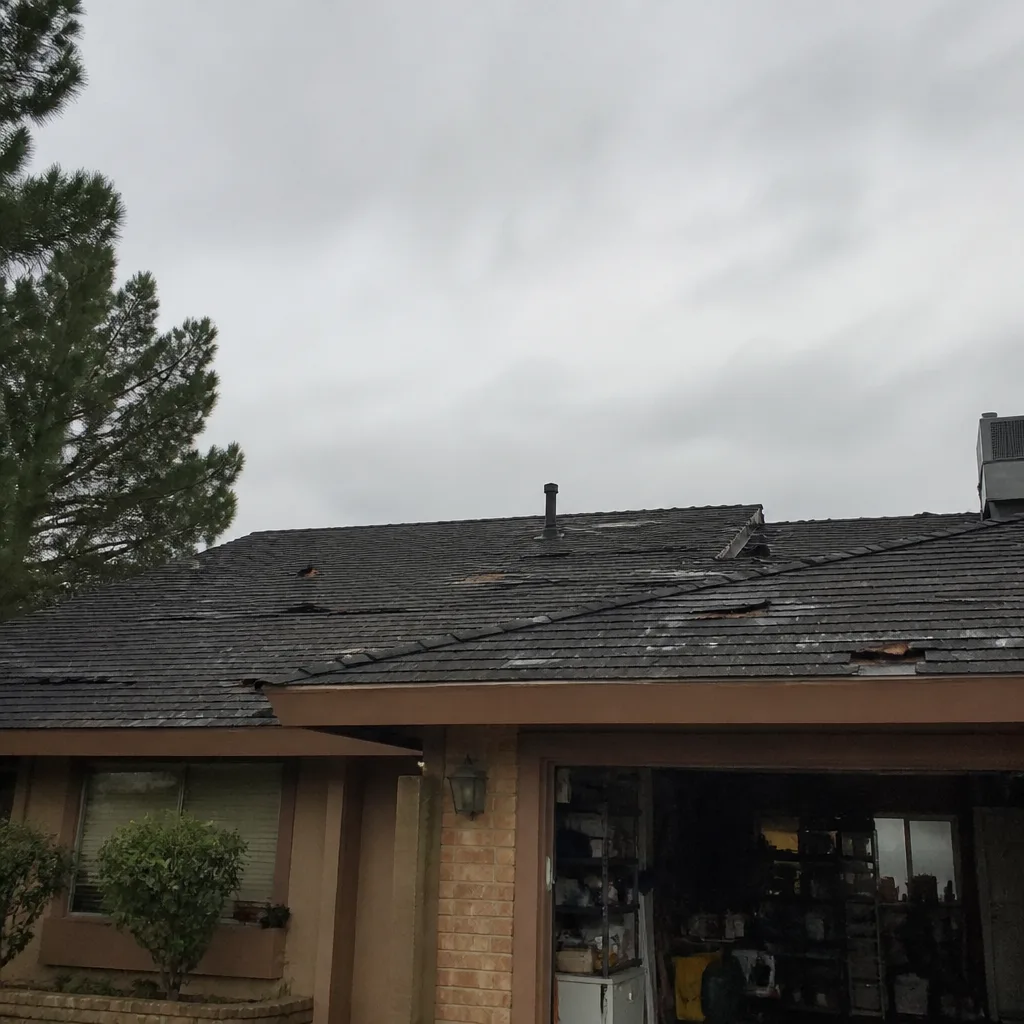 Before
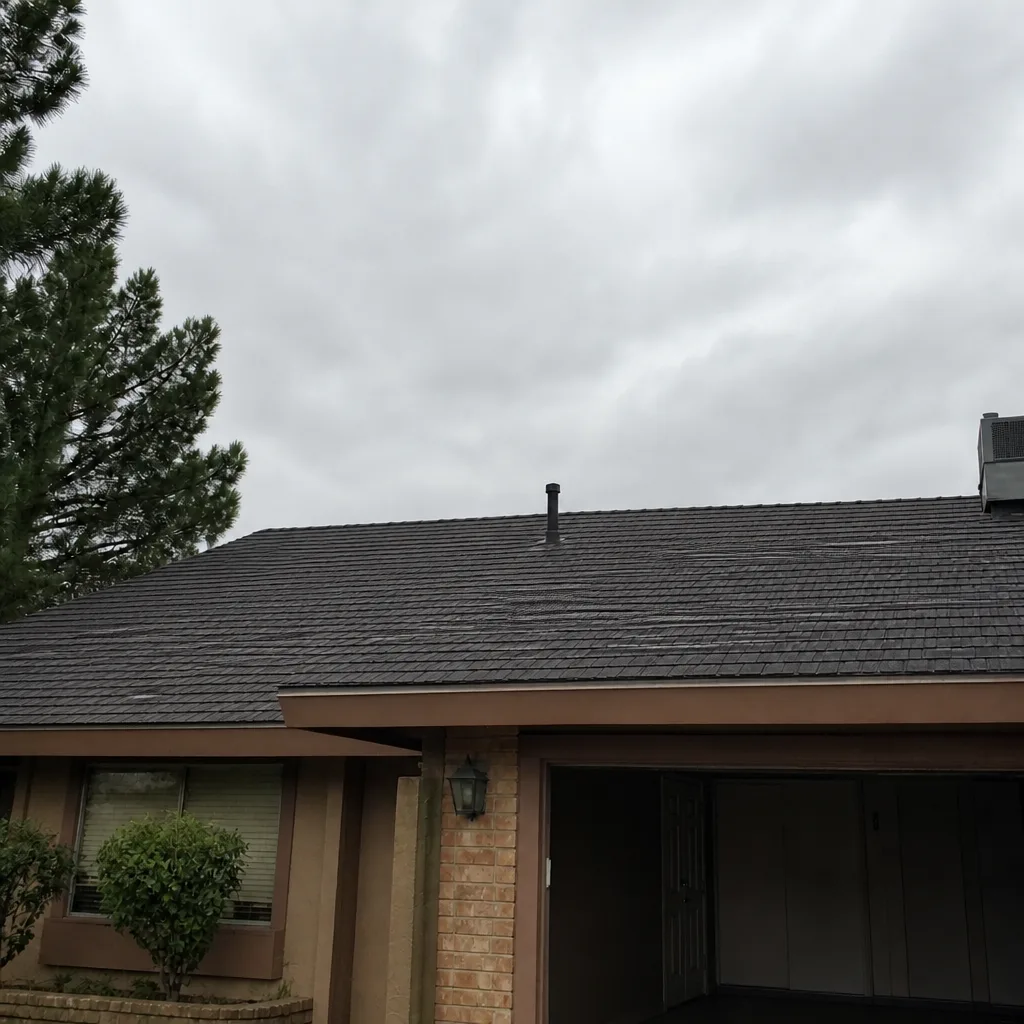 After
Roof Hail Damage Signs in Sunrise Manor, NV: What’s Really a Hail Strike and What’s Just Desert Heat
The clearest signs of real hail damage on a roof are sharp-edged, circular bruise marks with exposed mat at the center on asphalt shingles, and concrete tiles cracked in concentric fracture rings. But in Sunrise Manor, most of what gets called “hail damage” isn’t hail at all – it’s UV-spalling and thermal cracking from summers over 110°F, and telling the two apart is the difference between a targeted repair and an unnecessary full replacement. If a crew knocked on your door after a monsoon and pointed at your roof, call (844) 941-3509 before you sign anything.
Why Sunrise Manor Sees So Many “Hail Damage” Claims and So Little Hail
Sunrise Manor averages fewer than three significant hail events per decade. The neighborhood’s real weather story is heat: a Mojave Desert climate that bakes shingles, drys out sealants, and works the concrete tile underlayment on every 1990s and 2000s tract home until it crumbles. That gap between what the sky actually does and what sellers claim is exactly where storm chasers make their money.
Their timing is deliberate. Monsoon microbursts roll through Clark County from July into September, and that’s when out-of-town crews canvas hardest. A homeowner standing in their driveway looking up at a roof they can’t see clearly is easy to convince. This is the core problem: you can’t diagnose impact damage from the ground, and you shouldn’t have to take a stranger’s word for it.
What Real Hail Damage Looks Like
A genuine hail strike on an asphalt shingle leaves a bruise. Look for a round, sharp-edged indentation where the granules have been knocked loose and the dark fiberglass mat is showing at the center. It’s a distinct impact mark, usually clustered, often with several hits in the same few square feet. On shingles, hail also tends to knock the granules into gutters where they collect in visible drifts.
On concrete tile, hail cracking shows concentric fracture rings spreading outward from the point of impact. The tile fails in a starburst pattern rather than a clean line. That’s the signature, and it’s not common here.
What UV-Spalling and Thermal Cracking Look Like
UV-spalling is the imposter. It appears in linear patterns along the granule surface, a wash of granule loss that follows the sun exposure rather than the point of a strike. There’s no exposed mat at a sharp center – the surface just thins and fades. Thermal cracking on tile runs straight along the length of the tile, the same crack pattern you’d get from a footstep or a decade of expansion and contraction. Sunrise Manor’s 1990s and 2000s roofs accumulate far more of this than impact damage.
Here’s the part that trips people up: thermal cracks can look dramatic. Homeowners see a long split and assume something hit the roof. It didn’t. The roof simply moved for twenty summers and gave.
The Sign That Matters More Than Any Crack
After a monsoon microburst, the first real indicator of roof vulnerability in Sunrise Manor isn’t tile damage at all. It’s water intrusion through underlayment that was already baked to dust. Tile roofs here often look perfect from the street while the original 20-year underlayment beneath has disintegrated. Technicians routinely walk these roofs and find every tile intact and the paper gone – which means a roof that sheds the rare rain fine today is one monsoon away from a ceiling stain.
That’s why a photo-documented inspection from the roof surface, not the driveway, is the only way to actually know. Our technicians are background-checked, arrive in uniform, and photograph what they find from your actual roof, so you’re looking at the evidence instead of hearing a speech.
Our technicians have up to 10 years of experience reading exactly this kind of desert wear, and each inspection documents what’s cosmetic, what’s failing, and what needs attention now. You get photos, not pressure.
How to Tell What You’re Looking At
Use this as a field guide, not a diagnosis. Real inspection happens on the roof.
- Circular bruise with exposed mat: a real hail strike. Note the location and cluster pattern.
- Granule loss in lines following sun exposure: UV-spalling. Cosmetic unless it’s widespread.
- Tile crack in concentric rings: impact, most likely hail.
- Tile crack running straight down the length: thermal stress or foot traffic. Common here.
- Granules collecting in gutters: worth checking after any monsoon, even without visible impact.
- Discolored ceiling, damp attic, or loose flashing: likely underlayment failure, not hail.
If you’re seeing more than one or two of these, a roof-level look beats guessing. When wind made the damage, our team covers it under Emergency & Storm Damage, and we’ll tell you honestly which category you’re in.
Why Who You Call Changes What You’re Told
Ridgeline Roofing Co. has served homeowners since 1984. Over 42 years, we’ve been the crew that’s still here in the spring – not the truck that chases a monsoon up the county line. That changes the math. A company planning to leave town after the check clears has every reason to call a cosmetic crack “hail damage” and a targeted repair a full replacement. A company that has to look you in the eye at the grocery store has none.
That’s also why our 90-Day Done Right Promise is written down. If we call something a repair and it leaks again, we come back and make it right – no paperwork runaround, no arguing. A guarantee that stands behind a repair only makes sense if we’re calling damage honestly. We also offer a free second opinion on any written estimate, which is worth taking when someone hands you a replacement quote after a microburst.
We install products from seven manufacturer lines – GAF, CertainTeed, Owens Corning, IKO, Atlas, Tamko, and Boral – so when a repair is the right answer, we’re specifying the material that matches what’s already on your roof instead of forcing a substitute.
| What You’re Looking At | Ballpark Cost |
|---|---|
| Photo-documented roof inspection | Free, no obligation |
| Repair (flashing, tile replacement, small section) | Quoted upfront, priced in the estimate |
| Seasonal tune-up | $89 flat |
| Full replacement of concrete tile or shingle roof | Quoted line by line, no substitutions |
We work with a standing set of offers: $50 off any repair over $250, a free second opinion on any written estimate, and a permanent 5% senior and veteran discount. Add any two together and the honest number gets more affordable without anyone needing to overstate the damage.
(If you’d rather start from the top, our home page lays out every service we do across the East Valley.)
FAQs About Roof Hail Damage Signs
The most common real signs are sharp-edged circular bruises with exposed mat on asphalt shingles and tiles cracked in concentric fracture rings. Granule loss in straight lines is a different animal – that’s UV damage, not hail. If you’re unsure which one you’re looking at, call (844) 941-3509 and we’ll come take photos from the roof.
Hail leaves a point of impact with sharp edges; UV damage spreads in linear patterns following sun exposure and never exposes the mat at a distinct center. Thermal tile cracks also run straight along the tile’s length, while hail cracks fan out in rings. A homeowner can spot the difference from photos taken on the roof, but not usually from the ground.
Almost never. In a climate that averages fewer than three significant hail events a decade, real hail damage here usually means a handful of tiles or a small patch of shingles – targeted repair, not replacement. Be wary of any quote that jumps straight to a full tear-off after a monsoon. Call (844) 941-3509 for a free second opinion on any written estimate before you decide.
Because monsoon season is when out-of-town crews know Clark County homeowners are most likely to say yes to a quick pitch. They can’t stay to fix their mistakes, so their incentive is to inflate small damage into big jobs. A local company that’s been here since 1984 has no reason to – and a written 90-day guarantee it has to honor.
Get a Straight Answer on Your Roof
If a crew just told you your roof has hail damage and you’re not sure, don’t sign anything yet. Ridgeline Roofing Co. Sunrise Manor offers a no-pressure, photo-documented assessment – we tell you what we see, what’s cosmetic, and what actually needs work. Call (844) 941-3509 for a free estimate, any hour, and a live person will pick up.
Written by the team at Ridgeline Roofing Co. Sunrise Manor, serving Sunrise Manor, NV.