
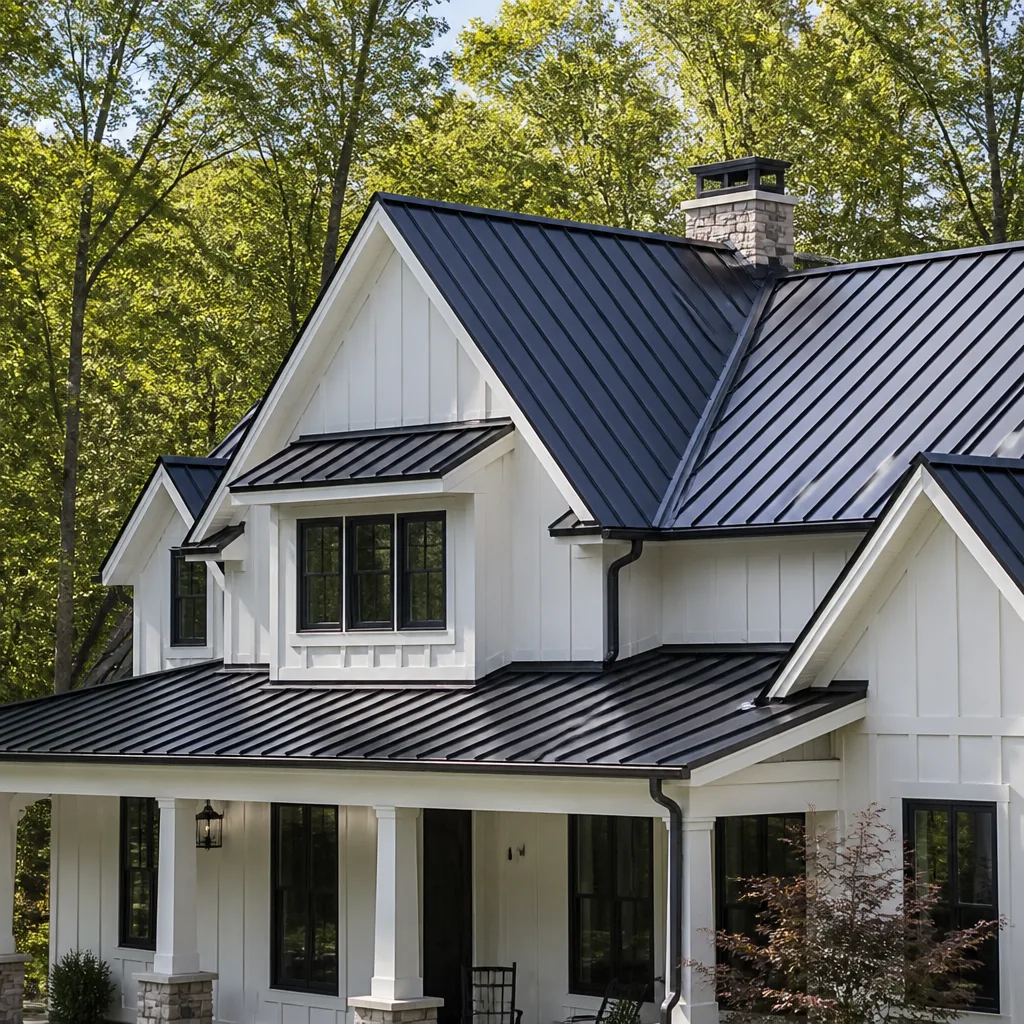
 Metal roofing
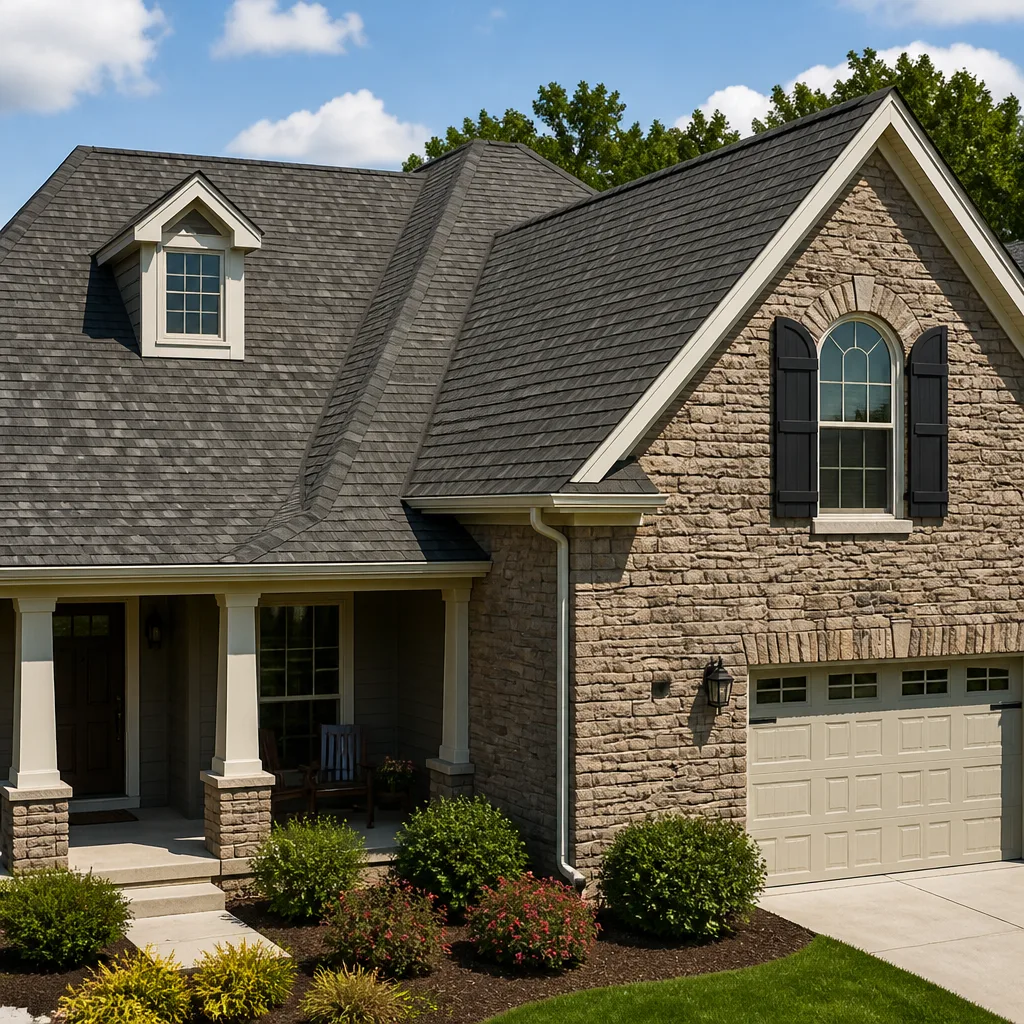 Architectural shingles
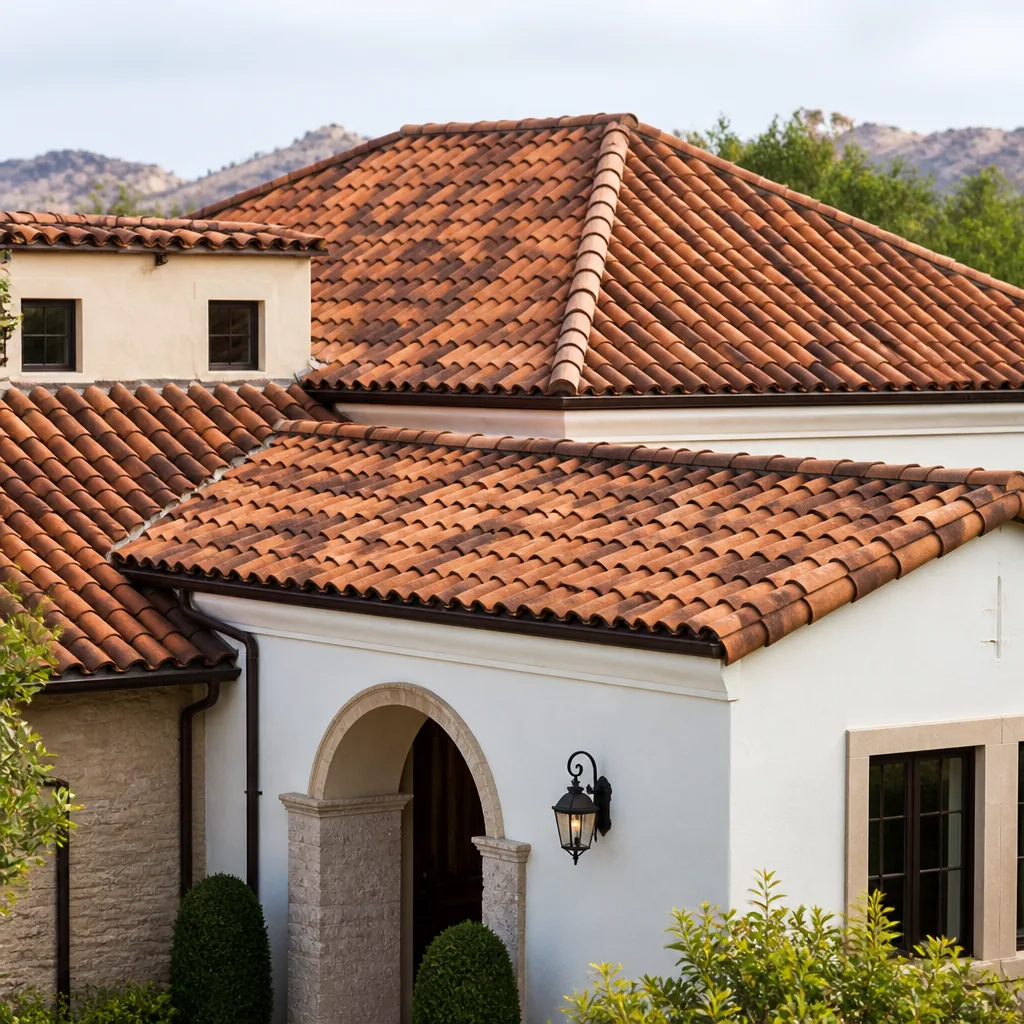 Tile roofing
 GAF
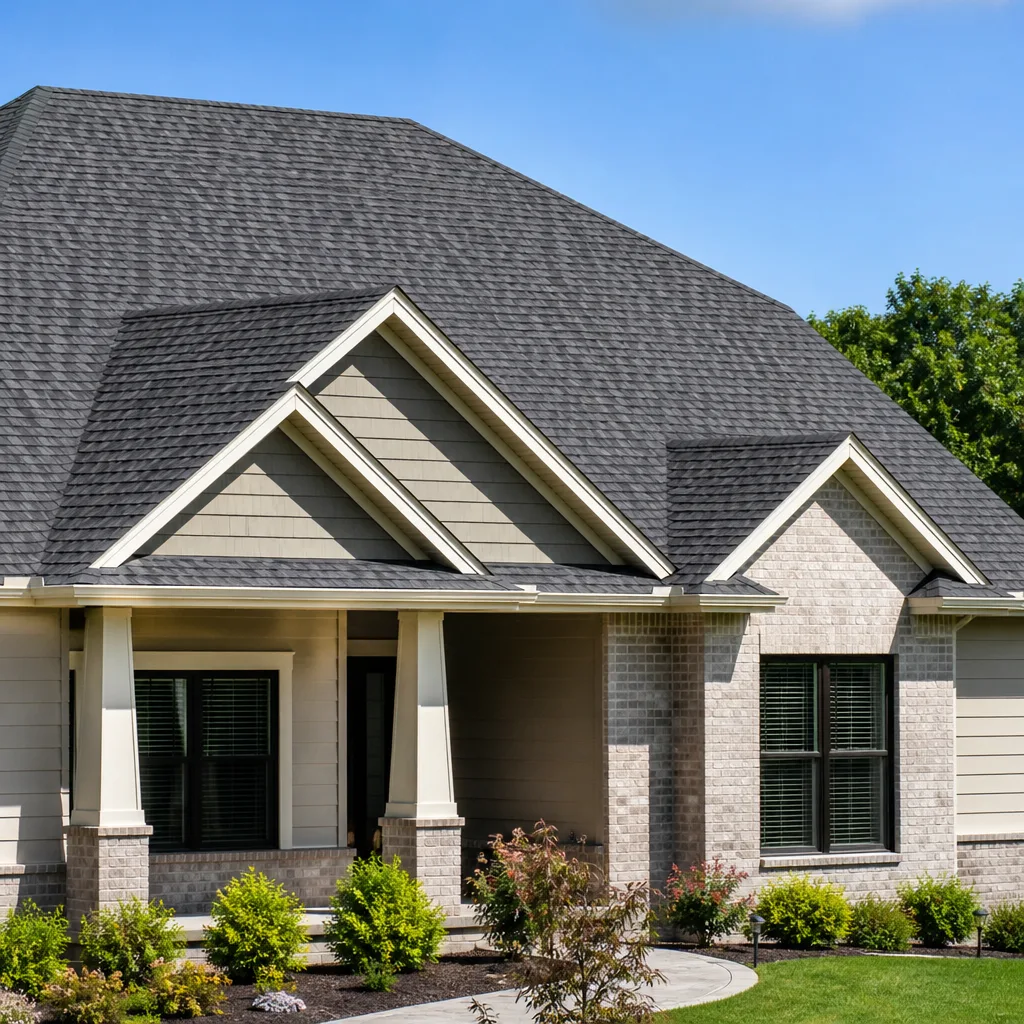 Owens Corning
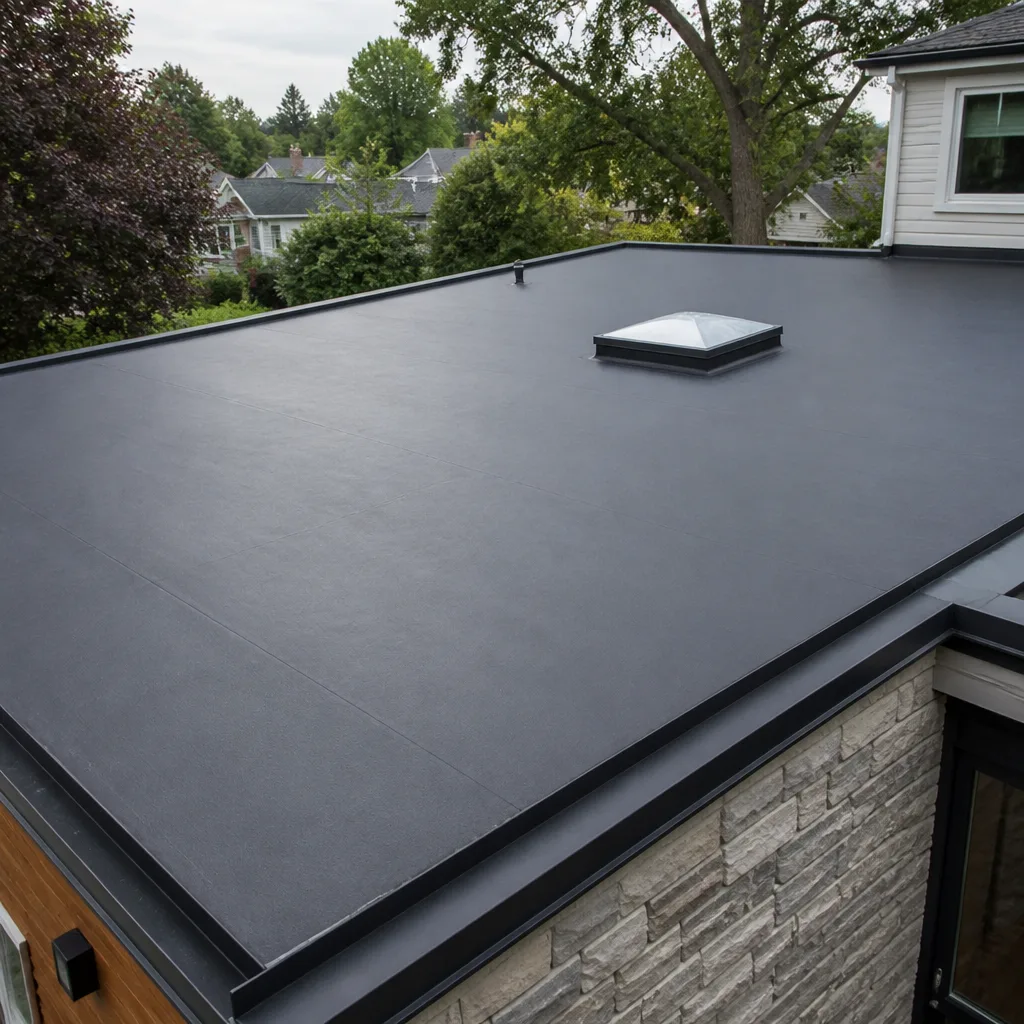 Flat & low-slope
Free roof inspection with deck photos before we talk money - GAF and Owens Corning certified installation
Styles & brands we work with
- Architectural shingles
- Metal roofing
- Tile roofing
- GAF
- Owens Corning
- Flat & low-slope
See the difference
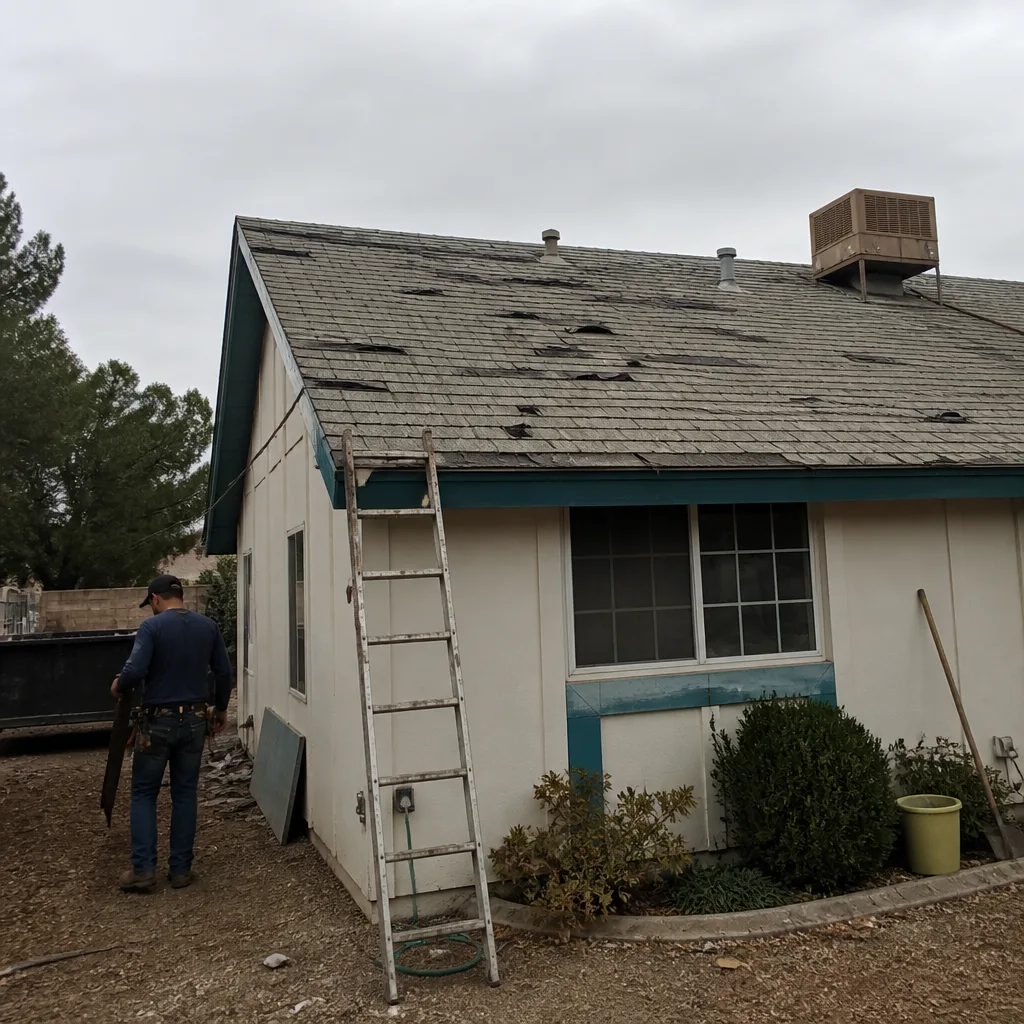 Before
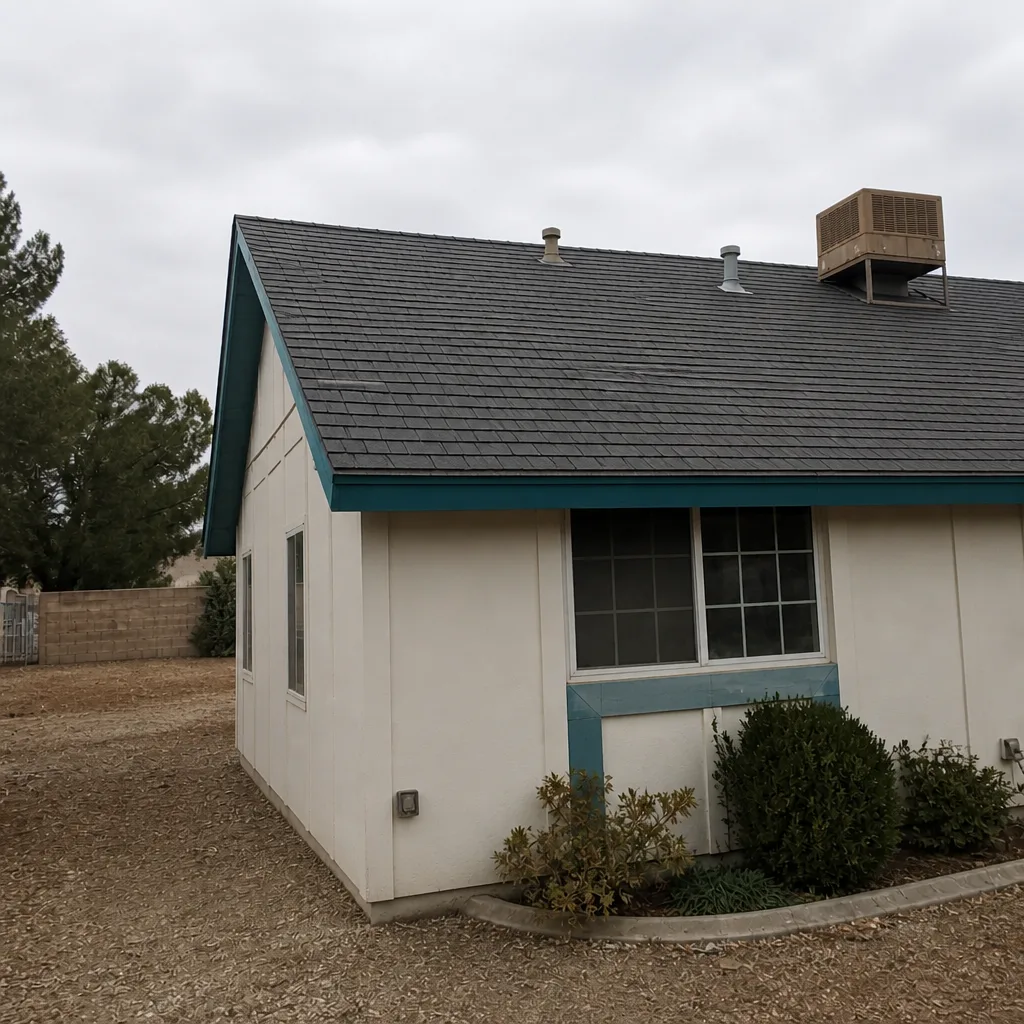 After
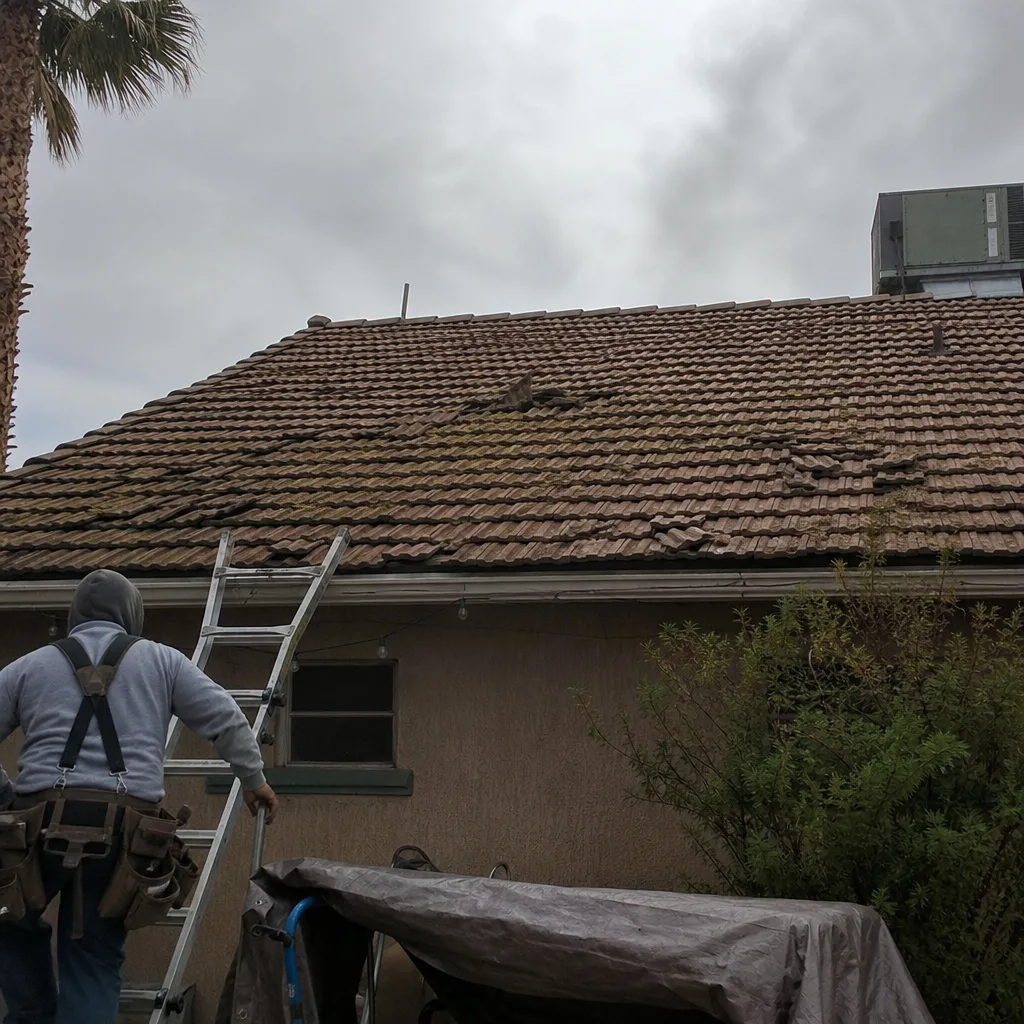 Before
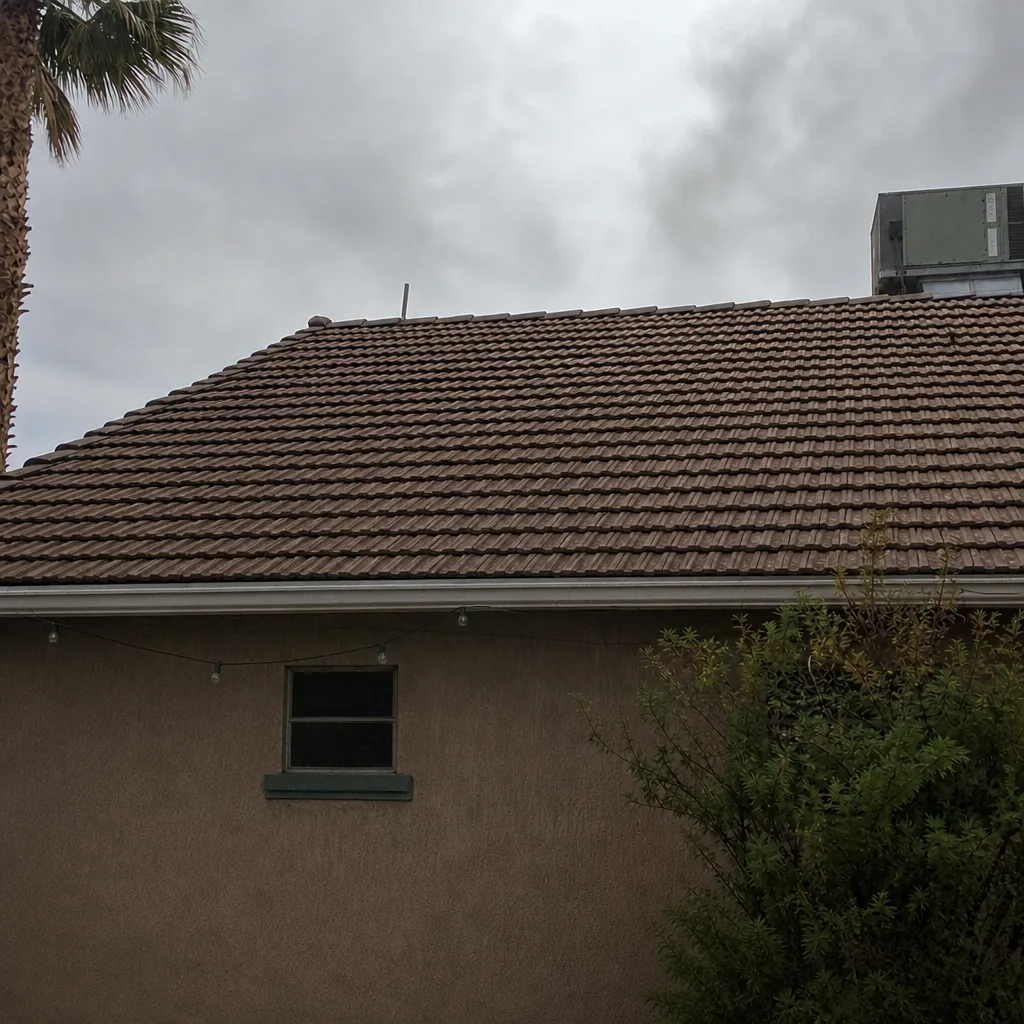 After
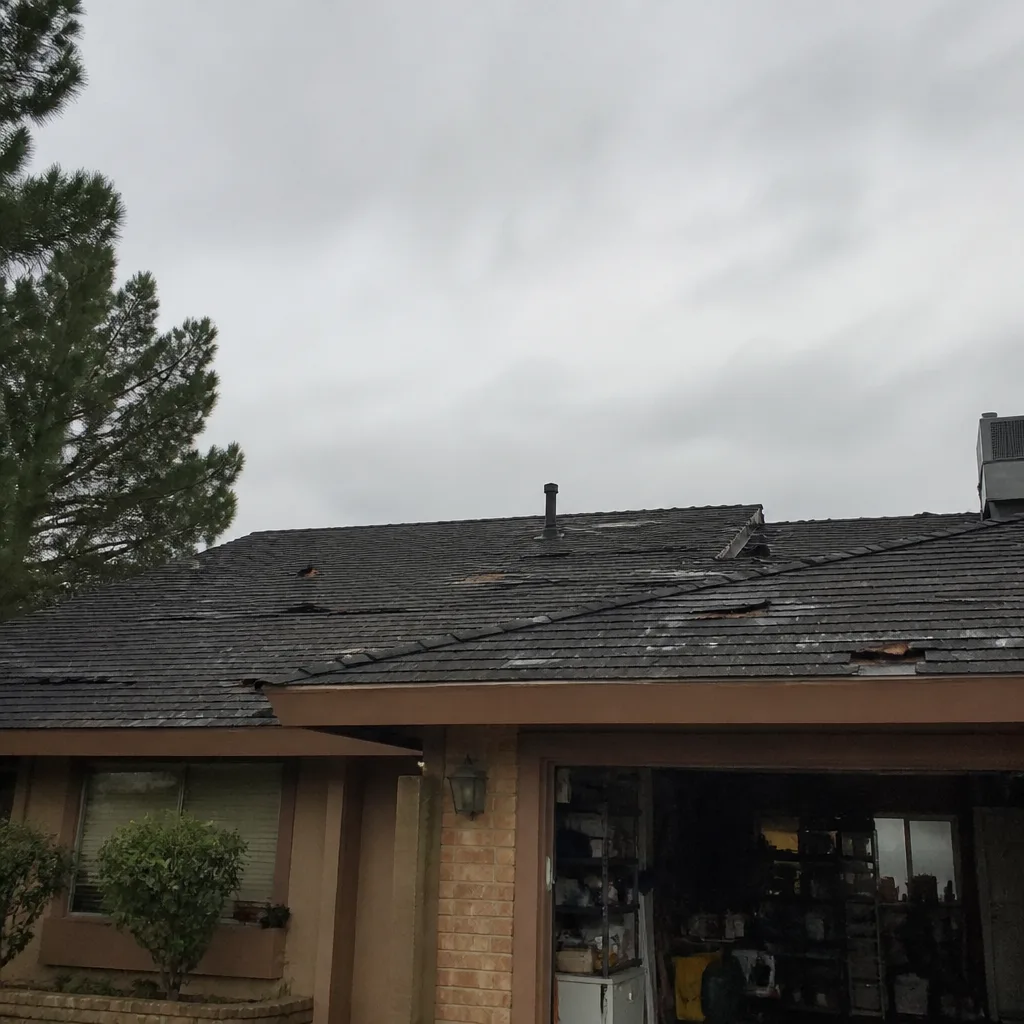 Before
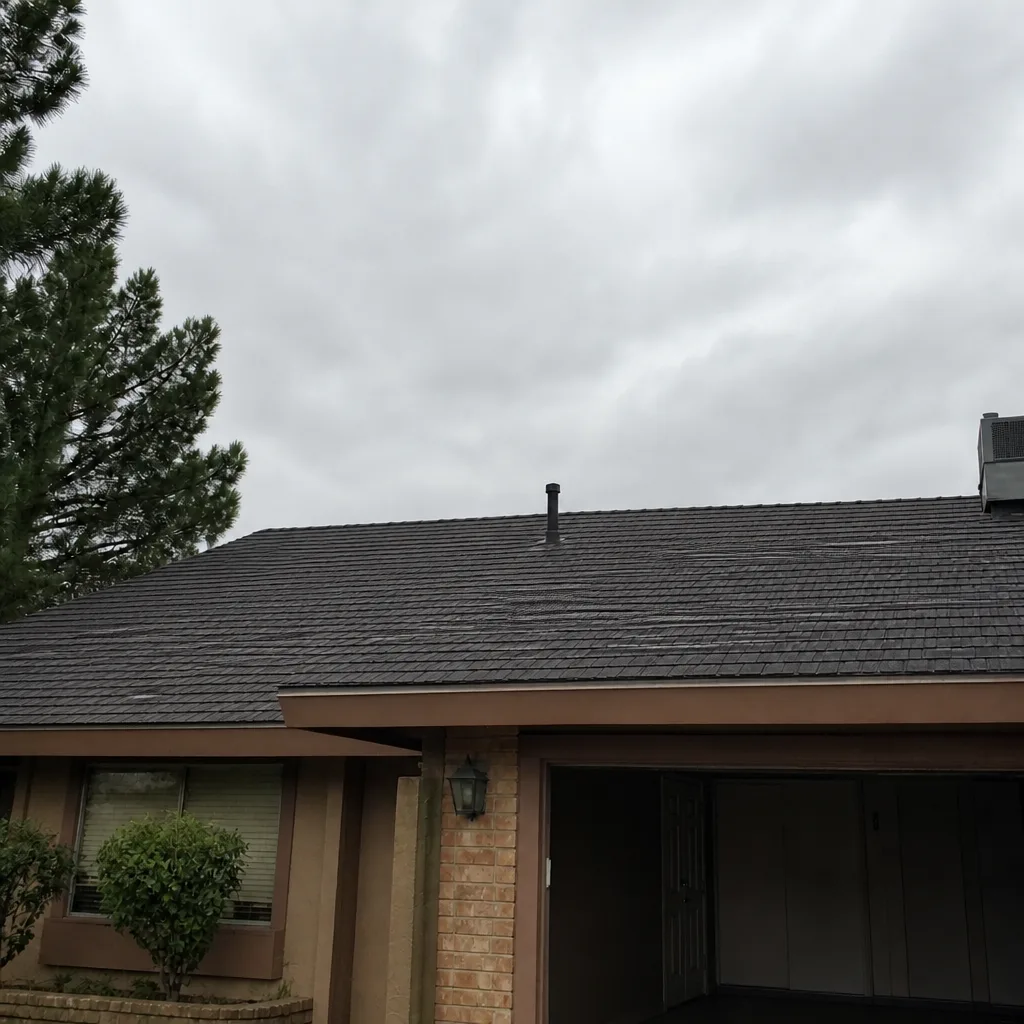 After
What Causes Roof Leaks in Sunrise Manor, NV? Usually the Layer You Can’t See
The most common cause of roof leaks in Sunrise Manor is not a broken tile or storm damage. It’s the felt or synthetic underlayment beneath intact-looking concrete tile that has baked to a powder over 20 to 25 years of desert heat. Tile can last 50 years. The paper under it does not, and when it fails, water finds its way through a roof that looks perfect from the street. If you’re seeing a ceiling stain and can’t spot the source, call (844) 941-3509 and we’ll get on the roof to find it.
Key Takeaways
- In Sunrise Manor’s Mojave climate, sun and thermal cycling cause more leaks than storms.
- Intact tile often hides failed underlayment that has reached end-of-life.
- Low-slope sections and parapet flashing are the next most common leak sources.
- Getting photos taken on the roof beats a verbal estimate from the driveway.
Why a Sunrise Manor Roof Leaks Even When Every Tile Looks Fine
Picture the call we get every July: a water stain spreading on a ceiling after the first monsoon, every tile in place, flashing that looks untouched from the ground. The leak is coming from underneath. Concrete tile in the Mojave works as a heat shield, and that’s good news for the tile – it lasts decades. The catch is that it also traps radiant heat against the underlayment layer below.
The original 15-lb or 30-lb felt installed in Sunrise Manor’s 1990s and 2000s tract homes has a functional life of about 20 to 25 years in this climate, no matter how good the tile above it looks. After that, it dries out, cracks, and turns brittle. Water from a rare monsoon microburst gets under the tile, hits failed paper, and travels sideways until it finds a seam or fastener to drip through. That’s why the stain shows up feet away from where the actual problem is.
We find this on roofs across Sunrise Manor constantly. Tile intact, paper disintegrated. It’s a failure mode generic roofing articles rarely explain, because you can’t see it from the driveway. You have to be up on the surface, lifting a tile and looking. That’s the honest answer to what many homeowners here assume is a mystery leak.
Sun and Thermal Cycling Do More Damage Here Than Any Storm
Most roofing advice online is written for places with snow, hail, and wind. Sunrise Manor doesn’t work that way. Summer highs climb past 110°F, rainfall is minimal, and the sun beats down year-round. The dominant leak mechanism here is thermal cycling: the roof expands and contracts through hundreds of degrees between a summer afternoon and a summer night, day after day. Over years, that movement works fasteners loose and cracks the sealants that keep water out.
Monsoon season from July to September does matter, but mostly as a stress test. A microburst reveals weaknesses that sun and heat have already created. It rarely creates them on its own. So the question to ask about a Sunrise Manor roof isn’t “did the storm break something” – it’s “how much has the sun already worn down.”
Two other spots fail on a schedule here:
- Low-slope sections. Many stucco tract homes in Sunrise Manor have low-slope sections with almost no ability to shed water on their own. When UV exposure degrades a sealant or membrane, even a minor monsoon turns into a standing-water problem instead of a quick runoff.
- Parapet walls and stucco interfaces. This is the second most common leak source in this housing stock. Stucco expands and contracts at a different rate than metal flashing, and the caulk bridging that gap typically degrades within 7 to 10 years under Mojave UV. Once it goes, water gets behind the stucco and works its way in.
Older mid-century homes near the original Sunrise Manor core, many with original sun-baked asphalt shingle roofs, add a third pattern: shingles that have lost their granules and curl at the edges, letting water straight through. The fix and the diagnosis look different from a tile roof, which is why an on-roof inspection matters more than a phone description.
What a Real Diagnosis Looks Like (and What It Costs)
A leak diagnosis only means something if it’s based on what’s actually on your roof. Our technicians are background-checked, arrive in uniform, and document every inspection with photos taken from your actual roof surface – not a scary speech in the driveway that you can’t verify or reference later. Our technicians have up to 10 years of experience, and we install products from seven manufacturer lines including GAF, CertainTeed, and Owens Corning, so the fix uses proper materials with no substitutions.
Here’s roughly what the work runs in this market:
| Job | Typical Range |
|---|---|
| Leak inspection and photo report | Often free or credited toward repair |
| Targeted leak repair (flashing, sealant, localized) | $250 - $650 |
| Underlayment replacement on a tile section | $900 - $2,400, depending on square footage |
| Full tile underlayment replacement | Quoted per roof; runs well above a spot repair |
These are ranges, not bids. What a Sunrise Manor homeowner actually pays depends on roof size, pitch, and how far the water has traveled. The number on the estimate is the number on the invoice – no surprises. When you’re weighing whether to patch or tear into the underlayment, a Roof Repair in Sunrise Manor assessment gives you the photos to decide with. For the full range of what we handle, our Roof Repair page covers the specifics, and you can always start from our home page.
When It’s Worth Calling a Pro
A water stain on the ceiling, a musty smell in a closet, or a drip during a monsoon are all signs the leak has been working for a while. Underlayment failure and flashing decay don’t fix themselves, and the longer water travels behind stucco or tile, the more it costs to correct. If you’re not sure what you’re looking at, that’s exactly the kind of call we take – a live person answers every call, day or night, including the middle of a storm. And when a repair is over $250, there’s $50 off, with a free second opinion on any written estimate you’ve already received.
FAQs
Failed underlayment is the usual answer. Concrete tile lasts 50 years, but the felt or synthetic layer beneath it in Sunrise Manor’s 1990s-2000s tract homes has a functional life of 20 to 25 years in this heat, so it can be baked to dust while the tile above still looks fine. Call (844) 941-3509 for a free photo-documented inspection.
A targeted repair is almost always cheaper when the underlayment is still sound in most areas – typically $250 to $650 for flashing or sealant work. If the paper is disintegrated across the whole roof, spot repairs just move the leak around, and replacement becomes the square deal. An on-roof inspection tells you which situation you’re in. Call (844) 941-3509 for an honest read.
Often yes, and a live person answers our phone 24/7 – no voicemail tree, no callback window. We’ll get a technician out to document the actual roof and show you what’s happening with photos. Call (844) 941-3509.
Because the monsoon didn’t cause the leak – it revealed one. Thermal cycling and UV have usually degraded the underlayment or caulk long before the first microburst, and the rain just finds the opening. That’s why we look at the roof, not the weather. Call (844) 941-3509 to get it checked before the next storm.
If you’d rather have it looked at, Ridgeline Roofing Co. Sunrise Manor offers a no-pressure assessment in Sunrise Manor – call (844) 941-3509 for a free estimate. We’ll get on the roof, show you the photos, and tell you plain what’s going on.
Written by the team at Ridgeline Roofing Co. Sunrise Manor, serving Sunrise Manor, NV.