
Last updated November 18, 2026
 Architectural shingles
 Metal roofing
 Tile roofing
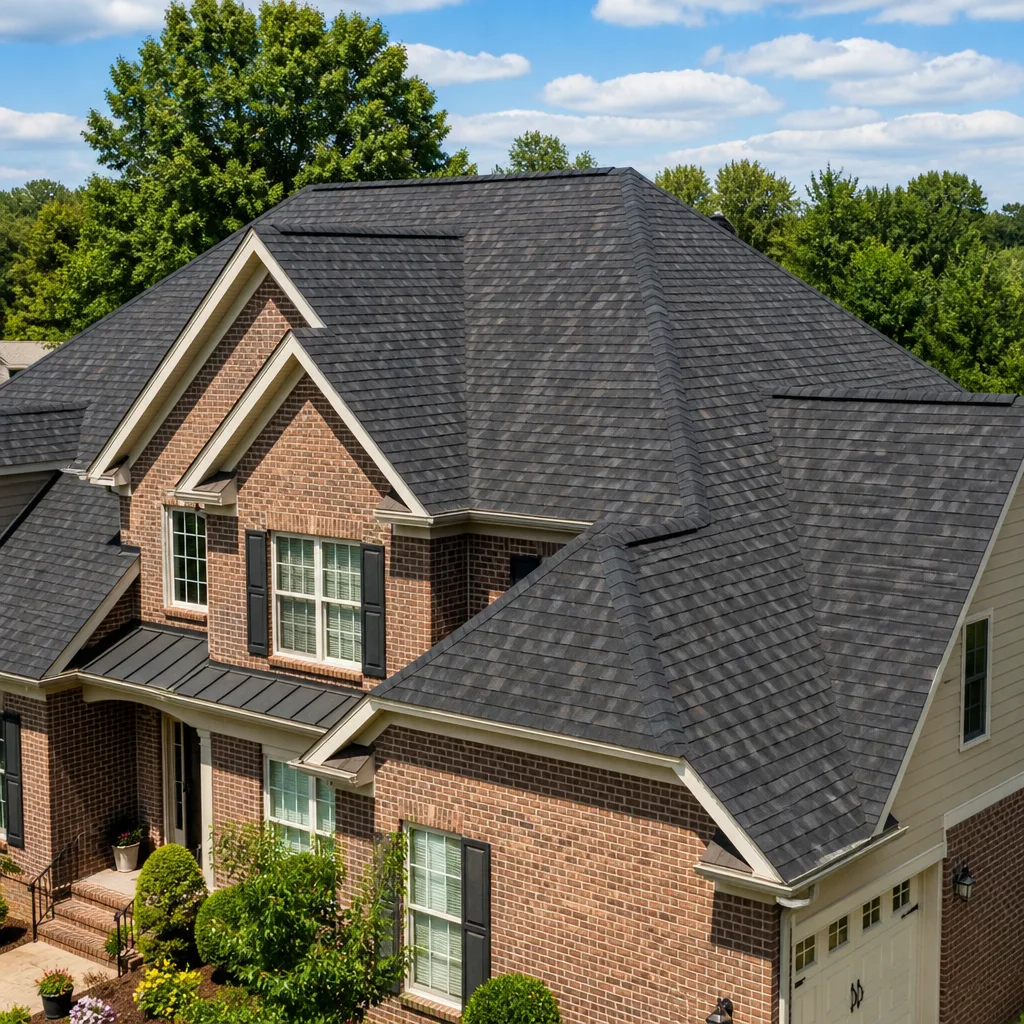 GAF
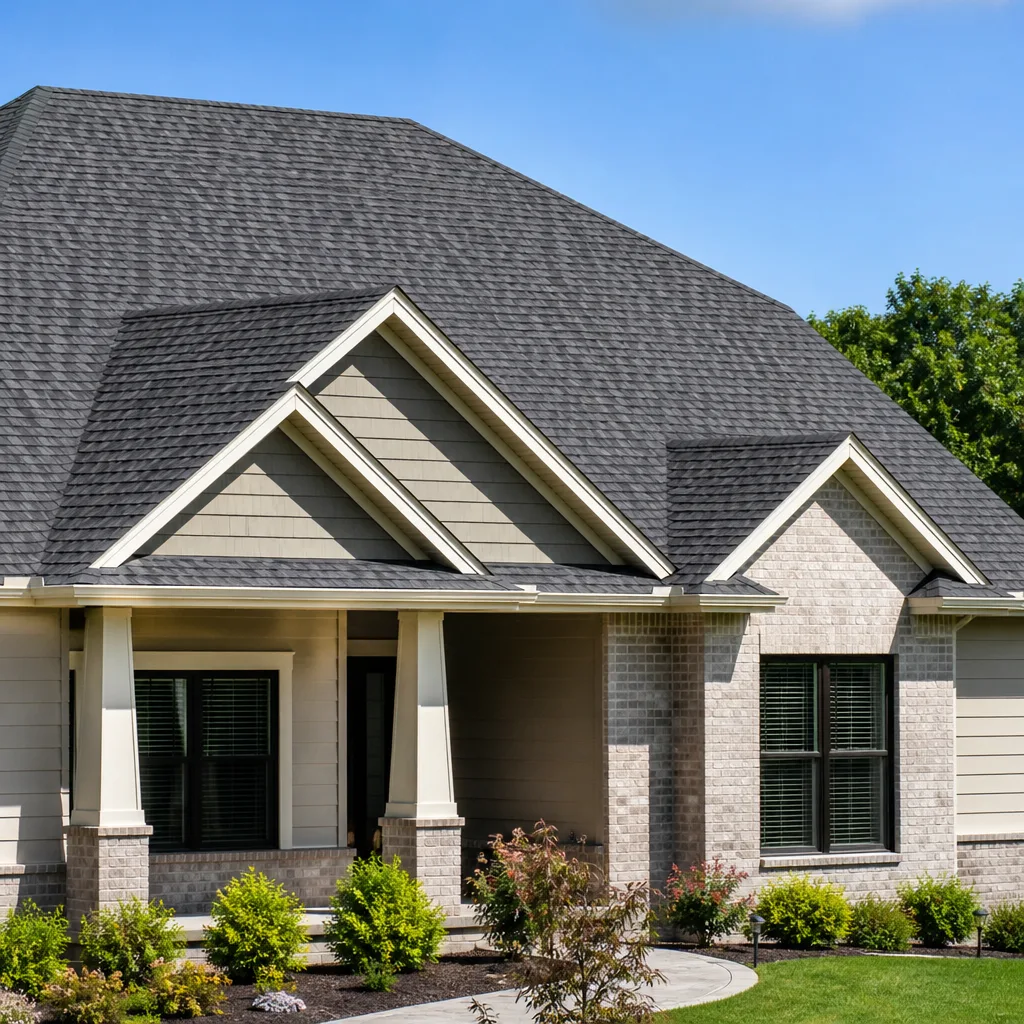 Owens Corning
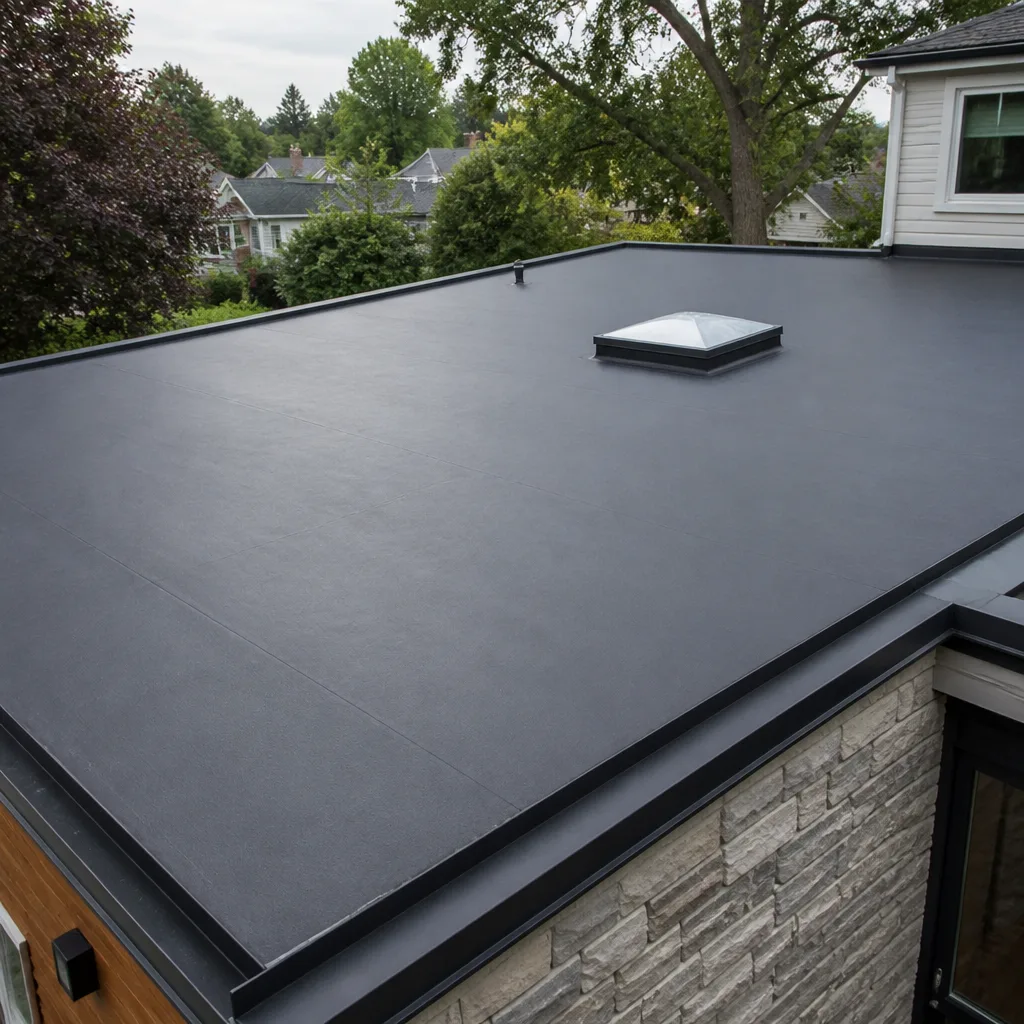 Flat & low-slope
Free roof inspection with deck photos before we talk money - GAF and Owens Corning certified installation
DIY vs Professional Roof Repair: What’s Safe to Do Yourself
There are exactly three roof repairs a handy homeowner can do without meaningful risk of making things worse, and roughly a dozen that look simple on YouTube but carry hidden failure modes that don’t show up until the next hard rain. That gap between what looks easy and what is actually safe is where most roof damage in Sunrise Manor starts. Replacing a cracked pipe boot wrong costs about $200 to redo. Misinstalling valley flashing can quietly rot your decking for two years before a single drop shows up on your ceiling. The right question isn’t “can I do this myself?” It’s “what’s the failure consequence if I do it wrong?” This guide breaks roof repairs into three honest categories, explains the tools and fall-safety math that change the real cost of DIY, and tells you where a professional is not optional.
Quick Answer
On a typical pitched asphalt roof, the only genuinely safe DIY repairs are replacing a cracked pipe boot, resealing lifted shingle tabs with approved roofing sealant, and clearing debris from valleys and gutters. Everything that touches flashing, underlayment, roof-to-wall transitions, or any flat or low-slope surface should go to a professional, because those failures hide under the surface and rot the structure before you can see them. If you can’t see the whole problem from the surface, you can’t safely fix it yourself.
Styles & brands we work with
- Architectural shingles
- Metal roofing
- Tile roofing
- GAF
- Owens Corning
- Flat & low-slope
Table of Contents
- The Three-Category Framework for Every Roof Repair
- Safe DIY Repairs: What You Can Actually Do
- Do It Wrong and It Costs Double: The Middle Category
- Leave It Alone: Repairs You Can’t See the Full Problem On
- Tools, Fall Safety, and the Real Cost of DIY
- Why Flat and Low-Slope Roofs Punish Amateur Repairs
- When a DIY Repair Voids Your Shingle Warranty
- What a Written Repair Guarantee Should Protect You From
The Three-Category Framework for Every Roof Repair
Most homeowners think about roof work as a single decision: hire someone or do it myself. That framing throws away the most useful piece of information you have, which is the cost of getting it wrong. A better split sorts every repair into three buckets, and the bucket tells you who should be on the roof.
- Safe DIY. Small, surface-level, and forgiving. If you get it wrong, you’ll know quickly and the redo is cheap. No hidden layers involved.
- Wrong costs double. Repairs that look simple but fail silently or require a proper seal you can’t verify by eye. A mistake here means paying a professional to undo your work before they can start the real fix.
- Leave it alone. Repairs where the visible symptom sits on top of a problem you can’t see from the surface. Flashing, decking, underlayment, and anything low-slope belong here.
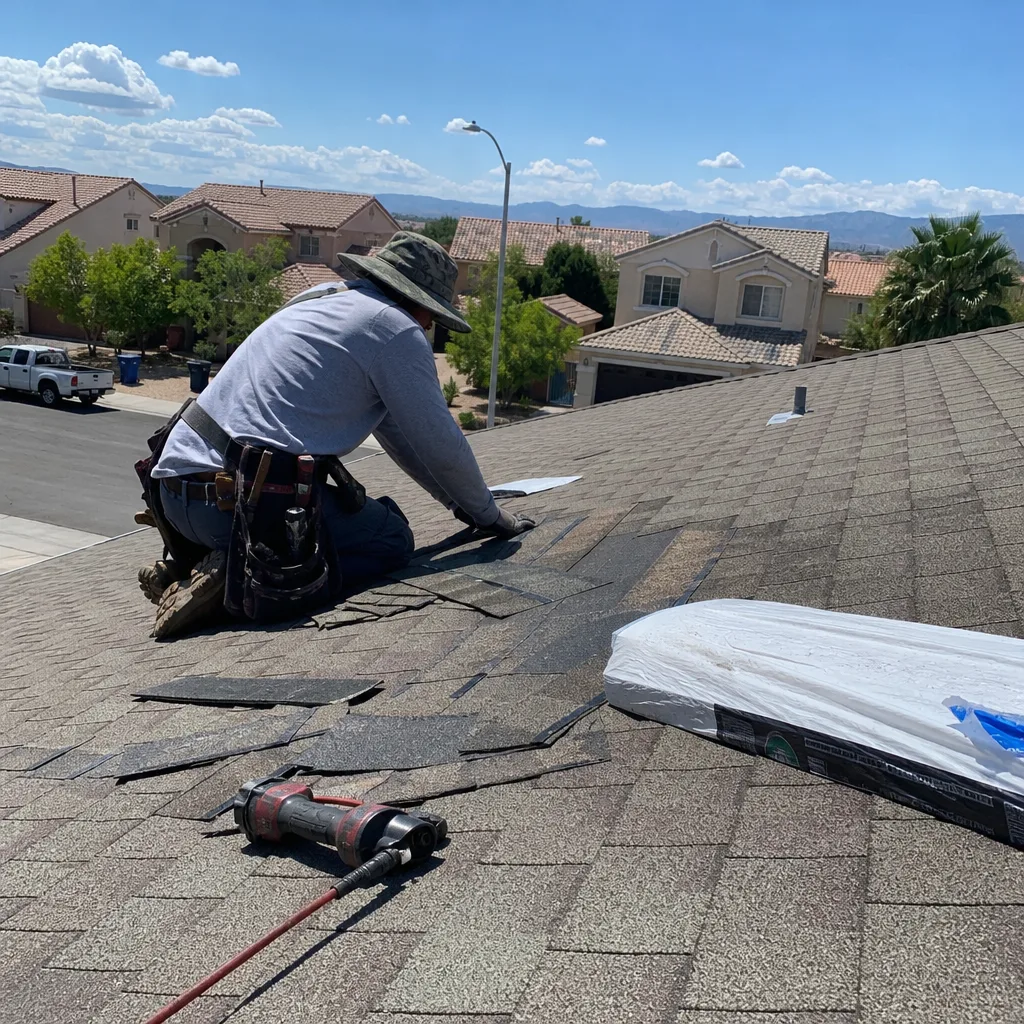
In our experience across Sunrise Manor, the second bucket is where homeowners get hurt most often. It’s not the obvious jobs that cause trouble. It’s the ones that seemed finished until the next monsoon-season downpour pushed water sideways under a shingle and into the felt. That’s also why we photograph every inspection from the actual roof: a homeowner who can see the layers understands which bucket a repair belongs in.
Safe DIY Repairs: What You Can Actually Do
Three repairs are genuinely within reach for a careful homeowner who is comfortable on a ladder and follows the rules. None of them require opening up the roof structure, and all of them fail visibly and cheaply if you get them wrong.
- Replace a cracked pipe boot. The rubber collar around a plumbing vent cracks with sun exposure, which is common on south-facing slopes in the valley. A replacement boot slides over the pipe and seals under the shingles above it. Match the pipe diameter, don’t over-tighten the collar, and check the seal from inside the attic after the first rain.
- Reseal lifted shingle tabs. Wind-lifted tabs on a pitched roof can be re-adhered with a manufacturer-approved roofing sealant applied in a thin bead under the tab, then weighted flat for a few hours. Never use silicone caulk or construction adhesive; both fail in heat and trap moisture.
- Clear valleys, gutters, and debris dams. Palm fronds, seed pods, and windblown grit collect in valleys and behind chimney crickets. Clearing them restores drainage and removes the standing-damp condition that starts most premature rot.
Those three are the honest list. Anything that requires lifting shingles past the seal line, cutting into underlayment, or working around a penetration you didn’t install belongs in the next two categories. When a repair is larger than these three, our Roof Repair in Sunrise Manor team can look at it with photos and tell you exactly what you’re dealing with.
Do It Wrong and It Costs Double: The Middle Category
This is the trap. These repairs look simple on a video and even feel finished when you climb down. The problem is that the seal or the overlap can’t be verified by eye, and the failure only shows up after the next hard rain, often months later.
- Flashing around a chimney or skylight. The layered metal and counter-flashing must shed water in a specific order. Get one layer wrong and water tracks backward under the shingles.
- Valley repairs. Valleys carry the heaviest water volume on the roof. A repair that’s slightly under-woven or under-sealed leaks for years before you see it.
- Roof-to-wall transitions. The step flashing and kick-out detail is where a huge share of interior leaks start. It’s fussy, hidden under siding, and unforgiving.
- Any repair on an older three-tab roof. Old shingles are brittle. Lifting one to fix a leak often cracks three more, turning a small repair into a full section replacement.
The math on this category is brutal. If you spend $80 on materials and a Saturday, then a professional has to remove your work and redo it correctly, you’ve paid twice and lost the day. In Sunrise Manor, where summer surface temperatures on a dark shingle roof push past 150°F, sealants that looked fine in spring can fail by July. That’s why we tell homeowners: on this bucket, the honest call is to get a written estimate first, then decide. Our no-hassle upfront pricing means the number on the estimate is the number on the invoice, so there’s no mystery to weigh against a DIY gamble.
Leave It Alone: Repairs You Can’t See the Full Problem On
The third category is the one where DIY can cost you a deck. These repairs sit on top of a problem that isn’t visible from the surface, so you cannot evaluate whether you’ve actually fixed it.
- Flat and low-slope roof repairs. Water on a low-slope roof doesn’t shed; it sits and finds seams. A patch that looks watertight can pond water under the membrane and rot the deck from underneath.
- Decking and sheathing replacement. If a shingle is soft underfoot or shows a dark water stain from the attic, the wood underneath is likely compromised. You can’t assess soft decking from the roof surface.
- Underlayment failures. Underlayment is the actual waterproofing layer on a pitched roof. A shingle repair that doesn’t touch a failed underlayment below it fixes nothing.
- Structural sag and ridge issues. Any sag, dip, or rotten fascia means load-bearing problems. These are beyond the surface entirely.
- Active leaks with no obvious source. Water travels. A stain on the ceiling in the hallway often starts thirty feet away on a different slope.
This category is where a professional inspection earns its keep. We document every check with photos taken from your actual roof, not a scary speech in the driveway. If you’d rather see what’s really going on before deciding, our Specialty Roofing in Sunrise Manor team handles the low-slope and hard-to-read cases that pitched-roof experience alone doesn’t cover.
Tools, Fall Safety, and the Real Cost of DIY
DIY roof repair almost always gets priced as materials only. Once you count the safety gear and the tools a proper repair needs, the real number is very different. On a typical single-story Sunrise Manor home with a 5:12 pitch, here’s what a safe DIY attempt actually requires:
- Fall protection: a proper roof harness and anchor set up costs $150 to $350, and it is not optional. Roof work is one of the most hazardous tasks a homeowner can attempt, and falls happen without warning on dry, sun-baked shingles.
- Ladder and stabilizer: a quality extension ladder with a stabilizer runs $250 to $450. Never carry materials up a ladder you haven’t stabilized.
- Roofing hand tools: a flat pry bar, hammer, utility knife, sealant gun, and a proper roofing sealant, roughly $80 to $150.
- Materials and disposal: varies, but even a small repair can run $60 to $200 once you buy the boot or the shingles and haul off old material.
- Your time and risk: a repair that a journeyman finishes in an hour can eat a full day the first time.
Add all that and the “cheap” DIY pipe boot can cost more than a professional call once you’ve bought gear you’ll never use again. Our technicians have up to 10 years of experience and arrive background-checked and in uniform, with the right tools and the sealants that hold in valley heat. If you’re weighing the numbers, the Ridgeline Roofing Co. Sunrise Manor home page lays out the estimates we offer at no charge.
Why Flat and Low-Slope Roofs Punish Amateur Repairs
The Sunrise Manor valley is full of low-slope and flat roof sections, on garages, additions, patios, and entire homes built through the mid-century. These roofs are especially punishing of amateur repairs, because the physics of water on a low slope works against a surface fix.
On a pitched roof, gravity is your partner. Water sheds off, and a leak announces itself quickly. On a low-slope roof, water ponds. It sits in the tiniest seam and works its way in over weeks. A patch kit applied by a homeowner can look perfect and still allow ponding water to migrate under the membrane, where it rots decking from the underside. Because the surface looks fine, a homeowner has no way to know the repair silently failed until water appears inside, usually somewhere unexpected.
Materials make it worse. Low-slope membranes – rolled, modified bitumen, or single-ply systems – rely on proper seam sealing, proper overlap, and correct substrate preparation. Those are controlled procedures, not eyeball procedures. A DIY patch that isn’t properly welded or overlapped will fail at the seam, and the failure is invisible. When homes in Sunrise Manor have a low-slope addition over a living space, a failed patch is a five-figure problem disguised as a $60 repair. That’s the clearest example of our leave-it-alone category. If any part of your roof is low-slope, treat it as a professional’s job unless you’re explicitly fixing something on top of a sound membrane.
When a DIY Repair Voids Your Shingle Warranty
Manufacturer shingle warranties from GAF, CertainTeed, and others are specific about what voids coverage. A DIY repair can quietly cancel the remaining warranty on your roof, and most homeowners never realize it until they need to claim it.
The common voiding triggers:
- Improper installation of flashing or penetration seals. If a repair touches a penetration and isn’t done to the manufacturer’s or local code standard, the shingle warranty on the affected area is typically void.
- Sealant substitution. Using a non-approved adhesive or caulk rather than the manufacturer-approved sealant voids the warranty on that section.
- Unpermitted repairs. Many jurisdictions require permits for repairs above a certain size. Work done without the required permit can void both the shingle warranty and, in a resale, complicate the inspection.
- Any repair that alters the manufacturer’s specified layering. Cutting underlayment or removing layers without proper replacement breaks the warranty terms.
This is where a professional’s paperwork matters as much as the work itself. Because we’re an authorized installer of GAF, CertainTeed, Owens Corning, IKO, Atlas, Tamko, and Boral materials, our repairs are done to the standards those warranties require. When you need a replacement later, our Roof Replacement & Installation in Sunrise Manor service carries the same standard. Protecting an existing warranty is often worth more than the small savings of a DIY fix.
What a Written Repair Guarantee Should Protect You From
If the reason to hire a professional is that a mistake is expensive, the guarantee is what makes the professional accountable. Here’s what a real written repair guarantee should contain. Use it as a benchmark whether you hire us or anyone else.
- The scope is written down. The guarantee covers specific repairs, not vague “workmanship.” If it isn’t written, it isn’t guaranteed.
- It covers the repair itself, not just the materials. A manufacturer warranty on shingles does nothing for a leaky seam the installer caused. The guarantee has to cover the labor.
- It has a defined callback process. If something isn’t right, who do you call and what happens next? A guarantee without a defined process is a phone number you can’t get through.
- It has no paperwork runaround. If honoring the guarantee requires navigating fine print, it’s not a guarantee.
- It’s backed by an established local company. The guarantee is only worth as much as the company standing behind it. A storm-chaser’s guarantee travels with the storm.
Our 90-Day Done Right Promise is written, has no paperwork runaround, and if it’s not right, we come back and make it right – we stand behind it, no arguing. It’s the standard we’d want for work done in our own mothers’ homes. It’s also why we ask for the second opinion: our standing offer of a free second opinion on any written estimate means you can compare our guarantee against whoever else you’re considering, before you decide.
Common Mistakes to Avoid
- Working on a wet or dewy roof. Sunrise Manor mornings leave a slick film on shingles. One slip can turn a minor repair into a hospital visit. Work only when the surface is fully dry.
- Using silicone or construction adhesive on shingles. Neither is a roofing sealant. Both fail in valley heat, trap moisture, and are the most common cause of a DIY repair that looks finished but isn’t.
- Treating a low-slope patch like a pitched repair. Patching a flat garage roof the same way you’d patch a pitched shingle roof is a guaranteed eventual failure. Low-slope needs membrane-rated materials and a proper seam.
- Climbing up without checking the attic first. Before you touch the roof, go into the attic and look for stains, sagging, and daylight. The attic tells you whether the problem is deeper than the surface.
- Lifting brittle three-tab shingles. On an older roof, lifting one tab often cracks several. Once you’ve cracked the field, a small repair has grown.
- Skipping the permit on a repair that needs one. A permit protects your warranty and your resale. When in doubt, call and ask before you start.
- Starting without a written estimate for the professional path. Get the number in writing. If the DIY gamble isn’t worth it, you want the professional price already in hand.
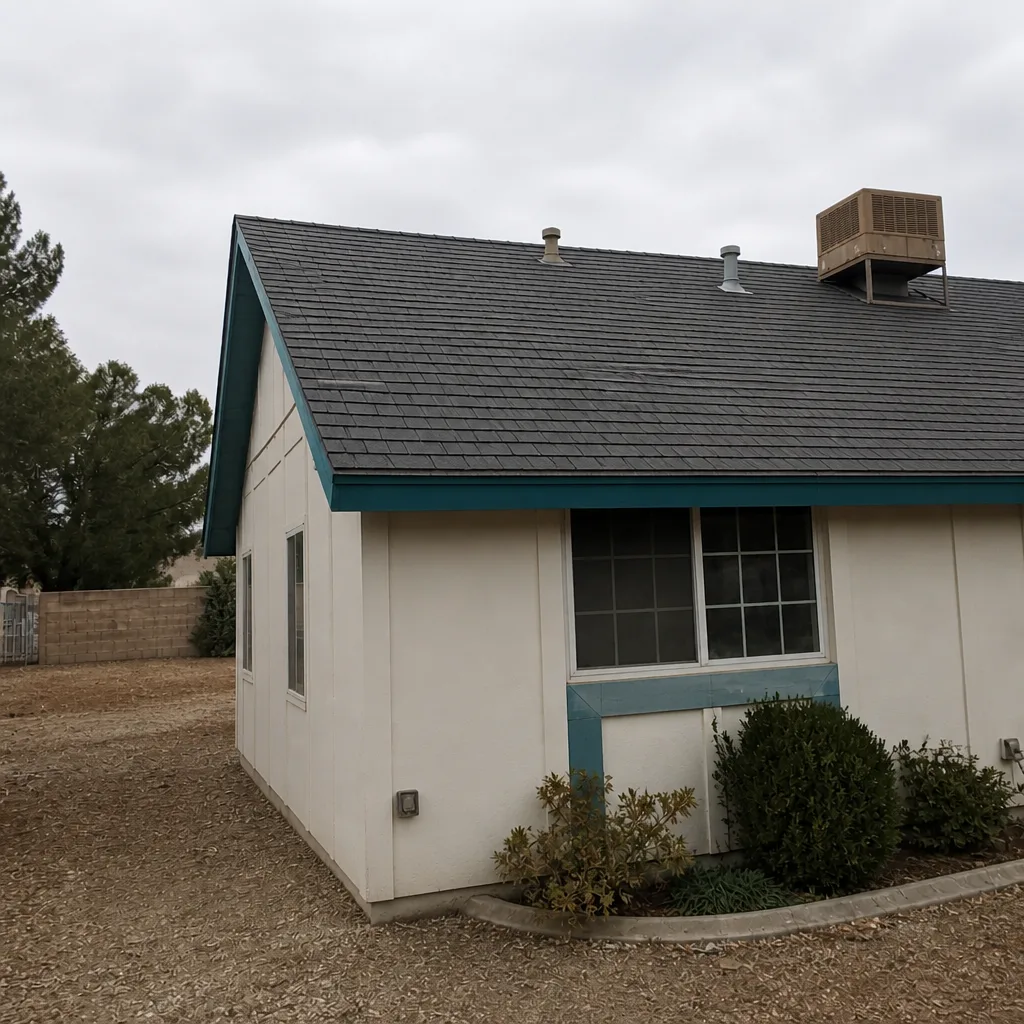
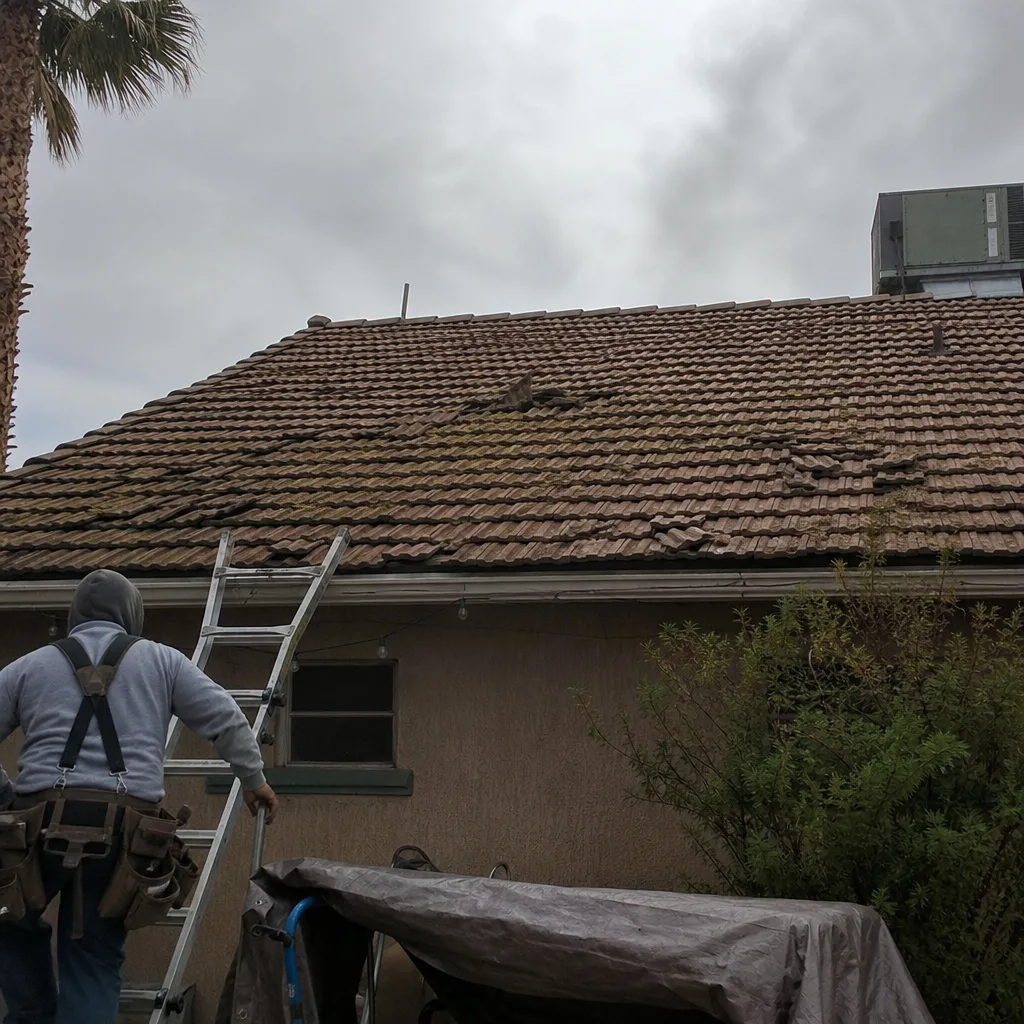
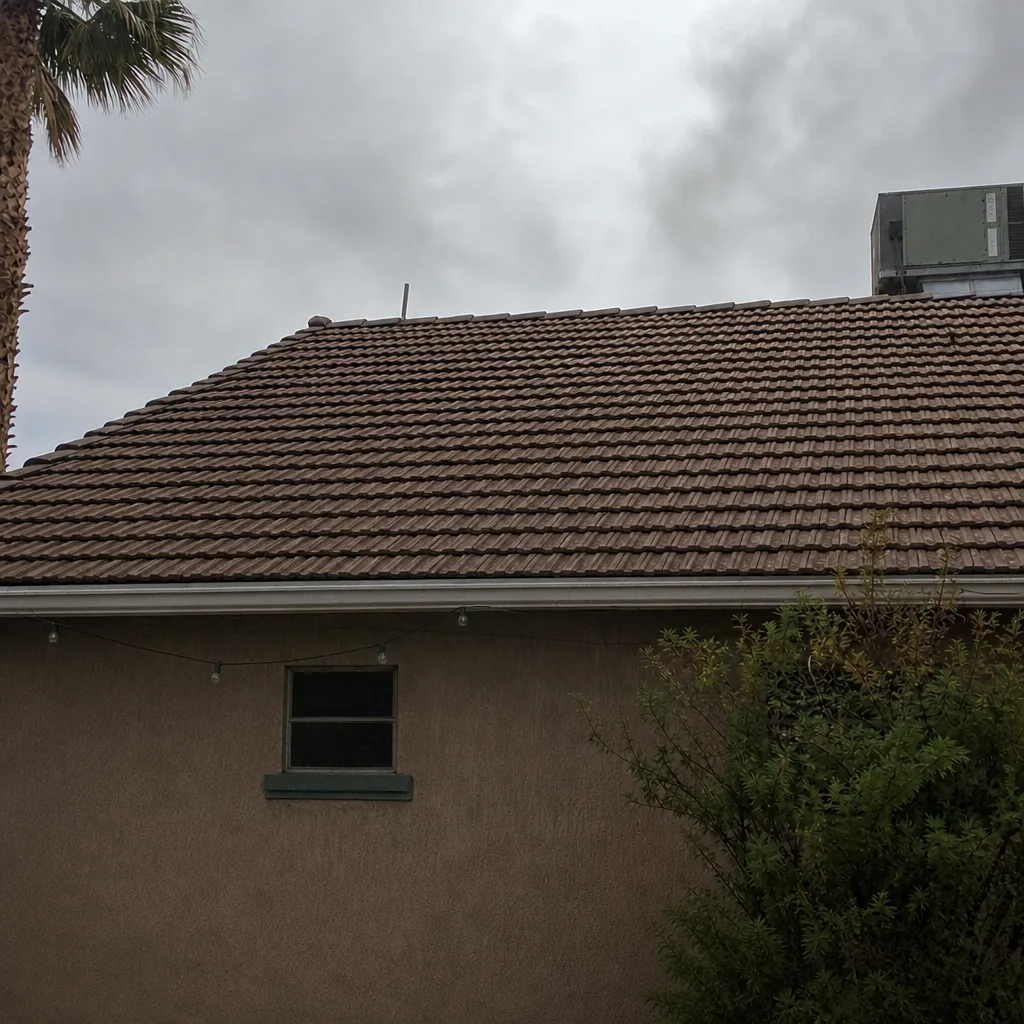
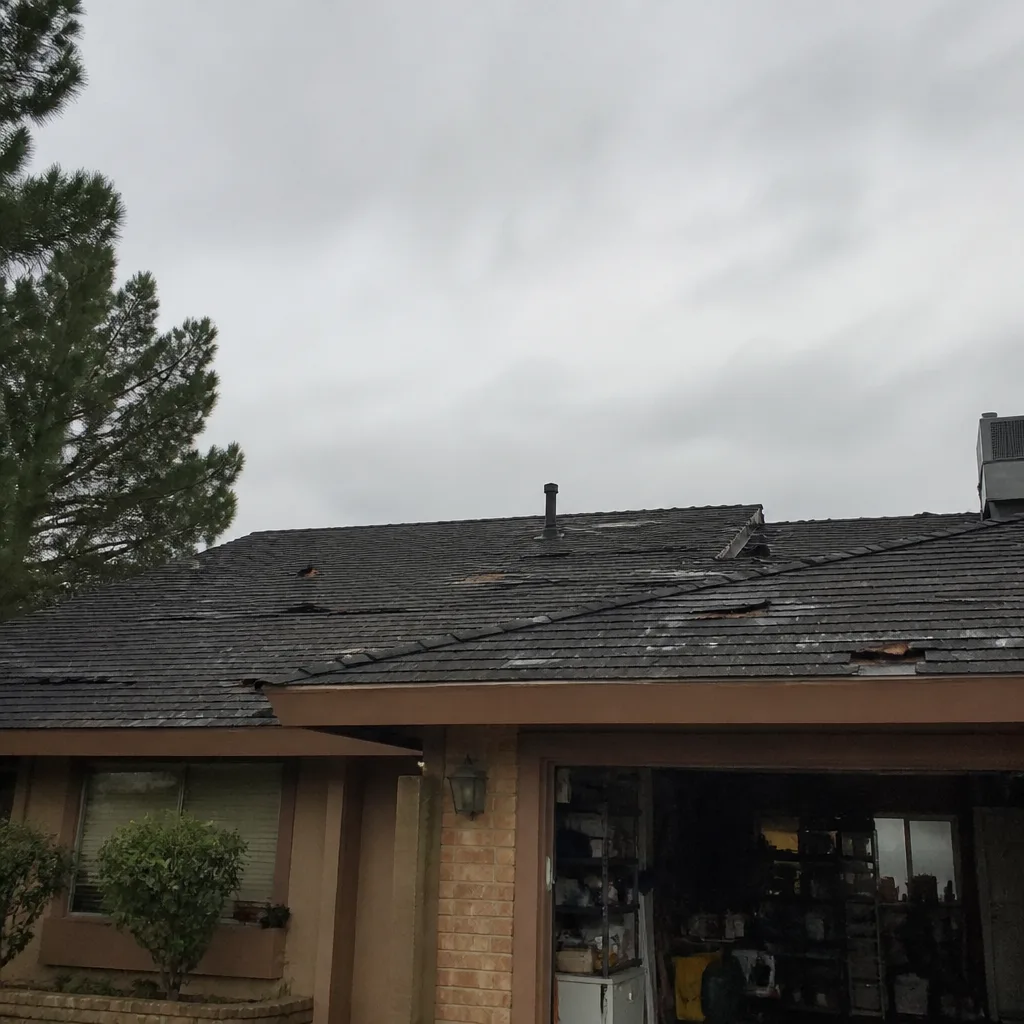
See the difference
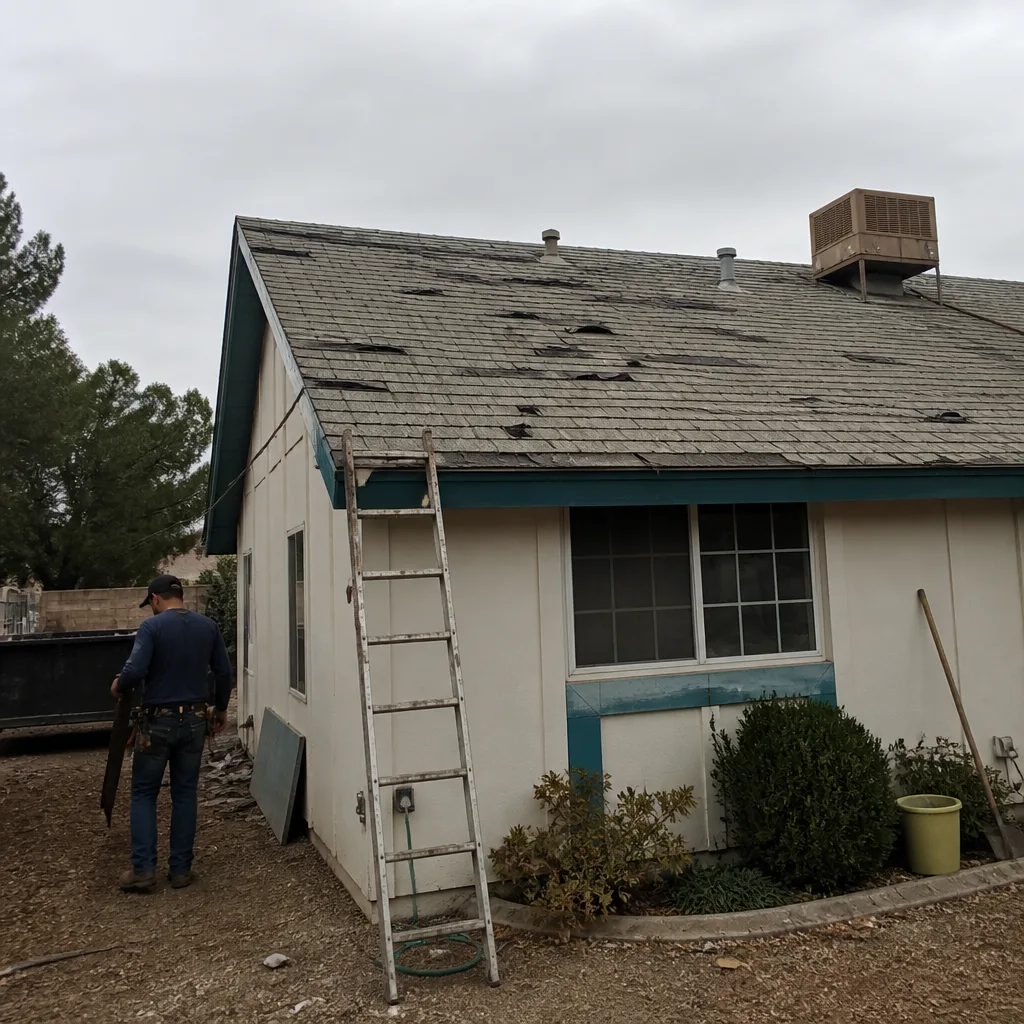 Before
 After
 Before
 After
 Before
 After
When to Call a Professional
Call a professional the moment a repair falls into the middle or leave-it-alone category, and frankly, that’s most of them. Specific triggers: any active leak you can’t trace to a visible source, any repair on a low-slope or flat roof section, any work around a chimney, skylight, or roof-to-wall transition, any soft or spongy decking, any sag or dip, any repair that requires lifting shingles past the seal line, and any repair large enough that a permit applies. Add the small repair you were going to do yourself that you now realize involves flashing. We’ve seen enough Sunrise Manor roofs to know the two-year-later version of an amateur fix is almost always more expensive than the original professional estimate. Ridgeline Roofing Co. Sunrise Manor offers free estimates in Sunrise Manor – call (844) 941-3509, and a live person will answer, any hour.
Frequently Asked Questions
Only if the leak traces to one of the three safe repairs: a cracked pipe boot, a lifted shingle tab, or a debris dam. If you can’t trace the leak to a visible, surface-level source, you can’t safely repair it yourself, because the actual failure is almost certainly under the surface.
A small pipe boot replacement typically runs $150 to $350, and a larger flashing or valley repair runs $400 to $1,200 depending on access. Low-slope repairs sit at the higher end. Call (844) 941-3509 for an exact quote – estimates are free, and the number on the estimate is the number on the invoice.
It can, and usually does. Using a non-approved sealant, altering the layered installation of flashing, or performing an unpermitted repair of any size can void the manufacturer’s warranty on that section. If your roof is under warranty from GAF, CertainTeed, or another manufacturer, check the terms before you touch it.
Small repairs like a pipe boot or a resealed tab generally don’t require a permit. Larger or structural repairs usually do. It’s the repair that alters the roof’s structure or covers a large area that triggers the requirement. When we handle the repair, we pull the permit when one’s needed and see it through to inspection, so it doesn’t become a problem at resale.
We don’t recommend it, and it’s the category we’re most careful about. A low-slope patch looks finished and fails silently; ponding water finds the seam and rots the decking from underneath before you see any sign inside. On a low-slope roof, an honest call to a professional is a $400 repair rather than a $4,000 deck replacement.
Call them, and check the written guarantee first. A proper guarantee covers the repair and labor, defines a callback process, and doesn’t require a paperwork battle. Our 90-Day Done Right Promise is written and we come back and make it right if it isn’t – no arguing. If you’re comparing estimates, our free second opinion on any written estimate lets you hold the guarantee next to theirs.
The Bottom Line
The safe DIY list is short and worth knowing: pipe boots, lifted shingle tabs, and clearing debris. Everything else belongs to the middle category (wrong costs double) or the leave-it-alone category (you can’t see the whole problem), and both of those end in a professional call. The real question is never “can I do this?” It’s “what does the failure cost if I get it wrong?” On a Sunrise Manor roof, with hot shingles, brittle older material, and more low-slope sections than most homeowners realize, that failure cost is usually higher than the estimate. We back every repair with a written 90-Day Done Right Promise and honest upfront pricing, so the professional path carries its own protection. Call (844) 941-3509 for a free estimate, and we’ll tell you honestly which category your repair is in.
Written by the team at Ridgeline Roofing Co. Sunrise Manor.