
Last updated November 18, 2026
 Metal roofing
 Architectural shingles
 Tile roofing
 GAF
 Owens Corning
 Flat & low-slope
Free roof inspection with deck photos before we talk money - GAF and Owens Corning certified installation
Styles & brands we work with
- Architectural shingles
- Metal roofing
- Tile roofing
- GAF
- Owens Corning
- Flat & low-slope
See the difference
 Before
 After
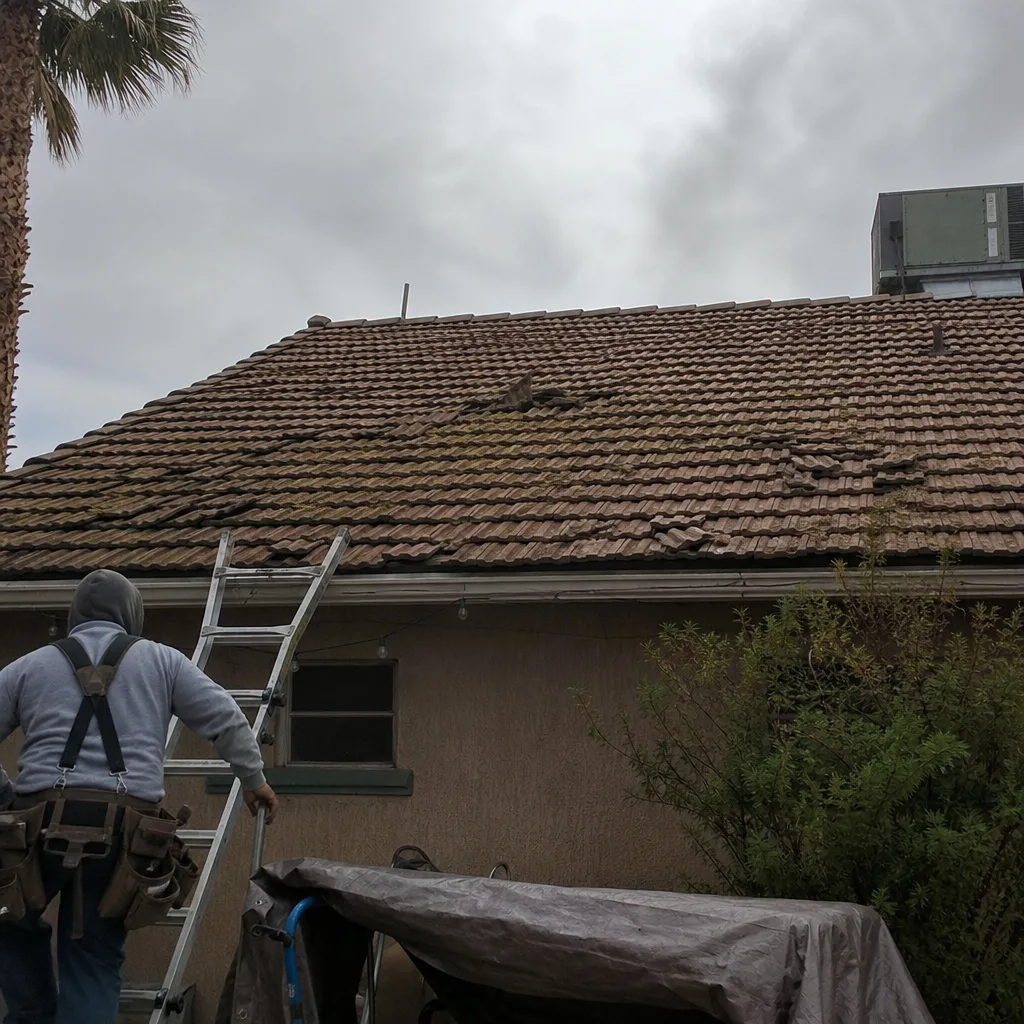 Before
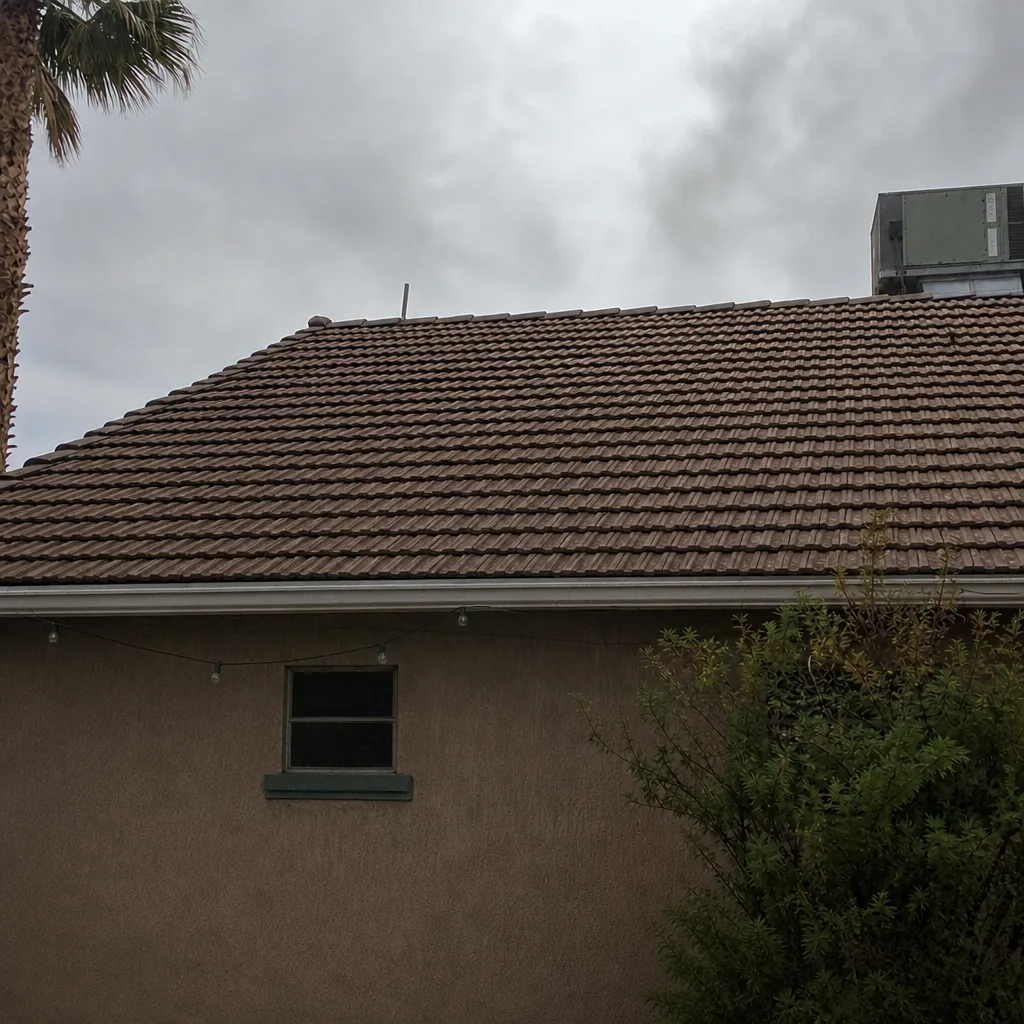 After
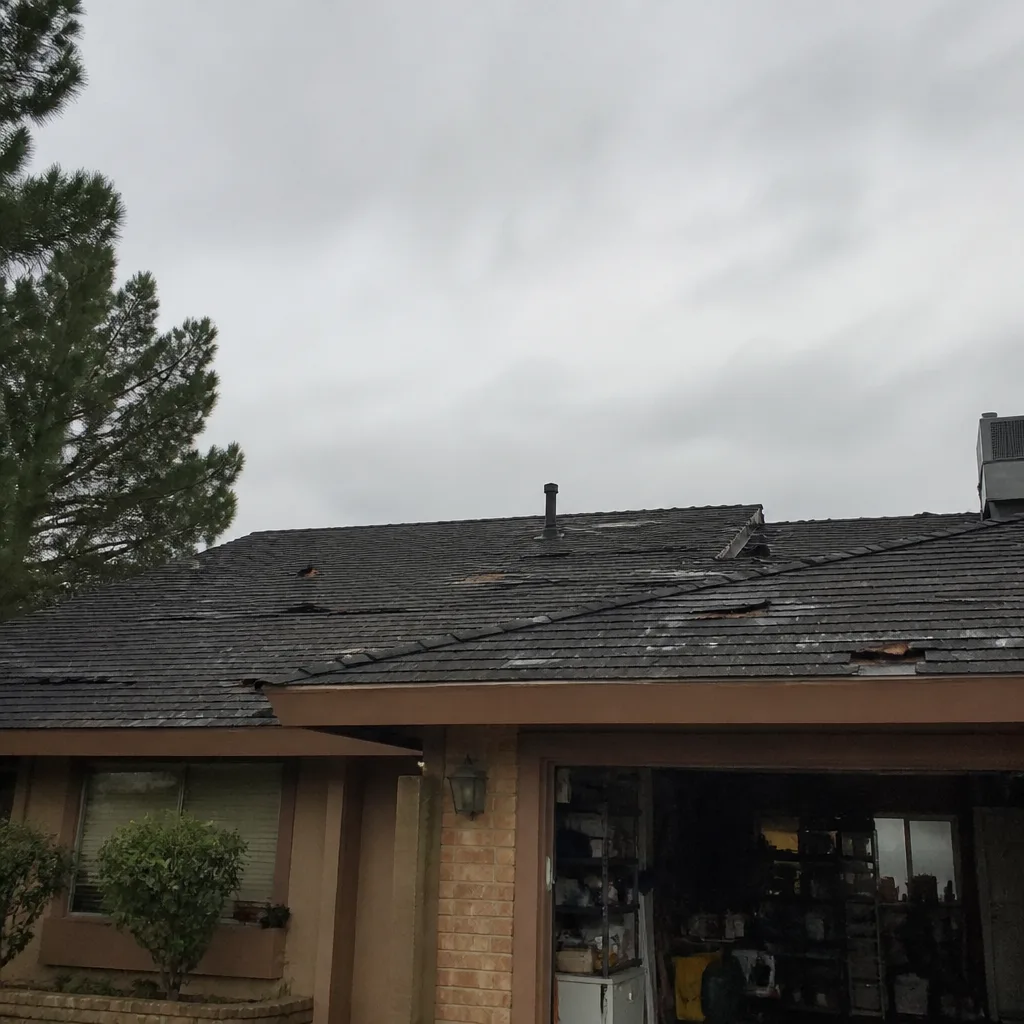 Before
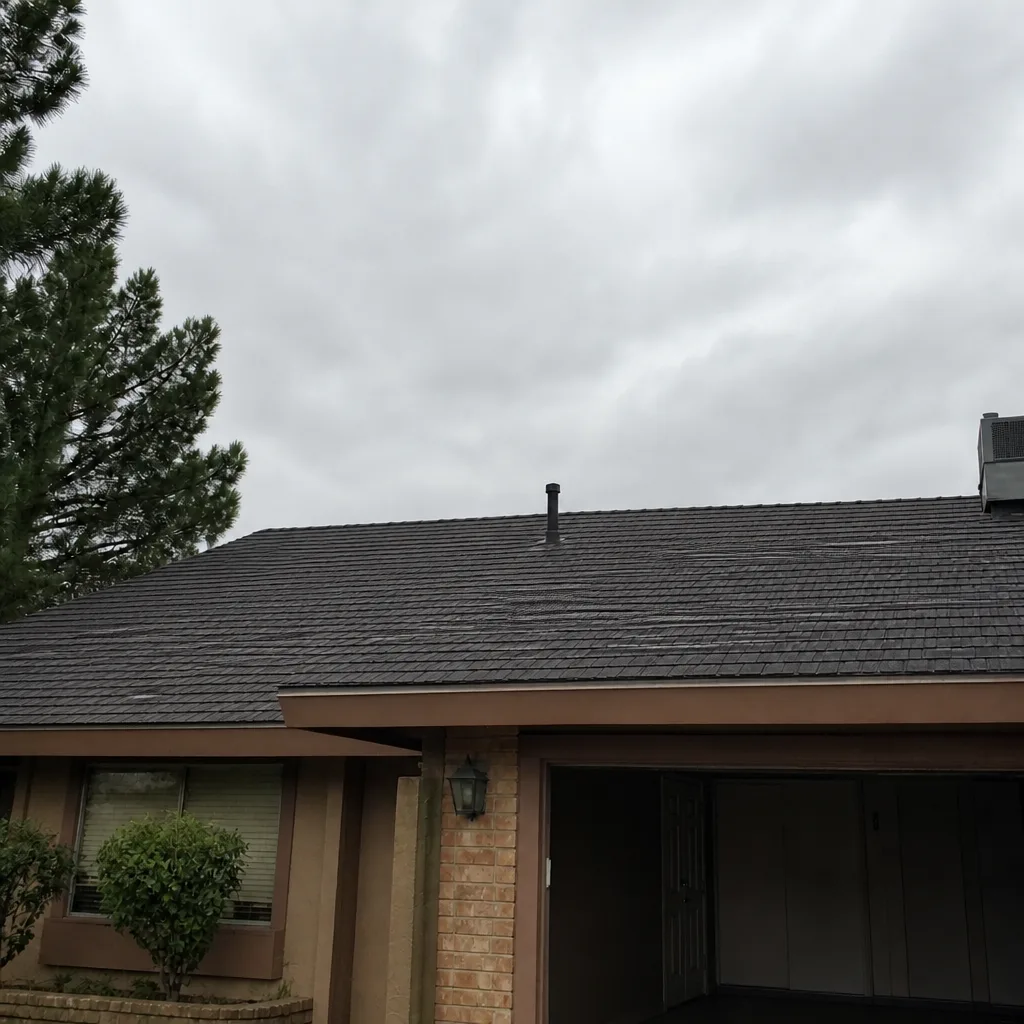 After
Specialty Roofing Warning Signs Every Homeowner Should Know
A failing foam roof doesn’t announce itself with a drip over the kitchen table. It shows up as an energy bill that climbed 15% across two summers while the attic stayed hotter than it should. By the time water finally finds a ceiling, the UV damage underneath has usually been compounding for three or four years. That delay is the whole problem with specialty roofing: foam, TPO, and tile fail quietly, in ways that read as HVAC trouble or a plumbing leak. This guide maps the warning signs to each system, explains why Sunrise Manor’s sun shortens your response window, and shows you what to check.
Quick Answer
Specialty roofing warning signs fall into three groups: system-specific surface clues (alligatoring on foam, wrinkles or open seams on TPO, hollow-sounding or cracked tiles), interior symptoms homeowners misattribute (paint bubbling near exterior walls, salt deposits on masonry, compressed attic insulation), and performance drift like rising cooling costs or standing water 48 hours after rain. In Sunrise Manor’s UV environment, a sign that buys you two years in a northern climate may give you six months, so catching it early and having it photo-documented matters more here than almost anywhere.
Table of Contents
- Why Specialty Roofs Fail Quietly
- Foam Roof Warning Signs
- TPO and Flat Membrane Warning Signs
- Tile Roof Warning Signs
- Interior Clues Homeowners Misread
- The Monsoon Test: A 24-Hour Homeowner Diagnostic
- Why Sunrise Manor’s Sun Compresses the Timeline
- Contractor Red Flags
Why Specialty Roofs Fail Quietly
Asphalt shingles telegraph their age. Curling, missing tabs, and granules piling in the gutter are visible from the curb, which is why every homeowner knows what an old shingle roof looks like. Specialty systems don’t work that way. Foam, TPO, and tile are designed to be monolithic and durable, and that’s exactly why their early failures stay hidden from street level.
Foam fails from the top down. The protective coating takes the UV hit, and once it thins, the foam cells underneath start to oxidize and absorb. The roof still looks solid from the driveway while its insulation value is quietly dropping. TPO fails at the seams and penetrations, not in the middle of the field, so the leak begins as a hairline gap you can’t see from the ground. Tile is the most deceptive of the three: the tile itself can look perfect for decades while the underlayment beneath it, which is what actually sheds the water, degrades from heat and age.
We’ve climbed thousands of roofs in the Sunrise Manor area, and the pattern repeats. The homeowner calls about a ceiling stain, and the actual failure started years earlier with a signal nobody translated. That translation is what this guide is for. A specialty roof gives you warning. It just doesn’t give it loudly.
Foam Roof Warning Signs
Spray polyurethane foam is a strong choice for low-slope roofs, but it depends entirely on its protective coating. When that coating wears, the foam degrades fast, especially under desert sun. Here’s what to watch for, in rough order of how early they appear.
- Energy cost creep. A 10% to 15% rise in summer cooling costs across two seasons, with no other explanation, is one of the earliest signs that foam has lost reflectivity and insulation value.
- Alligatoring. Visible from a ladder at the roof edge, this is a cracked, scaly pattern in the coating that looks like dried mud. It means the coating has failed and UV is reaching the foam.
- Soft areas underfoot. A trained technician walking the roof can feel spongy spots where water has entered the foam. If you can feel softness from a stable ladder position at the edge, the damage is already significant.
- Ponding that lingers. Water sitting in low spots more than 48 hours after rain stresses the coating and pushes moisture into seams.
- Chalking or powder on the surface. A white residue that rubs off on your hand signals coating breakdown.
In Sunrise Manor, foam roofs often show early alligatoring by year eight to ten if the coating wasn’t recoated on schedule. The good news is that a recoating at the right moment is far cheaper than a foam replacement, which is why catching the coating failure early pays for itself. We handle foam work as part of our Specialty Roofing in Sunrise Manor service, and the inspections are photo-documented from your actual roof so you’re looking at evidence, not a sales pitch.
TPO and Flat Membrane Warning Signs
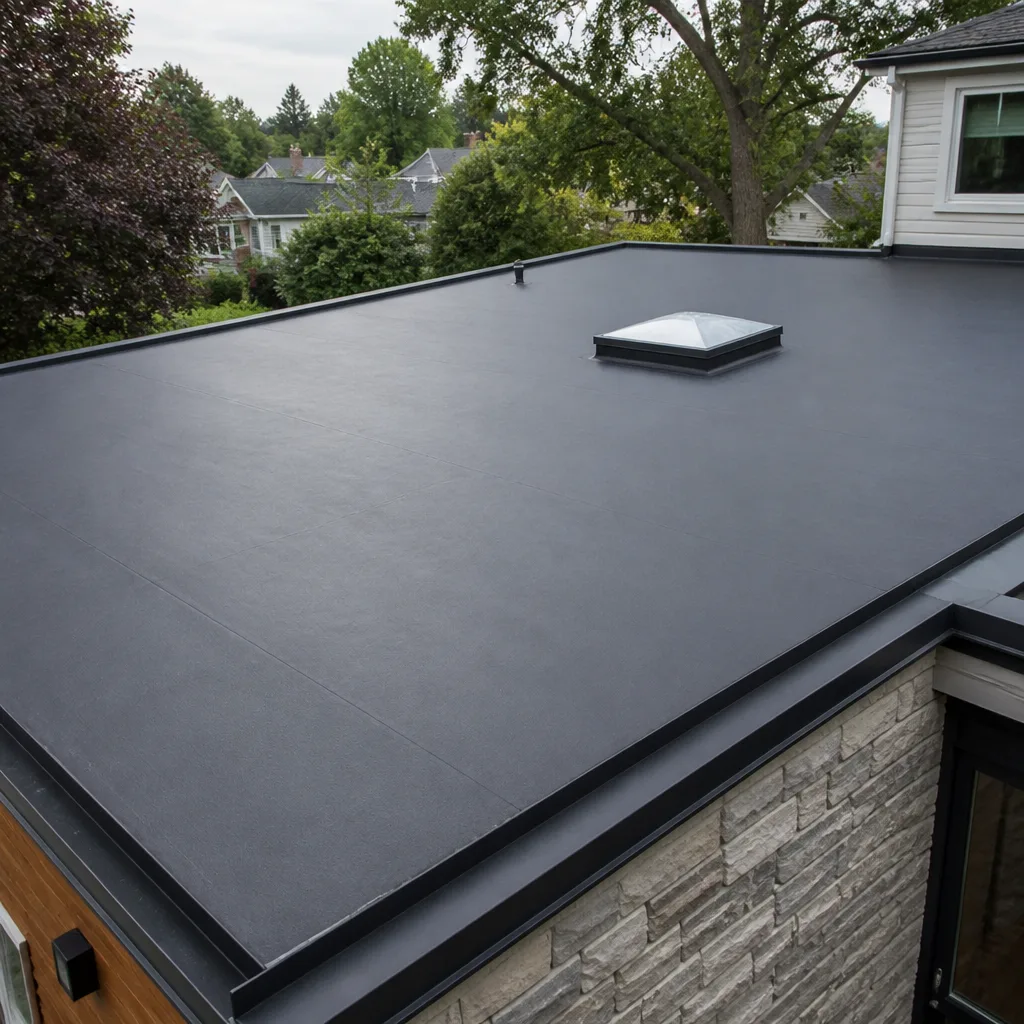
TPO is a single-ply membrane common on flat and low-slope roofs. It’s tough and reflective, but it fails at its weakest points: seams, edges, and penetrations where HVAC units, vents, and pipes come through. Most TPO leaks start at a seam gap or a poorly sealed curb, not in the middle of the sheet.
Here’s what a homeowner or a careful technician should look for.
- Wrinkles or bubbles in the field. A membrane that’s wrinkling or lifting in the middle of the sheet suggests adhesive failure or trapped moisture underneath.
- Visible seam gaps. Look along the welded seams. Any lifting edge or gap is where water gets in.
- Standing water 48 hours after rain. Some ponding is tolerable on a flat roof, but water that stays more than two days points to a slope or drainage problem that will shorten the membrane’s life.
- Punctures or scuffs near HVAC units. Service technicians walking on the roof can tear the membrane at equipment curbs. Those spots are prime leak candidates.
- Brittle or chalky membrane surface. TPO that has lost its flexibility is aging out and will crack at stress points.
On commercial-style flat roofs over homes in the Sunrise Manor area, we see seam failures more than field failures, and they’re exactly the kind of thing a roofer can miss if they never climb up. That’s the difference between an inspection and a guess.
Tile Roof Warning Signs
Tile roofs are beautiful and can last fifty years or more, but they have a secret: the tile is not the waterproofing. The underlayment beneath the tile is what sheds water. So a tile roof can look immaculate from the street while the underlayment is failing underneath, and that’s when leaks begin.
Watch for these signs.
- Hollow sound when tapped. A technician who taps tiles gently and hears a hollow, loose sound has found a tile that’s debonded from its bedding.
- Cracked or missing mortar at the ridge and hips. The mortar that holds ridge and hip tiles in place cracks with heat cycling. A cracked ridge is one of the most common tile roof failures we see.
- Granules in the gutters. Underlayment that’s deteriorating sheds granules into the gutters, where they look like coarse sand or grit.
- Slipped or shifted tiles. Tiles that have slid out of alignment, usually after a wind event or from fastener failure.
- Staining on the tile underside or deck. Visible once a technician lifts a tile or looks from the attic: the earliest proof the underlayment is going.
The tile roof timeline is deceptive because the surface can look new for decades. What matters is the underlayment age, and that’s not something you can judge from the curb. If your tile roof is older and you’ve never had the underlayment inspected, it’s worth having a technician get on the roof and photograph what’s actually there. Our team installs tile systems using materials from lines like Boral and GAF, so we know what healthy tile roofing looks like from underneath.
Interior Clues Homeowners Misread
Some of the most reliable roof warning signs don’t appear on the roof at all. They show up inside the house, where they get blamed on plumbing, HVAC, or paint. Here’s how to read them correctly.
Paint bubbling near exterior walls. If paint bubbles or peels near an exterior wall, especially high up, that’s often moisture migrating from the roof deck or attic, not a paint problem. On a specialty roof with a slow seam or underlayment leak, the first sign is often interior paint bubbling rather than a water stain.
Salt deposits on masonry. A white, powdery bloom on brick or stucco is called efflorescence, and it means moisture is moving through the masonry and evaporating on the surface. If it appears near the roofline or above a flat roof edge, suspect a roof leak feeding it.
Compressed insulation in attic corners. When insulation is packed down or damp in the attic corners, it’s often because water has been entering there and crushing it. Look for insulation that’s matted, darker, or lower in specific corners rather than evenly distributed.
A ceiling stain that appears only after heavy rain. Seasonal ceiling stains are classic signs of a roof leak that only triggers under sustained rain, which on a specialty roof usually points to a seam, penetration, or ponding issue. If a stain shows up after a monsoon and fades as the roof dries, that’s a leak, not condensation.
Each of these interior clues maps to a specific specialty roofing failure: seam gaps and underlayment degradation. If you’re seeing any of them in your home, we cover interior-side diagnostics in our Roof Repair in Sunrise Manor service, and the first step is always the same: get a trained technician on the roof to photograph the source.
The Monsoon Test: A 24-Hour Homeowner Diagnostic
Sunrise Manor gets its rain in concentrated bursts, which makes monsoon season the best free diagnostic tool a homeowner has. Within 24 hours of a significant rain event, you can check your roof from safe ground positions and spot warning signs while they’re fresh. Don’t walk the roof yourself, especially a flat or coated roof that may be soft or slippery. Work from a ladder at the edge and from inside the attic.
- Walk the perimeter on the ground. Look for water staining on stucco or fascia near the roof edge, and check gutters for water spilling out of place.
- Check the flat roof from a safe edge or ladder view. Note any standing water. If it’s still there 48 hours later, that’s a drainage warning you should act on.
- Look along seams and penetrations from the ladder. On TPO, note any lifted seam or gap near HVAC curbs and vents.
- Inspect the attic within 24 hours. Use a flashlight to check the deck underside near seams, chimneys, and corners for dampness or fresh staining.
- Note interior spots. Photograph any new paint bubbling, ceiling stain, or efflorescence, and write down the date and the rain event. A pattern over two or three storms is proof of a leak.
Doing this faithfully after each monsoon pays off. You build a record of what your roof does under real weather, which turns a vague worry into a specific, datable warning sign. When you call, that record makes the inspection faster and the repair more precise.
Why Sunrise Manor’s Sun Compresses the Timeline
A warning sign that gives a homeowner two years to respond in a northern climate might allow only six months in Sunrise Manor. The reason is UV. Our sun delivers a much higher annual UV load than northern climates, and every specialty roofing system is in part a UV-management system. Foam coatings, TPO membranes, and tile underlayments all age faster under that intensity.
In practical terms, this changes how you read the signs. Alligatoring on a foam roof that would be “watch it for a couple of years” back East is “schedule a repair this season” here. A TPO membrane that’s just starting to chalk has less time before it turns brittle and cracks. Tile underlayment that’s shown its first granules in the gutter is likely closer to failure than a homeowner expects.
The heat cycling compounds it. Our daytime-to-nighttime swings stress seams and mortar more than a mild climate does, which is why cracked ridge mortar on tile roofs and seam gaps on TPO show up here at the rates we see. Getting the inspection early, with photos taken from your actual roof, buys you the most options. It’s the difference between a targeted repair and a full replacement, and in this climate that window closes faster than most homeowners realize.
Contractor Red Flags for Specialty Systems
Specialty roofing is less common than shingle work, and not every roofer is qualified to work on it. The biggest tell is simple: a roofer who dismisses your warning signs without getting on the roof is not someone to trust with the repair. Specialty systems fail in ways you can’t see from the ground, so a roofer who diagnoses from the driveway is guessing.
Other red flags to watch for.
- A roofer who quotes a repair without a photo-documented inspection. On foam, TPO, and tile, the source is rarely where the leak shows up inside.
- Vague scopes and no line-item written estimate. You should see the specific repair and the price, not a lump sum.
- Pressure to replace the whole roof when a coated or seam repair is a real option.
- No written workmanship guarantee. A square deal includes a promise in writing.
- Unfamiliarity with the specific system. Ask whether they’ve worked on foam recoating, TPO seam repairs, or tile underlayment, and listen to the answer.
At Ridgeline Roofing Co., we’ve backed every job with our 90-Day Done Right Promise since 1984: if it isn’t right, we come back and make it right, no paperwork, no arguing. Our technicians are background-checked and arrive in uniform, and we install seven leading manufacturer lines including GAF, CertainTeed, Owens Corning, IKO, Atlas, Tamko, and Boral, so a proper specialty repair doesn’t get substituted with the wrong material. We’re the opposite of a storm-chasing outfit: we hire local crews and plan to be in town, standing behind these roofs, for years to come.
Common Mistakes to Avoid
- Diagnosing from the ground. Foam, TPO, and tile all hide their failures where you can’t see them from the curb. Insist on a photo-documented inspection from your actual roof before any repair is quoted.
- Waiting for the ceiling stain. By the time water shows inside, the underlying damage has usually been compounding for years, which is exactly what turns a coating repair into a full replacement.
- Blaming the wrong system. Paint bubbling, salt bloom on masonry, and rising cooling costs are roof symptoms, not plumbing or HVAC problems. Read them correctly before spending money elsewhere.
- Ignoring the 48-hour water test. Standing water that lingers more than two days after rain is a clear drainage warning on any flat or low-slope roof, and it’s best addressed before the membrane ages further.
- Choosing the lowest bid on a specialty repair. Specialty materials and methods aren’t interchangeable. A low bid often means the wrong material or a repair that skips the real source, and you’ll pay twice.
- Skipping the written guarantee. Without a written workmanship promise, the repair is only as reliable as the handshake behind it. Ask for it in writing.
- Skipping attic checks after a monsoon. A five-minute attic inspection within 24 hours of rain is the cheapest diagnostic you’ll ever run, and it catches leaks while they’re still small.
When to Call a Professional
Some warning signs are worth watching. Others are worth calling about today. Call a professional if you see alligatoring or soft spots on a foam roof, a lifted seam or gap on TPO, cracked ridge mortar or slipped tiles on a tile roof, or any new ceiling stain that appears after rain. Call immediately if paint is bubbling near exterior walls, salt is blooming on masonry near the roofline, or water is still ponding 48 hours after a storm. These point to active moisture entry, and in Sunrise Manor’s climate the margin for waiting is short. Ridgeline Roofing Co. Sunrise Manor offers free estimates in Sunrise Manor and photo-documented inspections with a live person answering every call, 24/7. Call (844) 941-3509 to schedule yours, and if you’re already weighing a larger replacement, our Roof Replacement & Installation in Sunrise Manor page explains the options and pricing in plain terms.
Frequently Asked Questions
The earliest signs are usually performance drift rather than visible leaks: rising summer cooling costs on a foam roof, visible alligatoring on the coating, or granules in the gutter from a tile roof’s underlayment. These appear months to years before water shows inside, which is why catching them early changes the cost of the repair. Call (844) 941-3509 for a free estimate and photo-documented inspection.
In Sunrise Manor, treat it as urgent rather than optional, because UV and heat cycling here compress the timeline that a northern climate would allow. A sign that gives two years of response time up north may allow only six months here. The safest move is a free inspection early, before a targeted repair turns into a full replacement.
A stain that appears only after heavy rain is a classic sign of a leak that triggers under sustained water, usually from a TPO seam gap, a foam coating failure, or degrading tile underlayment. It’s a real leak, not condensation. Have a technician get on the roof to find the source, and call (844) 941-3509 for a free estimate.
The signs point to different systems. Alligatoring, chalking, and soft areas underfoot point to foam; wrinkles, lifted seams, and ponding point to TPO; hollow-sounding tiles, cracked ridge mortar, and granules in the gutter point to tile underlayment failure. Interior clues like paint bubbling and salt bloom can appear with any of them, which is why a photo-documented roof inspection settles it.
Yes, where the work requires it. Larger specialty repairs and installations generally need permits, and we handle that as part of the job. We’ll walk you through what your specific repair requires before any work starts, so there are no surprises. Call (844) 941-3509 for a free estimate.
They shouldn’t surprise you if you get a written, line-item estimate up front. The number on the estimate is the number on the invoice, and we install materials from the manufacturer lines the repair calls for. Ask for the free second opinion on any written estimate you’ve already received by calling (844) 941-3509.
The Bottom Line
Specialty roofs fail quietly, and that’s the whole point. The energy bill that creeps up, the paint that bubbles near an exterior wall, the TPO seam that lifts after a monsoon, the tile ridge that cracks with heat cycling: each is a warning the roof gives you long before water reaches your ceiling. In Sunrise Manor’s sun, that warning window is shorter than most homeowners expect, so the smart move is to read the signs early and have them confirmed with photos taken from your actual roof. If you’ve spotted any of these signs, or you’d just like a clear picture of where your roof stands, Ridgeline Roofing Co. Sunrise Manor is here to help. Explore our Ridgeline Roofing Co. Sunrise Manor home page or the guided content on specialty roofing in Sunrise Manor. Call (844) 941-3509 for a free estimate. A square deal, a written promise, and a live person on the phone, day or night.
Written by the team at Ridgeline Roofing Co. Sunrise Manor.