
Last updated November 18, 2026
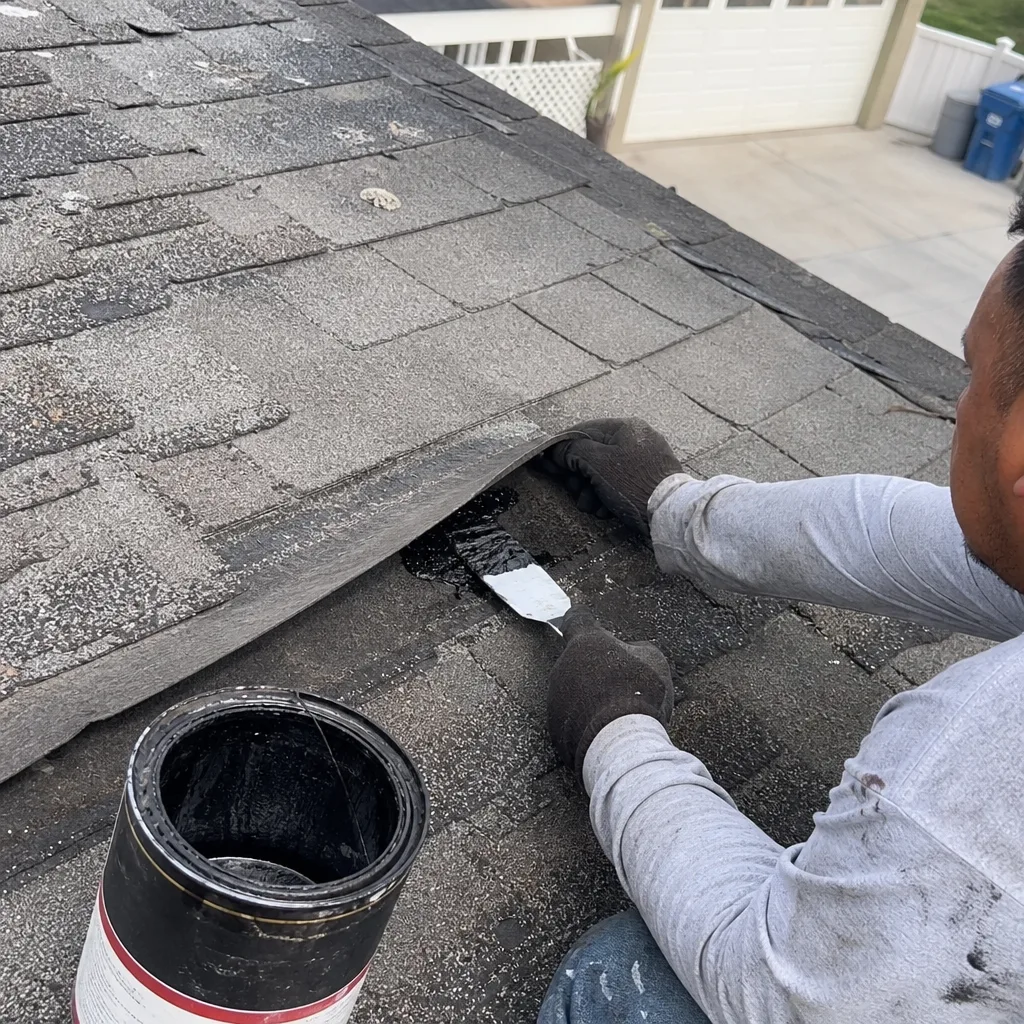
 Metal roofing
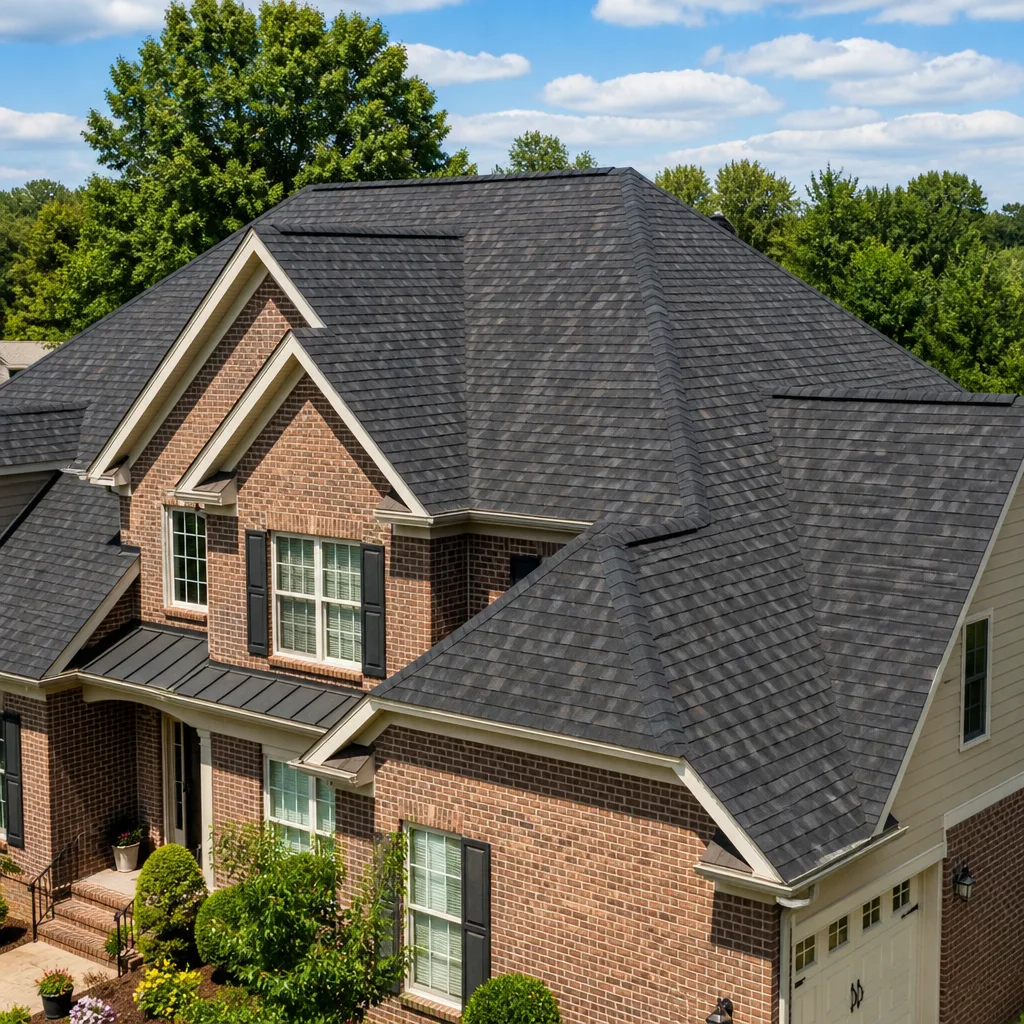
 Architectural shingles
 Tile roofing
 GAF
 Owens Corning
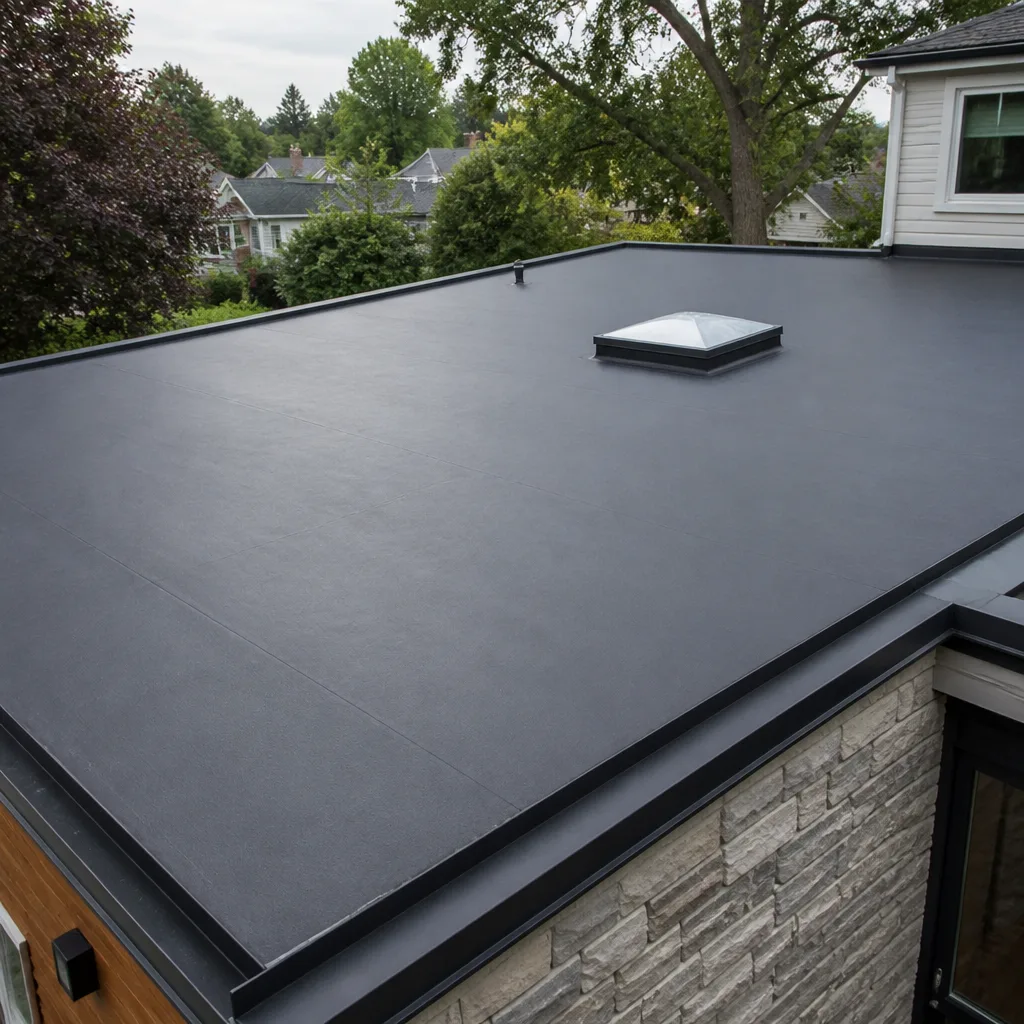 Flat & low-slope
Free roof inspection with deck photos before we talk money - GAF and Owens Corning certified installation
Roofing Warning Signs: A Sunrise Manor Homeowner’s Reference Guide
By the time you see a water stain on your ceiling, the roof has usually been failing for six to eighteen months. That’s the part nobody tells you. Long before the drip, the materials under your tile and shingles were already giving out – quietly, on the underside where you never look. Every sign in this guide appears before that stain. Most of them you can spot from the ground with a pair of field glasses. Sunrise Manor homes have their own set of tells, shaped by desert sun, monsoon rain, and the way this neighborhood was built. We put this reference together so you can read those signs early, while the fix is still small.
Quick Answer
The earliest roofing warning signs in Sunrise Manor are usually not leaks – they’re granule piles in gutters, cracked or displaced flashing at patio covers and chimney chases, sagging rooflines, and rising attic humidity in winter. Catching these before interior water intrusion turns a few hundred dollars of repair into a full replacement. If you notice two or more signs in this guide, it’s worth a free inspection.
Styles & brands we work with
- Architectural shingles
- Metal roofing
- Tile roofing
- GAF
- Owens Corning
- Flat & low-slope
Table of Contents
- The Five Ground-Level Warning Signs We Look For First
- Why Your Attic Is the Highest-Yield Inspection in the House
- Reading Granule Deposits in Gutters: An Age Clock for Shingles
- The Flashing Failures Sunrise Manor Roofs Get Most
- Indoor Signs Beyond Ceiling Stains: Binding Doors and Attic Humidity
- What Monsoon Season Reveals That Dry Months Hide
- When a Repair Is Enough and When It Isn’t
- What These Repairs Actually Cost in Sunrise Manor
The Five Ground-Level Warning Signs We Look For First
You don’t need a ladder to start. Walk your property line with the sun behind you and look up. Our technicians confirm these on the roof, but homeowners can catch most of them in fifteen minutes. Here are the five ground-level indicators we check first on Sunrise Manor’s concrete tile and architectural shingle homes.
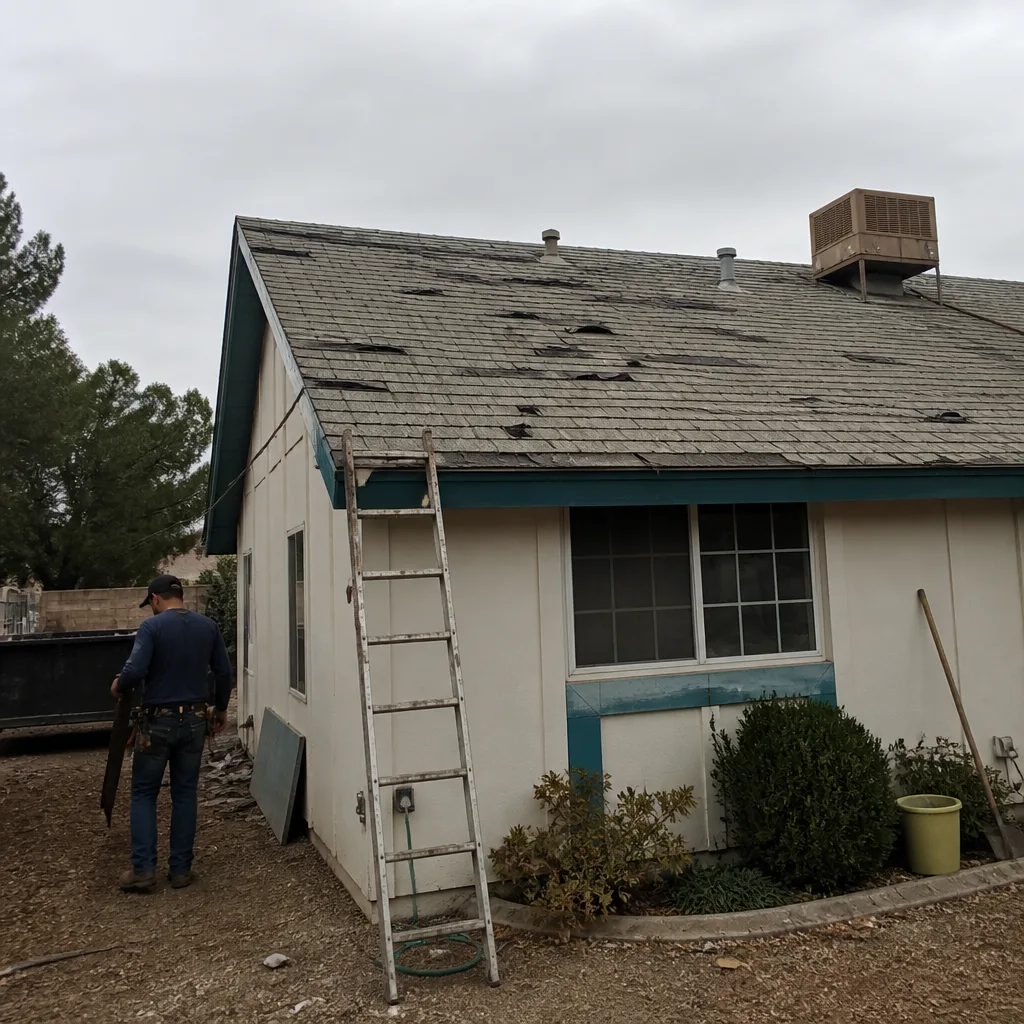
- Displaced or cracked tile and lifted shingle tabs. On tile roofs, one cracked tile lets water straight to the underlayment. On shingle roofs, tabs that curl and lift at the edges let wind-driven rain underneath. Both are signs the layer beneath is taking on water it wasn’t meant to carry.
- Drooping or uneven roof planes. Step back and sight along the ridge and eaves. A dip or sag in the roofline can mean decking has softened – a structural warning that appears long before a leak.
- Dark streaks and stain patterns. Vertical streaks running down the slope are usually algae and grit collection. Stains that form neat rectangles or follow flashing lines are different – those point to moisture tracking under the surface.
- Broken or missing pieces at the edges. Missing drip edge, lifted valley metal, or a gap at the fascia are where water gets its first foothold. On Sunrise Manor’s older tract homes, these edge details are often the first to weather out.
- Exposed or powdery underlayment. If you can see the felt or underlayment through a gap between tiles, or it looks bleached and powdery, it’s already drying out and tearing. That’s the underlayment degradation that turns a small repair into premature replacement.
Any one of these deserves a closer look from a trained eye. Ridgeline Roofing Co. is an authorized installer for GAF and CertainTeed products, so we can tell you whether a repair will meet the same standard as the original installation. Our full home page is a good place to start if you want to know how we work.
Why Your Attic Is the Highest-Yield Inspection in the House
The attic is where a Sunrise Manor roof tells the truth. You can spend an hour on the roof guessing, or ten minutes in the attic with a flashlight and know. We’ve found that this single check catches more developing problems than any other. Here’s exactly what to look for.
Your 10-minute self-inspection:
- Flashlight along the rafters and sheathing. Look for dark rings, tide-line stains, or soft spots on the underside of the roof deck. Water marks that ring a nail head are early, easy-to-miss signs.
- Daylight through the roof. Turn off the attic light and look for pinholes of daylight. Any daylight means a gap that water can find too.
- Insulation condition. Damp, matted, or compressed insulation, especially near the eaves or under valleys, points to moisture coming from above.
- Wood feel and smell. Rafters that feel spongy or wood that has a musty smell are warning signs that go beyond a simple leak.
- HVAC duct and vent connections. On Sunrise Manor homes, the biggest attic humidity source is often a loose duct or exhaust vent leaking warm air into a cold space. That moisture finds the roof deck and stays there.
It’s not the glamorous inspection, but it’s the one that pays. If you find anything on this list, call us to get a proper look. When you’re ready to talk about a repair, see our dedicated Roof Repair in Sunrise Manor page for how we handle it.
Reading Granule Deposits in Gutters: An Age Clock for Shingles
Asphalt shingles shed granules from the day they’re installed. That’s normal. What matters is the rate. A small scatter of grit in the gutter after a wind event is one thing. A pile at every downspout outlet is another. We’ve used this one indicator to gauge shingle age on Sunrise Manor roofs for years, and it’s remarkably reliable.
Rough benchmarks from our experience:
- Light, scattered grit: Normal weathering. No action needed beyond routine checks.
- Visible deposits in gutters and at downspout outlets, roughly the size of a coffee cup per run: The shingle surface is thinning. The roof has years left, but start planning and budget for replacement.
- Heavy deposits, bare spots on the shingle surface, and visible mat backing: The shingles are near or past the end of their service life. Repair won’t hold. Time for replacement.
Sunrise Manor’s UV load is the accelerant here. Our summer sun breaks down the asphalt binder faster than in cooler climates, so a shingle that would last longer elsewhere ages faster here. If the granules are shedding and you’re also seeing bare patches, that’s usually our cue to talk replacement. Our Roof Replacement & Installation in Sunrise Manor page explains the sequence and what to expect.
The Flashing Failures Sunrise Manor Roofs Get Most
Most leaks we get called about don’t start in the middle of the roof. They start where the roof meets something else. On Sunrise Manor homes, the same three junctions fail again and again:
- Roof-to-wall at patio covers. These are the worst offender. The flashing detail where a covered patio roof ties into the main house wall gets baked by sun, flexed by temperature swings, and then hit by monsoon rain. Early failure looks like a thin, dark line of separation where the metal flashing meets the stucco, or caulking that’s cracked and pulling away. That’s water getting in behind the flashing.
- HVAC curbs. The raised frame around your air handler creates a flat spot where water pools. Early failure is rust at the curb edges, a soft, sagging curb frame, or caulking that’s dried and lifted. A curb that’s been patching over the years is often the source of a slow drip that shows up nowhere near the unit.
- Chimney chases. The wide metal or masonry chase where the chimney runs to the roof is a big surface for water to sheet around. Early failure looks like cracked counter-flashing, missing or eroded sealant at the base, or staining running down the chase. The sealant at the base is the first thing to go.
The good news: flashing failures are the most predictable repairs we run across, and catching them early keeps them small. For specialty details and the products we use to build them back right, see our Specialty Roofing in Sunrise Manor. The good news for a homeowner is that a flashing repair is usually a single-visit job, and we quote a fixed price up front.
Indoor Signs Beyond Ceiling Stains: Binding Doors and Attic Humidity
The classic sign is a ceiling stain, but it’s a late one. Two earlier indoor signals are usually ignored because they seem unrelated to the roof.
Doors and windows that start to bind. A door that used to close cleanly and now catches at the top or rubs the frame is telling you the structure has moved. Often the cause is softened decking or sheathing that’s no longer holding the wall plumb. On an older Sunrise Manor home with wood-framed construction, this is worth taking seriously. A door that sticks in the dry months is less telling than one that stays stuck through the season.
Elevated attic humidity in winter. This is the quiet one. In the cooler months, if the moisture from daily living – cooking, showers, laundry – is reaching the attic because vents or ducts are leaking, it condenses on the underside of the roof deck. That vapor drive degrades insulation and can rot the deck from underneath. You can spot it with an inexpensive humidity gauge in the attic. If yours reads high in winter, it’s worth having us check the roof deck and the venting. Our technicians are background-checked and arrive in uniform, and we document every inspection with photos taken from your actual roof, so you’ll see what we see.
What Monsoon Season Reveals That Dry Months Hide
If you want to know the true condition of a Sunrise Manor roof, watch it through one monsoon. Our dry months are forgiving: water evaporates off a cracked tile and nothing reaches the ceiling. Then the July and August storms roll through in sheets and find every gap at once. The signs appear fast.
What to watch for during and after a monsoon:
- Dark, widening water tracks on stucco or fascia that weren’t there in June.
- Damp patches on the ceiling or along exterior walls that appear during a storm and dry out later. Those aren’t ghosts – they’re a flashing or valley leak.
- Water sheeting down the patio cover instead of off its edge. That’s a sign its surface or seal has broken down.
- Gutter overflow that isn’t just debris. If water backs up at the same spot every storm, the runoff detail isn’t working.
After a big storm, our phones stay staffed by a live person around the clock, and we take those calls in order. If you get water inside, call first. We’ll document what we find with photos and give you a written quote before any work starts.
When a Repair Is Enough and When It Isn’t
Not every warning sign means a new roof, and not every repair is worth doing. Here’s how we sort it out.
- A repair is enough when the damage is isolated: a few cracked tiles, a single failed flashing detail, one storm-damaged section, or a localized leak that hasn’t spread into decking.
- Replacement is the right call when granules are heavily shedding with bare patches, when water is reaching the deck in more than one area, when the underlayment is exposed and degraded, or when the roof is patching on top of patches. On our local roofs, sun and heat age the materials on a slightly faster clock, so a roof near the end of its expected life is worth talking about.
It can feel like a big decision. It’s your home, and it’s reasonable to be cautious. What we ask is that you don’t let fear or a pushy contractor make the call for you. We’ll show you the photos and tell you plainly whether it’s a repair or a replacement. A square deal, the price we quote is the price you pay, and we stand behind it. There’s no paperwork argument – the 90-Day Done Right Promise is written down.
What These Repairs Actually Cost in Sunrise Manor
We can’t quote a single number without looking, but we can give you a general sense of the range so you’re not caught off guard. These are prepared line-item estimates, never a lump sum with surprises:
- Cracked or displaced tile repair: usually a few hundred dollars per affected area, quoted after a roof inspection.
- Flashing repair at a patio cover or chimney: a fixed price per detail, based on how much sealant and metal need replacing.
- Storm-damage repair: varies with the extent; we document damage with photos and give a written quote before we touch the roof.
- Full replacement: priced by material line and square footage, with a written line-item quote and no change orders.
If you already have a written estimate from another company, bring it. Our free second opinion offer is there for a reason: two sets of eyes are better than one, and most homeowners we work with want a square deal more than the lowest bid. Call (844) 941-3509 and we’ll schedule a free inspection. Our technicians have up to 10 years of experience, and we install products from GAF, CertainTeed, Owens Corning, and other leading lines so the material meets the standard we build to.
Common Mistakes to Avoid
- Waiting for a ceiling stain. The stain is the last sign, not the first. By then the deck may already be soaked. Check the granule deposits and the attic first.
- Assuming the dry climate cancels out roof problems. Sunrise Manor’s dry months hide cracked tiles and failed flashing until monsoon season finds them. The absence of water inside doesn’t mean the roof is tight.
- Patching the same flashing detail every year. Repeated caulking over a failed flashing is a signal the detail itself needs rebuilding, not more sealant.
- Letting a storm chaser talk you into a full replacement off the ground. A truck that won’t be in town next spring shouldn’t be making a decision about the roof over your head. Get a second opinion with photos.
- Ignoring a door that won’t close. It’s easy to write off as the house settling. Sticking doors and windows deserve a look at the roof deck as part of the check.
- Skipping the attic. Ten minutes with a flashlight will tell you more about the health of your roof than an hour of looking up from the driveway.
- Assuming the cheapest bid is the square deal. The low bid often leaves out flashing work or materials. A written line-item estimate is what you compare, not a thumbnail number.
See the difference
 Before
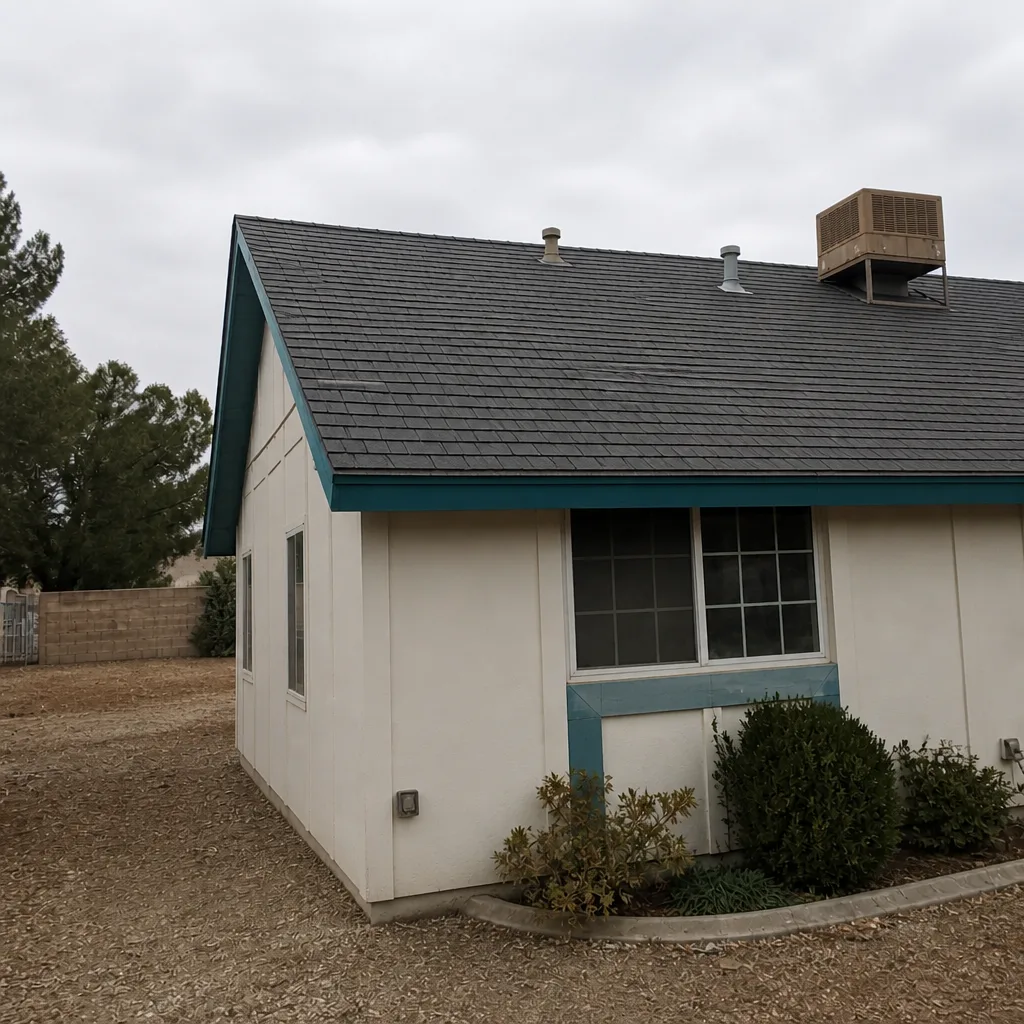 After
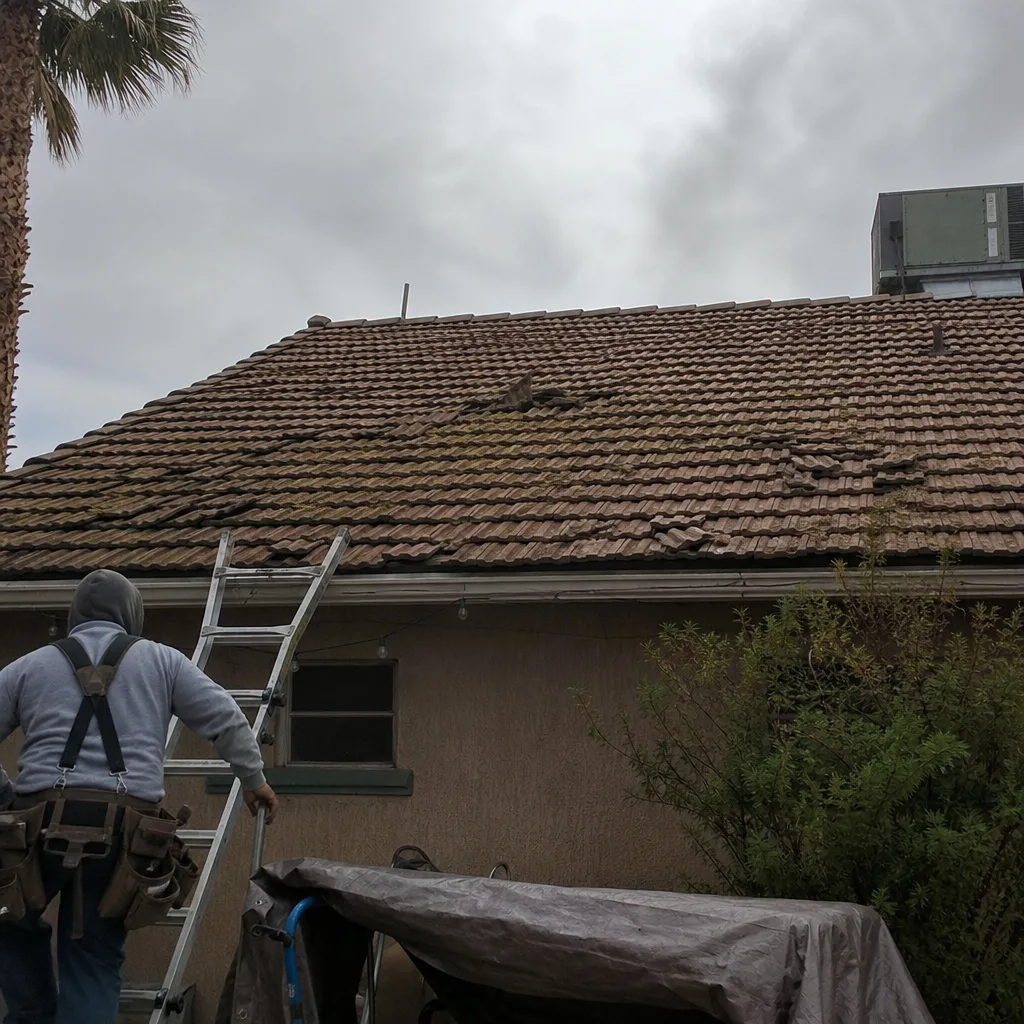 Before
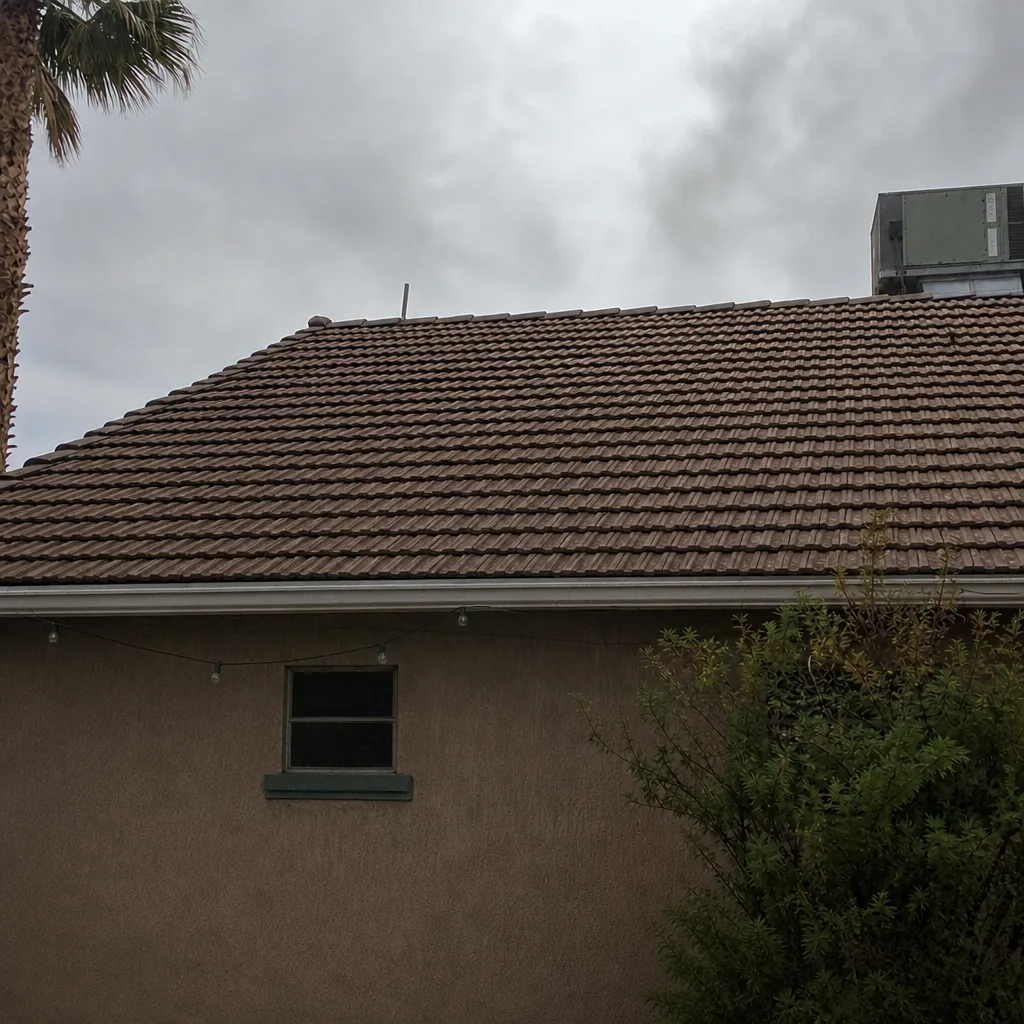 After
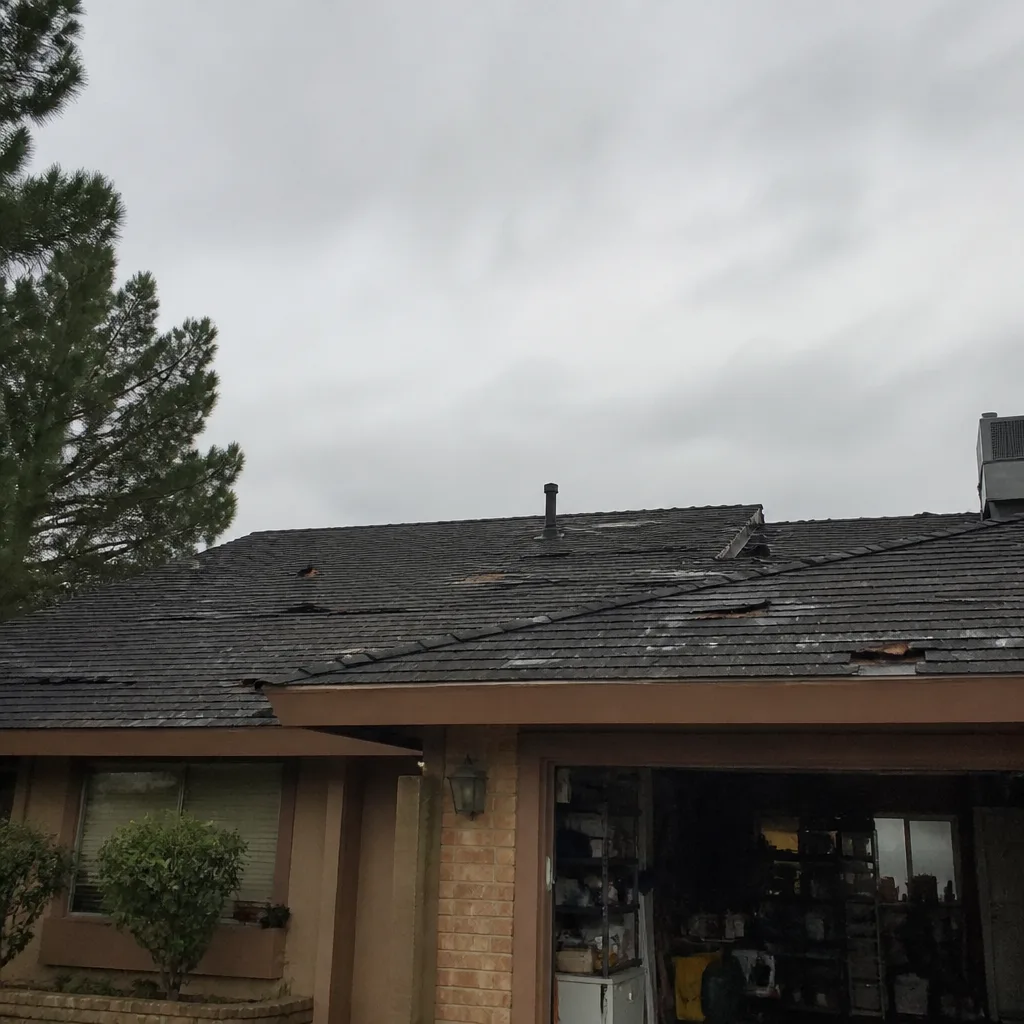 Before
 After
When to Call a Professional
Some checks you can do yourself; some you shouldn’t. Call us if you’ve noticed any of the following:
- Water inside the home during or after a storm, even once
- Two or more warning signs from this guide at the same time
- Granule shedding that has worsened over one season, or bare patches on shingles
- Sagging in the roofline or softening in any deck area
- Doors or windows that have started to bind in an older home
- A visible failure at a flashing detail you’ve already patched once
Don’t climb onto the roof to investigate a suspected leak. A fall from a roof is a real risk, and the best information comes from a proper inspection anyway. Our phones are staffed by a live person 24 hours a day, seven days a week. Ridgeline Roofing Co. Sunrise Manor offers free estimates in Sunrise Manor. Call (844) 941-3509 and a live person will answer – even on a weekend, even after a storm.
Frequently Asked Questions
If shingles show heavy granule shedding with bare patches, water is reaching the deck in multiple areas, or the underlayment is exposed and degraded, replacement is usually the right call. Isolated cracked tiles or a single failed flashing are typically repairs. A photo-documented inspection is the only reliable way to tell. Call (844) 941-3509 for a free estimate.
Yes. Water often tracks under the surface and along flashing for months before it shows on a ceiling. The early signs are usually in the gutters and attic, not on the ceiling. Call (844) 941-3509 if you suspect moisture.
Our inspections are free, and we document them with photos taken from your actual roof so you can see what we see. There’s no charge and no obligation. Call (844) 941-3509 to schedule.
Small flashing repairs are usually a few hundred dollars, and you’ll get a written line-item quote before any work begins. Call (844) 941-3509 for an exact number – estimates are free.
Some granule shedding is normal, but heavy deposits at downspout outlets and bare patches on shingles signal an aging roof near the end of its service life. That’s usually a sign to plan for replacement. Call (844) 941-3509 if you’re unsure which threshold you’ve crossed.
Yes. A live person answers every call, day or night, including weekends and the middle of a storm. There’s no voicemail tree and no callback window. Call (844) 941-3509 and we’ll get you scheduled.
The Bottom Line
The signs that matter most on a Sunrise Manor roof show up long before a ceiling stain. Cracked tile, granule piles in the gutter, a flashing line pulling away from the patio cover, a door that has started to stick – these are the early warnings that let you fix a problem while it’s still small. Walk your property with this guide, check your attic with a flashlight, and call when you find something. Our rooftops are named for the ridge, the line where a roof proves itself. We want yours to prove itself for a long time yet. When you’re ready for a look, call (844) 941-3509. Estimates are free, and a live person will answer.
Written by the team at Ridgeline Roofing Co. Sunrise Manor.