
Last updated November 18, 2026
 Metal roofing
 Architectural shingles
 Tile roofing
 GAF
 Owens Corning
 Flat & low-slope
Free roof inspection with deck photos before we talk money - GAF and Owens Corning certified installation
Specialty Roofing Maintenance Schedule: What to Do and When
A foam roof re-coat skipped by two years doesn’t age twice as fast. It can age four times as fast. Once UV light gets through the protective coating and reaches the foam underneath, the foam starts to break down from the inside, and that curve steepens every season you wait. This is the part most homeowners never hear: your specialty roof doesn’t fail on a calendar, it fails when a specific window closes. TPO, foam, and tile each run on a different clock. In Sunrise Manor, two windows matter more than any other: June before the monsoon, and October after the summer heat lets go. This guide gives you a task-based schedule for each system, what you can check yourself, and what deserves a professional.
Quick Answer
Specialty roofs need system-specific timing, not one annual inspection date. TPO needs seam checks twice a year and drain clearing annually. Foam/SPF needs a coating inspection every year and a full re-coat every 5 to 7 years. Tile needs a mortar check after every storm and an underlayment assessment at penetrations each year. For Sunrise Manor homes, schedule the two highest-value inspections in June (pre-monsoon) and October (post-summer-heat).
Styles & brands we work with
- Architectural shingles
- Metal roofing
- Tile roofing
- GAF
- Owens Corning
- Flat & low-slope
Table of Contents
- Why a Single Annual Inspection Date Is a Myth
- The System-Specific Maintenance Matrix
- TPO: Seam Checks Twice a Year, Drains Once
- Foam and SPF: The Coating Is the Roof
- Tile: Mortar After Storms, Underlayment Every Year
- The Two Sunrise Manor Windows That Matter
- What You Can Check Yourself vs. What Needs a Pro
- Documenting Maintenance for Warranty and Resale
- What Deferred Maintenance Actually Costs
Why a Single Annual Inspection Date Is a Myth
The convenience myth goes like this: pick a month, book an inspection, and you’re covered. That works for a shingle roof in a mild climate. It does not work for specialty systems, because each one wears on a different schedule.
TPO membrane is a thermoplastic. Its weak points are the heat-welded seams and the drains that pond water against them. Seams can open in a single monsoon season. Drains clog in weeks. Neither problem cares about your inspection anniversary.
Foam roofing is a coating system over a spray polyurethane core. The coating is what stops UV. When it wears thin in the traffic areas and around penetrations, the foam underneath starts to chalk and pit. That’s why the failure curve compounds: the coating protects the foam, the foam protects your ceiling, and once the first layer goes, the second one follows faster.
Tile is a different animal again. The tile itself can last generations. What fails is the mortar at the ridge and hip caps, and the underlayment beneath the field tile. Mortar cracks from thermal movement and monsoon wind. Underlayment dries out from below, where you can’t see it.
We’ve walked specialty roofs in Sunrise Manor where the coating had been recoated on a proper cycle for years and the roof was still sound. We’ve also seen foam roofs ten years old that were already at the end of their life, because the re-coat window was missed twice. Same material. Different clocks. Different outcomes.
The System-Specific Maintenance Matrix
Here’s the schedule we use on Sunrise Manor specialty roofs. Treat it as a task list, not a fixed appointment date.
- TPO membrane: Seam inspection twice a year (spring and fall). Drain and scupper clearing annually, plus a spot check after any heavy rain event. Penetration seal check annually.
- Foam / SPF: Full coating inspection every year, ideally in spring. Re-coat every 5 to 7 years depending on coating type and foot traffic. Extra coat on the walkways and around rooftop units as needed.
- Tile: Mortar check at ridges, hips, and valleys after every significant storm. Underlayment assessment at penetrations and valleys annually. Full roof inspection every 3 to 5 years.
- All systems: Post-storm inspection after any event with wind gusts over 50 mph or hail. Document with photos.
The pattern to notice: some of these are annual, some are seasonal, some are event-driven. A single inspection date covers roughly a third of them. If you own a specialty roof in Sunrise Manor and you’re on a “once a year in March” plan, you’re skipping tasks that matter.
TPO: Seam Checks Twice a Year, Drains Once
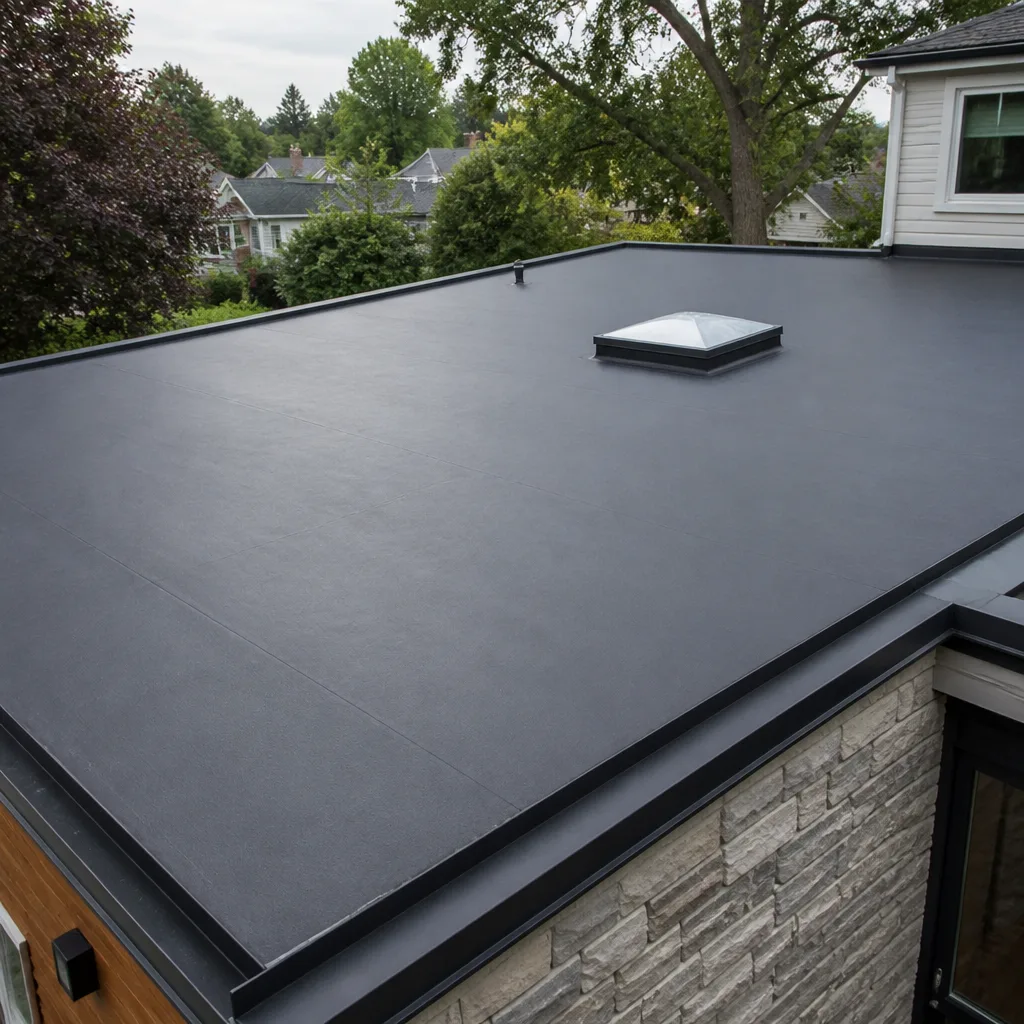
TPO is a single-ply membrane, usually white, heat-welded at the seams. It’s common on flat roofs across Sunrise Manor and holds up well to desert sun when the seams stay closed. The failure mode to watch for is water getting under an open seam.
Here’s the routine we recommend:
- Spring seam inspection (April-May). Walk the field and probe every seam by hand. Look for lifting edges, chalking, and any spot where the weld looks thin. Repair small seam issues before the heat arrives.
- Pre-monsoon drain clearing (June). Clear all drains, scuppers, and overflow outlets. Remove debris from the field. A clogged drain during a monsoon thunderstorm ponds hundreds of gallons in hours.
- Post-monsoon seam re-check (September). After the summer storms, re-inspect seams and check for ponding marks. Any area that held water needs to be looked at.
- Fall seam inspection (October). Second full seam check of the year. Seal any issue before winter temperature swings.
The gap between a small open seam and a soaked insulation board is one good rain. Seam checks twice a year are what keep that gap wide. Membranes from GAF and similar manufacturers carry installation warranties that depend on documented maintenance; a written record helps you if you ever need to file a claim. Our technicians have up to 10 years of experience with TPO systems, and we document every inspection with photos taken from your actual roof. If TPO covers a portion of your building, our Specialty Roofing in Sunrise Manor page covers the systems we install and maintain.
Foam and SPF: The Coating Is the Roof
Spray polyurethane foam is one of the most efficient roofing systems for a desert climate. It insulates, it seals, and it can be re-coated instead of replaced. But the coating is doing the work. Remove the coating and the foam starts breaking down fast.
UV exposure is what drives the failure curve. A thin spot in the coating lets sunlight through, and the foam underneath chalks and pits. The pitted area absorbs more heat, the coating around it pulls tighter, and the next coat fails faster. Two missed re-coat years on a foam roof doesn’t double the damage; it can quadruple it.
The annual routine:
- Coating inspection every spring. Look for thin spots, alligator cracking, exposed foam, and wear at walkways, around penetrations, and near rooftop equipment. Pay attention to the south-facing slopes where the sun hits hardest.
- Re-coat every 5 to 7 years. The exact cycle depends on coating type and traffic. A coating that’s still thick and intact at year 5 can go a bit longer. One that’s showing foam at year 4 should be re-coated now.
- Spot-coat as needed between cycles. Walkways and the areas around HVAC units take more foot traffic and need extra coating before the whole roof is due.
Sunrise Manor’s summer UV load is severe. The sun angle is high from May through September, and the temperatures at the roof surface regularly run 30 to 40 degrees hotter than the air. That heat is what accelerates coating breakdown on foam. In our experience, a foam roof in Sunrise Manor wants to be on the shorter side of the 5-to-7-year re-coat window, not the longer side. If you’ve had a foam roof for years and never had a coating inspection, the first step is a documented look at the actual surface. We’ll tell you what we see, and we’ll put the numbers in writing before any work starts.
Tile: Mortar After Storms, Underlayment Every Year
Tile is a durable roof, and that durability hides its real failure points. The tile itself can last 50 years or more. The mortar at the ridge and hip caps is a different story, and so is the underlayment beneath the field tile.
Mortar cracks from thermal movement and monsoon wind. When it cracks at a ridge cap, water gets in behind the tile. The tile still looks fine from the ground. The underlayment is doing the real waterproofing, and underlayment dries out slowly from the heat below. When it finally fails, you find out from a ceiling stain.
The maintenance pattern:
- Post-storm mortar check. After any significant monsoon event or wind gust, walk the ridges and hips. Look for cracked mortar, loose caps, and any tile that’s shifted. A single displaced tile is a water entry point.
- Annual underlayment assessment at penetrations. The penetrations matter most: plumbing vents, skylights, chimney flashing, and HVAC curbs. Have a technician check the underlayment condition at each one.
- Every 3 to 5 years, a full roof inspection. Broken or slipped tiles, valley condition, and any evidence of underlayment aging.
- After major hail, a professional inspection. Hail cracks tile in ways you can’t see from a ladder. A proper inspection with photos on the actual roof catches it.
Boral and other tile manufacturers build their warranties around proper installation and documented maintenance. Missing mortar caps after every storm is the single most common tile issue we see in Sunrise Manor. A ridge cap that shifts and isn’t reset will let water in during the first heavy rain. Small repairs made after the storm stay small repairs.
The Two Sunrise Manor Windows That Matter
Not every month in Sunrise Manor is equal. Two windows are worth more than the rest of the year combined.
Pre-monsoon, June. The North American Monsoon runs mostly July through September in the Las Vegas Valley. The storms arrive as short, intense downpours with wind, and the roof takes the full hit. Anything you can do before July should be done in June. That means clearing drains, checking seams, resetting loose mortar caps, and inspecting every penetration. The costs of a pre-monsoon inspection are modest. The cost of an interior water damage claim from a clogged drain during the first storm of the season is not.
Post-summer-heat, October. After the summer, the coating on a foam roof has cycled through months of peak UV. The mortar on a tile roof has expanded and contracted more times than at any other point in the year. October is when the coating is thinnest and the mortar cracks are widest. An October inspection catches both before the winter cool-down makes repairs harder and before water gets into a crack that won’t show itself until spring.
If you can only afford two inspections a year on a specialty roof, both should land in June and October. Everything else is a follow-up. Sunrise Manor sits at roughly 2,000 feet of elevation and gets more intense sun than the coastal cities, which makes these two windows even more important. There’s no other month in the year that gives you the same return.
What You Can Check Yourself vs. What Needs a Pro
You can learn real things about your roof from the ground. You can’t fully inspect it from there. Here’s where the line is.
Safe from the ground or a stable ladder:
- Walk the perimeter and look for missing, shifted, or broken tiles.
- Look for staining on the ceiling, especially after rain. Check closets and corners.
- With a flashlight from a ladder, look down the roof drains and scuppers for visible debris. Clear what you can reach with a long-handled tool, without stepping onto the roof.
- Look at the fascia and soffit for water lines or sagging, especially below the roof’s low points.
- After a storm, look for tile debris on the ground around the house. That tells you caps and tiles are moving.
Requires getting on the roof:
- TPO seam probing, which needs a trained hand on the membrane.
- Foam coating thickness checks, which are usually done with a coating gauge.
- Underlayment condition at penetrations, which means lifting tile at the vents and curb.
- Mortar condition at ridge and hip caps, which needs a close look (and often a probe).
- Anything that requires walking on tile. Tile is not a walking surface; it cracks easily and is a genuine fall hazard. Never walk a tile roof to check on it.
One note of safety. A specialty roof is a real fall risk, especially after rain or in the middle of summer heat. If you’re not sure about a ladder position or the roof is more than one story, don’t go up. Call a technician. Every inspection we run in Sunrise Manor is done by a background-checked, uniformed technician, and we document it with photos taken from your actual roof. That’s a safer way to know what’s up there.
Documenting Maintenance for Warranty and Resale
A roof maintenance history is a warranty document and a resale document. Most manufacturers and most home buyers want the same thing: a written record of what was done and when.
What to keep:
- Dated inspection reports. A one-page report per inspection with the date, what was checked, what was found, and photos.
- Photos taken from the roof. A ground-level photo of a ridge cap isn’t evidence. A photo taken on the roof at the failed spot is. Every inspection report should have them.
- Invoices for every repair and re-coat. Keep the paper. A foam re-coat receipt from 2019 matters to a home buyer in 2026.
- Warranty documents for the original installation and for any subsequent work.
- A simple log (a notebook or a folder works) with the date, task, and who did it.
Two reasons this pays off. First, most material and workmanship warranties include language that requires documented maintenance. If a manufacturer warranty claim is contested, the log is what supports your case. Second, Sunrise Manor has plenty of homes that have been in the same family for decades. When a home with a specialty roof is sold, the maintenance file answers the biggest question a buyer will have: what has been done, and is the roof still sound? A well-kept file is a quiet argument for the asking price. We hand over written inspection reports to every Sunrise Manor homeowner we visit, with photos on the record. When a warranty or a resale question shows up later, the paperwork is already there.
What Deferred Maintenance Actually Costs
This is the section worth reading twice.
| Task | Typical Cost | What It Prevents |
|---|---|---|
| TPO drain clearing (annual) | $200 | Ponding during monsoon, seam failure, interior ceiling damage |
| Interior water damage from an overlooked drain | $3,000 – $6,000 | Ceiling, insulation, drywall, paint, and possible mold |
| Foam roof re-coat on schedule | Far less than a replacement | Foam degradation, full replacement |
| Foam roof full replacement after missed re-coats | Several times the re-coat cost | The roof itself |
| Ridge cap mortar reset after storm | $150 – $400 | Water entry behind tile, underlayment damage |
| Underlayment repair after mortar missed | $1,500 – $4,000+ | Ceiling stains, structural damage |
| Tile inspection after hail | $89 with our seasonal tune-up | Cracked tile you can’t see from the ground |
The theme is the same in every row: the maintenance task is small, the failure it prevents is large. A $200 annual drain clearing is what stands between a simple task and a $4,000 interior water damage claim. A missed foam re-coat cycle is what stands between a scheduled renewal and a full replacement. The roof doesn’t negotiate. It just keeps running on its own clock.
This is the other reason we recommend writing everything down. When you have a file that shows the $200 drain clearings every year, you can see the pattern. When you don’t have the file, deferred maintenance tends to stay deferred until the ceiling stains give you a deadline you didn’t choose.
Common Mistakes to Avoid
- Treating one annual inspection date as enough. It covers about a third of the actual tasks. TPO seam checks twice a year, foam coating inspections annually, mortar checks after every storm: the schedule is task-driven, not date-driven.
- Skipping the October inspection because “summer is over.” October is when coating is thinnest and mortar cracks are widest. Skipping it in Sunrise Manor means waiting until the next storm to find the problem.
- Walking on tile to check it yourself. Tile cracks and slips. It is a fall surface and a breakage surface. Use binoculars from the ground or call a technician.
- Waiting for a leak before calling anyone. By the time you see a ceiling stain on a specialty roof, the water has usually been getting in for months. The leak is the last symptom, not the first.
- Letting a foam roof ride past its re-coat window. Two missed years on a foam roof is not twice the damage; it can be four times the damage. The compounding curve is real and it does not forgive.
- Skipping the pre-monsoon June drain clearing. This one costs $200 and is what stands between you and a flooded ceiling in the first monsoon rain. It is the single cheapest task on the whole schedule.
- Not keeping records. A warranty claim needs documentation. A resale needs it too. No file, no proof.
See the difference
 Before
 After
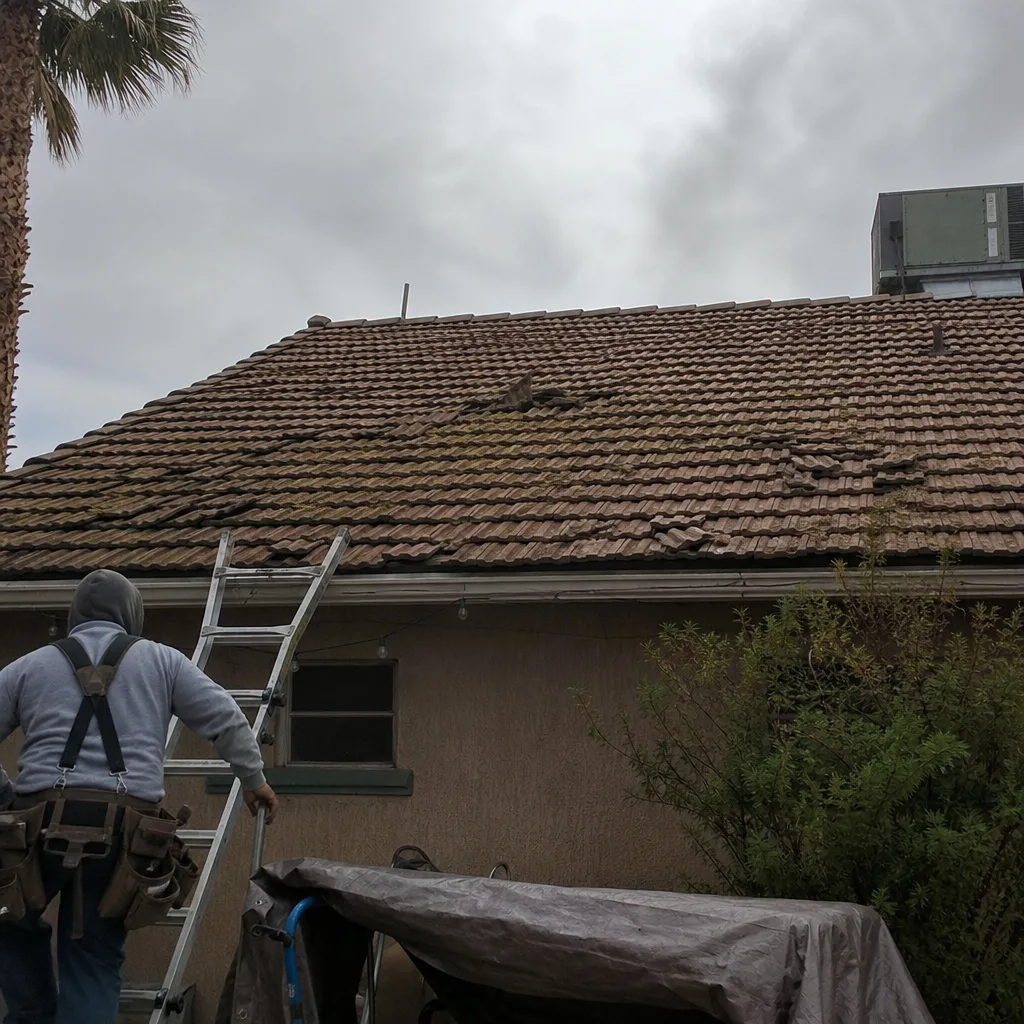 Before
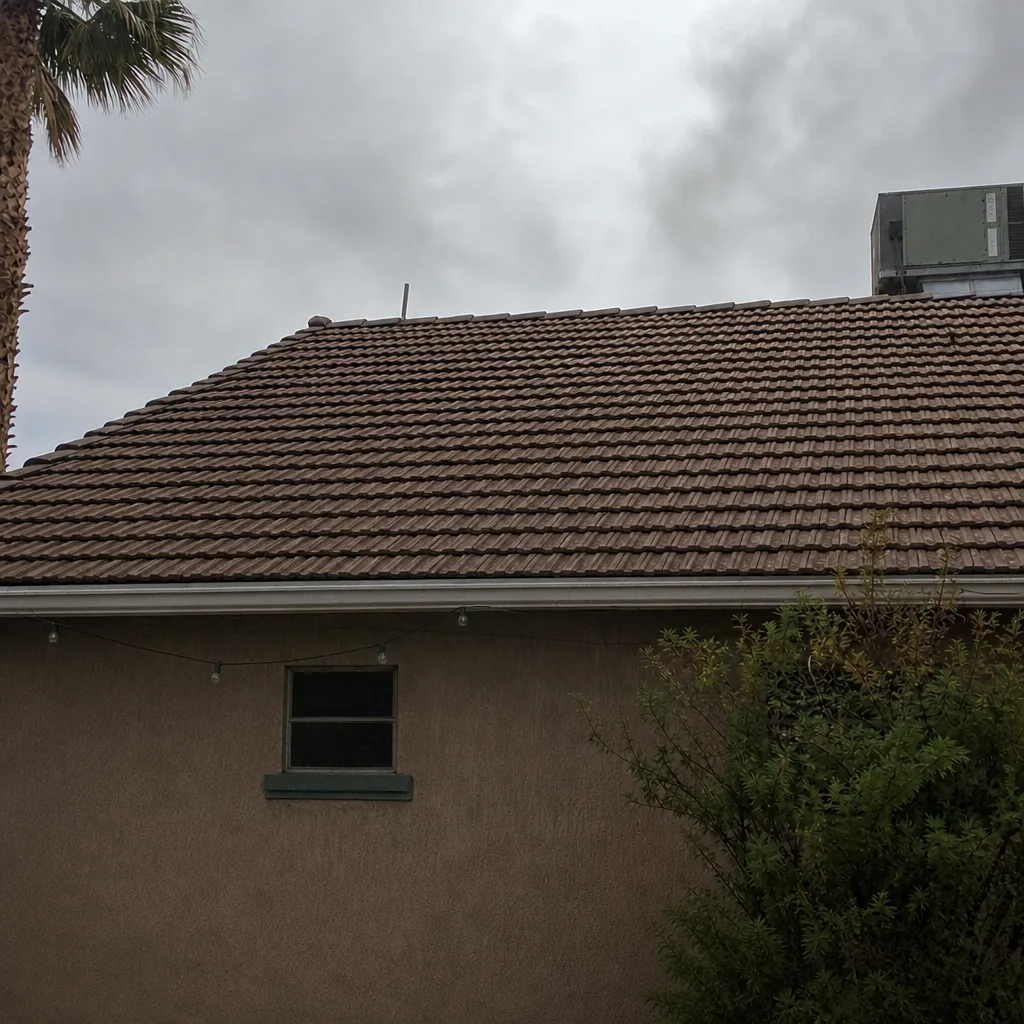 After
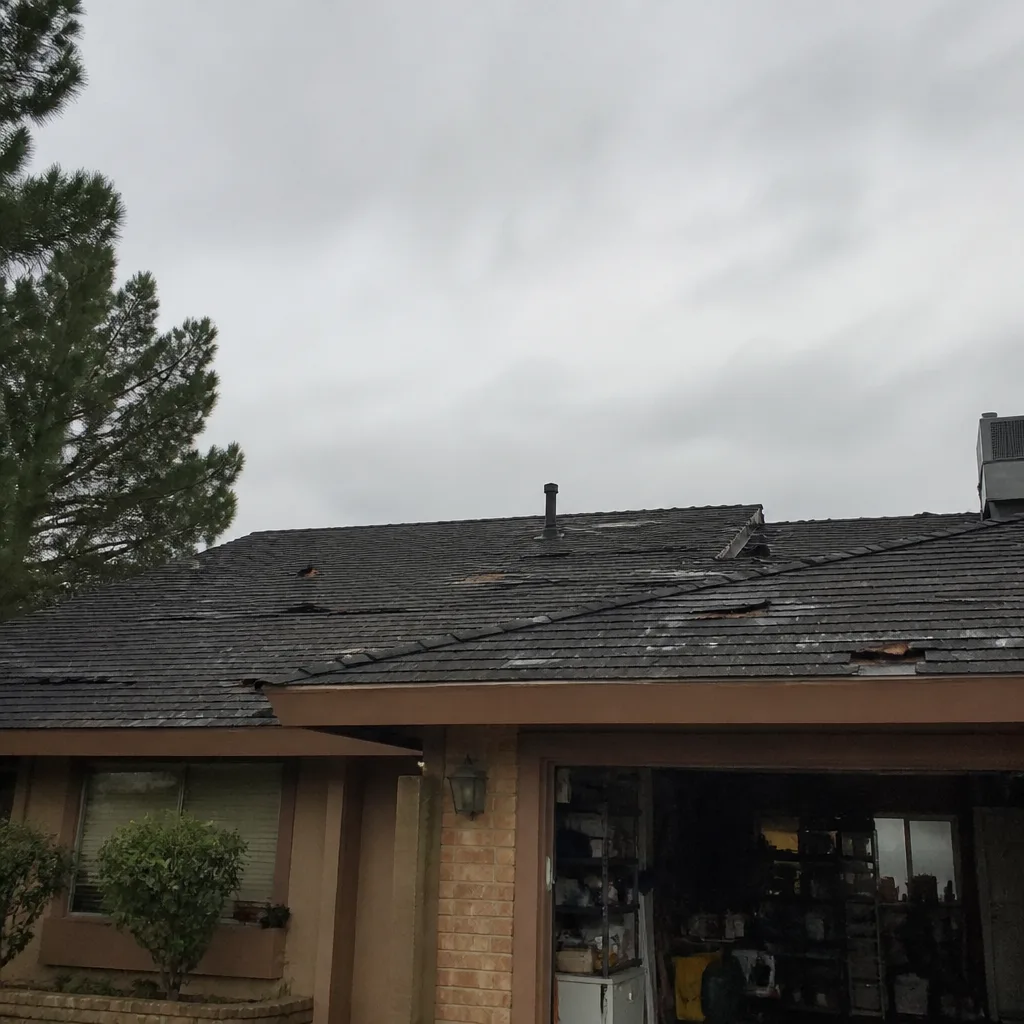 Before
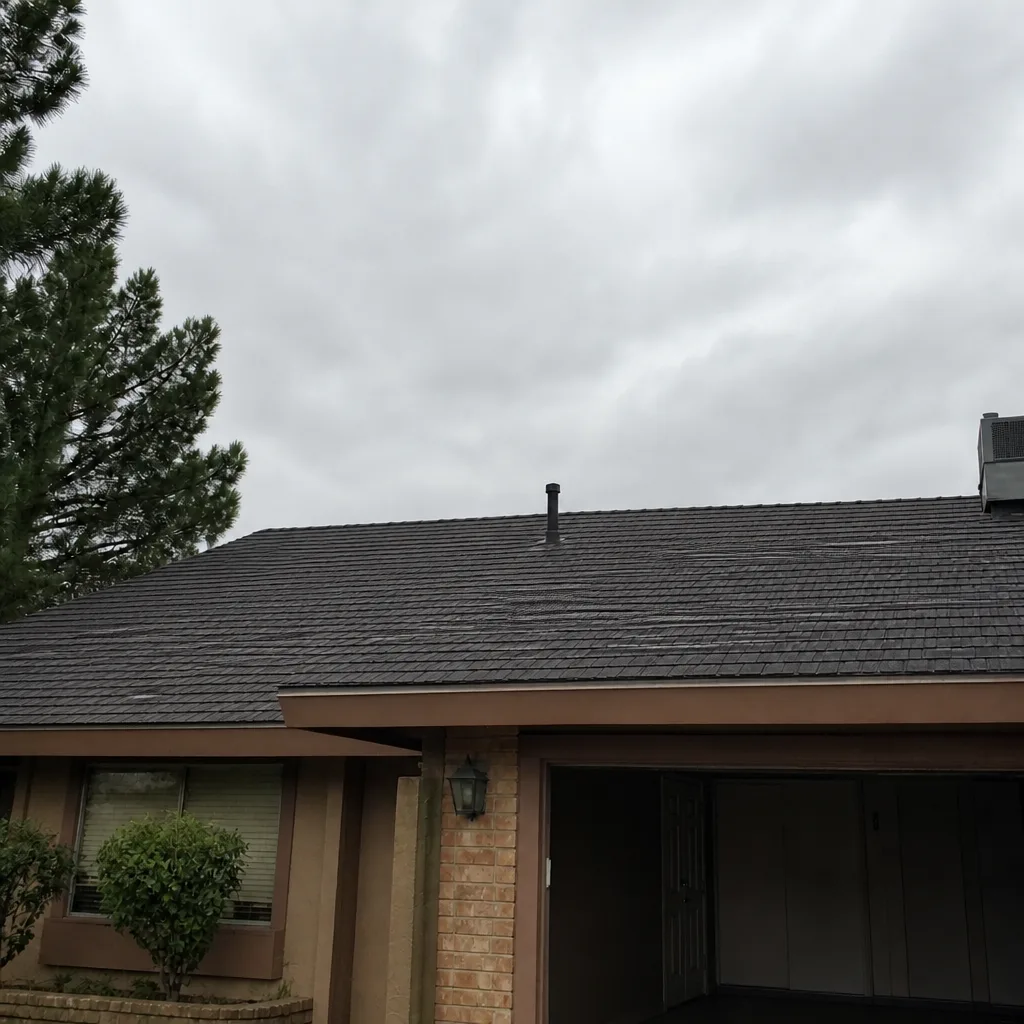 After
When to Call a Professional
Call a professional the moment you see a ceiling stain, a shifted ridge cap, a displaced tile, a low spot on a flat roof, or any visible foam on a coating that should be solid. Call after any storm with hail or wind gusts over 50 mph. Call if you can’t remember the last coating inspection on a foam roof; the answer is usually “years.” And call before June. Pre-monsoon is the cheapest month of the year to catch a problem.
Any of the following is worth a look: visible ponding on a flat roof, a seam that’s lifting at the edge, a tile or two on the ground after a storm, mortar coming loose from the ridge, or a ceiling that’s soft under a specialty roof section. Plumbing vents and skylights need a check too; those penetrations fail first.
Ridgeline Roofing Co. Sunrise Manor offers free estimates in Sunrise Manor. Call (844) 941-3509 to schedule yours. If the work goes beyond a repair, our Roof Repair in Sunrise Manor and Roof Replacement & Installation in Sunrise Manor pages cover what to expect. Every job is backed by the 90-Day Done Right Promise, in writing.
Frequently Asked Questions
At least twice a year, in June before the monsoon and in October after the summer heat. Add a post-storm inspection after any event with hail or gusts over 50 mph. A single annual inspection misses the seasonal windows that matter most here.
Every 5 to 7 years, with an annual coating inspection in between. In Sunrise Manor’s high-UV summers, we usually lean toward the shorter end of that window. Call (844) 941-3509 for a free estimate if you’re not sure when your last re-coat was.
You can clear debris you can reach safely from a ladder with a long-handled tool. If the drain is fully clogged, the roof requires anyone to walk on it, or you’re not sure of a stable ladder position, hand it to a technician. A $200 annual drain clearing prevents a $4,000 interior water damage claim; not worth risking a fall.
Yes for any significant event. Mortar at ridge and hip caps cracks in ways you can’t assess from the ground. After a major monsoon storm or hail, a professional inspection catches cracked mortar and shifted caps before the next rain gets behind the tile.
Yes. Most material and workmanship warranties require documented maintenance, and a dated inspection report with photos taken from the roof is what supports a claim. It also supports resale. Keep invoices, inspection reports, and the original warranty documents in one file.
Our seasonal tune-up is $89, covering an inspection and a report on what we find. Larger items like a foam re-coat or a TPO membrane repair are priced individually, with a written line-item quote before any work starts. Call (844) 941-3509 for an exact quote. Estimates are free, and the number on the estimate is the number on the invoice.
The Bottom Line
Your specialty roof runs on more than one clock. TPO wants seam checks twice a year and drains cleared once. Foam wants annual coating inspections and a re-coat every 5 to 7 years, on the shorter end in Sunrise Manor. Tile wants mortar checks after storms and underlayment checks at penetrations every year. The two dates that matter most in Sunrise Manor are June (pre-monsoon) and October (post-summer-heat). Write everything down. The $200 drain clearing and the mortar reset after a storm are what keep you out of the $4,000 water damage claim and the full replacement. That’s a square deal for the homeowner. For us, it’s just the work done right.
Ridgeline Roofing Co. Sunrise Manor – call (844) 941-3509 for a free estimate. We install and maintain systems from GAF, CertainTeed, Owens Corning, IKO, Atlas, Tamko, and Boral. Every job is backed by the 90-Day Done Right Promise. Learn more about how we work at our Ridgeline Roofing Co. Sunrise Manor home page.
Related Reading
- Specialty Roofing in Sunrise Manor – the systems we install and maintain
- Roof Repair in Sunrise Manor – fixes for specialty roof leaks and damage
- Roof Replacement & Installation in Sunrise Manor – when maintenance is no longer enough
- Ridgeline Roofing Co. Sunrise Manor home – start here for the full picture
Written by the team at Ridgeline Roofing Co. Sunrise Manor.