
Last updated November 18, 2026
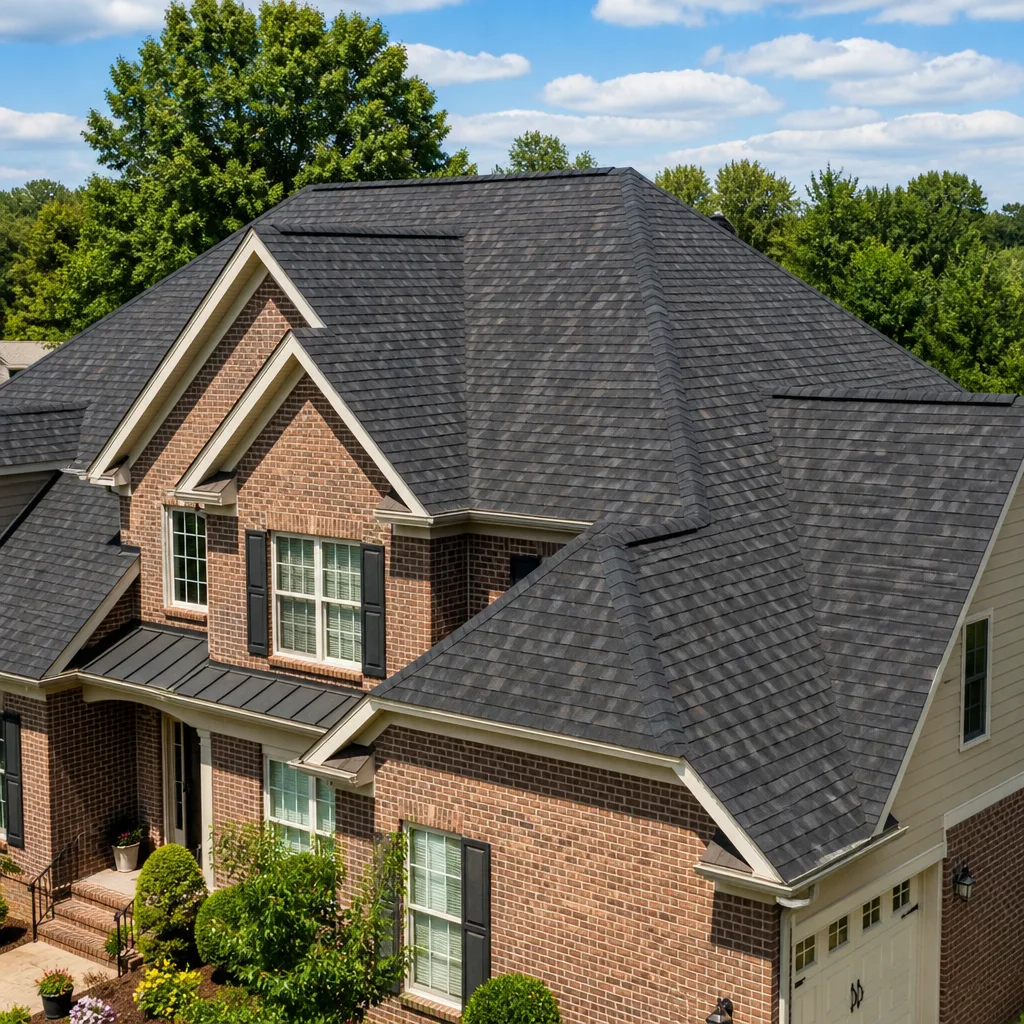
 Architectural shingles
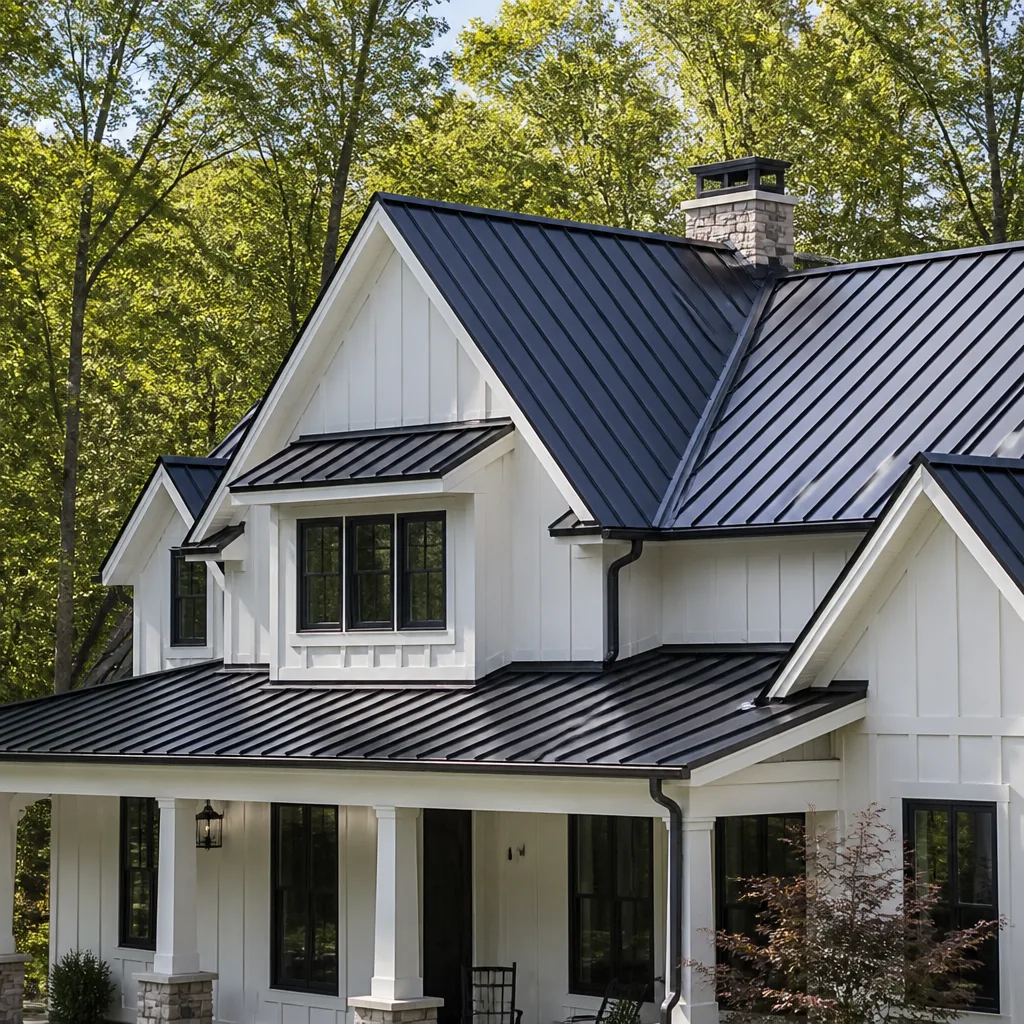 Metal roofing
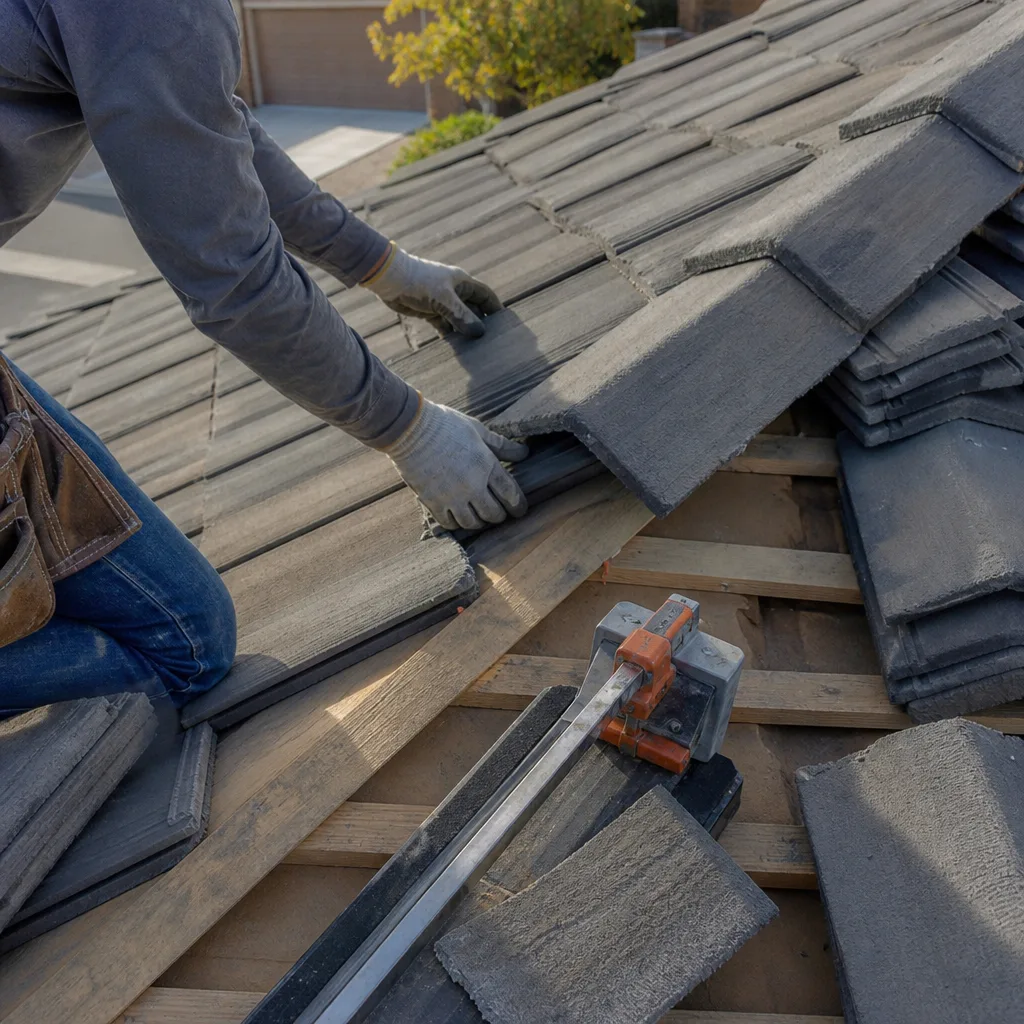
 Tile roofing
 GAF
 Owens Corning
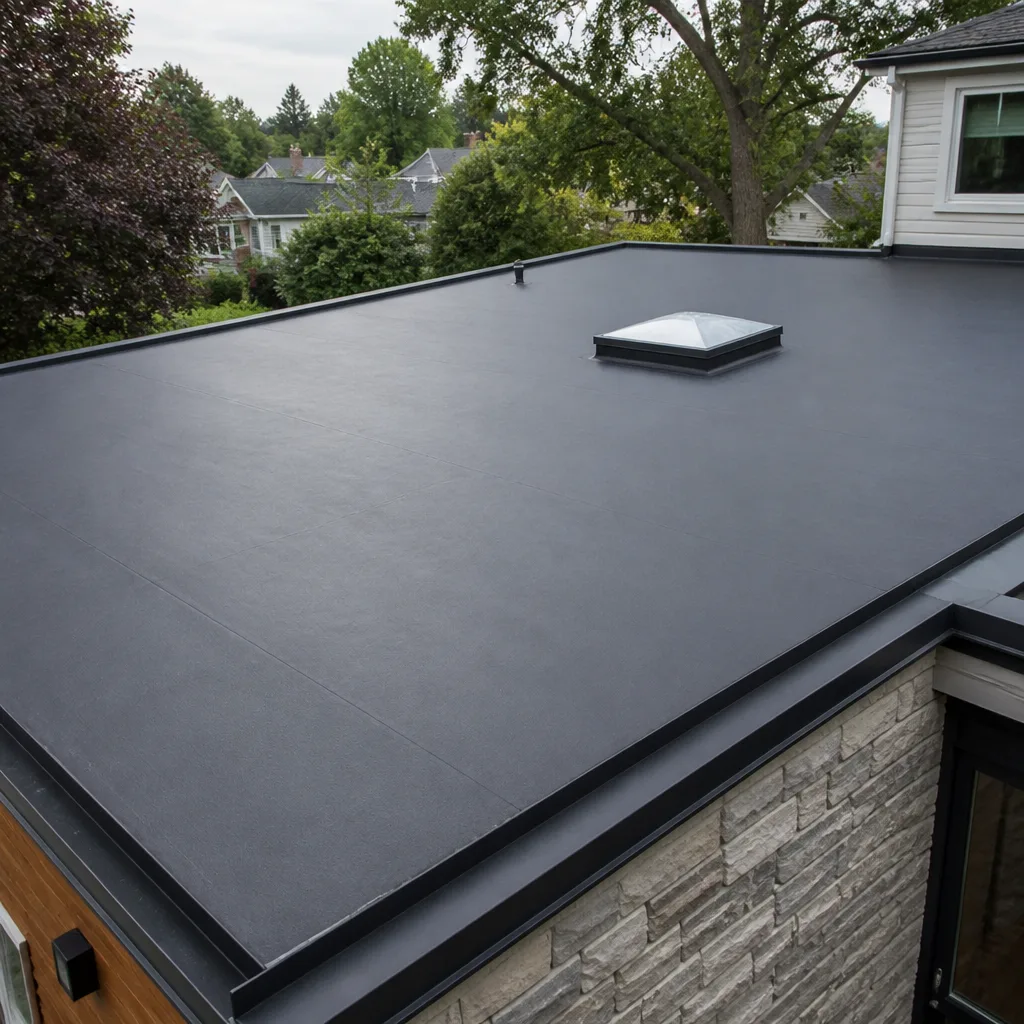 Flat & low-slope
Free roof inspection with deck photos before we talk money - GAF and Owens Corning certified installation
Roof Replacement & Installation Troubleshooting: Common Problems and How to Fix Them
If your new roof leaks within the first year, the material almost certainly isn’t defective. In our experience, roughly 90% of post-installation failures trace back to flashing installed incorrectly, starter strip left off to save time, or penetrations sealed on a hot afternoon when the sealant wasn’t ready to bond. The shingles did their job. The sequence around them didn’t. This guide breaks down the five failure points we find most often after a replacement, how to tell a workmanship problem from a material defect, and what to do about each. We’ve spent enough time on Sunrise Manor roofs to know the difference matters.
Quick Answer
Most problems after a roof replacement come from installation-sequence errors – things done in the wrong order or skipped under time pressure – not from bad shingles. Your recourse depends on which it is: installation defects fall under the contractor’s workmanship warranty, while genuine material failures are covered by the manufacturer. Before you call anyone, take photos, note the date the roof was completed, and pull out both warranty documents so you know which one applies.
Styles & brands we work with
- Architectural shingles
- Metal roofing
- Tile roofing
- GAF
- Owens Corning
- Flat & low-slope
Table of Contents
- The Five Most Common Post-Installation Failure Points
- Workmanship Warranty vs. Material Warranty: Two Different Documents
- What “Improper Installation” Means in Manufacturer Language
- Monsoon Season Problems vs. First Heat Cycle Problems
- How the 90-Day Done Right Promise Works as a Troubleshooting Commitment
- What to Check in the First 90 Days After Installation
- Common Mistakes to Avoid
- When to Call a Professional
The Five Most Common Post-Installation Failure Points
Ask any roofer who does service work what they find on a roof that’s under five years old, and you’ll hear the same list. These aren’t exotic problems. They’re the predictable ones. We’ve seen all five on Sunrise Manor roofs within a single hot season.
- Improperly seated or lapped flashing. Flashing at walls, chimneys, skylights and valleys is where water finds its way in. If it’s lapped wrong or not set into the substrate, no shingle on the roof will save you.
- Missing starter strip. Starter strip runs along the eave and rake edges to seal the first course of shingles and give the wind something to grip. Skipping it cuts wind resistance immediately. You won’t notice until a gust peels back the edge.
- Penetration sealing done cold or hot. Pipe boots, vents and nails need sealant to bond. On a 110-degree Sunrise Manor afternoon, sealant skins over before it grabs. Done before the sun rises, it sets right.
- Nail placement out of the nail line. High nails or overdriven nails let shingles lift. Manufacturing warranties explicitly call this out as installation error, not material defect.
- Underlayment skipped or overlapped incorrectly. In a place where the roof sees direct summer sun for months, underlayment is the second line of defense. If it’s been left off under valleys or overlaps the wrong way, you’ll find out the hard way.
Each one traces back to sequence, timing, or a shortcut. None of them is a bad-lot shingle. When you’re troubleshooting, ask the contractor to walk you through what they did at each of these five points on your specific roof. If they can’t, that’s information too.
Workmanship Warranty vs. Material Warranty: Two Different Documents
This is where most homeowners get stuck. Your roof is covered by two warranties, and they’re not interchangeable. The workmanship warranty comes from the contractor and covers how the roof was installed. The material warranty comes from the manufacturer (GAF, CertainTeed, Owens Corning, Tamko, and the others we install) and covers the product itself. Knowing which applies saves you weeks of phone calls.
- Workmanship warranty: Issued by your contractor. Covers installation errors like flashing, nailing, starter strip, and sealing. Length varies – ask for the written terms before the job begins.
- Material warranty: Issued by the manufacturer. Covers defects in the shingles, underlayment, or other products. Almost always excludes anything the manufacturer labels “improper installation.”
- Labor vs. product: Even when material is defective, labor to replace it may not be covered unless you registered the manufacturer warranty properly.
- Registration: Some manufacturer warranties require you to register within a specific window after completion. Miss it and the coverage narrows substantially.
- Overlap gaps: A defect that could be either is often pushed back and forth between the two parties. That’s why you want both documents in hand before you call either one.
If you want a second read on what your existing paperwork actually says, our team offers a free second opinion on any written estimate – and that includes a review of warranty terms you’ve already signed. It’s the kind of thing that costs nothing and prevents a lot of arguing.
What “Improper Installation” Means in Manufacturer Language
Manufacturers include “improper installation” language in nearly every material warranty, and it’s the single most common reason a claim gets denied. The phrase sounds vague on purpose. In practice, it usually means one of the following:
- Fasteners placed above the manufacturer’s nail line or overdriven
- Shingles installed below the manufacturer’s minimum roof slope without the required underlayment
- Missing or incorrect starter strip along the eaves
- Flashing not installed according to the manufacturer’s published detail drawings
- Installation in temperatures outside the manufacturer’s stated range
- More than one layer of shingles left on the roof when the spec calls for tear-off
- Missing ice-and-water shield where it’s required by code or manufacturer spec
Here’s the important part for homeowners: these are all things you can protect against before the job starts. Ask your contractor to provide the manufacturer’s installation instructions for the specific product line, and ask how each of the applicable items above will be handled on your roof. Ask whether they’ll pull the permit – the inspection that follows will catch most of these. A contractor worth hiring won’t flinch at these questions. When we install GAF or CertainTeed systems, those details are part of the scope, not a conversation you have to force.
Monsoon Season Problems vs. First Heat Cycle Problems
Sunrise Manor has two very different weather regimes, and they reveal very different flaws. The monsoon season from July through September delivers wind-driven rain in sudden bursts. The dry heat cycle from May through June and beyond pushes materials through expansion and contraction. A roof that fails in one often wouldn’t have failed in the other.
Problems that show up after the first monsoon
- Interior water stains below a valley or skylight: almost always a flashing issue that only shows under sustained sideways rain
- Water at a chimney or wall junction: counter-flashing that wasn’t lapped correctly
- Drips near a pipe boot: sealant that didn’t bond during a hot afternoon install
- Granule loss concentrated in valleys: a sign that water is backing up because a valley isn’t carrying the load it should
Problems that show up in the first heat cycle
- Edges lifting or shingles curling at the eave: missing or short starter strip
- Visible nail pops from inside the attic: high nails driven into the roof deck
- Gaps at ridge or hip caps: cap shingles installed without the correct adhesive exposure
- Wrinkled or bubbling underlayment seen from the attic: underlayment installed with too little ventilation or wrong overlap
If you had your roof done in, say, April and the first problem shows up in August, you’re likely looking at a heat-cycle issue. If it shows up in September after a storm, it’s likely monsoon-related. Same roof, different clock. Ask the contractor to inspect specifically for the pattern you’re seeing.
How the 90-Day Done Right Promise Works as a Troubleshooting Commitment
A workmanship guarantee is only as good as the follow-through. Our 90-Day Done Right Promise is written down for a reason: when something isn’t right in that first three months, we come back and make it right. No paperwork gymnastics. No arguing over whether it was our problem. No wait-and-see.
Here’s what it covers in practice. If a flashing detail we installed starts leaking, that’s on us. If a starter strip we laid is letting the eave lift, we fix it. If a sealant we applied on a hot morning is failing at a pipe boot, we reset it. What it doesn’t cover is storm damage after the fact, material defects in the shingle itself (that’s the manufacturer), or damage from something else hitting the roof. Knowing the boundary makes the promise useful.
To invoke it: call the number on your paperwork, describe what you’re seeing, and tell us when it started. We’ll schedule a photo-documented inspection. Because we’re a 24/7 live-phone operation, you’ll reach a person whenever you call – including during the storm that caused the problem. In a place like Sunrise Manor, where monsoon rain can build fast and a small leak becomes a ceiling stain before the day is over, that matters more than the fine print.
For a deeper look at how that interacts with specific repair decisions, our Sunrise Manor roof repair service walks through the diagnosis process we use when a homeowner calls about a new-roof leak.
What to Check in the First 90 Days After Installation
The first three months are when most installation problems announce themselves. You don’t need to climb a ladder to catch them. Here’s what to look for, in order:
- Week one: Walk the perimeter and look for loose granules in the gutters. Some granule shedding is normal on a brand-new roof. Heavy accumulation isn’t.
- Week two to four: Check the ceiling of every room below the roof for any sign of a stain, especially after a rain event. Photograph and date anything you see.
- Week four to six: From the ground, look along the eave line on a sunny day for any lift or shadow at the roof edge. Starter strip problems show up here first.
- Attic check: On a bright day, look in the attic for daylight between boards and for any drips or water marks on the rafters. Both tell you something.
- Month two to three: Check gutters and downspouts for sediment. If you see shingle fragments, note it and mention it to your contractor.
- After the first significant rain: Walk the interior and exterior again for stains, drips, or pooling. This is the most important check.
Any of these findings is a legitimate reason to call. You’re not being fussy. You’re giving the contractor the chance to fix it under warranty, which is exactly what the warranty is for. If you’re in a neighborhood like Windsor Park or Section 31, where roof replacements cluster after big hail years, you’ll often find a neighbor has seen the same pattern. Comparison is fair.
See the difference
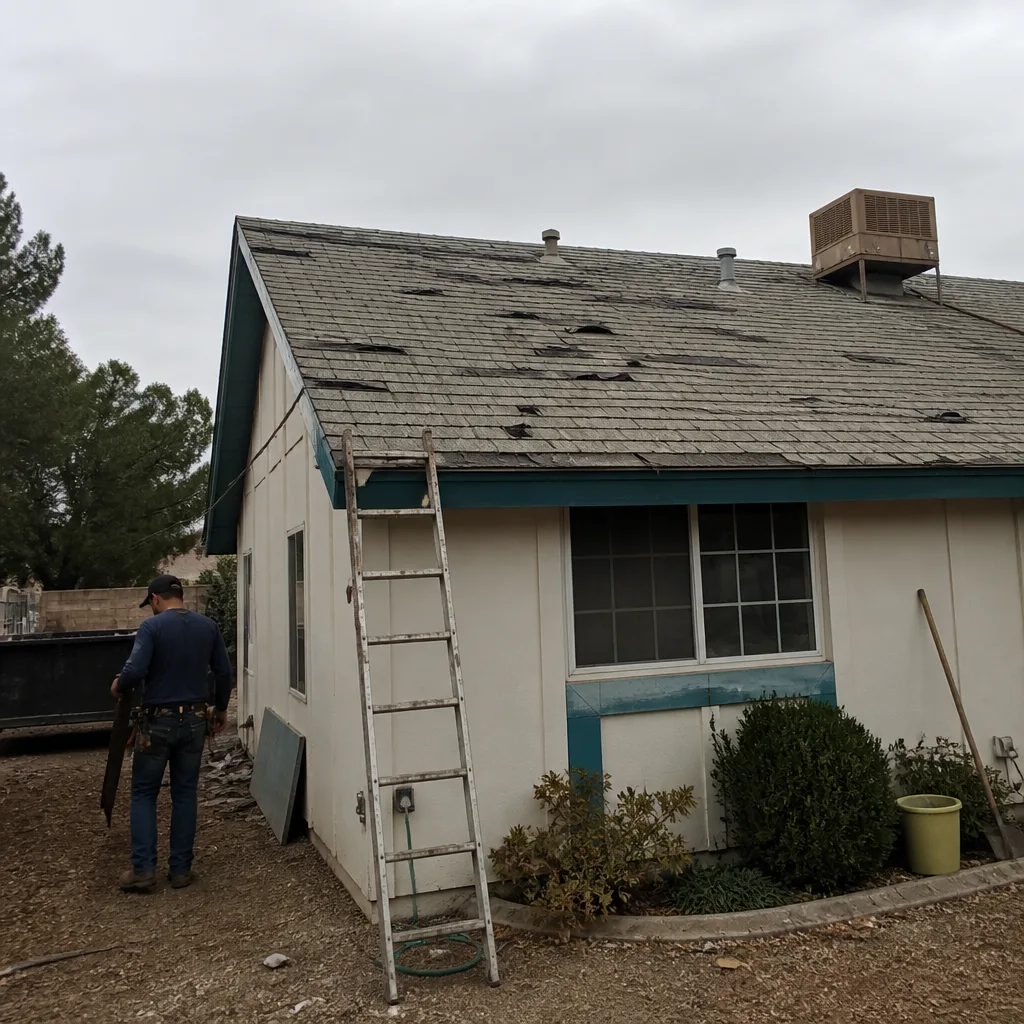 Before
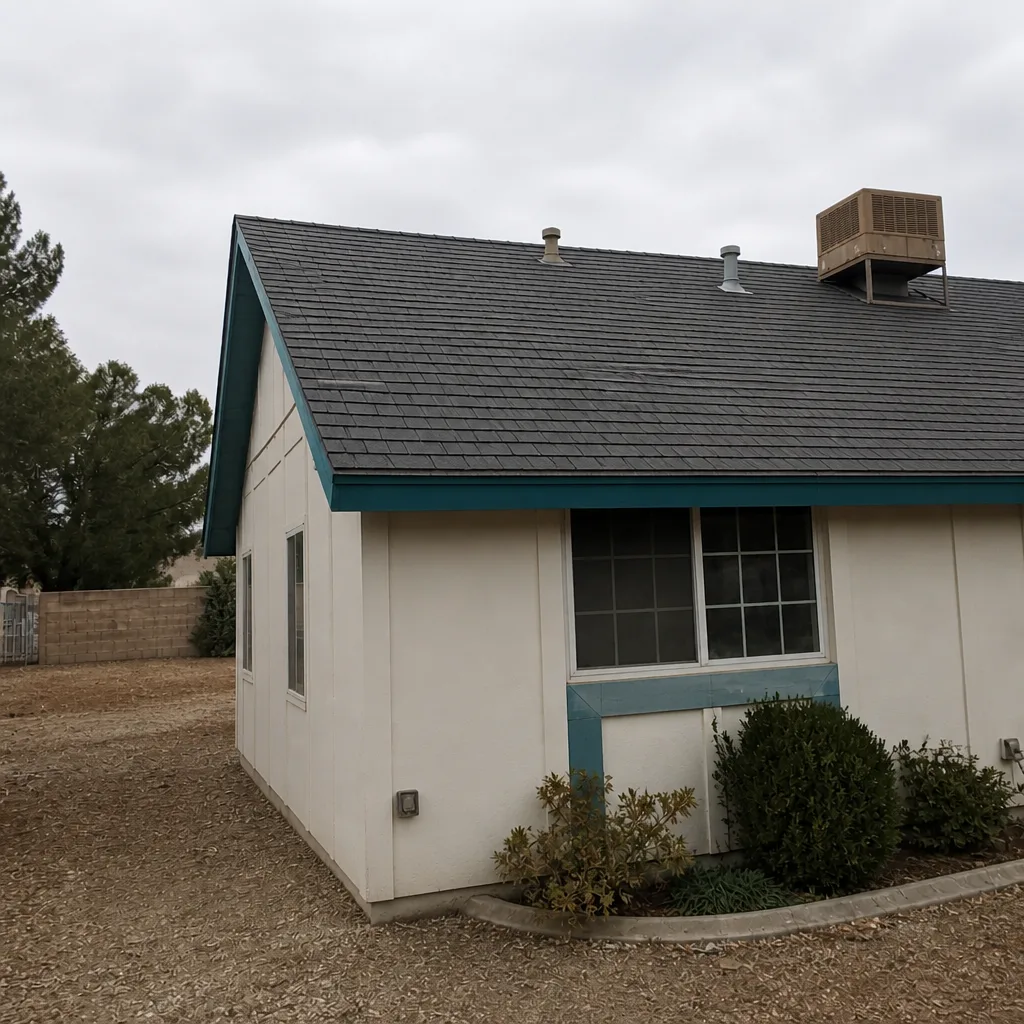 After
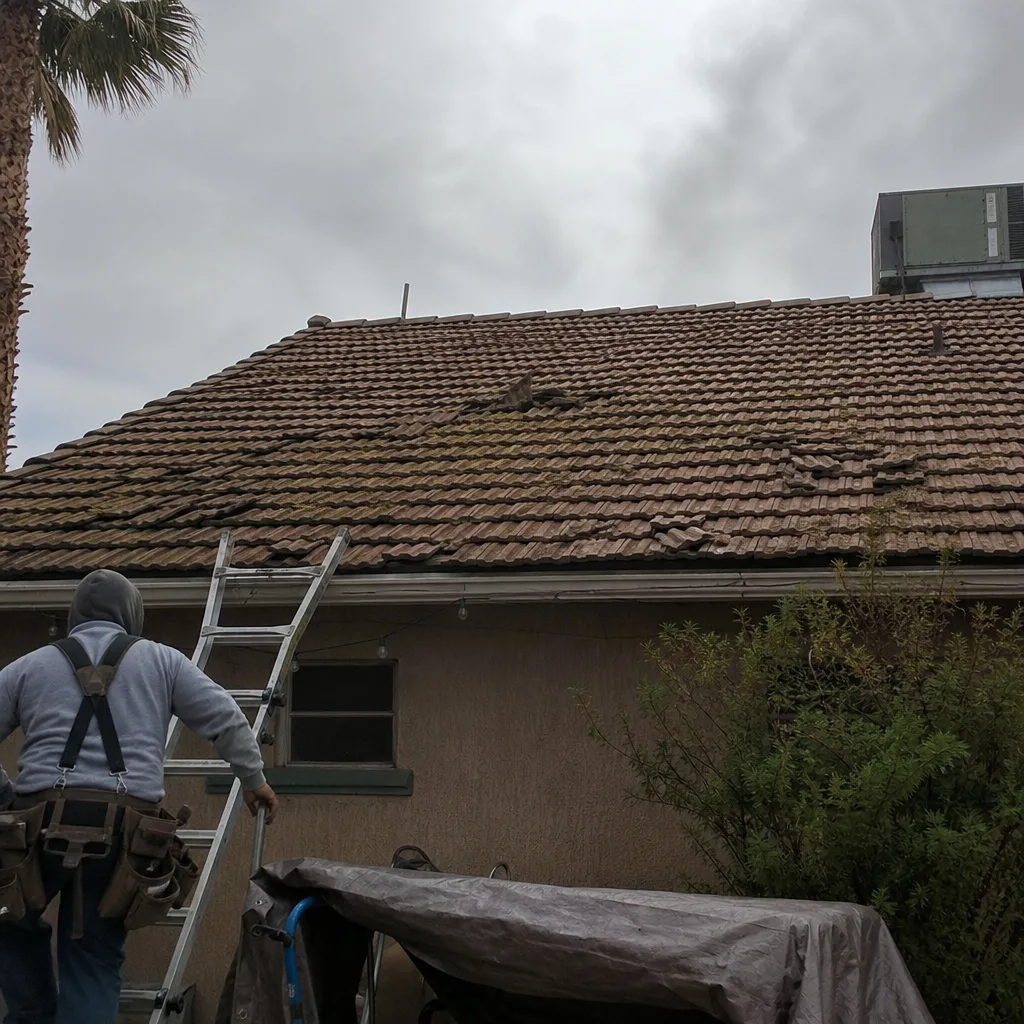 Before
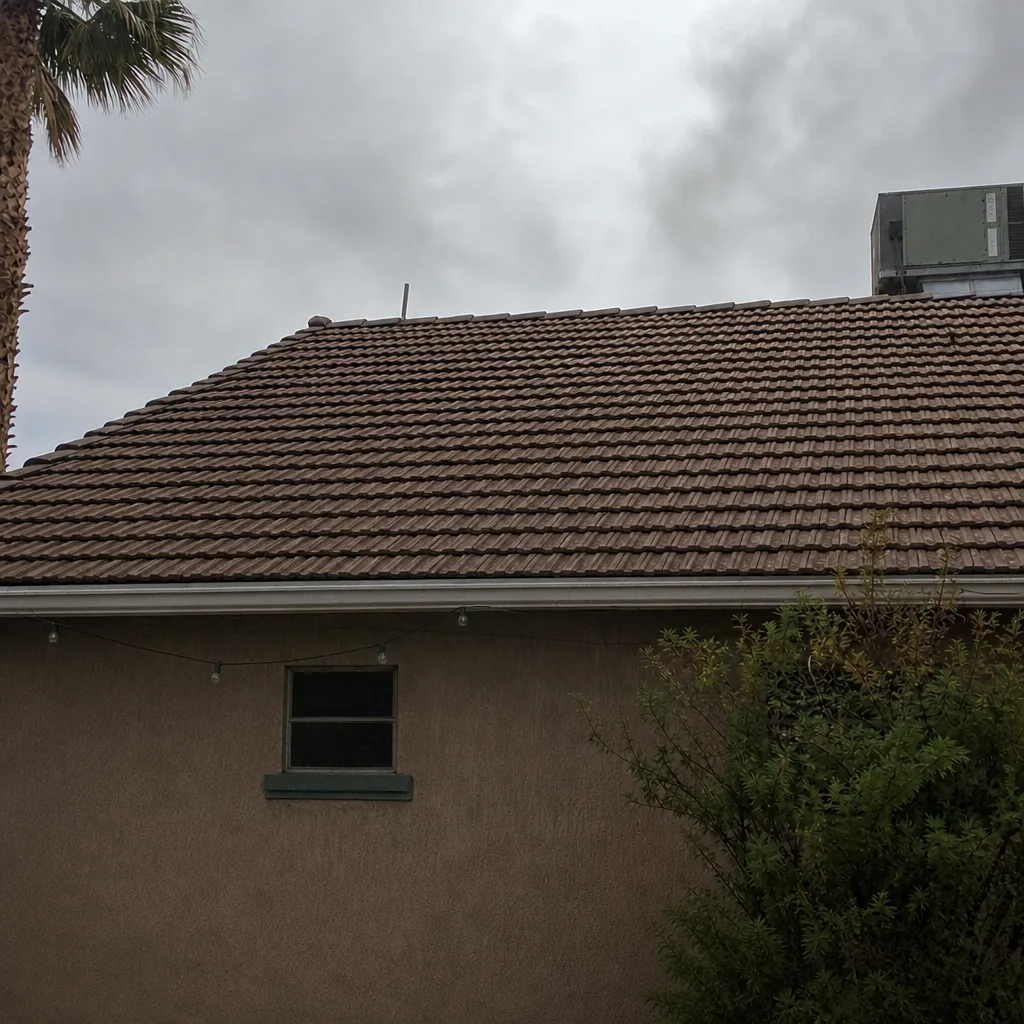 After
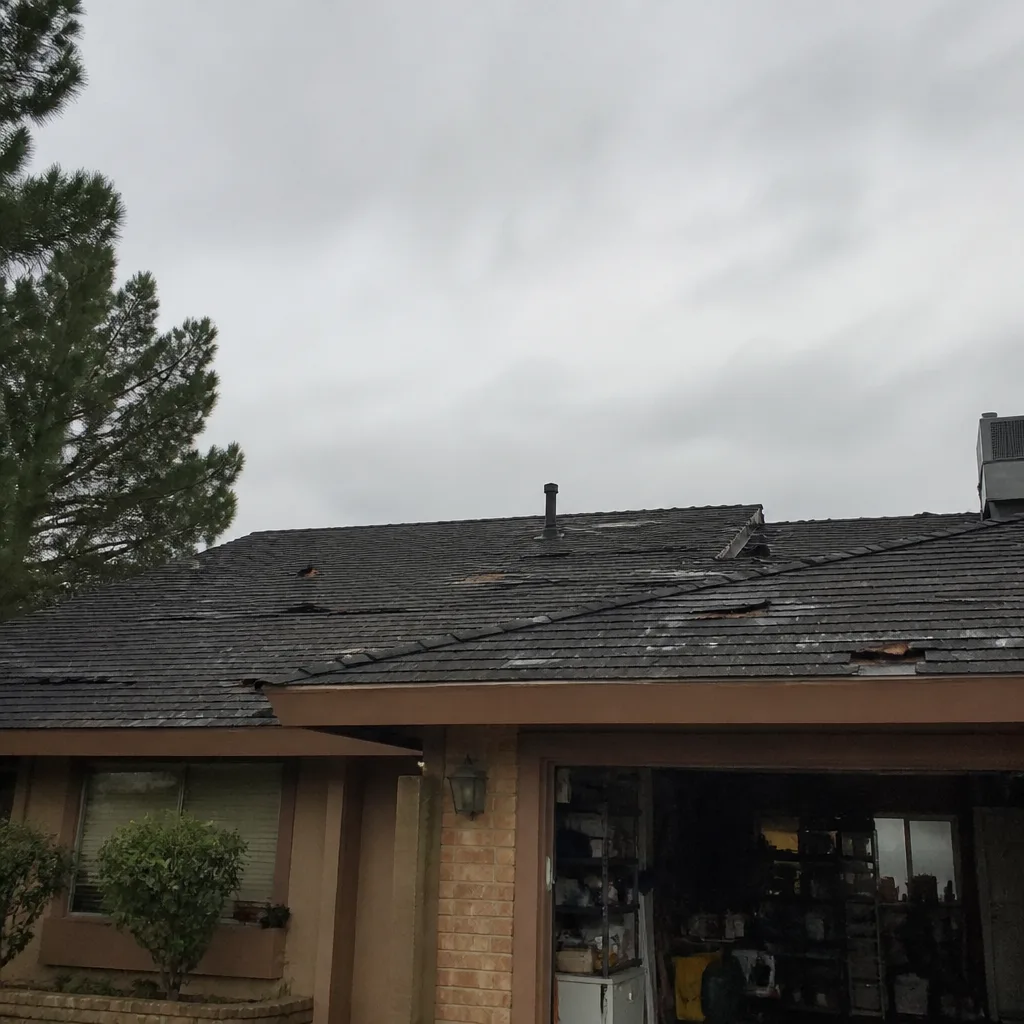 Before
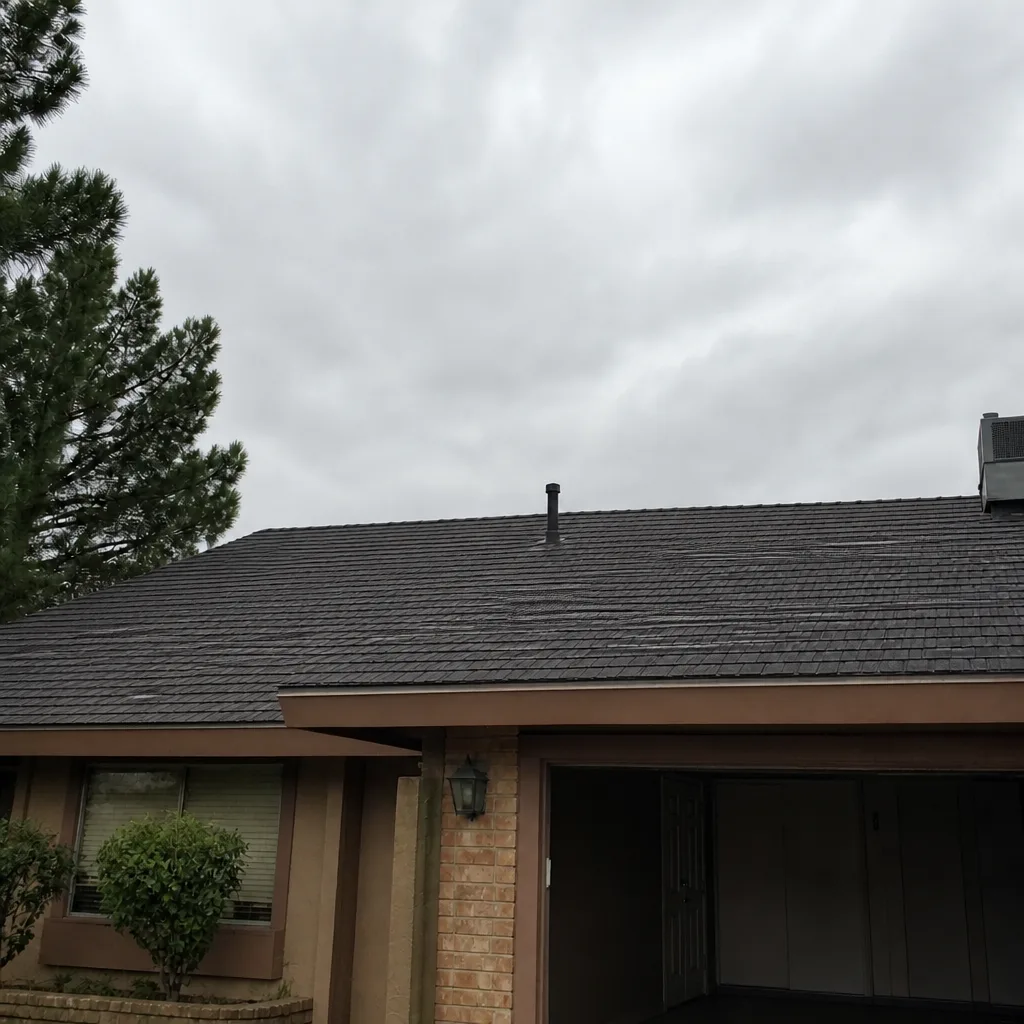 After
Common Mistakes to Avoid
- Calling the manufacturer before the contractor. Manufacturer claims are routinely denied when the underlying issue is installation. Start with the person who did the work, get a written diagnosis, then escalate if needed.
- Signing a completion punch list without a roof inspection photo package. Insist on photos taken from the actual roof, not the driveway. You should be able to see every penetration, every valley, and both sides of the ridge.
- Assuming any granule loss is failure. A little granule shedding on a new roof is normal. In Sunrise Manor, where the summer sun is unforgiving, some granule loss in the first year is expected – unless it’s concentrated in one area.
- Letting a “quick patch” slide without a written record. If a contractor patches something under warranty, ask for a written note describing what they found and what they did. It protects you and them.
- Skipping the permit to save money. The inspection that follows a pulled permit catches most of the installation errors listed in this guide. Skipping it is the wrong place to save.
- Ignoring a small ceiling stain because it stopped growing. A stain that hasn’t grown in a week hasn’t finished its job. It’s drying out. The next rain will tell you more.
- Hiring on price from a truck passing through. A local contractor with a written workmanship guarantee and a working phone number is the difference between recourse and no recourse. That’s the whole game in Sunrise Manor roofing.
When to Call a Professional
Some roof problems can wait for a weekday. Some can’t. Call a professional right away if you see water actively coming through a ceiling, if a section of shingles has peeled back after a wind event, if you find daylight in the attic where there shouldn’t be any, or if a stain has grown noticeably in a single week. Don’t climb onto a wet or sloped roof to inspect it yourself – the injuries outweigh the savings every time.
For less urgent symptoms – a small stain that appeared once and hasn’t grown, an edge that lifts slightly on a hot afternoon, a persistent drip at a pipe boot – call for a scheduled inspection and get photos of what’s happening before deciding anything. Ridgeline Roofing Co. Sunrise Manor offers free estimates in Sunrise Manor – call (844) 941-3509. Our phones are answered live 24/7, and we come to your roof, not the driveway, with a camera.
For homeowners starting from scratch rather than troubleshooting an existing roof, our guide to roof replacement and installation in Sunrise Manor covers the full sequence in detail.
Frequently Asked Questions
Look at where the problem is. If it’s at a flashing, a penetration, or the eave edge, it’s almost always installation. If the shingle itself is cracking, blistering, or losing granules in one uniform area, a material defect becomes a real possibility. Photos taken from the roof settle the question in most cases. Call (844) 941-3509 and we’ll take a look – estimates are free.
In most cases, yes – if the manufacturer can demonstrate the installation didn’t follow their published instructions, they’ll deny the claim. The best protection is to hire an authorized installer who pulls the permit and follows the spec. Every manufacturer line we install – GAF, CertainTeed, Owens Corning, Tamko, Boral, and the rest – comes with published installation instructions, and we follow them.
A first-rain leak almost always points to a flashing or penetration detail the installer missed or sealed too quickly. It’s rarely the shingle itself. Close-up photos of the leak area, along with the date your roof was completed, are what a good inspection starts with. Call us at (844) 941-3509 and we’ll schedule a same-week visit.
The workmanship warranty comes from the contractor and covers installation. The manufacturer warranty covers the material itself. They’re separate documents, they cover separate failures, and one often kicks in where the other leaves off. If your two documents disagree, ask for a written read of both before you make any decision about repairs.
We’d advise against it. Roofing sealants and flashing work have to be applied in the right conditions – especially in Sunrise Manor, where an afternoon sealant application may not bond before it skins over. One wrong sealant application on a penetration can hide the real issue long enough for interior damage to grow. Call a professional at (844) 941-3509 instead.
Don’t wait past the first rain. If you see a stain, a drip, or a lifted edge, call the same week. On our jobs, the 90-Day Done Right Promise is the window to make it right with no arguing. Call (844) 941-3509 and we’ll schedule a photo-documented inspection. Estimates are free.
The Bottom Line
Most problems after a roof replacement are installation-sequence failures, not material defects. Flashing, starter strip, penetration sealing, nail placement, and underlayment are the five places problems show up first, and each one has a specific cause and a specific fix. Your recourse depends on which warranty applies: the workmanship warranty covers installation, the manufacturer’s warranty covers the product, and “improper installation” is the phrase that decides most claims. Understand your documents before you call anyone. In Sunrise Manor, where the heat cycle and the monsoon each reveal different weaknesses, the first 90 days are the ones that matter. Written guarantees, permitted jobs, and a contractor who’ll come back to look – those are the things that turn a troubleshooting problem into a fixed roof.
If you’re in Sunrise Manor and you’re not sure whether what you’re seeing is a real problem or not, call us at (844) 941-3509. Our phones are answered live 24/7, the inspection comes with photos, and the estimate is free. Our team installs GAF, CertainTeed, Owens Corning, IKO, Atlas, Tamko, and Boral, and every job we do is backed by the 90-Day Done Right Promise – done right, and if it isn’t, we make it right.
For roof systems outside standard asphalt shingle – tile, metal, or flat – our specialty roofing service in Sunrise Manor covers the details that matter for those installations. For a broader view of how Ridgeline Roofing Co. supports Sunrise Manor homeowners across repair, replacement, and specialty work, start at our Sunrise Manor home page.
Written by the team at Ridgeline Roofing Co. Sunrise Manor.