
Last updated November 18, 2026
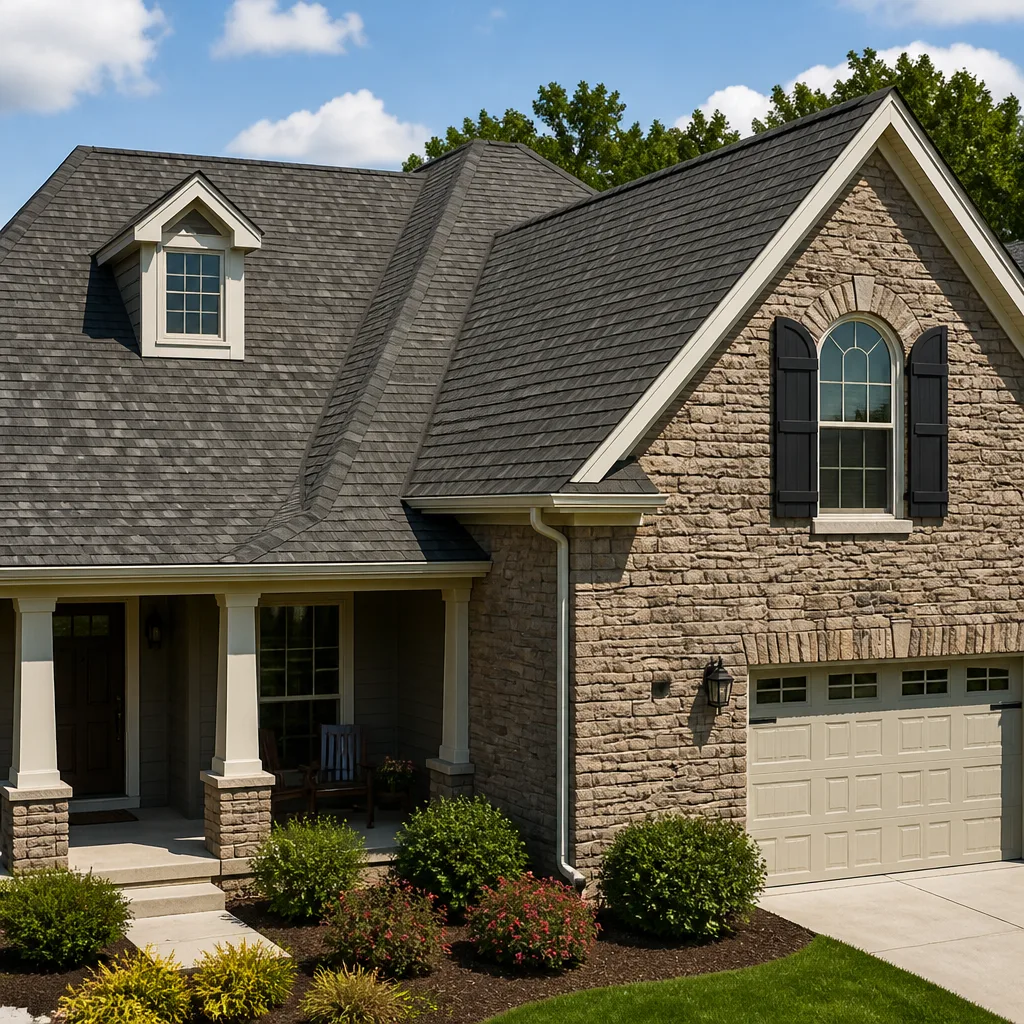 Architectural shingles
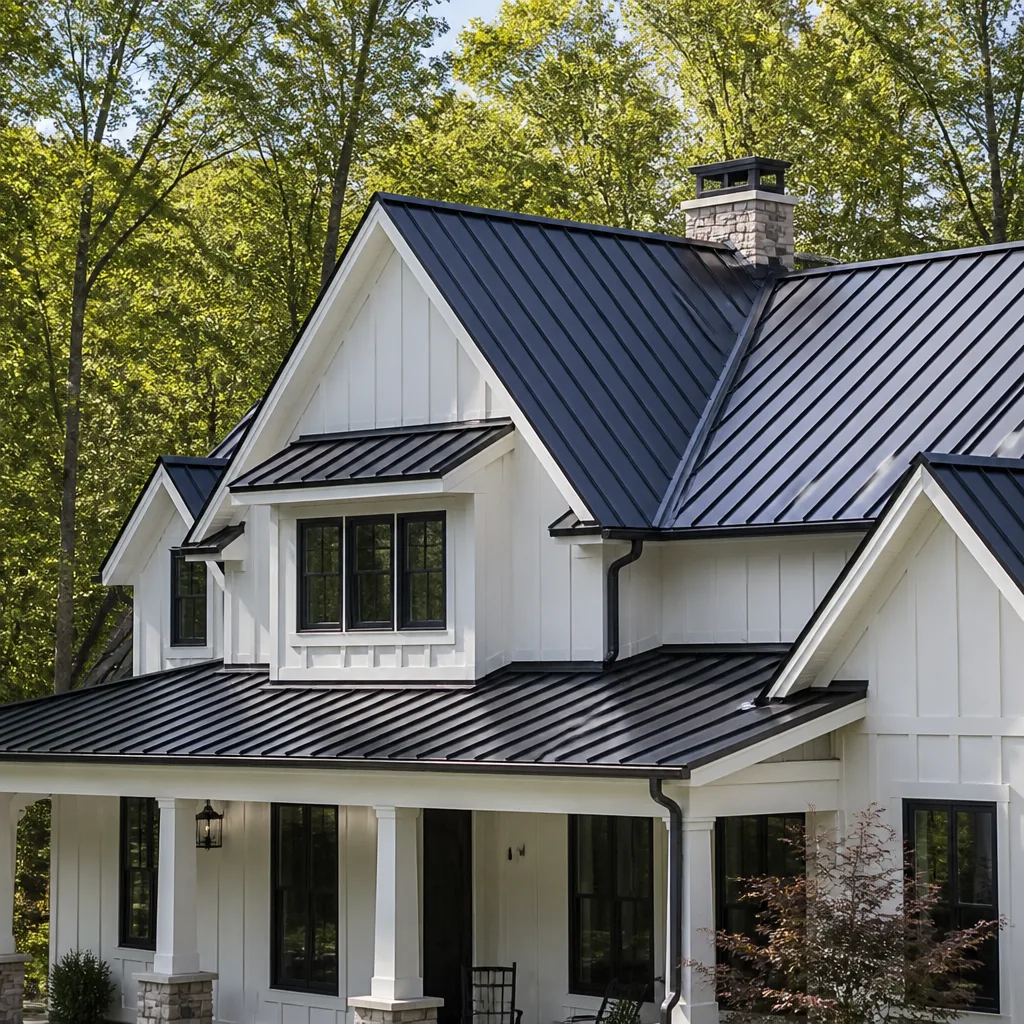 Metal roofing
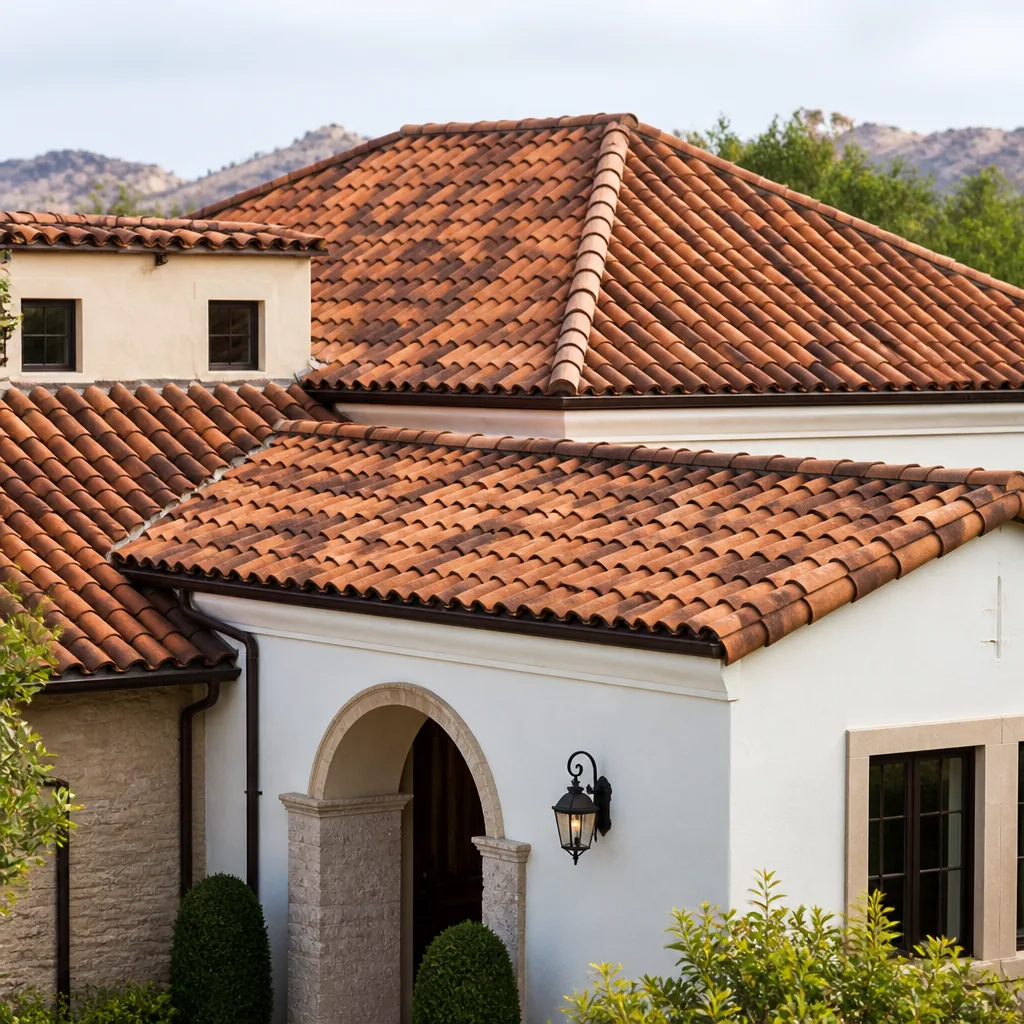 Tile roofing
 GAF
 Owens Corning
 Flat & low-slope
Free roof inspection with deck photos before we talk money - GAF and Owens Corning certified installation
DIY vs Professional Roof Replacement & Installation: What’s Safe to Do Yourself
Nevada allows an owner-builder permit, which means you can legally tear off and replace your own roof. That surprises most homeowners. But Clark County requires inspections at three separate stages, and the middle one happens while your home is wide open to the sky. Fail it, and you’re standing on a half-finished deck with a storm coming and no licensed contractor under any obligation to pull you out of the hole. This guide walks through the permit process, the true DIY cost once you count tool rental and dump fees, how manufacturer warranties actually work, and the structural decisions that field judgment handles better than any video. We’ve watched these plays unfold across Sunrise Manor, and the guidance here reflects what we see.
Quick Answer
For most homeowners, full roof replacement is not a safe or cost-effective DIY project. The savings over a professional bid are smaller than they appear once you add permits, tool rental, dump fees, and time off work, and a single inspection failure or installation mistake can cost more than the entire professional job. The DIY question has a near-universal answer on replacement, not because of skill, but because of permits, liability, and warranty exposure.
Styles & brands we work with
- Architectural shingles
- Metal roofing
- Tile roofing
- GAF
- Owens Corning
- Flat & low-slope
Table of Contents
- The Nevada Owner-Builder Permit: What’s Legally Possible
- The Three Inspection Stages and What Happens If You Fail
- The Real Cost Comparison: DIY vs. Professional
- Why Manufacturer Warranties Void on DIY Installation
- The Structural Decisions That Require Field Judgment
- Insurance, Liability, and the Uninsured Crew Problem
- What Sunrise Manor Climate Does to a DIY Roof
- Common Mistakes to Avoid
- When to Call a Professional
The Nevada Owner-Builder Permit: What’s Legally Possible
Nevada Revised Statutes allow a homeowner to pull an owner-builder permit for work on their primary residence, provided they intend to live in the home for at least a year after the work is complete and have not sold another owner-builder permitted home in the previous year. That’s the legal door. It’s real. But the permit is only the entry point, and the entry point is nowhere near the hardest part of the job.
Clark County, which covers Sunrise Manor and the rest of the Las Vegas Valley, enforces specific inspection milestones for a residential reroof. The permit application itself asks for a scope description, material specifications, and the number of squares being replaced. Getting the application right is the easy part. Meeting the inspections is where owner-builders run into trouble.
Homeowners in Sunrise Manor can absolutely navigate the paperwork. The form isn’t the obstacle. The obstacle is being your own contractor on a job that requires sequencing, safety equipment, and the willingness to stop work and wait for an inspector who may not arrive for two or three days. During those days, your roof is either stripped down to the decking or partially covered with underlayment that isn’t rated for the sun. In a valley that sees 300-plus days of sunshine a year and powerful spring wind events, that gap matters.
If you intend to stay in the home long-term and want a roof you can trust, this is worth reading through our Roof Replacement & Installation in Sunrise Manor guide to see what a properly permitted project actually entails.
The Three Inspection Stages and What Happens If You Fail
Clark County inspects a residential reroof at three points. Understanding these stages is the clearest way to see the risk.
- Deck inspection. After tear-off and before underlayment goes down, the inspector checks the exposed sheathing for damage, rot, improper nailing, and required nailing patterns. If the deck fails, work stops until repairs are made and re-inspected. Any dry rot found in Sunrise Manor’s older housing stock (particularly in homes built in the 1970s and 1980s with original plywood) is your problem to identify and fix, not the inspector’s.
- Underlayment inspection. The inspector verifies the underlayment type, overlap, and fastener schedule. In our climate the underlayment spec matters as much as the shingles, because the underlayment is what actually protects against wind-driven rain when the occasional monsoon rolls through.
- Final inspection. After the roof is complete, the inspector confirms the finished surface, flashing, and vent penetrations. A failure here usually means tearing out finished work to fix a flashing detail nobody flagged.
Any of these failures leaves you exposed. During the middle inspection, your roof is likely down to bare decking with no weather barrier. There’s no crew working for you, no foreman to reroute, no insurance policy covering the open structure. If it rains, you’re drying out your attic. If you fall behind schedule and the county can’t re-inspect for a week, you may be sitting on a stripped roof through a full weather cycle. In our experience, nobody who’s done this once wants to do it twice.
The Real Cost Comparison: DIY vs. Professional
The gap between a YouTube thumbnail and a real bid is narrower than the internet suggests. Here’s a realistic line-item breakdown of what a typical Sunrise Manor residential reroof runs against when a homeowner does it themselves.
- Materials. Shingles, underlayment, flashing, vents, cap, drip edge, and nails. Contractor discounts recover some of the gap, but a homeowner pays retail or close to it.
- Permit fee. Clark County owner-builder permitting, plus inspection scheduling. Comparable to contractor permit fees but paid out of pocket.
- Tool rental. Nail gun, air compressor, shingle shovels, roof jacks, fall protection harnesses, and a debris trailer. Rental for a multi-day DIY job adds up.
- Dumpster and disposal. A 30-yard roll-off is typical for a full reroof. Permitting for placement varies by Sunrise Manor HOA and lot.
- Time off work and labor. Two working adults at standard roof production rates need the better part of a week, weather permitting. On a valley roof in summer, that’s a real serious safety concern.
- Injury risk. Falls are the biggest cost driver of all. Emergency room, missed work, and disability exposure dwarf the entire job in a bad scenario.
Add those up and the savings erode. We’ve walked homeowners through this math in person and seen the same reaction every time: the DIY number is closer than the internet promised, and it comes with months of your summer gone.
Why Manufacturer Warranties Void on DIY Installation
Manufacturer warranties, whether GAF, CertainTeed, Owens Corning, or any of the lines we install, are written for installation by a licensed contractor following that manufacturer’s published specification. Pull a manufacturer warranty certificate on any current shingle and read the “installation requirements” section. Non-licensed installation voids the standard manufacturer coverage. Not a partial void. A void.
What that means for a homeowner:
- No material warranty coverage if the shingles develop a manufacturing defect.
- No wind-lift or transition-lift coverage.
- No recourse if the underlayment fails behind the shingles.
- No upgrade protection on the manufacturer’s extended system warranty.
On top of the manufacturer warranty, many real estate transactions in Sunrise Manor and the surrounding valley ask the seller for proof the roof was professionally installed and permitted. A buyer’s inspector flags an owner-builder roof, and suddenly the negotiation is about a discount, not a repair. The roof is depreciated by the buyer’s risk assessment, not by the shingles’ actual condition.
The Structural Decisions That Require Field Judgment
What the videos don’t teach is what to do when the deck under your feet doesn’t match the drawing. Every reroof has field decisions that determine whether the roof performs for 25 years or fails in 8. Three of them:
- Fastener pattern. High-wind zones in Sunrise Manor require specific nail counts, placement relative to the shingle’s nailing line, and correct penetration into the decking. One missed nail per shingle is invisible at install and becomes a wind-lift failure the first time 50 mph gusts hit.
- Decking repair. When you pull the old shingles and find soft spots, the decision is where to stop the repair and how to properly scab replacement decking into the existing framework. Overbuild the repair and you’re paying for unnecessary lumber. Underbuild and the new shingles telegraph the defect in two seasons.
- Valley design. Where two roof planes meet, water concentrates. The underlayment layering, the ice-and-water membrane placement (still needed in Las Vegas for driven rain), and the metal valley flashing configuration all depend on observation, not a checklist. Correct valley work is the single most cited cause of interior water damage on new roofs.
These decisions get made on the deck, in the moment, with the sun on your back. Our technicians have up to 10 years of experience, and the ones who make these calls reliably have seen the outcomes on a few hundred roofs. A homeowner making the calls blind has seen them on zero. That’s the gap.
Insurance, Liability, and the Uninsured Crew Problem
Hiring a roofer means something specific. It means the contractor carries general liability insurance that covers your home during the job and workers’ compensation coverage for every person on your roof. If your “roofer” is an uninsured crew, and one of their workers falls off your roof, you are personally exposed to the injury claim. Homeowner policies commonly exclude injuries to paid workers on the property, which means your coverage isn’t a shield in that scenario.
When you hire a licensed, insured roofing contractor, the employer’s workers’ compensation policy is the first line for worker injuries, and the general liability policy is the first line for damage to your home. When you do it yourself, you are the employer without a workers’ compensation policy. If a friend or family member helping you falls, that injury lands in your lap with no employer’s coverage and a homeowner’s policy that may deny the claim.
If you’re weighing this out, the Ridgeline Roofing Co. Sunrise Manor home page covers how we structure a job from estimate through final inspection, including the insurance documentation we hand over before a single nail leaves the truck.
What Sunrise Manor Climate Does to a DIY Roof
Sunrise Manor sits on the east side of the valley, and the roof environment here is unforgiving. Summer surface temperatures on a dark shingle roof regularly reach well past 150 degrees. Shingles become soft and mar at those temperatures, which is why our crews start early and finish sections before midday heat sets in. Homeowner installs that stretch into the afternoon bake shingles down in ways that compromise nailing integrity.
Spring wind is the other factor. The valley funnels gusts that routinely exceed 40 mph, and those gusts are what separate a roof installed with the correct high-wind nailing pattern from one installed with the standard. After a wind event, we see the same pattern across Sunrise Manor: newly installed roofs from unlicensed crews lose shingles on the west-facing slopes first, because that’s the side the wind loads. Local codes and material specs have been tightened to address this, but they only matter if someone on the roof is following them.
Monsoon season, typically July through September, brings short, intense rain events that test underlayment and flashing. A roof installed with the wrong underlayment overlap leaks in one season. A roof installed correctly with the right underlayment in Sunrise Manor just works. There’s no way to know which you’ve got until the first monsoon.
If your current roof has damage you’re deciding whether to repair or replace, our Roof Repair in Sunrise Manor page covers how we draw the line between the two on a valley roof.
Common Mistakes to Avoid
- Skipping the deck inspection. Homeowners often tear off, cover with underlayment, and call for inspection. Clark County requires deck inspection before underlayment goes down. Out-of-order work stops the job and forces a partial tear-off.
- Buying retail materials and assuming they’re the same as contractor-grade. Big-box shingles are often a lower-grade version of the same product line. The warranty difference is buried in the fine print.
- Ignoring HOA requirements in Sunrise Manor subdivisions. Many area neighborhoods have specific color and material specs that override what the county approves. Install the wrong color and you’re re-roofing on your dime.
- Scheduling installation in July. We’ve seen homeowners start a summer DIY reroof in Sunrise Manor and end up in the emergency room with heat exhaustion by day two. The valley summer is a serious safety matter on a roof.
- Assuming a permit is the same as licensed work. An owner-builder permit is legal, but it does not trigger the manufacturer warranty and does not provide the insurance coverage a licensed contractor does.
- Hiring an uninsured crew to save a few hundred dollars. The gap between a licensed bid and an uninsured crew’s bid is small compared to the exposure. If a worker falls on your property, you’re the one holding the claim.
- Trusting the low bid from an out-of-town crew. Storm-chasers follow hail and wind events. They aren’t there next spring when the flashing starts leaking.
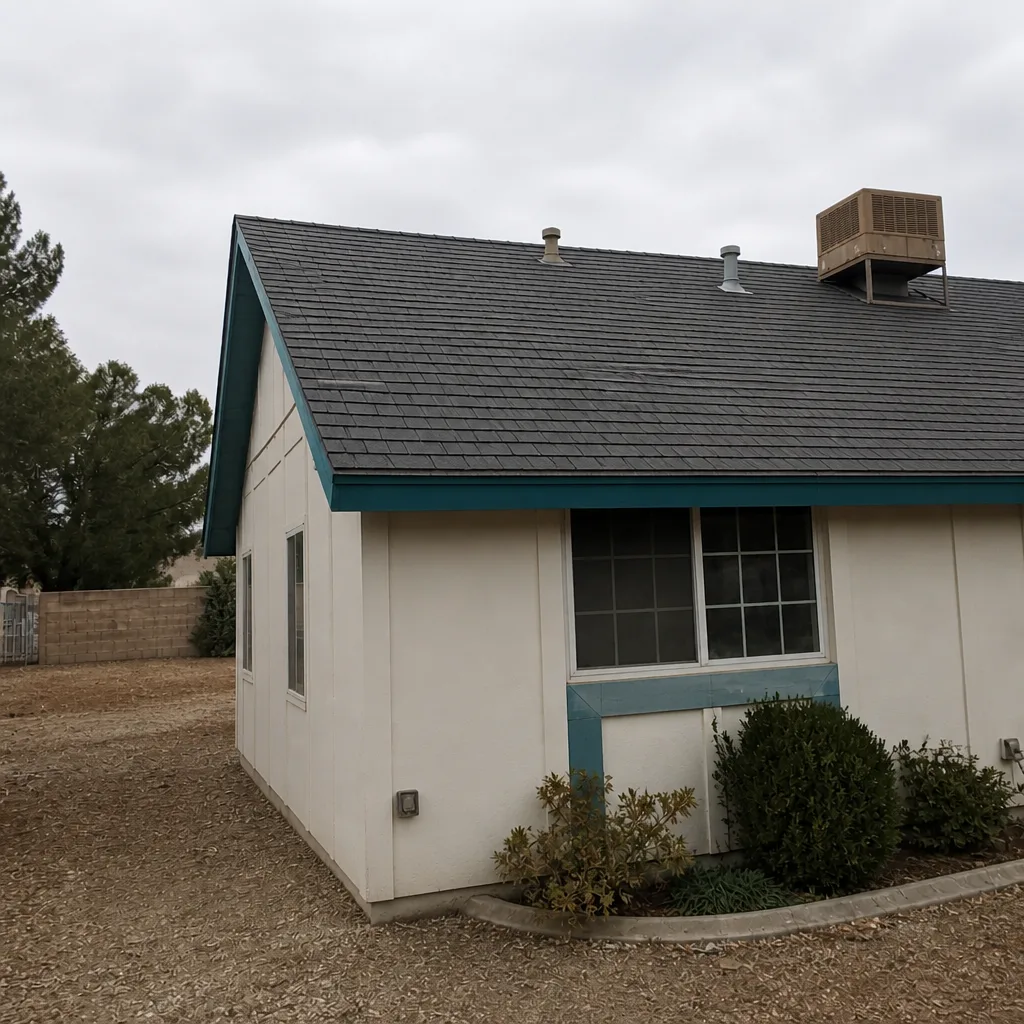
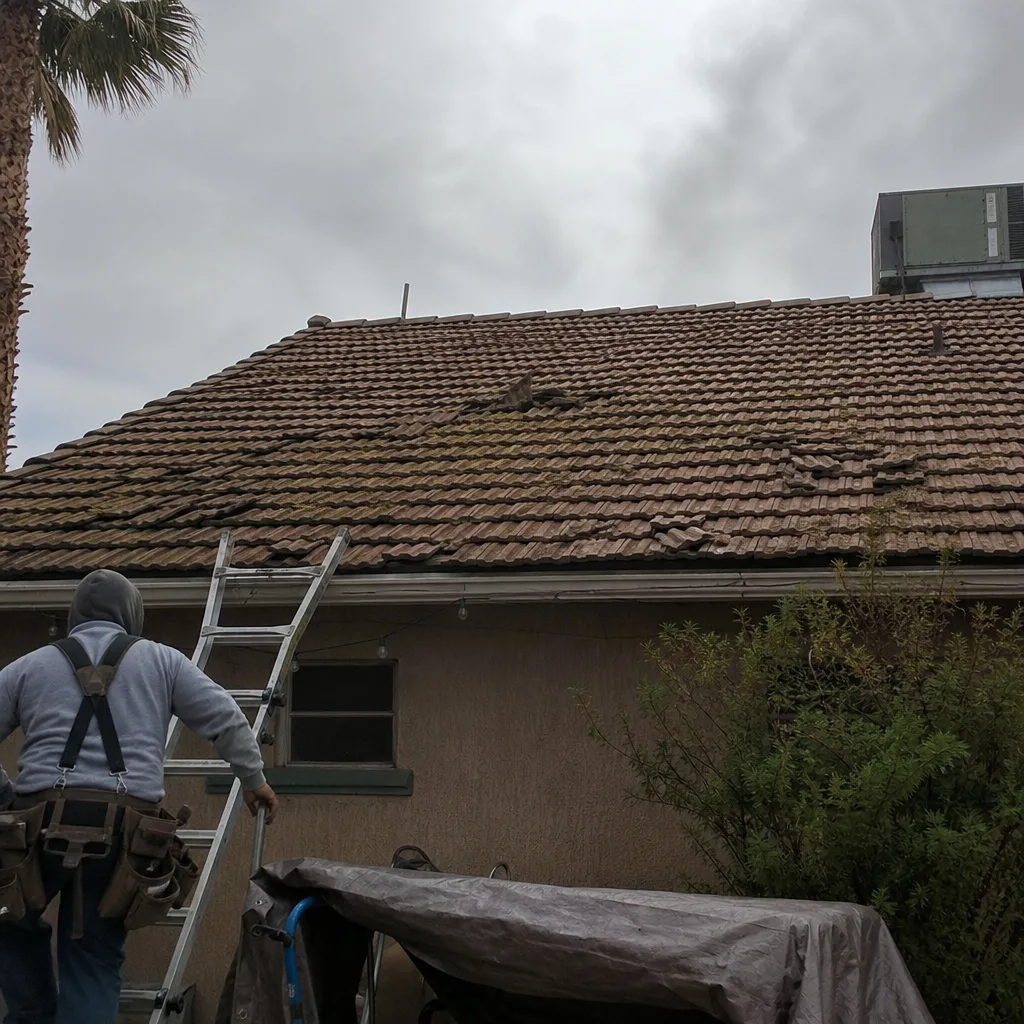
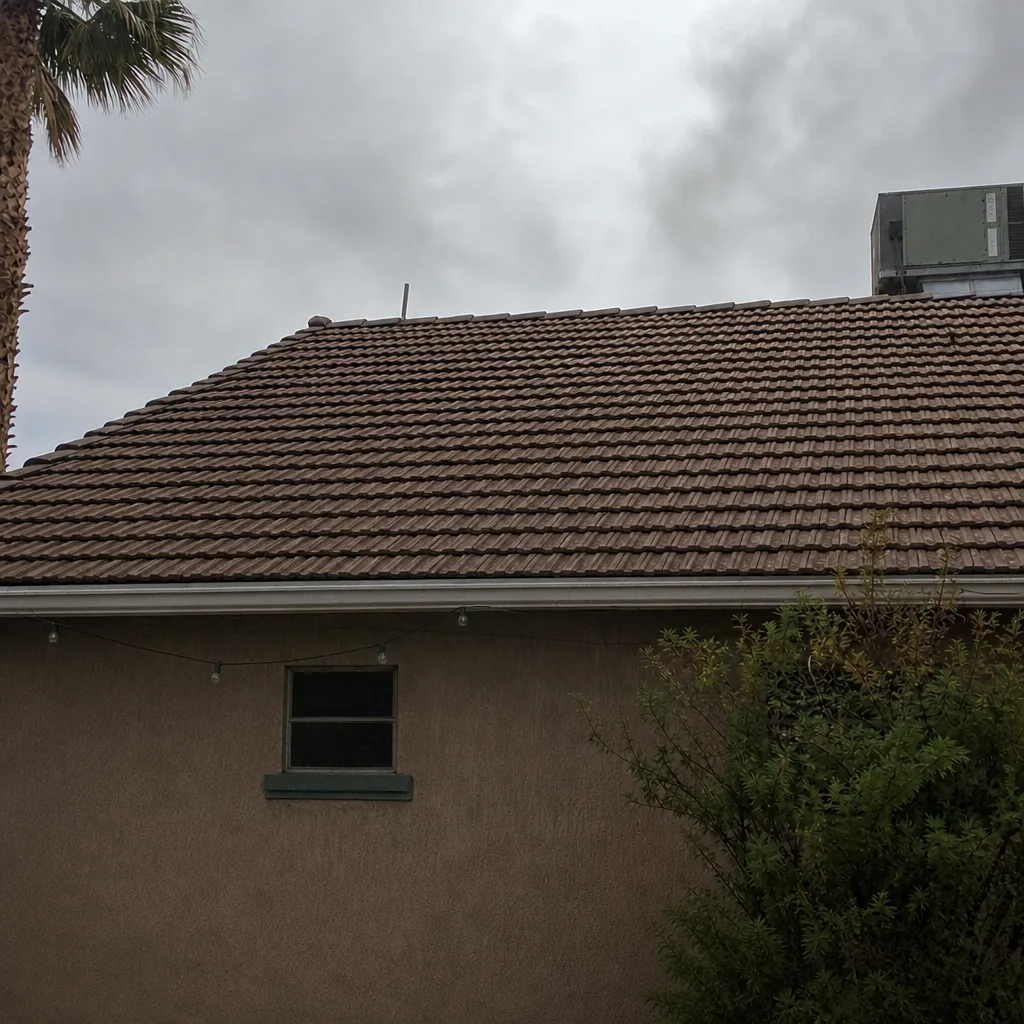
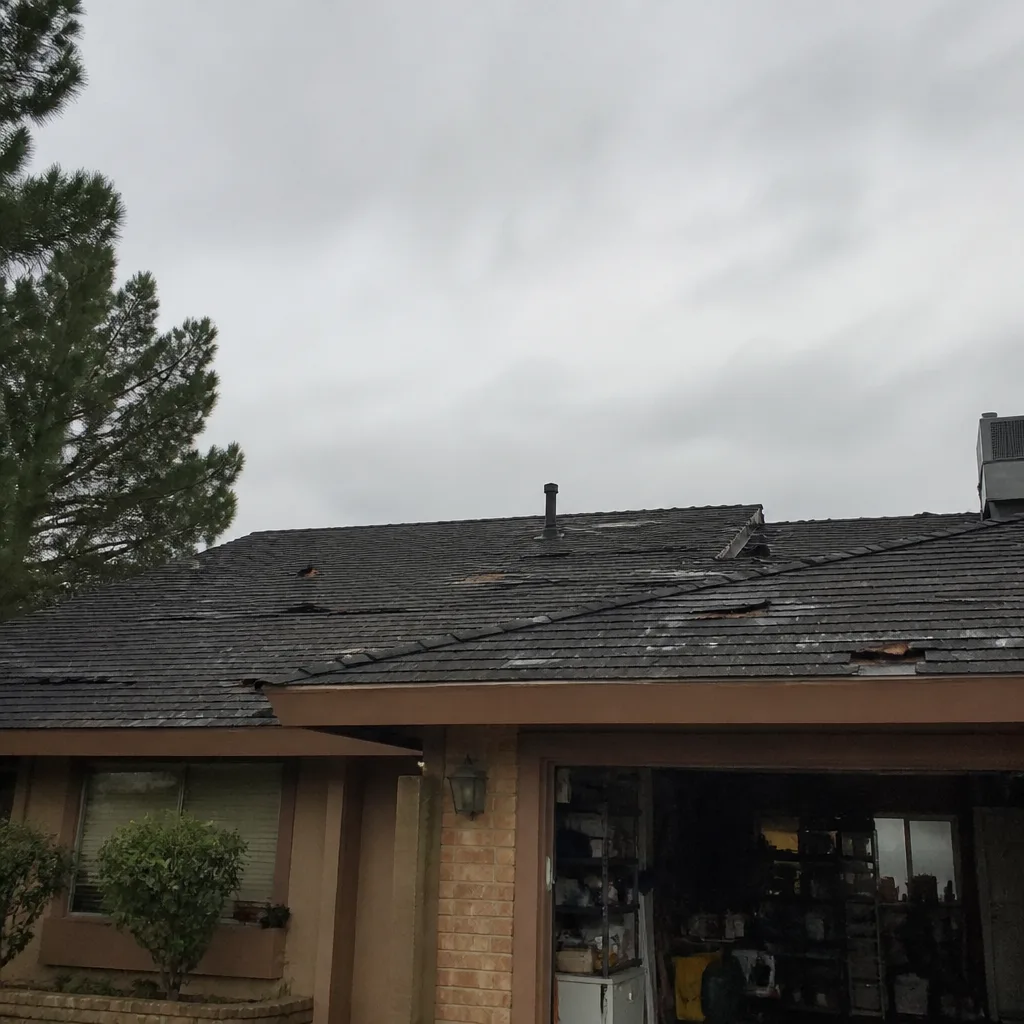
See the difference
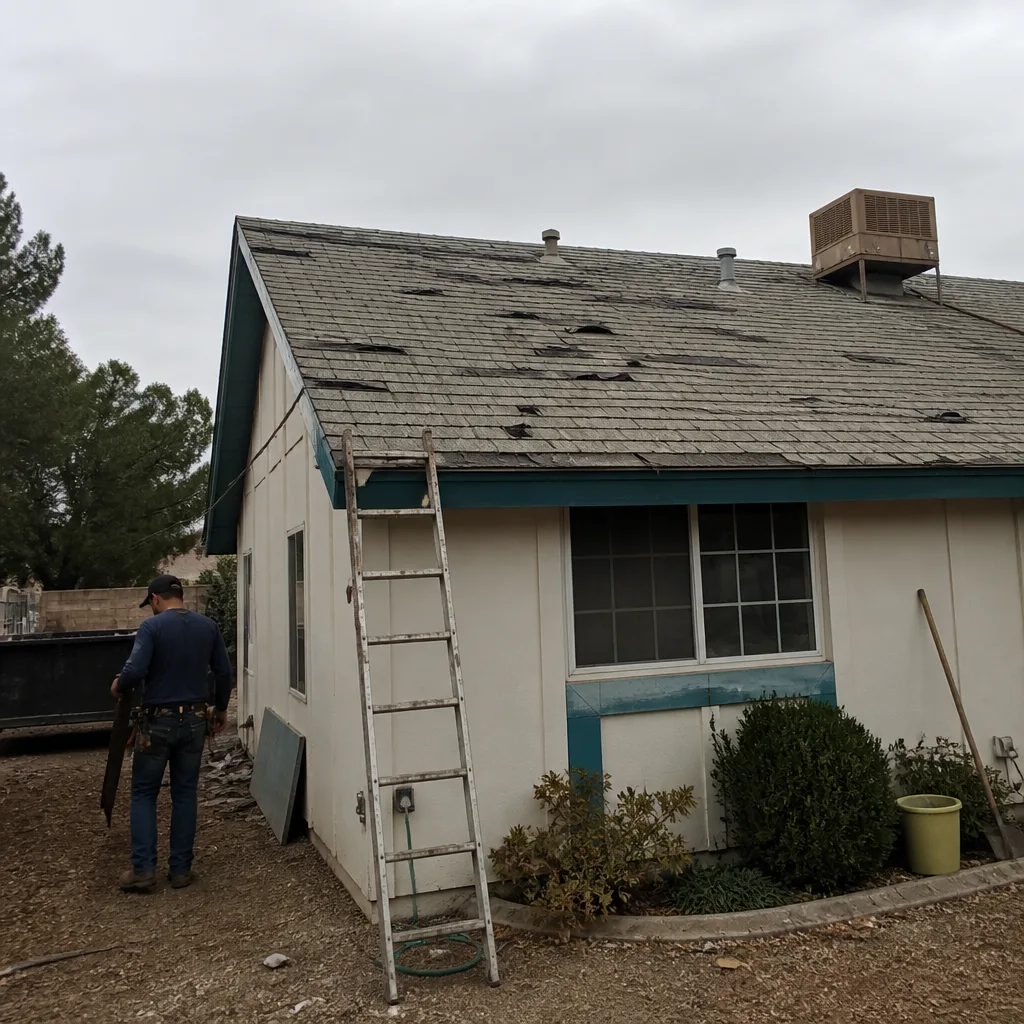 Before
 After
 Before
 After
 Before
 After
When to Call a Professional
Call a professional roofer when the job is a full replacement, when the deck has any soft spots, when the roof has three or more penetrations (vents, chimney, skylights), when you’re selling the home in the next two years, when the home was built before 1990, or when any part of the work involves a slope over 6/12. Those scenarios carry the inspection, warranty, and liability exposure that make DIY not worth it. Full disclosure: if the only issue is a single missing shingle or a small asphalt patch on a low-slope utility roof, that’s repairable by a careful homeowner and we’ll say so. Beyond that, it’s a pro job.
Ridgeline Roofing Co. Sunrise Manor offers free estimates in Sunrise Manor. Call (844) 941-3509 to schedule an inspection and get a written, line-item bid.
Frequently Asked Questions
Yes. Nevada’s owner-builder permit allows a homeowner to replace their own roof on their primary residence if they intend to live there at least a year afterward. The permit is real. The catch is the Clark County inspection schedule, which requires deck, underlayment, and final stages while your roof is exposed to weather during the gaps.
Usually far less than expected. Once you add tool rental, dumpster fees, permit fees, retail material pricing, and time off work, the savings over a professional bid typically come in under 25 percent, and sometimes under 15 percent. That’s before any injury cost or inspection failure.
Yes. GAF, CertainTeed, Owens Corning, and the other major manufacturers require licensed contractor installation for their standard material warranties. An owner-builder install voids the manufacturer coverage, and the underlayment and flashing add on top of that.
Work stops until you correct the issue and re-schedule the inspection. During that gap, your roof is often stripped to the decking with no weather barrier. If rain arrives, the interior damage is yours to dry out and repair, and a licensed contractor is not obligated to take over a job in progress.
Personal liability for worker injury. Homeowner policies commonly exclude paid workers injured on the property. If an uninsured worker falls off your roof, the workers’ compensation claim lands on you, and that exposure dwarfs any savings on the bid.
Yes, and this is where a free second opinion pays off. Bids vary widely on scope, material spec, and inspection responsibility. Ridgeline Roofing Co. offers a free second opinion on any written estimate. Call (844) 941-3509 and we’ll review a competitor’s bid without any pressure to sign.
The Bottom Line
Roof replacement is one of the few home projects where the DIY question really does have a near-universal answer. Nevada’s owner-builder permit is legal and real, but it’s only the entry point. The three Clark County inspection stages, the manufacturer warranty void on non-licensed install, the structural judgment calls made on the deck, and the personal liability for worker injury all stack up on the DIY side. The savings are smaller than YouTube makes them look, and the downside is a roof that fails in eight years instead of twenty-five. For a Sunrise Manor homeowner planning to stay in the home, the math tilts hard toward a licensed, insured, permitted job.
Ridgeline Roofing Co. has served local homeowners since 1984 and backs every job with the 90-Day Done Right Promise, a written workmanship guarantee with no arguing and no paperwork. If the roof isn’t right, we come back and make it right. We install products from seven manufacturers, including GAF, CertainTeed, and Owens Corning, and our technicians are background-checked and arrive in uniform. Most jobs finish in a single visit, and the price on the estimate is the price on the invoice. A live person answers every call around the clock, including nights, weekends, and the middle of a storm. If you’re weighing a specialty system like tile or metal, our Specialty Roofing in Sunrise Manor page covers what installation looks like on those roof types and what permitting they require.
Call (844) 941-3509 for a free estimate. We’ll walk the roof, take photos from the actual deck, and give you an upfront price with no surprises. If a repair will do the job instead of replacement, we’ll tell you that, because a square deal is a square deal either way.
Written by the team at Ridgeline Roofing Co. Sunrise Manor.