
Last updated November 18, 2026
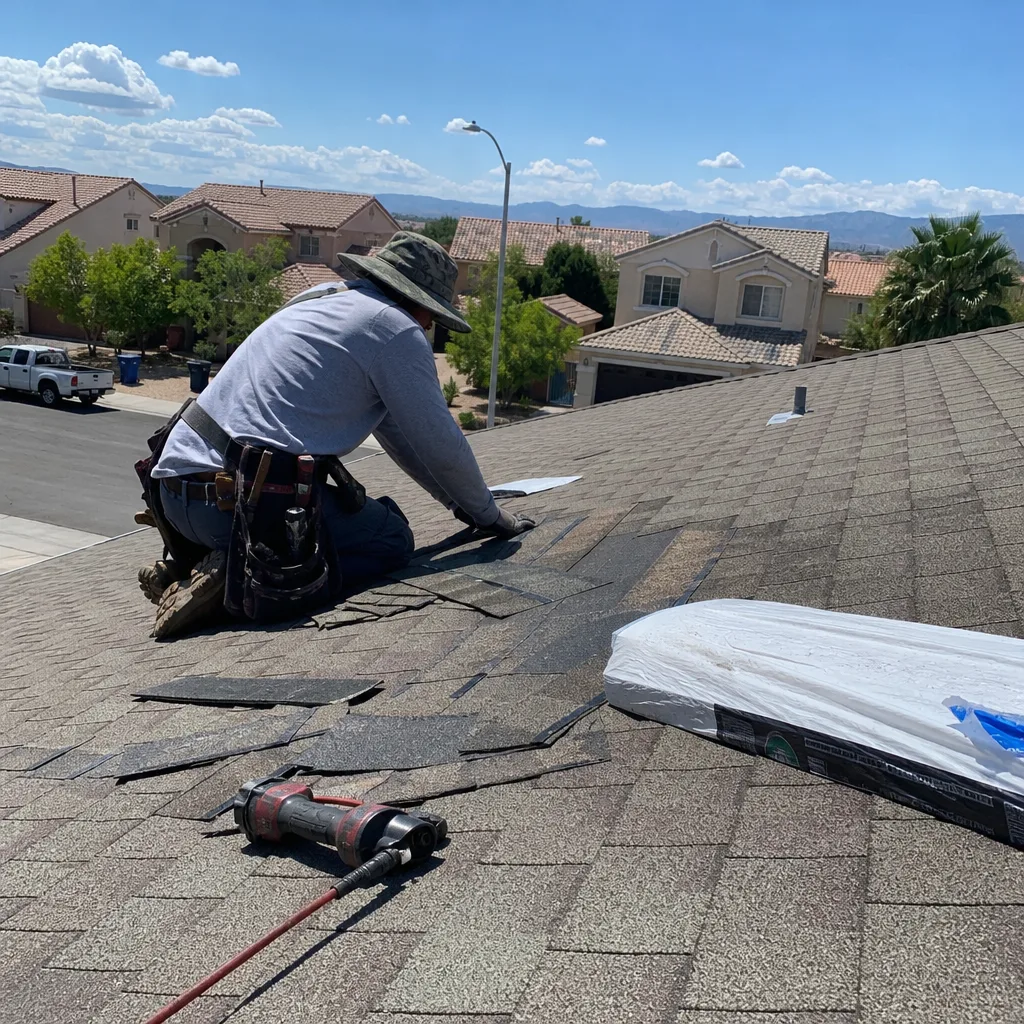
 Architectural shingles
 Metal roofing
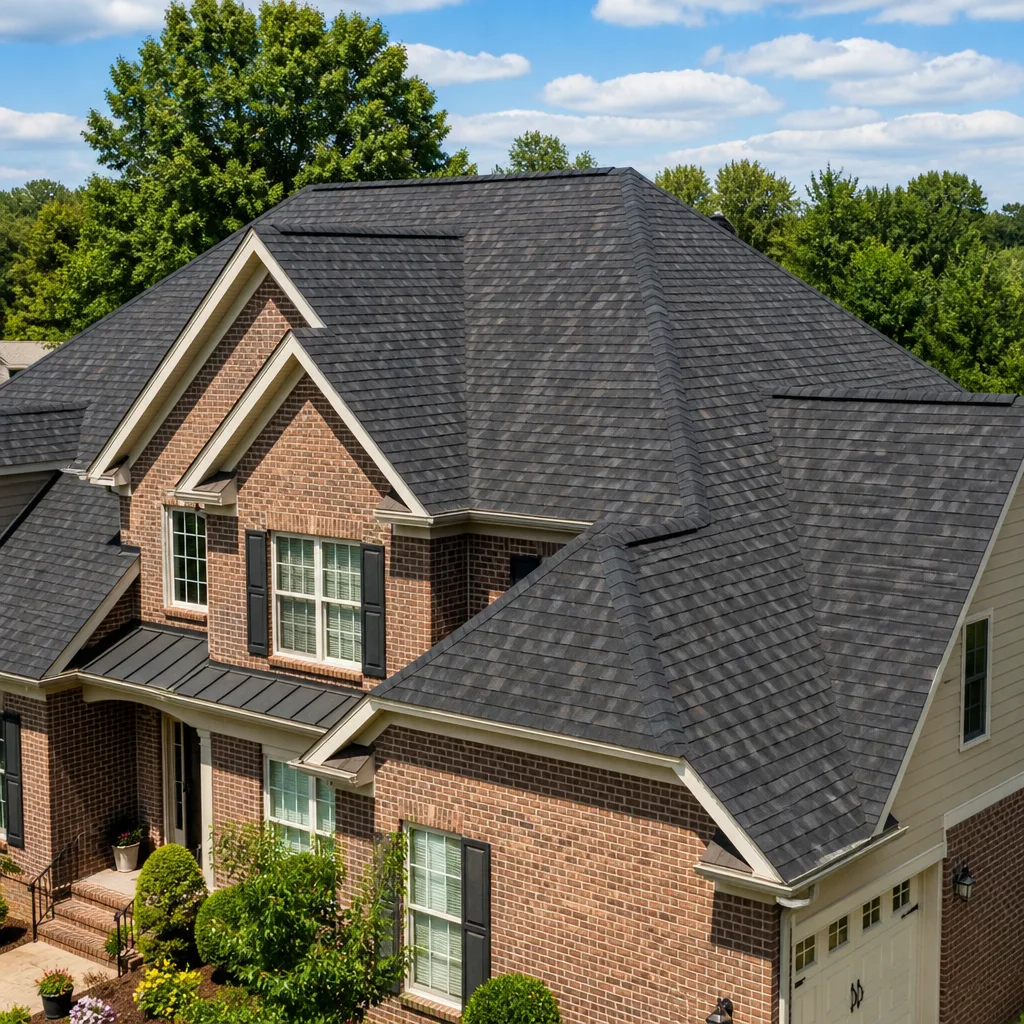
 Tile roofing
 GAF
 Owens Corning
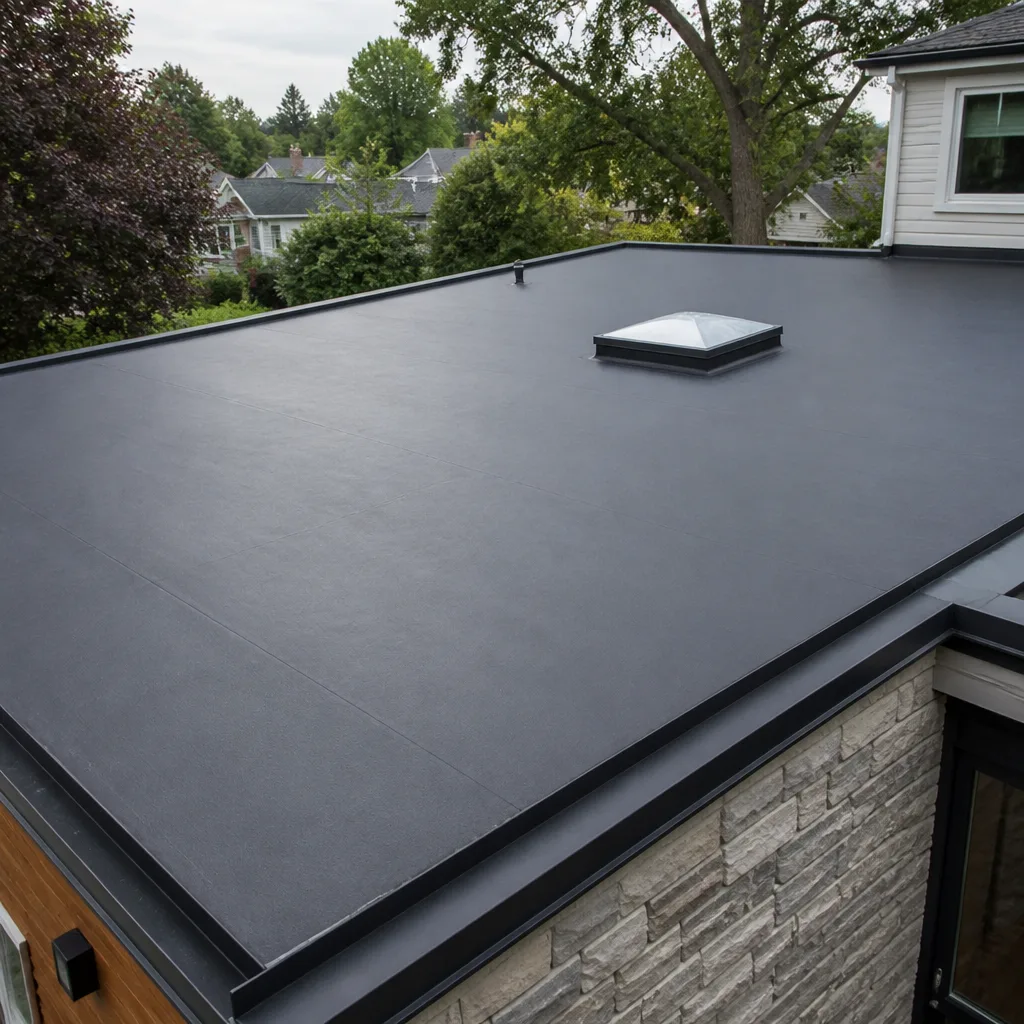 Flat & low-slope
Free roof inspection with deck photos before we talk money - GAF and Owens Corning certified installation
Emergency & Storm Damage Maintenance Schedule: What to Do and When
The homeowners who handle monsoon season calmly aren’t lucky – they inspected their roof in May. That’s the whole trick, and it isn’t much of a trick. In Sunrise Manor, the gap between a roof that shrugs off a July microburst and one that ends up under a blue tarp usually comes down to two weekends of work a year: one before the storms arrive, one after they leave. This guide lays out that calendar month by month, names the specific maintenance tasks that prevent emergency calls, and explains how to build a photo record that makes an insurance claim move faster instead of stalling out.
Quick Answer
Storm damage prevention in Sunrise Manor follows a two-window schedule: a pre-monsoon inspection and reinforcement pass in April through May (finished before June 1), and a post-summer assessment in September once the monsoon pattern closes. Between those windows, the highest-value tasks are flashing re-seal, pipe boot inspection, and keeping flat foam roofs on a tighter recoat interval than manufacturer literature suggests – because Sunrise Manor’s UV load ages foam faster than the timeline printed on the bucket.
Styles & brands we work with
- Architectural shingles
- Metal roofing
- Tile roofing
- GAF
- Owens Corning
- Flat & low-slope
Table of Contents
- Why a Maintenance Schedule Beats Storm Scrambling in Sunrise Manor
- April: The Pre-Monsoon Inspection Pass
- What to Reinforce by June 1
- The Maintenance Tasks That Actually Prevent Emergency Calls
- Building Your Pre-Storm Documentation Baseline
- Deferred Maintenance vs. Normal Wear: What Voids a Storm Claim
- Why Sunrise Manor Foam Roofs Need a Tighter Recoat Schedule
- September: The Post-Monsoon Assessment
Why a Maintenance Schedule Beats Storm Scrambling in Sunrise Manor
Sunrise Manor sits in the valley’s northeast, where summer storms build over the mountains and unload fast. The rain total for a monsoon cell is often modest – an inch, sometimes less – but it can land in twenty minutes onto a roof that hasn’t seen water since the previous September. Sun-baked sealant, brittle plastic, and a foam coating that has thinned under a full summer of UV all get tested at once. That’s the mechanical reality behind most “sudden” roof failures we see in Sunrise Manor: nothing was sudden. The sealant had been cracking for months.
A maintenance posture flips the order of operations. Instead of reacting to damage you discover mid-storm, you find the weak points in dry, mild weather when fixes are cheap, quick, and scheduled. A flashing reseal done in April takes an afternoon. The same flashing letting go in July turns into ceiling drywall, wet insulation, and a claim. We’ve watched this pattern repeat across the east valley for years, and it holds whether the roof is tile, shingle, or the flat foam assemblies common on Sunrise Manor homes built in the 1960s through 1980s.
The schedule below assumes a typical Sunrise Manor house with a sloped roof plane and at least some flat or low-slope sections. If your roof is a specific assembly type, the Specialty Roofing in Sunrise Manor page covers how foam, tile, and metal each behave differently under this climate.
April: The Pre-Monsoon Inspection Pass
April is the right month in Sunrise Manor for one reason: the weather is workable and the storms are still two months out. An inspection done now leaves time to schedule repairs before June, when every roofer in the valley gets busy and the window closes. Here’s the pass we recommend, in order:
- Walk the perimeter at ground level. Look for lifted shingle tabs, cracked tiles, granules collecting at downspout outlets, and any staining on fascia or soffit boards. A dark streak on the fascia near a roof edge usually means water has been escaping behind the gutter.
- Check the attic from underneath. Bring a flashlight and look for daylight at penetrations, water stains on decking, and rusted or discolored nail tips. Stains that run in a vertical line point to a specific leak path – photograph them before they dry.
- Inspect the flashing zones. Chimney surrounds, valley metal, step flashing where a wall meets the roof plane, and the counterflashing at parapet walls are the first places to fail. Sealant there should be pliable, not chipped or pulled away.
- Look at every pipe boot. These are the neoprene collars around plumbing vents. Under Sunrise Manor’s UV intensity they crack at the top of the collar within a decade or so, and a cracked boot is one of the most common leak sources we find.
- Clean the drains and scuppers. Flat sections and parapet walls drain through scuppers, not gutters. Palm fronds, gravel, and blown debris clog them every spring.
- Photograph everything, wide and close. More on that in the documentation section below.
Nothing on this list requires climbing. A homeowner with binoculars and an attic flashlight can log most of it. Anything that needs someone on the roof itself is a job for a trained technician, and it’s where a documented inspection with photos from your actual roof pays off – you see what they see instead of hearing a speech in the driveway.
What to Reinforce by June 1
By the end of May, everything that can be tightened, resealed, or replaced before storm season should be finished in Sunrise Manor – because once the first monsoon cell rolls through in late June or early July, you don’t want an open work order hanging over your head. The June 1 target list is short and specific:
- Re-seal all exposed flashing. Polyurethane sealant at chimney surrounds, step flashing, and vent penetrations should be replaced, not just topped off. Layering new sealant over old, failed sealant is one of the most common shortcuts we correct.
- Replace cracked pipe boots. A split collar gets a new boot, period. Patching a neoprene collar with sealant is a temporary fix that usually fails within a season.
- Re-seat lifted shingles and tiles. A single lifted tab is a wind catch. Under 50 mph gusts, one lifted tab can peel a whole course back. Re-seating and re-adhesive now prevents that cascade.
- Clear scuppers and drains one more time. Spring winds in Sunrise Manor push fine desert dust and palm debris onto flat sections. A second clearing before June matters.
- Check the gutters and downspout fasteners. A downspout that’s pulling loose from the fascia lets water run against the wall instead of away from the foundation.
- Recoat foam if the coating is thinning. If a foam roof is due, the recoat should happen in spring, before UV season peaks. See the foam section below for why the timing matters more here than elsewhere.
The repairs themselves are ordinary roof repair work. What isn’t ordinary is doing it on a schedule. That distinction is the whole point of this guide, and it’s the same posture behind our Roof Repair in Sunrise Manor approach: find and fix the small failure before it becomes a claim.
The Maintenance Tasks That Actually Prevent Emergency Calls
Most emergency calls we take in Sunrise Manor trace back to a small number of failure points. If you maintain these, you’ll head off the majority of storm-season problems.
Flashing re-seal
Flashing is the metal that directs water around penetrations and wall intersections. It’s also where sealant does the quiet work. Sealant loses flexibility under heat cycling and UV, and once it cracks, water finds the gap. In this climate, expect to inspect flashing annually and re-seal every three to five years, sooner on south- and west-facing planes that take the most sun.
Pipe boot inspection
Every plumbing vent on your roof is a hole through the decking, sealed by a rubber collar. Check the collars each spring. If the neoprene has cracked or pulled away from the pipe, it needs replacement – this is one of the cheapest fixes on a roof and one of the most expensive to ignore.
Foam recoat intervals
We address this in detail below, but here’s the short version: follow the manufacturer’s interval as a minimum, then shorten it for this climate. The UV load in Sunrise Manor ages coating faster than the generic timeline accounts for.
Granule and coating checks
On shingle roofs, granules in the gutter mean the shingle surface is wearing. On foam, coating that has worn thin lets UV reach the foam itself, which then breaks down into a sponge. Both are cheap to catch early and don’t get cheaper.
Drainage and scupper clearing
Flat sections and parapets depend on clear drains. A clogged scupper during a monsoon cell turns a flat roof into a pond in minutes. Clear them before the season and again mid-season.
If your roof is approaching the end of its expected life, all the maintenance in the world won’t extend it indefinitely. When repairs stack up faster than they should, Roof Replacement & Installation in Sunrise Manor lays out what that decision looks like.
Building Your Pre-Storm Documentation Baseline
This is the step most homeowners skip, and it’s the one that saves the most grief when a claim is filed. Insurance adjusters work on evidence. If you can show the condition of your roof before the storm, you can prove what the storm did – and rule out the adjuster’s default assumption that the damage was pre-existing.
Build the baseline in April, before the season starts:
- Take wide shots of every roof plane from several angles, ideally in good morning light. Date-stamp them by saving to a folder named for the year.
- Take close-up photos of every flashing zone, pipe boot, and valley. Wide shots show context; close-ups show condition.
- Photograph the attic from underneath, including the decking, rafters, and any existing stains. If a stain already exists before the storm, document it now so it doesn’t get blamed on the storm later.
- Photograph gutters, downspouts, and any flat sections with their drains clear.
- Keep a short written log. Note the date, what you inspected, and any repairs done. A page of notes is worth more than a dozen disorganized photos.
Keep the whole record in one folder, digital or physical. If you use a professional inspection, ask for the photo set – a documented inspection with photos taken from the actual roof gives you a baseline that an adjuster will take seriously. That’s the standard our technicians work to, and it’s why we hand homeowners the images rather than keeping them internal.
Deferred Maintenance vs. Normal Wear: What Voids a Storm Claim
This is where homeowners get surprised, and it’s worth being direct about. Insurance covers storm damage. It does not cover wear and tear, and it often won’t cover damage that a neglected condition allowed. The line between the two is what adjusters argue about.
Normal wear is expected. Granules wearing off a shingle over years, coating thinning on a foam roof, or sealant losing flexibility is ordinary aging, and insurance doesn’t pay for it. What insurance covers is a discrete event: wind lifting shingles, hail bruising a surface, a monsoon cell forcing water past flashing that was sound before the storm.
Deferred maintenance is different, and it’s the category that sinks claims. If sealant around a chimney had been cracked for two seasons, an adjuster can reasonably call the resulting leak a maintenance failure rather than a storm event. If a scupper had been clogged before the storm, the resulting ponding is often attributed to the clog. If a pipe boot was split and patched rather than replaced, the leak is on the patch. The fix is documentation – the April baseline above is what lets you show a sound condition before the storm.
Keep records of any repairs you make, note the dates, and photograph the completed work. Our technicians document every inspection with photos from your roof for exactly this reason. If you’re facing a claim right now, see the Ridgeline Roofing Co. Sunrise Manor home page for how our emergency and storm damage response works.
Why Sunrise Manor Foam Roofs Need a Tighter Recoat Schedule
Flat foam roofing is common on Sunrise Manor homes from the 1960s through the 1980s, and it’s a good system when it’s maintained. The foam itself is the waterproof layer, and the elastomeric coating over it is the sacrificial layer that takes the UV. Once the coating wears thin, UV reaches the foam directly, and the foam begins breaking down into a porous, water-absorbing surface. That’s the failure mode, and it’s driven almost entirely by sun.
Manufacturer recoat intervals typically assume a moderate UV climate. Sunrise Manor isn’t moderate. Our region gets intense, sustained sun through the summer, and south- and west-facing planes take a heavier load than the shaded planes. In practice, that means:
- Follow the manufacturer’s interval as a floor, not a target. If the literature says recoat every five to seven years, treat five as the number to beat in this climate, not seven.
- Inspect the coating annually. Look for thinning, chalking, and any area where the foam surface shows. Those spots need attention before the next full recoat.
- Treat the sun-facing planes on their own schedule. A roof with mixed exposure may need spot recoats on the hot planes long before the shaded ones.
- Never let the coating fail all the way through. Once the foam is exposed, the recoat becomes a repair, and the cost climbs.
Foam roofs and their specific maintenance needs are covered in more depth on the Specialty Roofing in Sunrise Manor page. We install materials from GAF, CertainTeed, and Owens Corning, and we’re honest about which systems suit which roof types in this climate. Our technicians have up to 10 years of experience with the roof types you’ll find across Sunrise Manor.
September: The Post-Monsoon Assessment
Once the monsoon pattern closes in September, the second window opens. The goal now is to catch what the season tested before the next dry spell lets a small problem expand.
- Re-walk the attic. Look for new stains or water tracking that appeared since April. Photograph them immediately, before the heat dries the evidence.
- Inspect every flashing zone and pipe boot again. Storm-season heating and cooling stresses sealant. Anything cracked or pulled away needs a fresh reseal before the dry season.
- Check for wind-lifted shingles and displaced tiles. A single lifted tab is a target for the next wind event. Re-seat and re-adhesive now.
- Clear drains and scuppers one final time. Monsoon debris collects in flat sections and along parapets.
- Assess foam coating condition after a full summer of UV. If it’s thinning, schedule a recoat for spring if the timeline allows.
- Update your documentation. Add the post-season photos to the April folder. The record now shows what the season did – which is exactly what an adjuster wants to see if you file later.
If a repair is needed, do it in the fall. The weather is workable, the schedule is easier, and you’re not waiting behind a backlog of storm work. For the broader picture of what a longer-term fix involves, our Roof Repair in Sunrise Manor page covers the range of repairs we handle.
Common Mistakes to Avoid
- Skipping the April inspection because the roof “looks fine.” The whole point is to catch the failures that aren’t visible from the ground. By the time a leak shows up in the ceiling, damage has been accumulating for months.
- Patching a pipe boot with sealant instead of replacing it. A split neoprene collar needs a new boot. Sealant over a crack is a temporary fix that fails within a season, and the leak returns.
- Topping off old sealant at the flashing instead of removing and resealing. New sealant over failed sealant doesn’t bond and doesn’t last. Replace, don’t layer.
- Following the manufacturer’s foam recoat interval to the letter in Sunrise Manor. The printed interval assumes a moderate UV climate. This is not that. Treat the interval as a maximum, not a schedule.
- Skipping the documentation baseline. Without pre-storm photos, an adjuster has only your word that the flashing was sound before the storm. The photos are the evidence.
- Clearing scuppers once a year instead of twice. Spring winds and monsoon debris both clog drains on Sunrise Manor flat sections. Clear before June and again in September.
- Waiting until the first storm to call for a repair. Spring and early summer is the window to get work done. Once storms arrive, schedules fill and the wait grows. Call before the season, not during it.
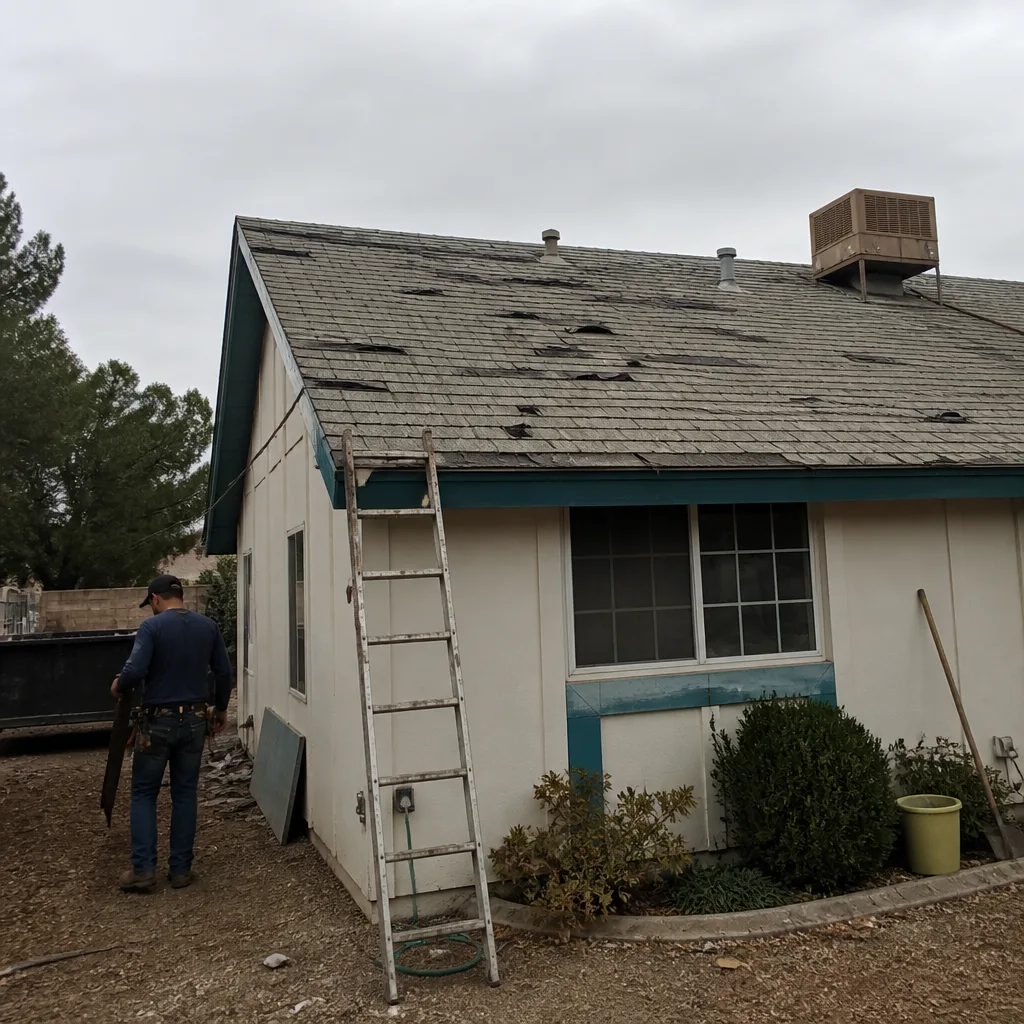
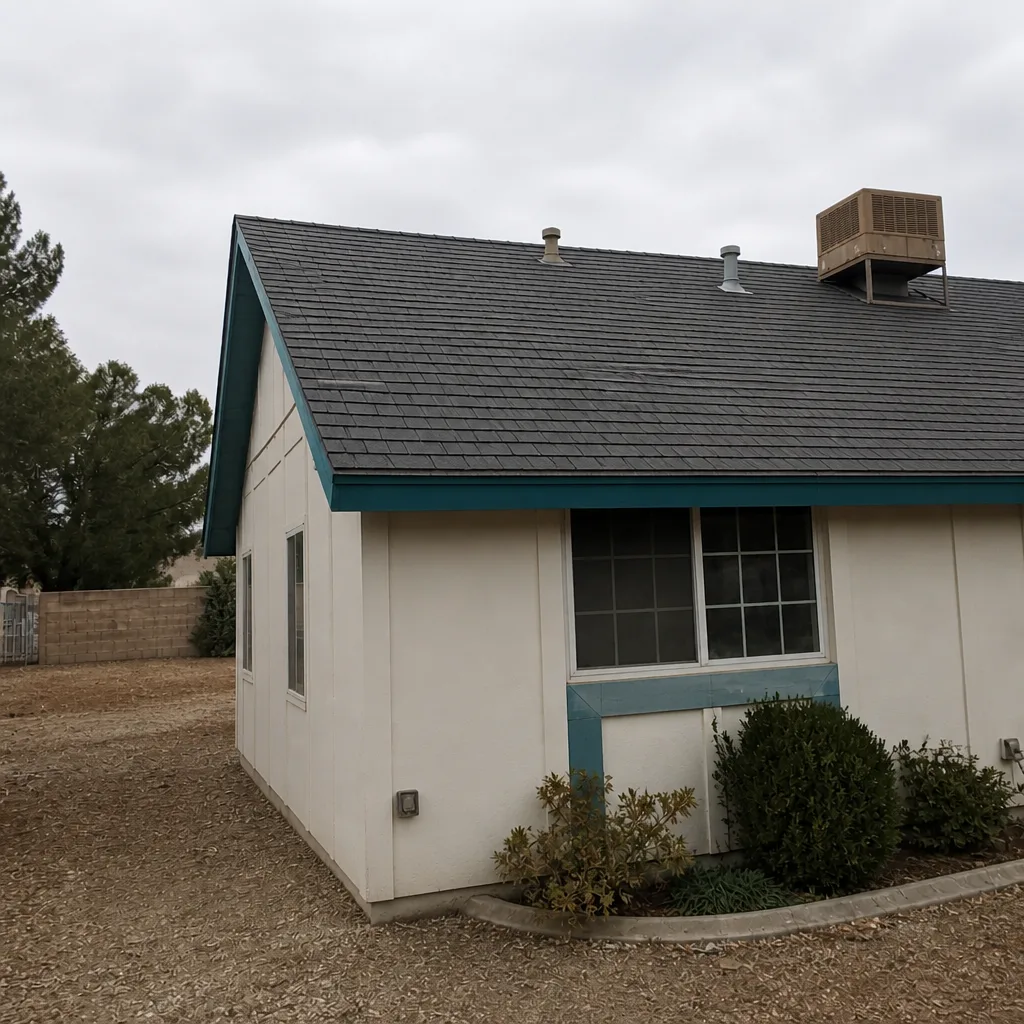
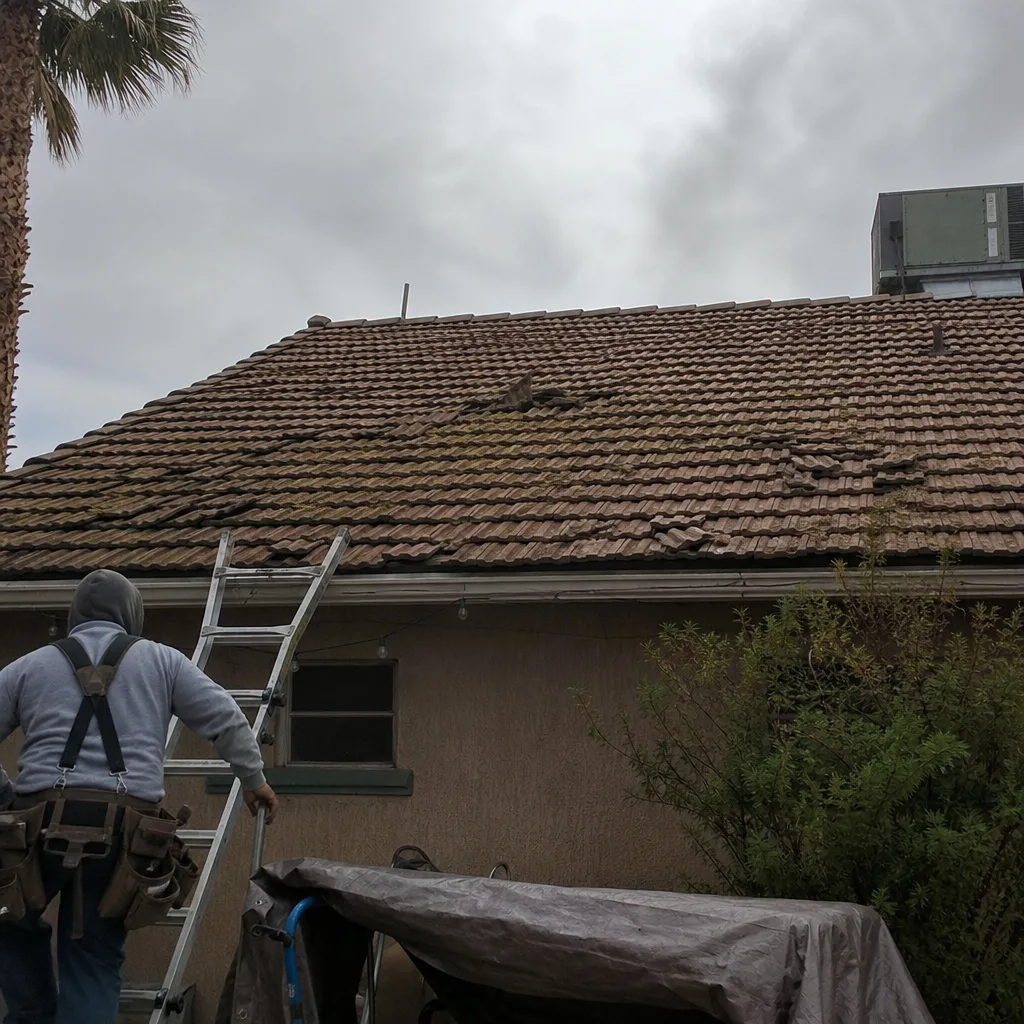
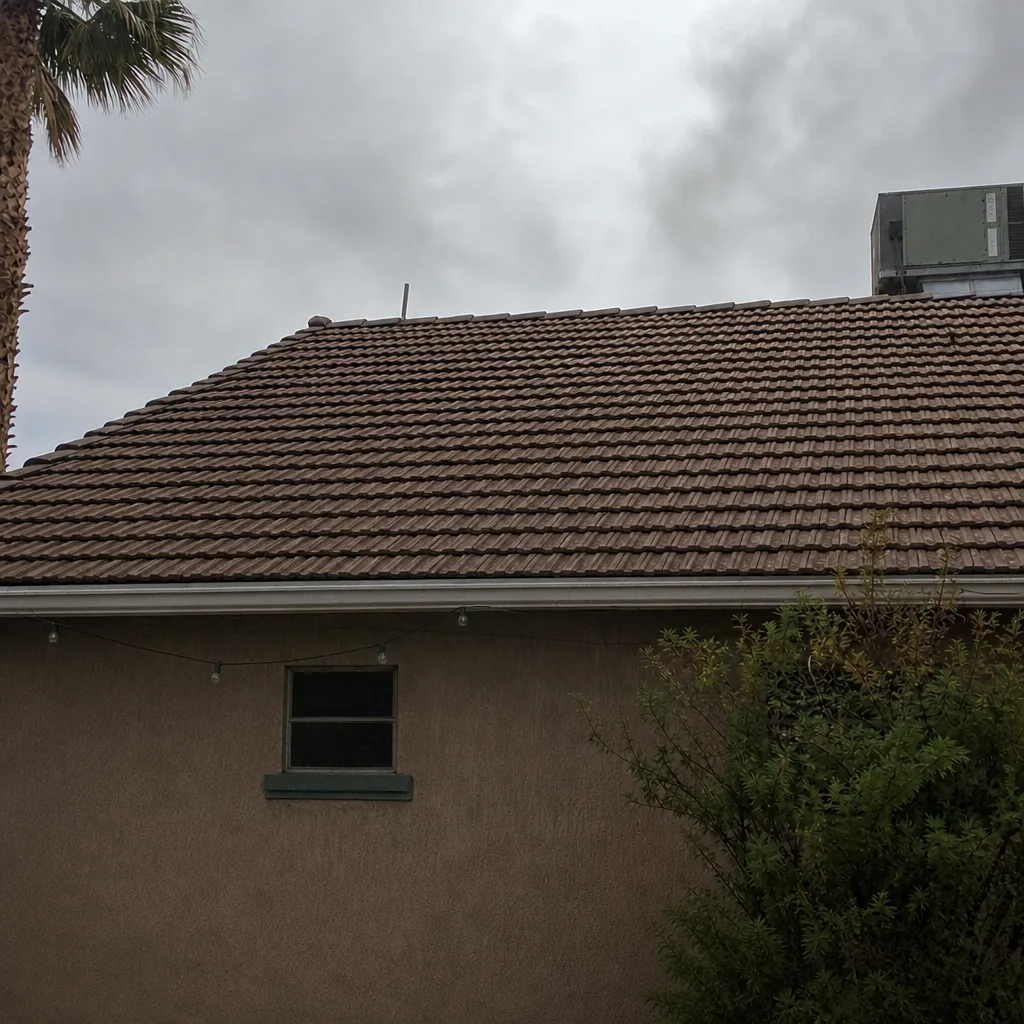
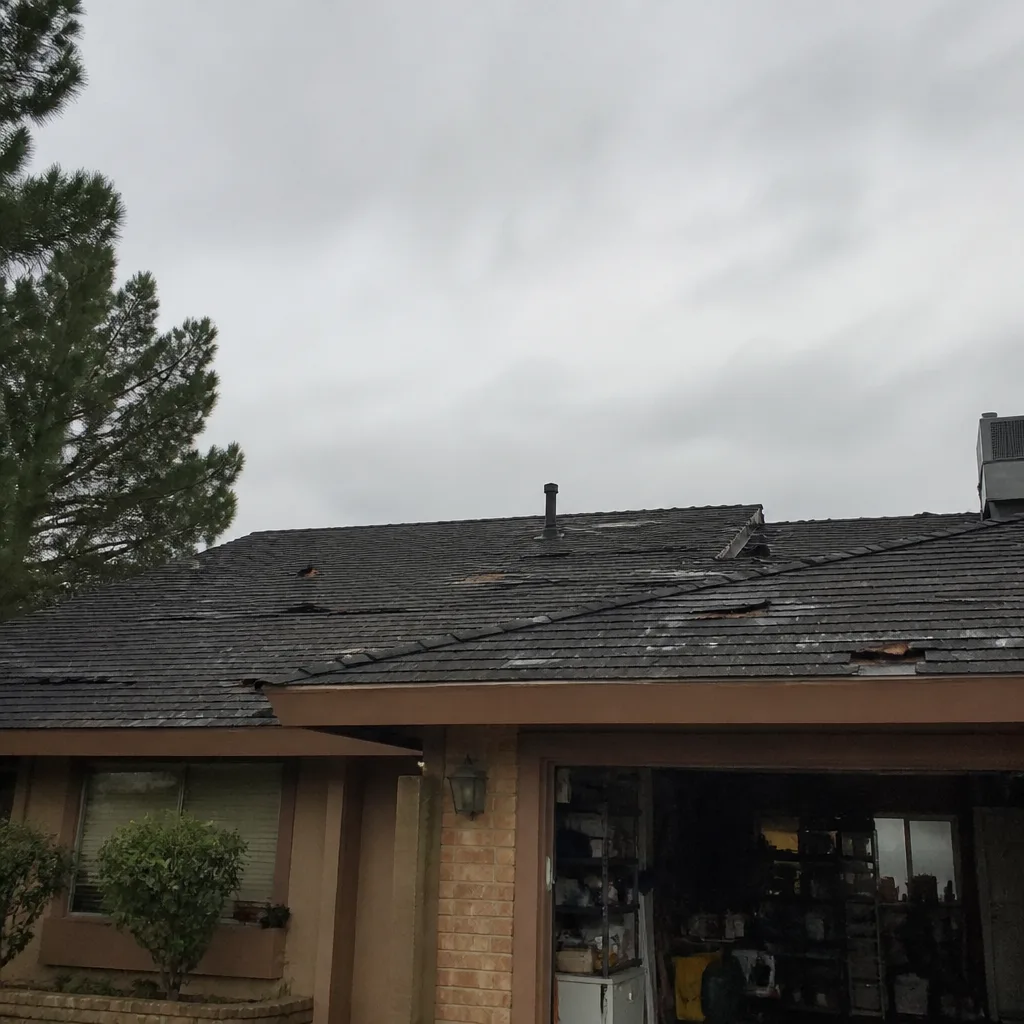
See the difference
 Before
 After
 Before
 After
 Before
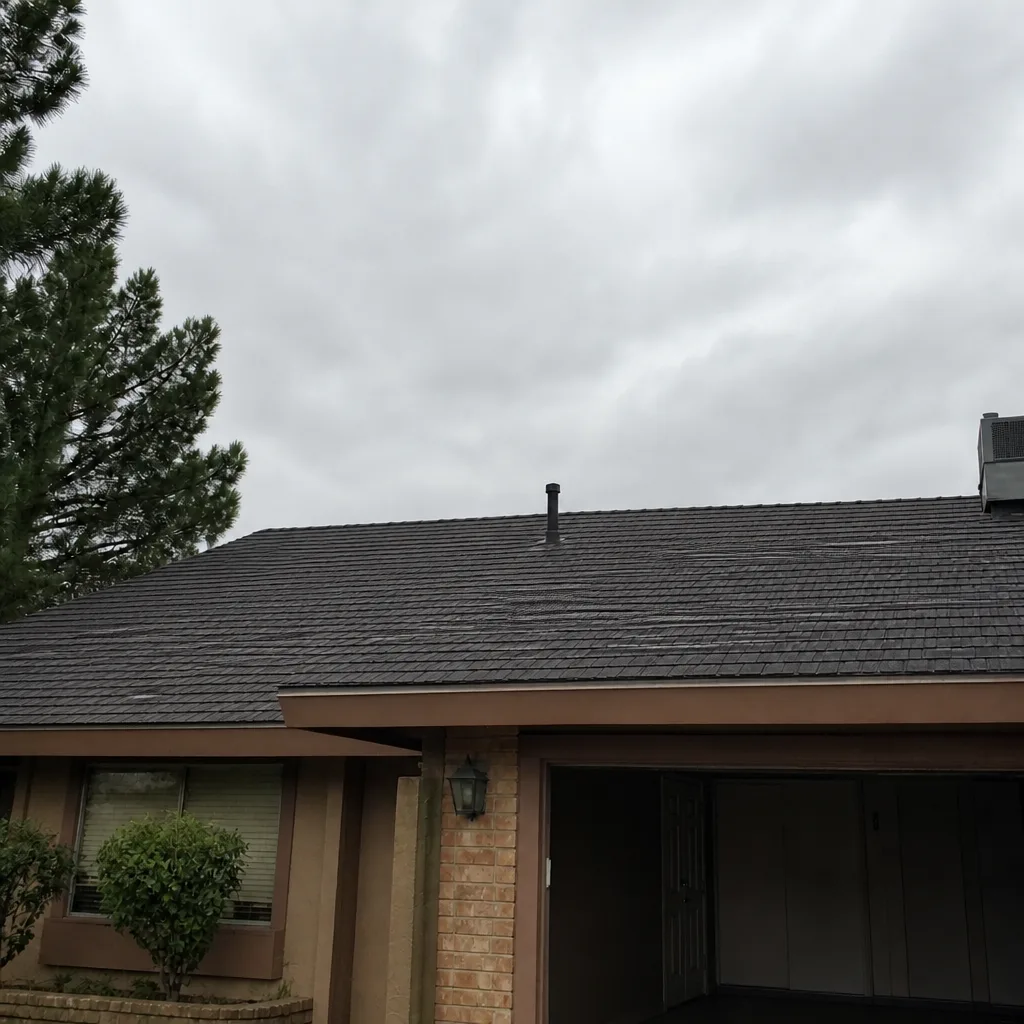 After
When to Call a Professional
Some tasks are homeowner work. Climbing on the roof, inspecting flashings at height, walking a foam surface, and assessing structural damage are professional work, and we recommend a trained technician for each. A good rule of thumb: if the inspection requires a ladder above the first story, or if you can’t confidently read what you’re seeing, call. Defective flashing and compromised roof decking are common and easy to misread from the ground. So is water tracking in the attic that looks like a stain but is actually a leak path.
We also recommend calling after any single event that produced visible damage – a lifted section after a wind gust, ceiling stains after a storm, or water pooling on a flat section. Ridgeline Roofing Co. Sunrise Manor offers free estimates in Sunrise Manor – call (844) 941-3509. Our phones are staffed by a live person around the clock, including nights, weekends, and the middle of a storm. If it’s not right, the 90-Day Done Right Promise means we come back and make it right – no paperwork, no arguing. The number on the estimate is the number on the invoice.
Frequently Asked Questions
Twice a year: once in April before monsoon season and once in September after it closes. Between those windows, a quick look after any significant wind event is worth the effort. A roof that sits through a full year without any inspection in this climate is a roof you’re trusting on luck.
April. The weather is workable, the storms are still two months out, and you have time to complete any needed repairs before June 1. Scheduling in late May or June puts you in the crunch, when every roofer in the valley is busy.
It can. Insurance covers storm damage but not wear and tear, and a condition that was neglected before a storm can lead an adjuster to deny or reduce the claim. That’s why pre-storm photo documentation of your roof’s condition matters – it’s what lets you show the roof was sound before the event.
We recommend treating the manufacturer’s recoat interval as a maximum, not a target, and shortening it for this climate. The UV load in Sunrise Manor ages foam coating faster than generic guidelines account for, especially on south- and west-facing planes. Inspect the coating every year and recoat before the foam is exposed.
Ground-level and attic inspection, drain clearing, and photo documentation are tasks most homeowners can do themselves. Anything requiring a ladder above the first story – walking a roof, inspecting flashing at height, assessing foam or structural damage – is work for a trained technician. A fall is worse than a leak.
Photos of every roof plane, close-ups of all flashing and pipe boots, the attic from underneath, and the gutters and drains. Keep a short written log of the date, what you inspected, and any repairs done. Store everything in one folder so you can hand it to an adjuster if you ever need to.
The Bottom Line
Emergency preparedness in Sunrise Manor comes down to two weekends of work a year. Inspect in April, reinforce by June 1, document the condition with photos, and assess again in September. The tasks that prevent the most emergency calls are specific and ordinary: flashing re-seal, pipe boot replacement, annual foam coating inspection, and clearing the drains twice a year. The difference between a calm monsoon season and a tarp on the roof usually isn’t luck – it’s a maintenance posture. If you’d rather not climb the ladder yourself, call (844) 941-3509 for a free estimate. Our technicians are background-checked, arrive in uniform, and document every inspection with photos from your actual roof. The number on the estimate is the number on the invoice, and the 90-Day Done Right Promise stands behind every job – if it’s not right, we make it right.
Written by the team at Ridgeline Roofing Co. Sunrise Manor.