
Last updated November 18, 2026
 Metal roofing
 Architectural shingles
 Tile roofing
 GAF
 Owens Corning
 Flat & low-slope
Free roof inspection with deck photos before we talk money - GAF and Owens Corning certified installation
Specialty Roofing Troubleshooting: Common Problems and How to Fix Them
A water stain on the ceiling under a flat roof almost never sits beneath the hole that let the water in. On low-slope assemblies, water can travel six to ten feet laterally along the deck before it finds a seam, a fastener, or a nail pop to drop through. We’ve opened ceilings in Sunrise Manor where the stain sat over the living room but the actual breach was out at the parapet, twenty minutes of walking and probing away. That single misunderstanding – treating a specialty roof like a shingled slope – is why so many repairs get cut in the wrong place, fail again within a season, and cost twice what the first fix would have. This guide walks through how specialty systems actually fail, how to trace a leak back to its true entry point, and where the line sits between a patch you can handle and one that voids your warranty.
Quick Answer
Most specialty roofing failures come from a handful of repeat offenders: separated seams on TPO and modified bitumen, perimeter terminations that pull loose, deteriorated drain collars, alligatored foam coatings, and cracked mortar at tile hips and ridges. The repair that lasts is the one aimed at the true entry point, not the stain on your ceiling. Tracing the leak back to where water actually gets in, then repairing that specific detail, is what separates a fix that holds from a patch that fails again.
Styles & brands we work with
- Architectural shingles
- Metal roofing
- Tile roofing
- GAF
- Owens Corning
- Flat & low-slope
Table of Contents
- The Trace-Back Method: Finding Where Water Actually Enters
- TPO and Modified Bitumen: The Three Failure Points We Find Most
- Foam Roofs (SPF): Alligatoring, Ponding, and Re-Coating Intervals
- Tile Roofing: Why the Broken Tile Is Rarely the Leak
- DIY Patch or Pro Repair: Where the Line Sits
- What Sunrise Manor’s Climate Does to Specialty Roofs
- How a Proper Specialty Roof Inspection Should Go
The Trace-Back Method: Finding Where Water Actually Enters
On a pitched shingle roof, water usually enters close to where it shows up inside. Gravity pulls it down the slope, and the stain sits near the breach. Low-slope and flat systems break that rule. Water moves sideways under the membrane, along the deck, and through the insulation before it finds a path down. Cut a patch at the stain and you’ve sealed a spot that was never leaking.
Trace-back is the discipline of working backward from the stain to the source. Here’s how a trained technician does it:
- Map the interior first. Note the exact stain location, size, and whether it’s active. Check the attic or plenum above for water tracks on framing and insulation.
- Walk the roof above and uphill of the stain. On a flat roof, that means every direction the deck could slope toward the wet spot, not just straight up.
- Inspect the details before the field. Seams, penetrations, drain collars, terminations, and flashing are where water gets in. The open field of a membrane rarely fails on its own.
- Look for the tell. Lifted seam edges, rusted fastener heads, blistered laps, cracked sealant, or debris dams that hold water against a detail.
- Confirm with a controlled water test if the entry point is still unclear. Isolate one section at a time and watch for the interior to react.
We’ve seen this save homeowners real money. One Sunrise Manor customer had three separate patches cut at a recurring stain over eighteen months. The actual problem was a terminated edge at the parapet where the membrane had pulled back from the wall, letting water run sideways under the field. Nobody had checked the edge because the stain was dead center of the ceiling. When a repair keeps failing, the diagnosis is wrong – not the patch.
TPO and Modified Bitumen: The Three Failure Points We Find Most
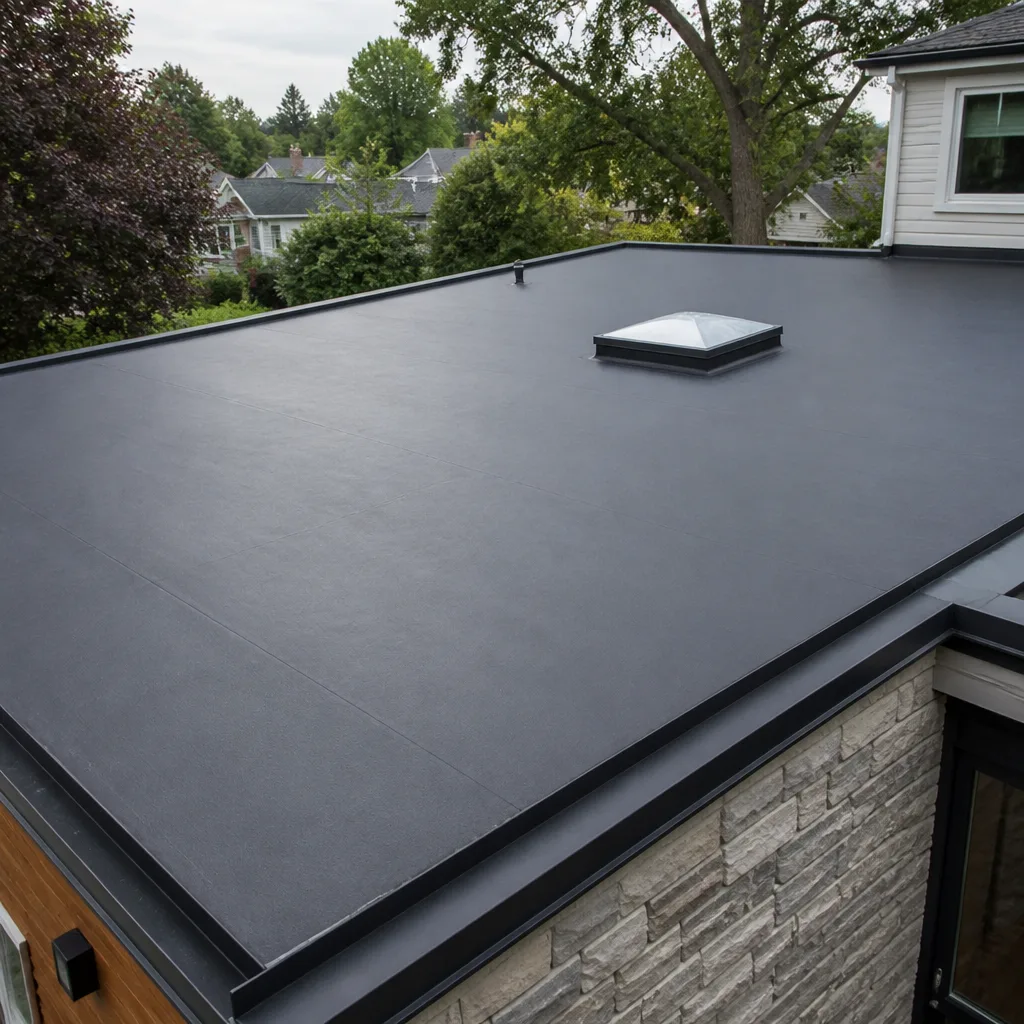
TPO and modified bitumen are the workhorses on Sunrise Manor’s low-slope homes, additions, and patio covers. They’re reliable systems installed right, and they fail in predictable places when they do. Three details account for the majority of leaks we find.
1. Seam separation
TPO seams are heat-welded or chemically bonded, and modified bitumen seams are torched or adhered. Either way, the seam is only as good as the installer’s technique. A seam that wasn’t fully welded shows up as a lifted edge with a dull, powdery line underneath instead of a fused bead. Water wicks into that gap and travels under the field. On a hot desert roof, thermal cycling works these seams open over time. What to look for: any seam with an edge you can slip a putty knife under, or a white chalky line where the weld didn’t take.
2. Perimeter termination bar pull-out
Where the membrane meets a wall or parapet, it’s usually held by a metal termination bar with fasteners. If the bar is loose, the fasteners are backing out, or the sealant above it has cracked, water gets behind the membrane and runs down. This is the single most-missed leak source on flat roofs, and it’s why a “mystery” leak that won’t quit usually traces back to a perimeter detail nobody examined. What to look for: a bar that moves when you press it, missing or rusted fasteners, or daylight between the bar and the wall.
3. Drain collar deterioration
Every roof drain has a collar where the membrane ties into the drain body. Caulk fails, the collar cracks, or debris clogs the drain and forces water to stand against the detail until it finds a way through. What to look for: cracked or shrunken sealant at the collar, a drain ring sitting proud of the membrane, or ponding that doesn’t clear within a day of rain.
These aren’t shingle problems, and shingle techniques don’t fix them. A proper repair re-welds the seam, re-secures and re-seals the termination, or rebuilds the drain collar with compatible material. When the field itself is past its service life across the whole roof, we’ll tell you plainly that a roof replacement in Sunrise Manor makes more sense than another patch – and we’ll back that recommendation with photos from your actual roof, not a speech in the driveway.
Foam Roofs (SPF): Alligatoring, Ponding, and Re-Coating Intervals
Spray polyurethane foam is a genuinely good roofing system for a desert climate – it insulates, it seals, and it handles the flat and low-slope shapes shingles can’t. But foam lives or dies on its protective coating, and that coating has a service interval. Homeowners who bought a foam roof with a fresh white coating and assumed it was maintenance-free for life are the ones calling us ten years later with a problem.
Three issues come up again and again:
- Alligatoring. The coating dries out, shrinks, and cracks into a pattern that looks like alligator skin. Once it cracks, ultraviolet light hits the foam underneath and starts eating it. Foam that’s been exposed this way can pit and erode fast in the desert sun.
- Ponding. Foam follows the deck, so if the deck has a low spot, the foam has a low spot. Standing water breaks down coatings from above and stresses the foam beneath. On Sunrise Manor roofs we often find ponding near HVAC curbs and at the low corner where the original deck settled.
- Coating wear at the edges. The coating thins first at parapets, penetrations, and walkways where foot traffic and sun exposure are highest. These are small spots to touch up early and expensive areas to ignore.
Here’s the counterintuitive part: the quality of the original installation matters less than whether the coating gets refreshed on schedule. A well-installed foam roof that goes twenty years without a re-coat will fail before a modestly installed one that’s re-coated every five to seven years. If you’re not sure when your coating was last renewed, get it looked at. A fresh coating now is far cheaper than foam replacement later. Our specialty roofing services in Sunrise Manor include foam re-coating and repair, and we’ll tell you honestly whether your roof needs a recoat or a rebuild.
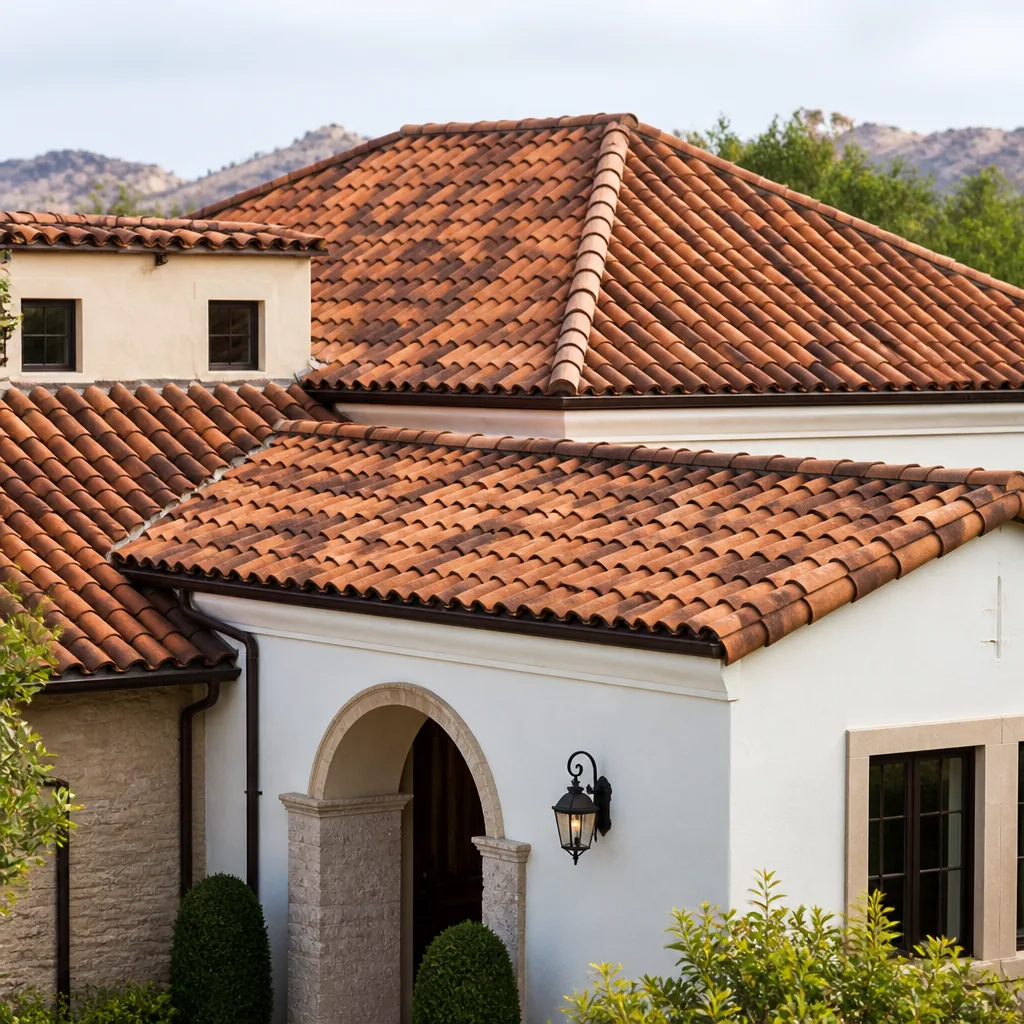
Tile Roofing: Why the Broken Tile Is Rarely the Leak
Tile roofs – clay, concrete, and the Boral profiles we install – have a reputation for being fragile, and broken tiles get blamed for leaks more than any other cause. In our experience, that blame is usually misplaced. A single cracked field tile is a cosmetic issue. The tiles shed water, but the underlayment beneath them is what actually keeps the house dry. A tile roof is really two roofs stacked: the visible tiles, and the waterproofing layer under them.
Where tile roofs actually leak:
- Cracked mortar at hips and ridges. The mortar that beds ridge and hip tiles is the most common failure point on an older tile roof. Sun and thermal movement crack it, and water gets under the caps and onto the underlayment. It’s a small repair that gets deferred until the ceiling stains.
- Failed underlayment at penetrations. Plumbing vents, exhaust stacks, and skylights interrupt the underlayment. If the flashing and collar aren’t rebuilt correctly during a repair, water finds the gap – often years after a previous “fix.”
- Underlayment aging out. The tile lasts fifty years or more. The underlayment underneath may not. When it dries out and tears, the roof leaks despite looking perfect from the street.
Replacing a few broken tiles is fine when they’re genuinely broken, but it doesn’t solve a leak unless the water path is understood. Where tile is failing across a whole slope, re-underlayment is the fix. This is the kind of specialty work we do regularly in Sunrise Manor, and it’s a job for a licensed, insured contractor – not a weekend project.
DIY Patch or Pro Repair: Where the Line Sits
Not every roof problem needs a contractor. Some do, though, and knowing which is which saves money and protects your warranty. Here’s how we draw the line.
Fine to handle yourself
- Sealed fastener heads that are lifting. A single popped fastener with a warranty-compatible sealant is a small, contained fix.
- Minor caulk failure at a flashing edge. Touch-up caulk at a vent boot or a flashing edge is maintenance, and every roof needs some.
- Clearing debris. Keeping drains and gutters clear is the cheapest roof maintenance there is.
Call a licensed contractor
- Seam repairs on TPO or modified bitumen. A proper weld or torch-down requires the right material and technique. A bad seam repair creates a second failure point and voids the manufacturer’s warranty.
- Anything at or above a termination bar or parapet edge. Loose terminations mean water is actively getting behind the membrane. Getting this wrong can flood a wall cavity.
- Drain collar rebuilds. The geometry here is unforgiving, and a poorly sealed collar ponding the next rain will give you a fresh leak.
- Foam re-coating. Coating compatibility and thickness matter. The wrong coating over the wrong prep can trap moisture and rot the foam.
The reason this matters isn’t just safety – it’s warranty. Most manufacturers specify that field repairs be done by a licensed, trained installer. Do the work yourself and the manufacturer may decline a claim on a roof that should have been covered. We install product lines from GAF, CertainTeed, and Tamko, and our technicians know exactly what keeps those warranties intact. A free second opinion on a written estimate, which we offer on any quote, is often worth the phone call before you make a decision.
What Sunrise Manor’s Climate Does to Specialty Roofs
Sunrise Manor sits in the Mojave, and the desert does specific things to specialty assemblies that a homeowner moving here from a wetter climate won’t anticipate.
- Intense summer sun. Surface temperatures on a dark membrane can run 150 degrees or higher on a July afternoon. That cycles every seam and termination dozens of times a season. Seams fail faster here than in cooler climates, which makes seam inspection a twice-a-year habit worth keeping.
- Monsoon season. When the summer storms arrive, they arrive hard. A roof that’s been quietly degrading all year suddenly gets tested. We field calls in the days after a monsoon from homeowners whose flat roof “never leaked before.” It didn’t – it had just never been hit that hard.
- Dry air and dust. Fine desert dust settles into seams, drain collars, and coating cracks. Mixed with a little moisture, it becomes a growing medium and a barrier to adhesion on repairs. This is why prep work matters so much here.
- UV degradation. Every coating, membrane, and sealant ages faster in strong UV. A re-coating interval that works in a cloudy climate is too long here.
We’ve been standing behind roofs in this community since 1984, and we’ve watched these patterns repeat across decades. Our crews know what a Sunrise Manor roof looks like after ten desert summers, because it’s the only climate we’ve ever worked in. That’s a different kind of knowledge than what a storm-chasing outfit brings to town.
How a Proper Specialty Roof Inspection Should Go
A specialty roof inspection is not a walk around the yard with a clipboard. It should involve getting onto the roof, photographing what’s actually there, and explaining it to you in plain language. Here’s what we do on every inspection, and what any reputable contractor should be willing to do.
- Access the roof safely and inspect every detail. Seams, terminations, drains, penetrations, flashings, and the field. On tile, we lift tiles at the trouble spots to see the underlayment.
- Photo-document everything. Every problem area gets photographed on your actual roof. You get the photos, and you get a walk-through of them. No scary speech, no vague “you’ve got problems.”
- Trace any active leak back to its true entry point. This is the whole game on specialty roofs. A proper inspection identifies the entry point, not just the stain.
- Give you a written, line-item estimate. No-hassle upfront pricing: the number on the estimate is the number on the invoice. Most repairs we handle finish in a single visit.
- Back the work with a written guarantee. Ours is the 90-Day Done Right Promise. If it isn’t right, we come back and make it right – no paperwork, no arguing.
We also bring a live person to the phone around the clock, which matters more than it sounds when a monsoon rolls through and you’re standing in a wet hallway at 10 p.m. That’s the difference between a company rooted in the community and one that’s passing through. You can reach our team anytime, including nights and weekends, and a real person will pick up.
Common Mistakes to Avoid
- Cutting a patch at the ceiling stain. On low-slope systems, the stain is the destination, not the entry point. Cut the patch at the stain and you’ll be sealing a spot that was never leaking while the real breach keeps pouring water in.
- Using shingle sealant on TPO or modified bitumen. Standard roof cement doesn’t bond properly to TPO, and it can attack the membrane. It creates a new failure point and can void the manufacturer warranty.
- Assuming a broken tile caused the leak. A cracked tile in the field is cosmetic. The leak is almost always at a hip or ridge, a penetration, or the underlayment itself.
- Skipping foam re-coats because “it still looks white.” Coatings can look intact from the driveway and be too thin to protect the foam. The re-coat interval matters more than the original install.
- Hiring a storm-chaser after a monsoon. Every hard rain in Sunrise Manor brings out-of-town trucks offering same-week work. They won’t be here next spring when the patch fails. A local contractor with a written guarantee is the square deal.
- Ignoring ponding because “it drains eventually.” Standing water for more than 24 to 48 hours stresses coatings and seams, and it’s a sign a drain or a deck slope needs attention.
- Doing DIY work that voids the warranty. A cheap weekend fix can cost you a manufacturer claim on a much larger repair. Read the warranty terms first.
See the difference
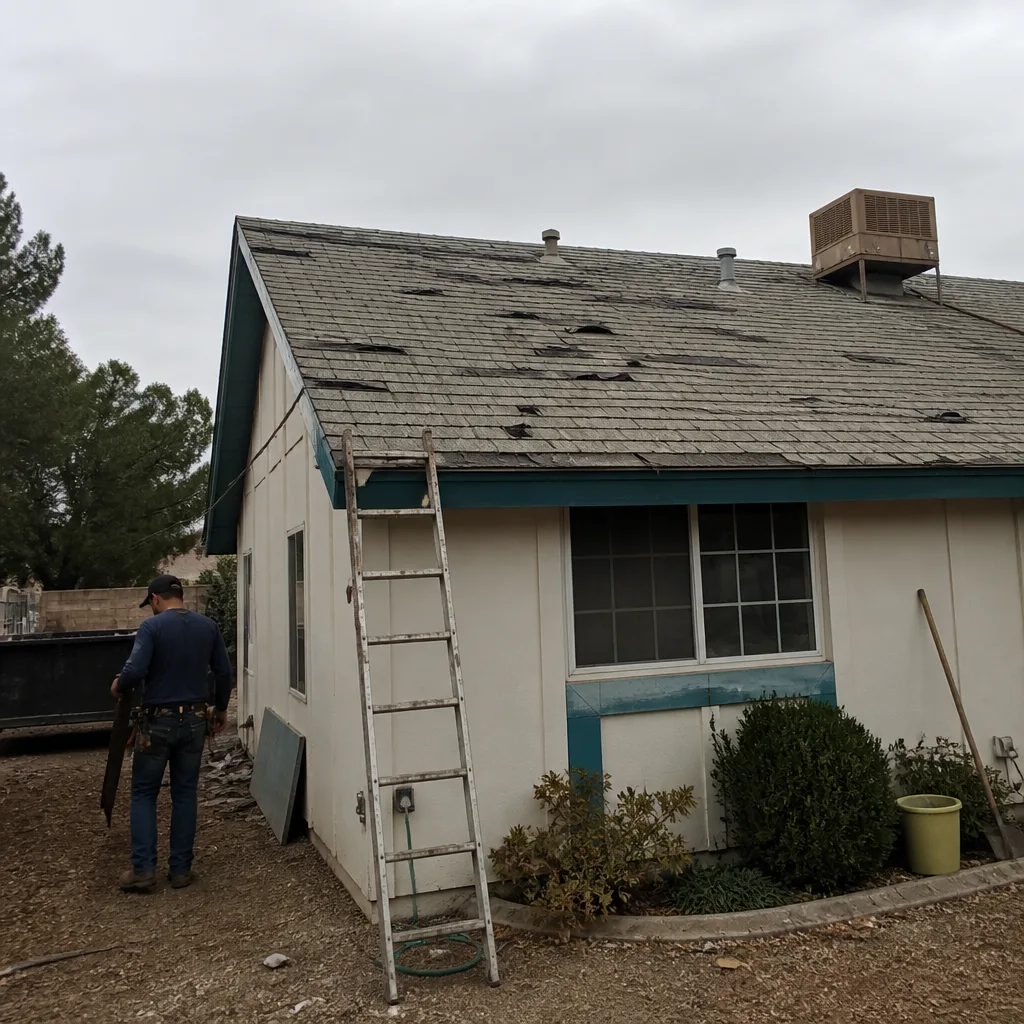 Before
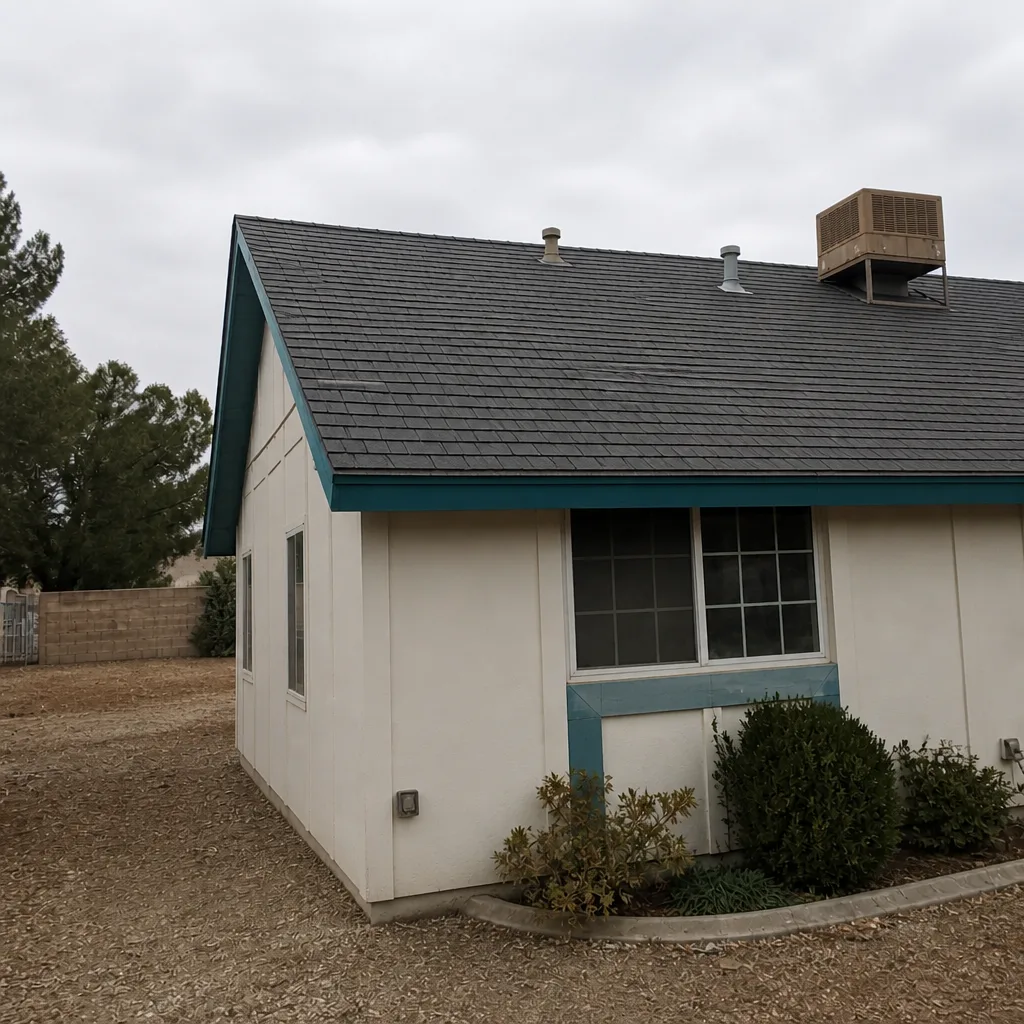 After
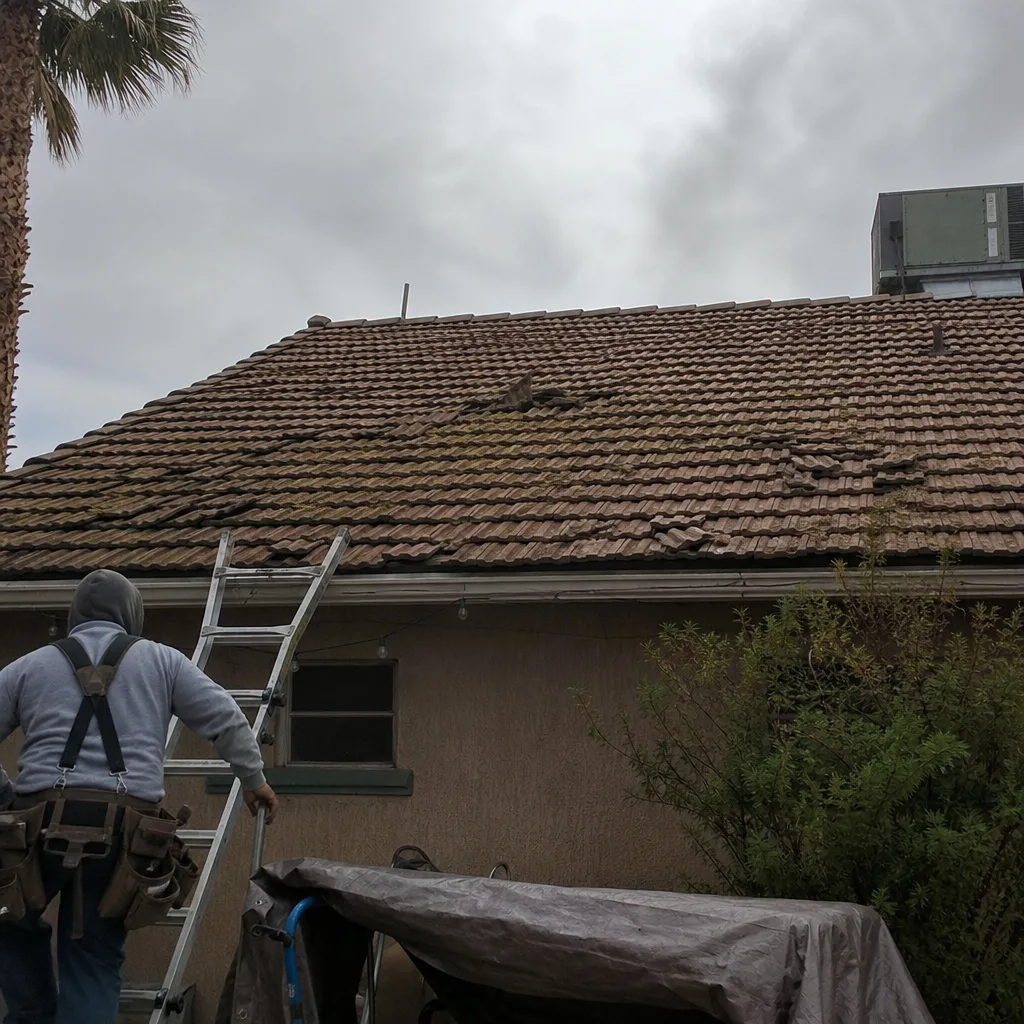 Before
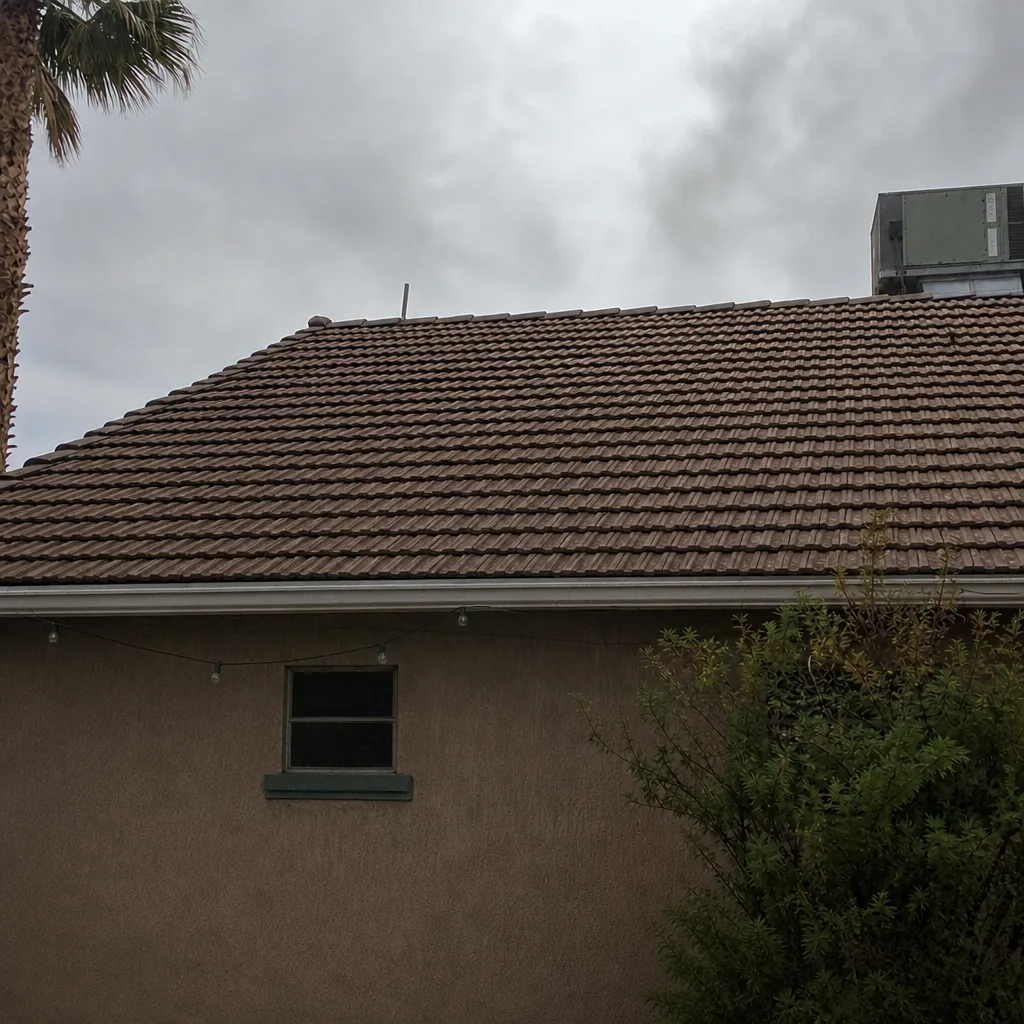 After
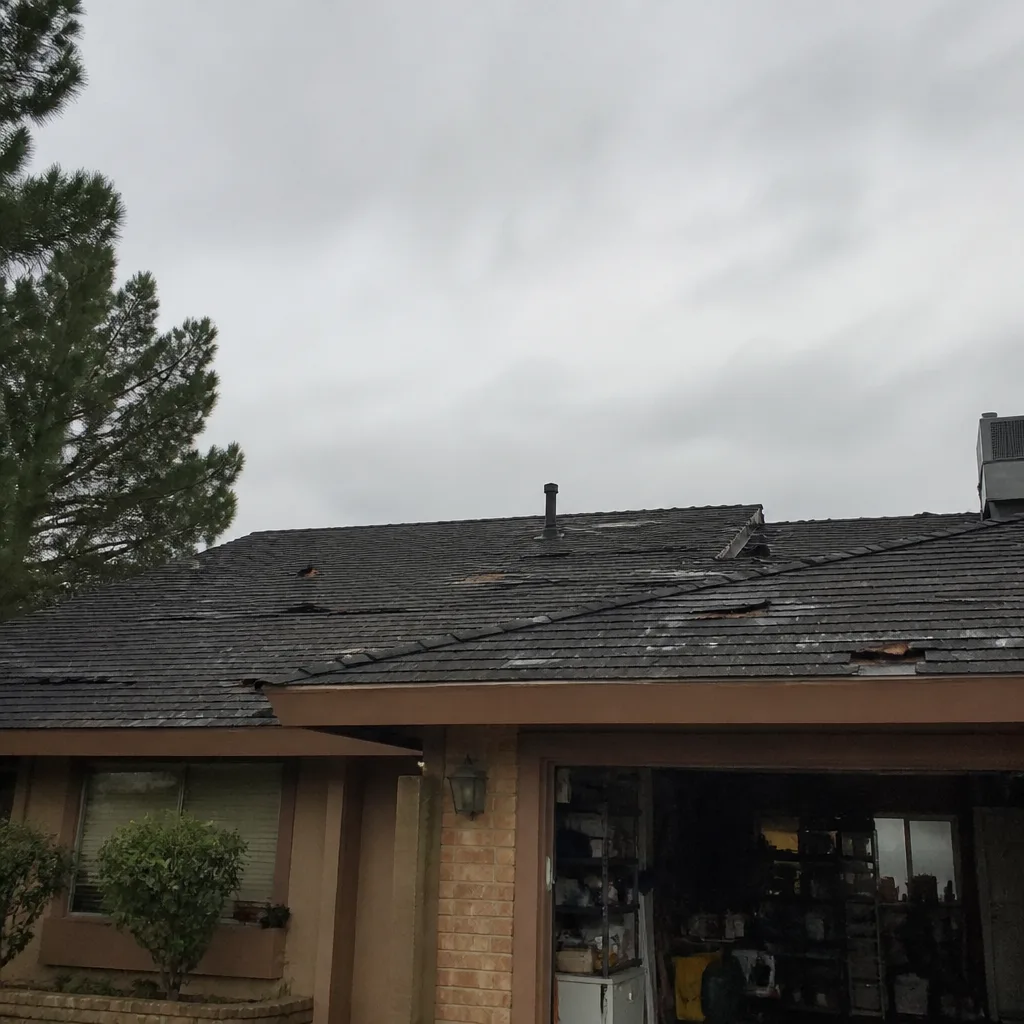 Before
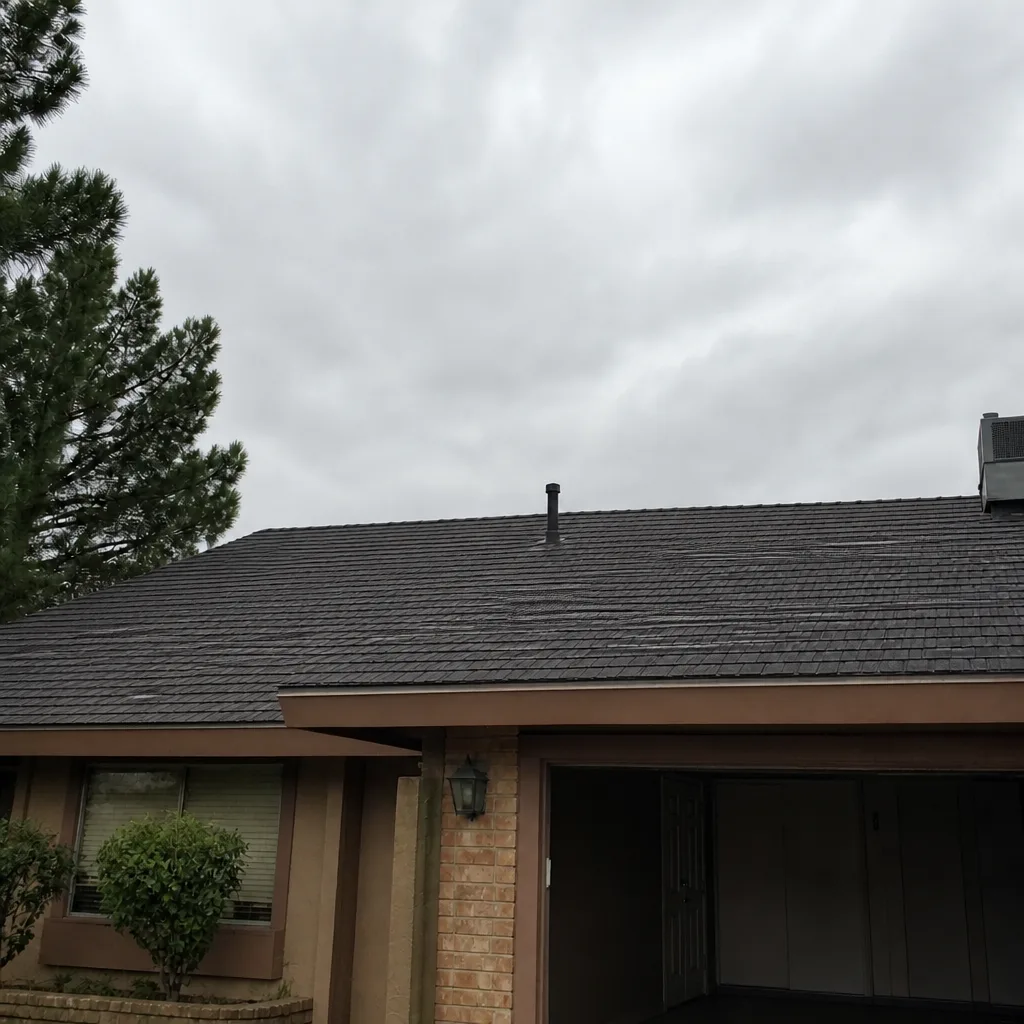 After
When to Call a Professional
Call a professional the moment you see water where it doesn’t belong, a seam lifting, a termination bar that moves, or a drain that isn’t draining. Call sooner if a specialty roof has gone more than five to seven years since its last coating refresh, if a repair you’ve already had keeps failing, or if a storm has just put your low-slope roof through a hard test. Some of these are small fixes caught early. Ignored, they turn into ceiling damage and wet insulation. Routinely, homeowners in Sunrise Manor wait too long because they can’t tell if a problem is serious. That’s exactly what a proper inspection is for – to find out for sure. Ridgeline Roofing Co. Sunrise Manor offers free estimates in Sunrise Manor – call (844) 941-3509 and a live person will pick up, day or night. You can also find our full range of roof repair services in Sunrise Manor and our Sunrise Manor home base.
Frequently Asked Questions
Because the first repair was almost certainly aimed at the stain, not the entry point. On low-slope roofs, water travels laterally under the membrane before it drops through, so the leak and the breach can be several feet apart. A patch at the ceiling stain seals a spot that was never leaking. The fix is a proper trace-back inspection to find where water actually gets in – usually a seam, a termination bar, or a drain collar.
Most flat roof repairs we see in Sunrise Manor run a few hundred to a couple thousand dollars depending on the size and location of the repair, with seam and termination repairs typically on the lower end and drain collar or larger field repairs toward the upper end. Because specialty roofing repairs vary so much with what’s found on the roof, the honest answer is that you need a written, line-item estimate on your actual roof. Call (844) 941-3509 for a free estimate – we’ll give you a number you can plan around, and the number on the estimate is the number on the invoice.
For minor issues like a lifting fastener head or a small caulk failure, yes. For seam repairs, termination bars, and drain collars, no. Proper TPO seam repair requires heat welding or chemical bonding with compatible material, and a bad repair voids the manufacturer warranty and creates a second failure point. A licensed, trained installer protects both the roof and the warranty.
In the Mojave climate, every five to seven years is typical, though a roof that takes full summer sun and foot traffic may need attention sooner at the high-wear spots. The critical point is that the coating’s age matters more than how the roof looked when it was installed. A well-installed foam roof that’s gone fifteen years without a re-coat will fail before a modest one that’s re-coated on schedule. If you don’t know when your roof was last coated, have it inspected.
Almost never on its own. On a tile roof, the underlayment beneath the tiles is the actual waterproofing layer. A cracked field tile is cosmetic. Leaks come from cracked mortar at hips and ridges, failed flashing at penetrations, or underlayment that’s aged out. Replacing the broken tile won’t stop a leak if the entry point is somewhere else, which is why a proper inspection is worth doing before you pay for tile replacement.
Yes. A live person answers our phones 24 hours a day, seven days a week, including nights, weekends, and the middle of a storm – no voicemail tree. If your specialty roof is leaking right now, call (844) 941-3509 and we’ll help you get it handled. Our technicians are background-checked, arrive in uniform, and document everything with photos from your actual roof.
The Bottom Line
Specialty roofs fail differently than shingled slopes, and they need to be diagnosed differently. The stain on your ceiling is where water landed, not where it entered. The three TPO and modified bitumen failure points – seams, terminations, and drain collars – account for most leaks we find in Sunrise Manor. Foam roofs live or die on their coating schedule. Tile roofs leak at the mortar and the underlayment, not the broken field tile. And the line between a fine DIY fix and a warranty-voiding mistake is clearer than most homeowners realize. When you’re ready to know for sure, Ridgeline Roofing Co. brings over four decades of local work, back-checked technicians, photo documentation, and a written 90-Day Done Right Promise to every job. Call (844) 941-3509 for a free estimate – and if something isn’t right, we come back and make it right.
Written by the team at Ridgeline Roofing Co. Sunrise Manor.