
Last updated November 18, 2026
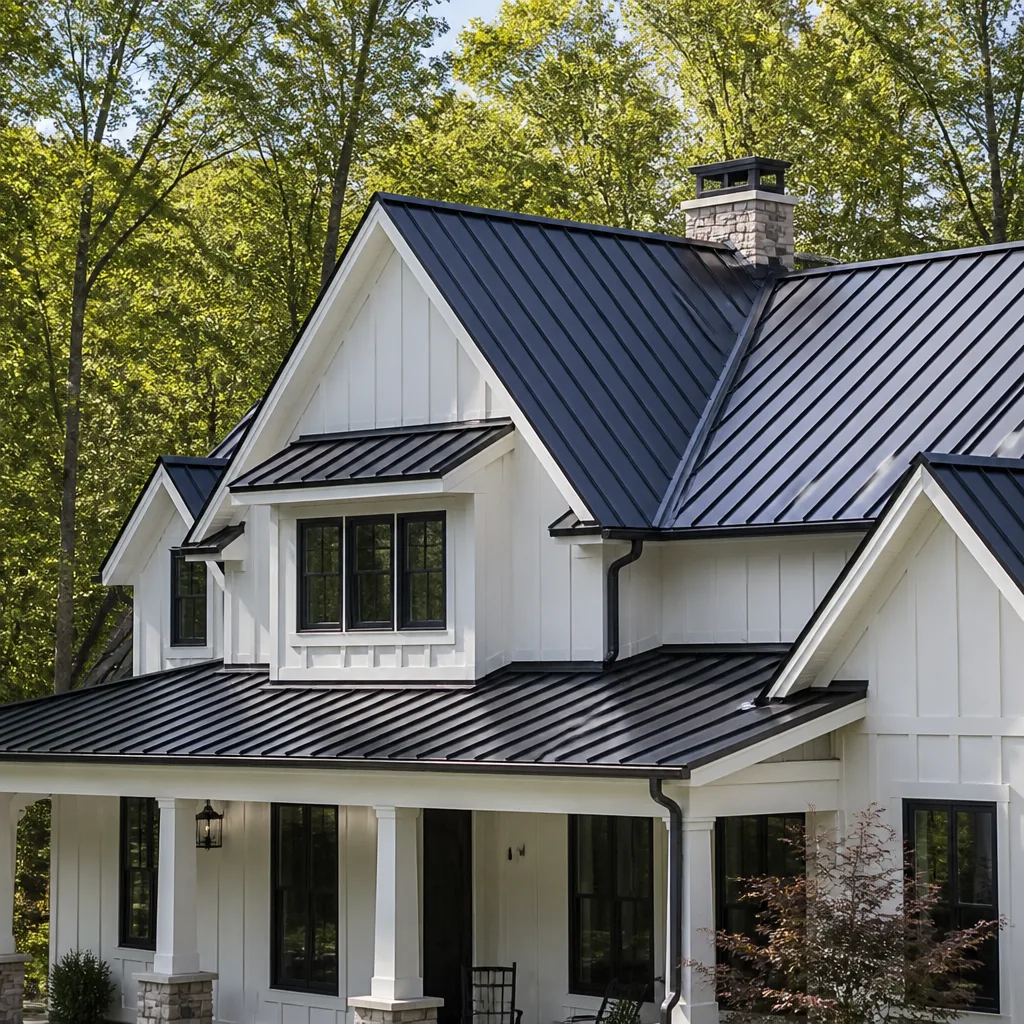 Metal roofing
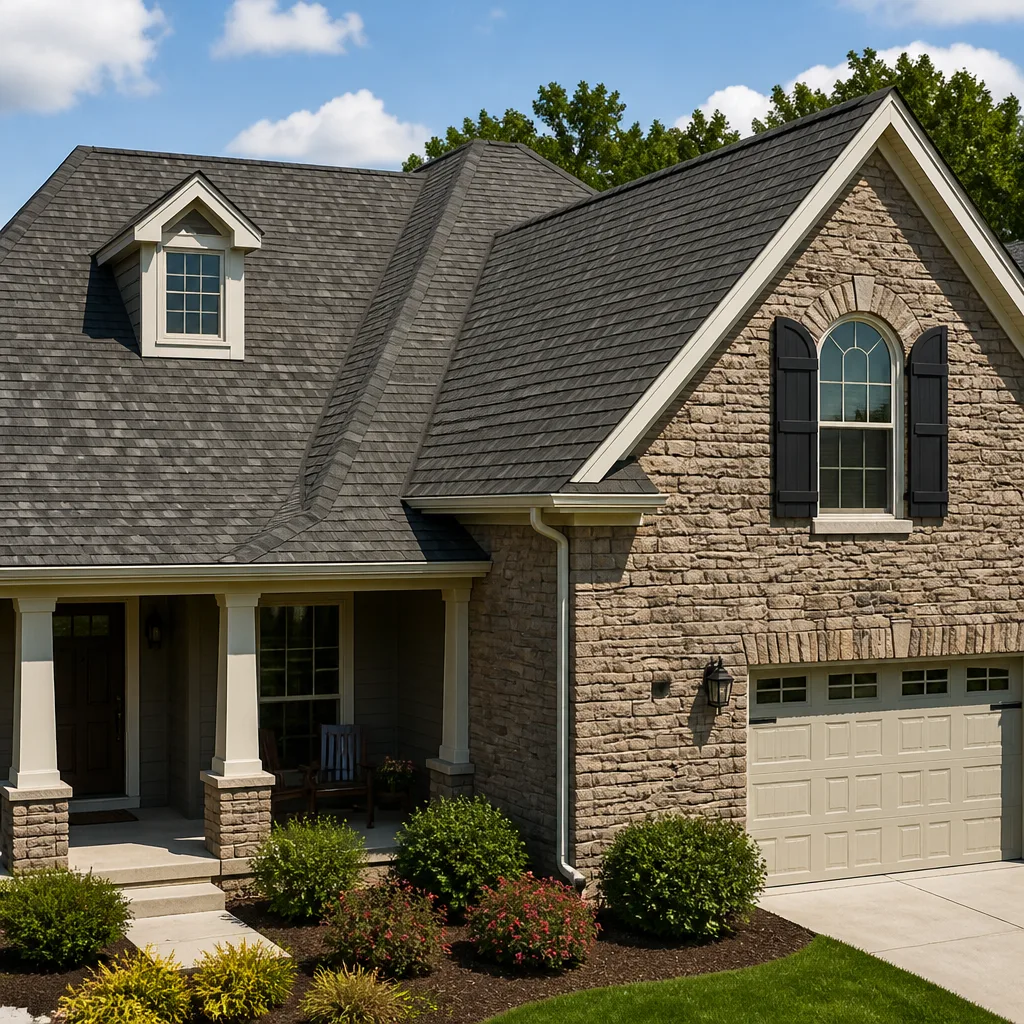 Architectural shingles
 Tile roofing
 GAF
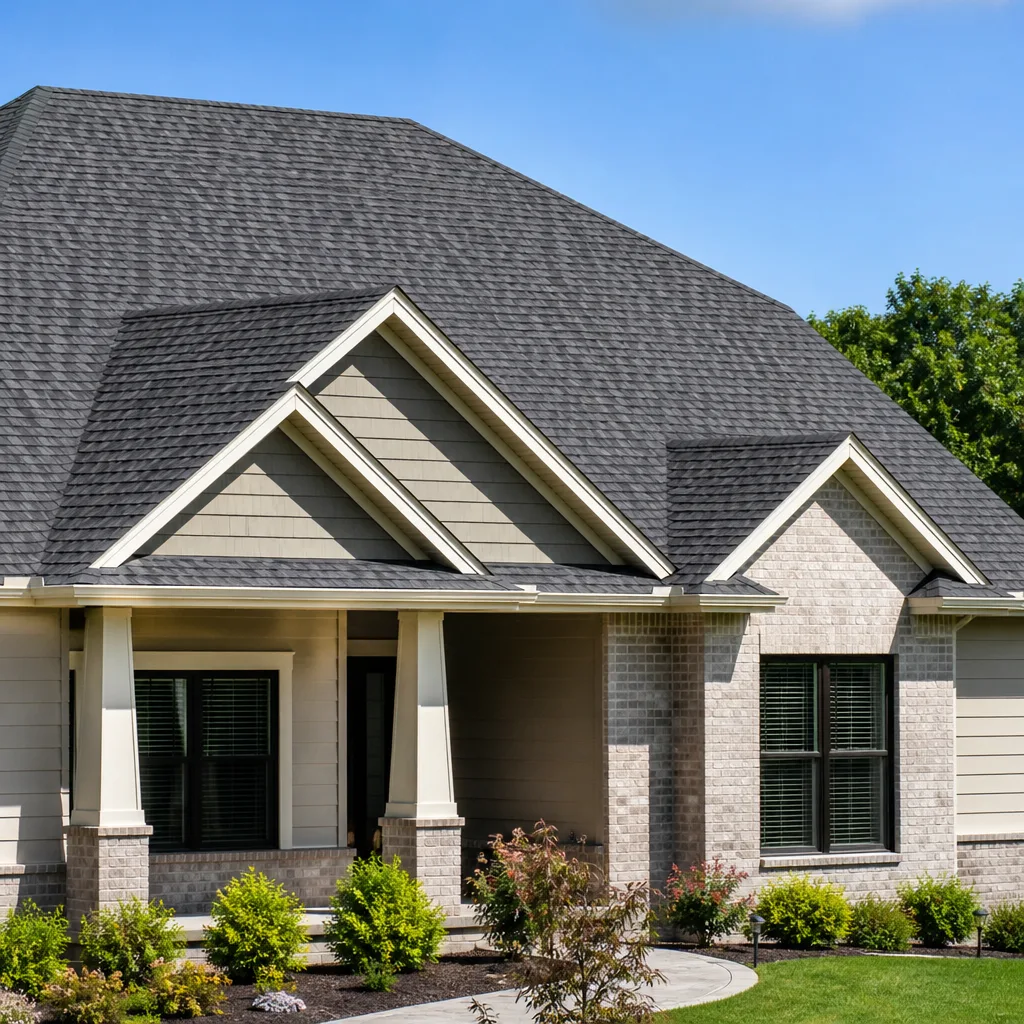 Owens Corning
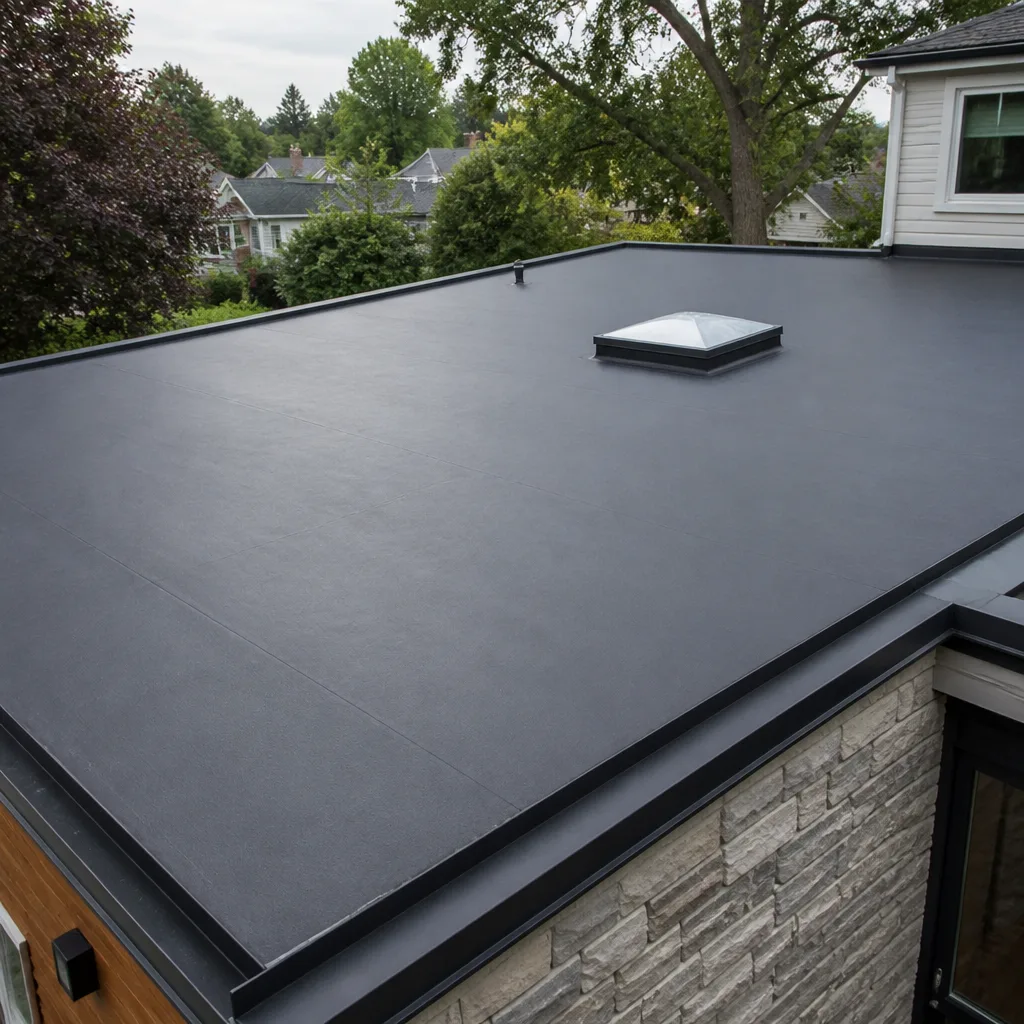 Flat & low-slope
Free roof inspection with deck photos before we talk money - GAF and Owens Corning certified installation
Roofing Permits, Codes & Inspections in NV: What You Need to Know
In 2023 a Sunrise Manor homeowner put their house on the market, accepted an offer, and then found out at escrow that the re-roof they’d paid for three years earlier had been permitted through the City of Las Vegas. The house isn’t in Las Vegas. It’s in unincorporated Clark County, which meant the permit was pulled from the wrong office, issued under the wrong jurisdiction, and never inspected by the authority that actually had standing. Clearing it up took two weeks and a re-inspection fee, and it nearly cost the sale. One paperwork detail, three years earlier, nearly unwound a lifetime of equity.
This guide is about that detail. We’ll walk through which office governs a Sunrise Manor address, how to look up any parcel, when Nevada requires a roofing permit, what the code actually says about tear-offs versus overlays, and what a Clark County inspector checks at each stage. If you own a home here and plan to stay, this is worth twenty minutes of your attention.
Quick Answer
In Nevada, a roofing permit is required for virtually any re-roof or structural roof work, and for Sunrise Manor specifically the permit comes from the Clark County Building Division because the community sits in unincorporated Clark County, not inside Las Vegas city limits. The work is inspected in stages by Clark County, and any roof work done without that permit can surface during a title search and stall or void a home sale until it’s remediated.
Styles & brands we work with
- Architectural shingles
- Metal roofing
- Tile roofing
- GAF
- Owens Corning
- Flat & low-slope
Table of Contents
- Which Office Governs Roofing Permits for a Sunrise Manor Address?
- When Is a Roofing Permit Legally Required in Nevada?
- What Nevada’s Adopted Code Requires: Tear-Off vs. Overlay Rules
- How to Look Up Your Own Parcel and Permit History
- What a Clark County Roofing Inspection Actually Examines
- How Unpermitted Roofing Surfaces During a Home Sale
- Why Sunrise Manor’s Climate Makes Code Compliance Matter More
- Common Mistakes to Avoid
Which Office Governs Roofing Permits for a Sunrise Manor Address?
Sunrise Manor is an unincorporated community in Clark County, which means it does not sit inside the incorporated boundaries of the City of Las Vegas even though it shares a ZIP code relationship and a mailing address that reads “Las Vegas, NV.” This is the single fact that trips up more homeowners and more out-of-town contractors than anything else in this guide. The USPS designation on your mail is a postal label, not a legal jurisdiction. When it comes to building permits, plan review, and final inspection, unincorporated Clark County answers to the Clark County Building Division.
Here’s how the two offices split, in plain terms:
- Clark County Building Division governs unincorporated communities, including Sunrise Manor, Paradise, Winchester, and Enterprise.
- City of Las Vegas governs parcels inside the incorporated city limits, generally the older downtown core and the established neighborhoods closer to the center.
- City of North Las Vegas and City of Henderson govern their own incorporated parcels.
The boundary is not a straight line and it does not follow a highway or a ZIP code. It follows parcel lines that were drawn as the county grew, which means two houses on the same street or even the same block can fall under different jurisdictions. We’ve seen a Sunrise Manor block where the north side of the street was county and the south side was city. That’s not a hypothetical. That’s the reality of a valley that grew faster than its map.
Getting this wrong has three consequences. The permit gets issued by an office without jurisdiction over the parcel. The inspection is performed by the wrong authority, meaning the final sign-off has no standing. And when the home is sold, the title company finds a permit that doesn’t match the parcel’s governing authority, which flags it as an open item for remediation. A Sunrise Manor re-roof permitted through Las Vegas isn’t “close enough.” It’s a paperwork defect that has to be fixed on the county’s timeline, not yours.
The fix is simple: before any contractor touches your roof, verify the jurisdiction on the specific parcel. We cover exactly how below.
When Is a Roofing Permit Legally Required in Nevada?
Nevada requires a permit for essentially all roofing work that changes the cover, structure, or drainage of the roof. The common homeowner assumption that “it’s just a repair, we don’t need a permit” holds for a very narrow band of small work. Outside that band, a permit is mandatory, and the homeowner is the party legally responsible for making sure it exists. Not the contractor. The homeowner.
A Nevada roofing permit is required in these specific scenarios:
- Full tear-off and re-roof of any residential roof, regardless of square footage or cost.
- Roof overlay where an additional layer of shingles is applied over the existing cover, which requires a permit and, importantly, a structural verification for the added dead load.
- Any structural roof repair, including decking replacement, rafter repair, truss modification, or fascia and soffit structural work.
- Replacement of more than a small patch of sheathing, generally any repair that exceeds a modest area.
- Roof-mounted equipment such as skylights, solar, or HVAC curb installation that penetrates the roof membrane.
- New roof drainage, including rerouting or adding gutters and downspouts where the drainage calculation changes.
A true minor repair, like replacing a handful of lifted shingles or resealing a small flashing detail, generally falls outside the permit threshold. But the moment the work touches decking, structure, or the full cover, you’re in permit territory. If a contractor tells you a full Sunrise Manor re-roof doesn’t need a permit, that contractor either doesn’t know the county’s rules or is hoping you don’t. Either answer means you should make a different call. Our Roof Repair in Sunrise Manor team walks every homeowner through the permit question before work starts, not after.
What Nevada’s Adopted Code Requires: Tear-Off vs. Overlay Rules
Nevada adopts the International Residential Code and International Building Code with state and local amendments, and the roofing chapter is where most homeowner confusion lives. Two questions come up more than any other: can I overlay instead of tear off, and what does the code actually say about how many layers I’m allowed.
The short version: residential roofs in Nevada may not carry more than two layers of roofing at any time. If your Sunrise Manor house currently has one layer and you want to overlay a second, you may be permitted to do so, subject to verification of the structural load and the condition of the existing decking. If your house already has two layers, the next job is a mandatory full tear-off to the deck.
The tear-off threshold also triggers on these conditions, and here’s where homeowners get caught:
- Decking condition. If the existing sheathing is soft, delaminated, or shows rot, the overlay can’t proceed. Full tear-off and decking replacement is required.
- Flashing condition. If roof-to-wall, roof-to-valley, or roof-to-penetration flashing is failing, overlay can’t proceed because the flashing can’t be reconstructed under a new layer.
- Structural load. An added layer of shingles typically adds several pounds per square foot of dead load. In a wind and heat climate like ours, that load matters more than it does in a milder market.
- Warranty requirements. Most manufacturer warranties, including the IKO, Atlas, Tamko, and Boral systems we install, require a full tear-off to be honored at their full term. An overlay often voids the manufacturer warranty or shortens it, even when the permit is legal.
For new construction, the code is simpler. A new roof goes on new sheathing with a full underlayment system, and every manufacturer’s installation spec applies. For a replacement, the code treats it as a new cover, which is why the permit and inspection sequence is the same as new construction. Read the code as a floor, not a ceiling. A contractor who meets the code minimum on a Sunrise Manor roof in a full afternoon sun and monsoon-drainage climate has met the minimum and nothing more. Our Roof Replacement & Installation in Sunrise Manor work is built off the manufacturer spec plus the county’s inspection sequence, not just the code floor.
How to Look Up Your Own Parcel and Permit History
You can determine your own jurisdiction and pull your own permit history in about fifteen minutes without leaving your kitchen table. Here’s the sequence we recommend, in order:
- Find your parcel number. The Clark County Assessor’s public parcel search displays your parcel number, jurisdiction, and address by APN. Search by street address.
- Confirm your jurisdiction. The Assessor record shows whether the parcel is in unincorporated Clark County or an incorporated city. That’s the answer to the jurisdiction question, definitively.
- Pull the permit history. The Clark County Building Division’s online permit search, or the corresponding city portal, lists every permit issued against that parcel and its current status. Look for roofing permits, status “finaled,” and the inspector’s name and date.
- Match the permit to the work. If a re-roof appears in the history, check the permit pull date against the roof age. A roof from 2019 with no permit around 2019 is a red flag.
- Note open permits. A permit without a final inspection is “open.” Open roofing permits on a parcel are a sale-blocking item and worth resolving before you list.
If you find an open permit on a Sunrise Manor parcel, the county can generally walk you through the closeout process, which may require a re-inspection and, in some cases, partial removal of the cover so the inspector can verify what’s underneath. That’s the part nobody wants to hear, and it’s the part that makes doing it right the first time worth the effort.
What a Clark County Roofing Inspection Actually Examines
A Clark County roofing inspection is performed in three stages, and each has a specific failure pattern. Knowing what each stage examines is the difference between a clean final and a re-inspection fee.
Stage 1: Pre-cover / underlayment. The inspector verifies the decking attachment, sheathing condition and nailing pattern, the ice-and-water membrane at valleys and eaves, the underlayment lap, and the flashing details at walls, valleys, and penetrations. The most common failure here is inadequate decking attachment, particularly on older Sunrise Manor homes with original board sheathing that was never upgraded to code-required panel sheathing.
Stage 2: Mid-install / in-progress. The inspector verifies that the roofing material itself is being applied per the manufacturer spec, including starter course, field shingle alignment, nail placement and depth, and ridge and hip cap installation. The most common failure here is high nailing, where the fastener penetrates above the manufacturer’s specified nail line. That’s a fast pass to a fail.
Stage 3: Final. The inspector verifies the completed cover, ridge and hip lines, penetration flashing (vents, skylights, HVAC curbs), drainage and gutter attachment, and site cleanup. The most common failure here is flashing detail at wall transitions and the lack of a completed drainage path, particularly on flat or low-slope sections over a Sunrise Manor patio cover or addition.
Two things about the process are worth knowing. The permit number must be visibly posted at the job site throughout the project. And the homeowner, not the contractor, is the permit holder of record, so a “we pulled the permit” claim from a contractor is worth verifying in the county portal before work starts. That’s not paranoia. That’s the one step that separates a real permit from a story.
How Unpermitted Roofing Surfaces During a Home Sale
Unpermitted roofing most often surfaces during a home sale, and it surfaces through the title search and the buyer’s inspection contingency at roughly the same time. The title company pulls the permit history as part of its exam, and the buyer’s inspector is looking for evidence of a recent re-roof. When the two line up, the conversation moves to remediation.
What remediation looks like in Clark County:
- Disclosure and negotiation. The seller discloses the unpermitted work, and buyer and seller negotiate who pays for remediation, or the sale price is adjusted.
- After-the-fact permit. The county may allow the homeowner to apply for a permit after the work was performed, which requires an inspection and, in many cases, partial cover removal so the inspector can verify the concealed layers.
- Full re-roof ordering. If the inspector finds the work defective or unverifiable, the county may order a full re-roof, and the seller eats the cost on the way out the door.
- Sale delay. Either path takes weeks to months, and the buyer’s clock doesn’t stop for the county’s timeline.
A Sunrise Manor homeowner we worked with after the escrow scare above had to put the roof through a county re-inspection and pay for partial cover removal, but they kept the sale. The cost was a fraction of what a full re-roof order would have been, and the lesson stuck. The homeowner now has the county permit history in a folder with the deed. We think that’s the right habit for anyone planning to stay in their home or eventually sell it.
Why Sunrise Manor’s Climate Makes Code Compliance Matter More
Sunrise Manor sits at the eastern edge of the valley, closer to Frenchman Mountain and the Lake Mead corridor, which means it catches a slightly different wind and heat profile than neighborhoods deeper into the city. Summer surface temperatures on a dark shingle roof can run 40 to 60 degrees hotter than ambient air, which accelerates the aging of the underlayment and shortens the life of the shingle. Monsoon-season downpours in July and August put a wind-driven water load on flashing details that a code-minimum install barely holds. And the winter cold snaps that hit the eastern valley matter to adhesion and sealant.
What this means for the code question is this: a Sunrise Manor roof built to the code floor is more vulnerable here than a code-floor roof built in a milder climate. The three-stage inspection sequence we run through above is a legal minimum, not a performance standard. We install manufacturer systems from seven lines including GAF, CertainTeed, and Owens Corning under Specialty Roofing in Sunrise Manor because the underlayment spec and the flashing detail designed for our climate outperform a generic install. That’s the difference between a roof that passes an inspection and a roof that’s still holding in fifteen years.
If you’re planning a re-roof on a Sunrise Manor home, the climate question and the permit question are the same question. Both are about building to a standard that survives the environment, not just the inspection.
Common Mistakes to Avoid
- Assuming the mailing address determines the jurisdiction. A “Las Vegas, NV” mailing address on a Sunrise Manor parcel does not mean the City of Las Vegas governs it. Verify against the Assessor’s parcel record before any permit is pulled.
- Letting the contractor hold the permit without verifying. The homeowner is the permit holder of record. Check the county portal before work starts and confirm the number is real and the parcel matches.
- Opting for an overlay to save money on an aging roof. An overlay on failing decking or worn flashing is a fail at Stage 1 and a full tear-off later. It also voids or shortens most manufacturer warranties.
- Assuming a small repair is exempt. Decking replacement, structural work, and any repair that touches the full cover requires a permit, even on a modest area.
- Skipping the final inspection and letting the permit go open. An open permit surfaces at sale and becomes a closing problem.
- Hiring an out-of-town crew that pulls the wrong permit or none at all. Storm-chasers don’t come back for re-inspections. County records don’t forget, and the homeowner carries the exposure.
- Not keeping the permit documentation. Keep the permit number, final inspection record, and manufacturer warranty in one folder with the deed. It’s the fastest defense at sale and the one thing a title company can’t argue with.
See the difference
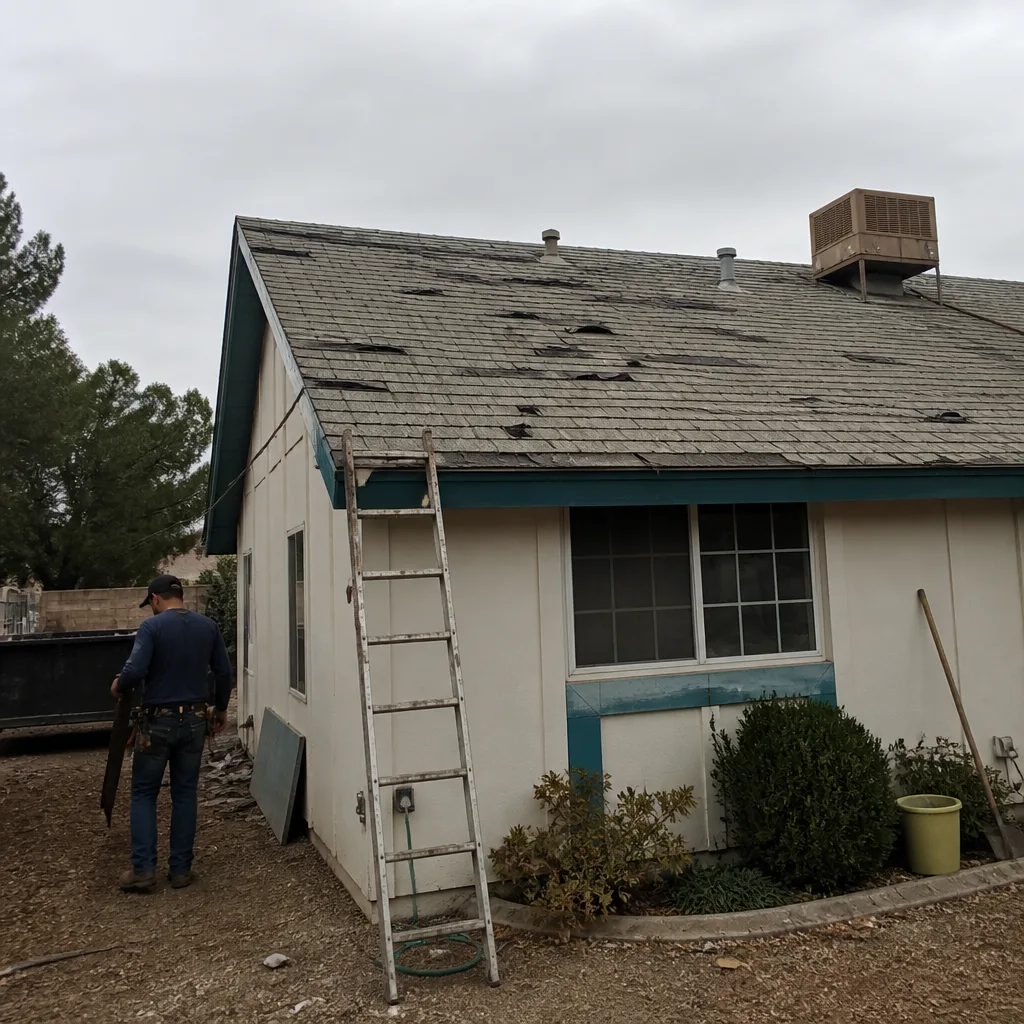 Before
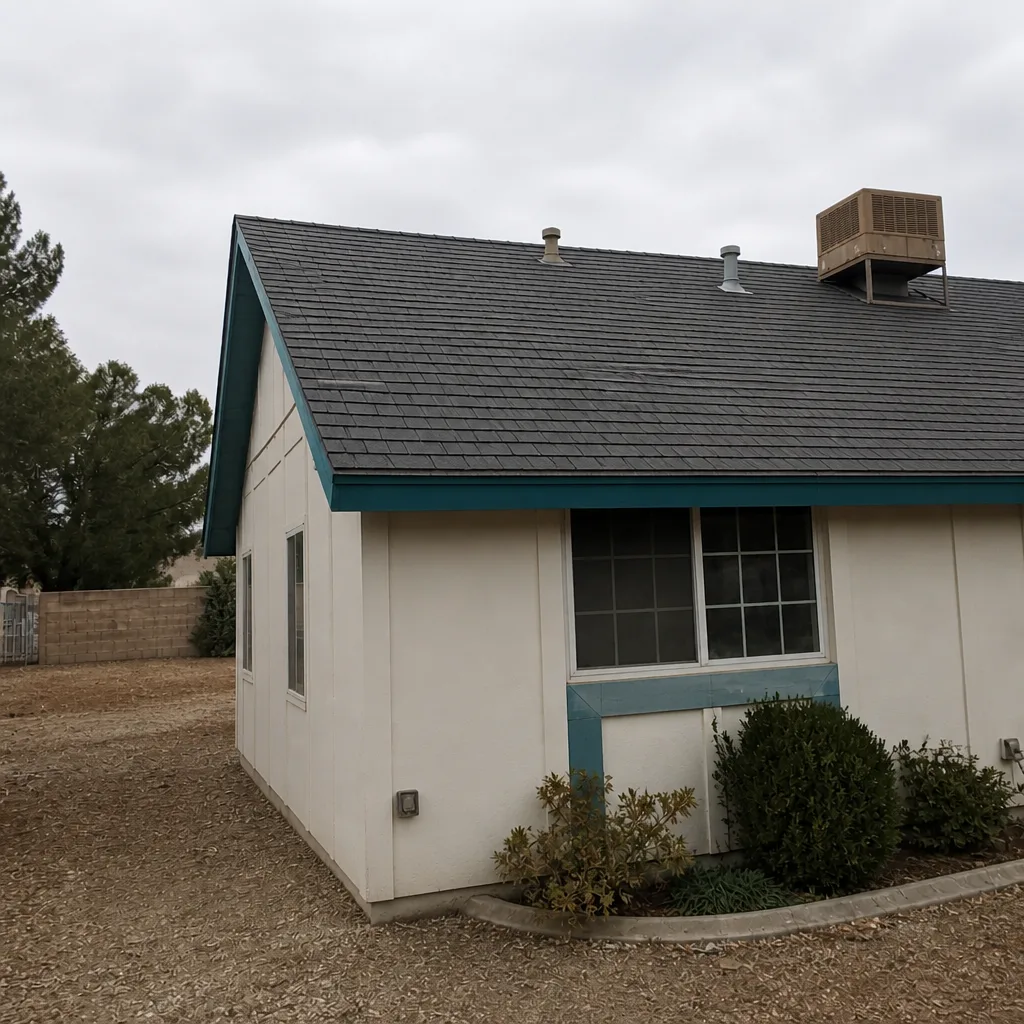 After
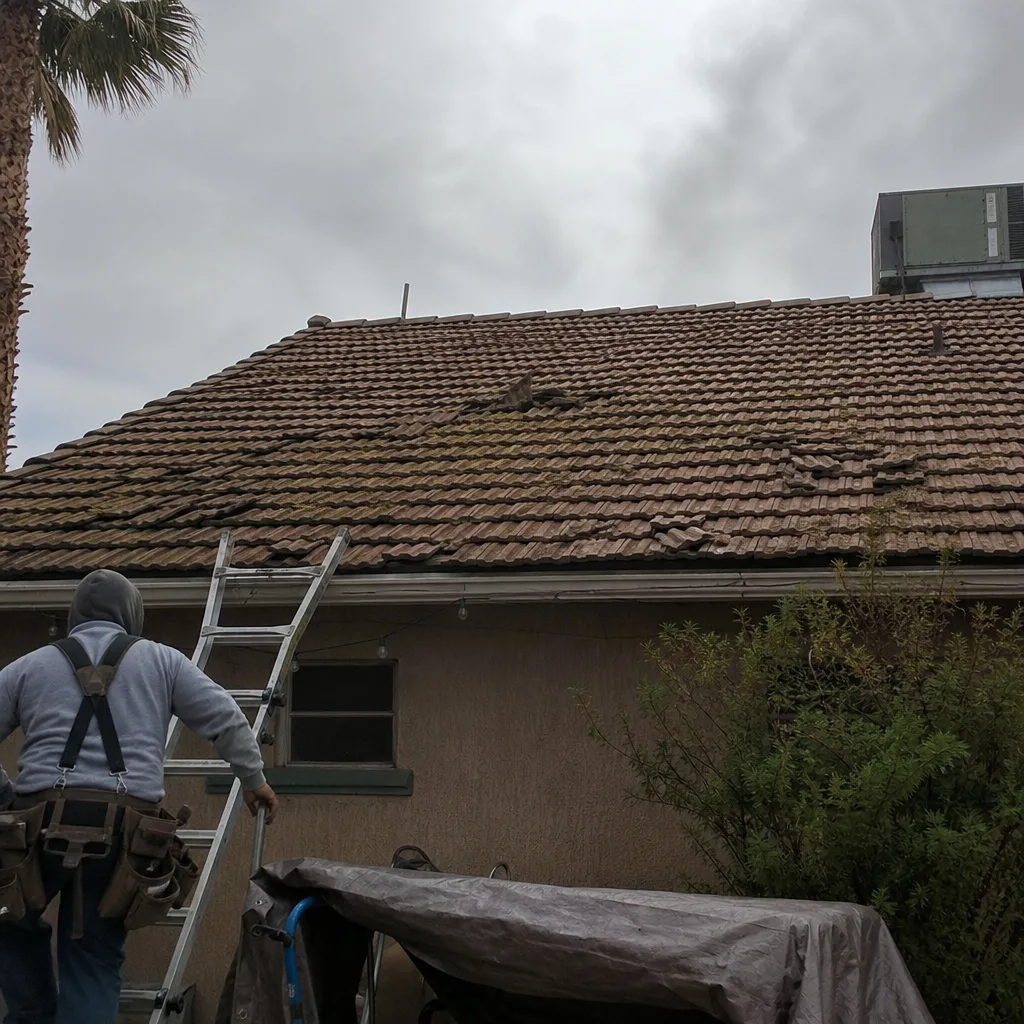 Before
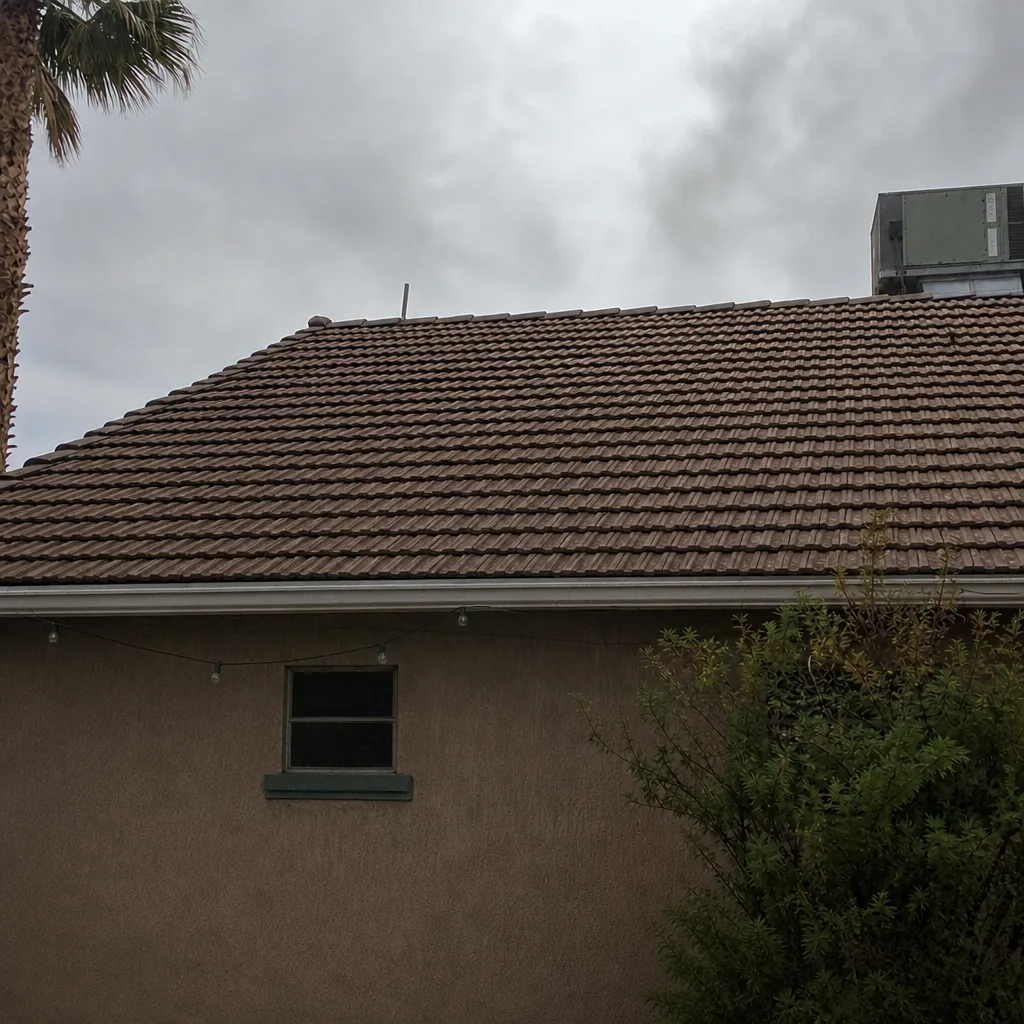 After
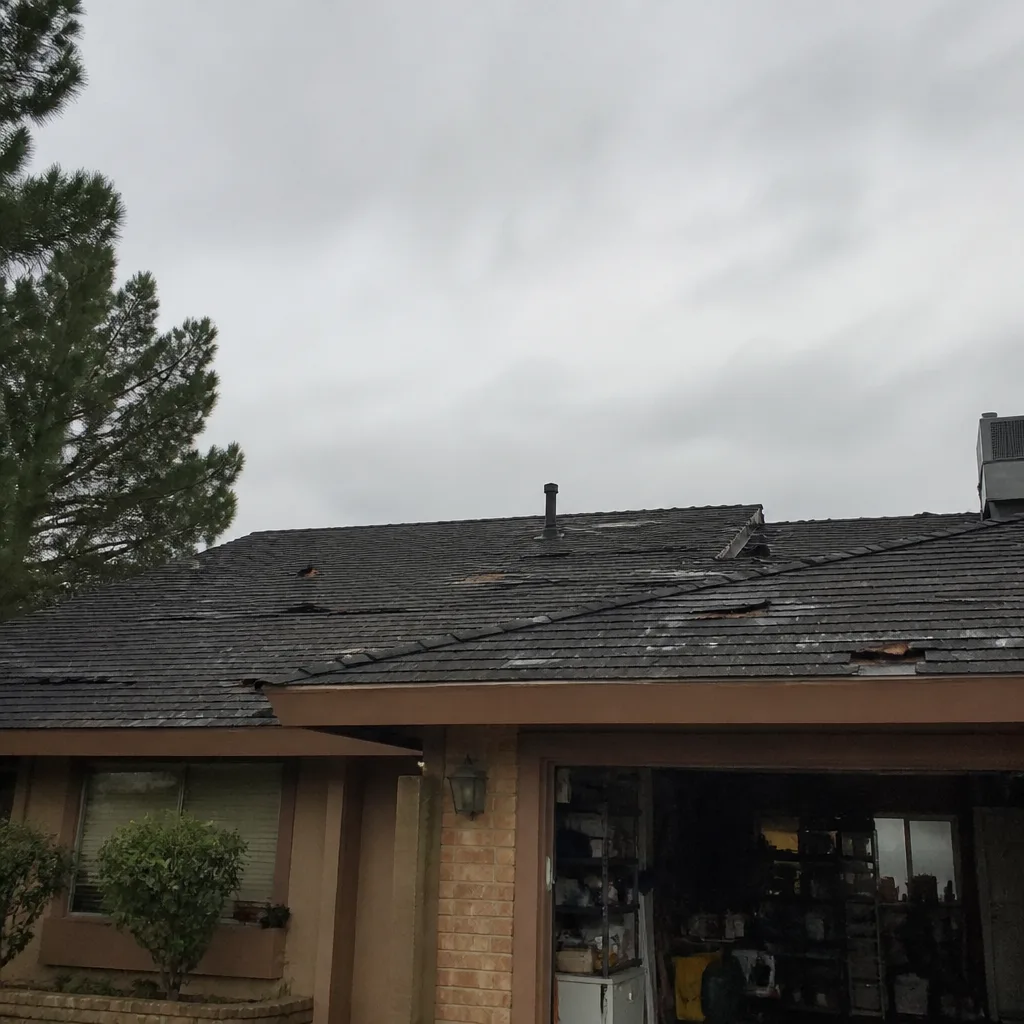 Before
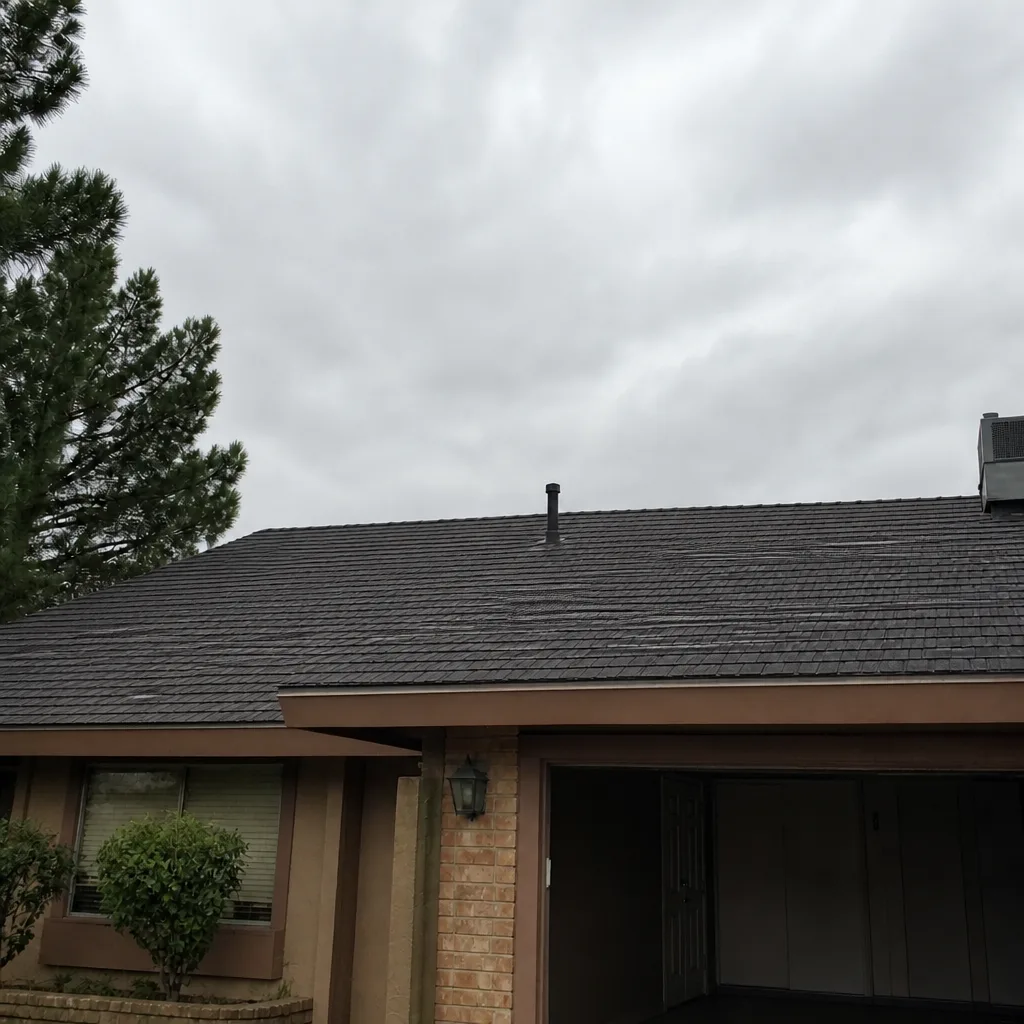 After
When to Call a Professional
Call a professional roofer when the work involves decking, structure, the full cover, or a permit that has to clear a county inspection. Call one immediately if you’re within 90 days of listing a Sunrise Manor home and don’t know whether the roof you inherited or re-roofed has a finaled county permit on it. Call one if you’ve found an open permit on the parcel, if a contractor has told you a full re-roof doesn’t need one, or if you’re dealing with storm damage and want the repair done to a spec that will pass inspection the first time. Roof work carries real fall and structural risk, and the county inspection sequence is there for a reason. That’s a job for a trained technician on a roof with proper safety setup, not a homeowner on a ladder. Ridgeline Roofing Co. Sunrise Manor offers free estimates in Sunrise Manor – call (844) 941-3509 to schedule yours, with no obligation and a written line-item quote.
Frequently Asked Questions
A Sunrise Manor address pulls a Clark County permit, because the community is in unincorporated Clark County, not inside Las Vegas city limits. The mailing address says “Las Vegas, NV,” but the Assessor’s parcel record is the definitive answer and it shows the jurisdiction. Confirm against the parcel record before any permit is pulled, because pulling from the wrong office invalidates the inspection.
Yes. A full residential re-roof of any size requires a permit in Nevada, and the homeowner is the permit holder of record. The same is true for overlays, structural roof repairs, decking replacement, and roof-penetrating equipment like skylights or solar. Only minor repairs like small flashing or shingle patching generally fall outside the permit threshold. Call (844) 941-3509 for a free estimate that includes the permit scope.
Permit fees in Clark County are calculated from the valuation of the job, so a full re-roof runs higher than a repair, and an overlay runs lower than a tear-off. The permit is a line item on the estimate, not a hidden cost. We quote the permit fee in writing up front as part of the free estimate, so the number on the estimate is the number on the invoice. Call (844) 941-3509 to get that number for your project.
Unpermitted re-roofing surfaces during the title search at sale and can stall or void the closing. Remediation usually means an after-the-fact permit, a county re-inspection, and in some cases partial cover removal so the inspector can verify the concealed layers. If the work is defective, the county may order a full re-roof, and the seller carries the cost. It’s a fixable problem but not one you want on a closing timeline.
Nevada residential roofs may not carry more than two layers of roofing at any time, so an overlay is only permitted on a single-layer roof that passes a structural and decking check. On a two-layer roof, the code requires a full tear-off. Most manufacturer warranties on the IKO, Atlas, Tamko, and Boral systems we install require a tear-off to be honored at full term. Call (844) 941-3509 for an honest read on which path your roof allows.
Yes. Never release final payment until the county has performed the final inspection and the permit status shows “finaled” in the portal. The permit number should be posted at the job site for the duration of the work, and the final inspection record is your proof the work passed. A contractor who won’t wait for the final isn’t a contractor you want on a Sunrise Manor roof.
The Bottom Line
Sunrise Manor sits in unincorporated Clark County, which means the Clark County Building Division – not the City of Las Vegas – governs your roofing permit, your inspection, and your final sign-off. A full re-roof or overlay requires a permit, overlays are capped at two layers total, and an unpermitted or wrongly-permitted roof can derail a home sale years later. Verify the jurisdiction on your parcel, check the permit history in the county portal, and hold final payment until the final inspection is finaled. If you’d like the whole thing handled end to end, Ridgeline Roofing Co. Sunrise Manor offers free estimates, a written 90-Day Done Right Promise, and photo-documented roof inspections – call (844) 941-3509 to get yours scheduled. You can also start at our Ridgeline Roofing Co. Sunrise Manor home page.
Call (844) 941-3509 for a free estimate. A live person answers every call, and we’ll bring a written, line-item quote to the table with the permit scoped and the inspection path laid out – so you know the full picture before you sign anything.
Written by the team at Ridgeline Roofing Co. Sunrise Manor.