
Last updated November 18, 2026
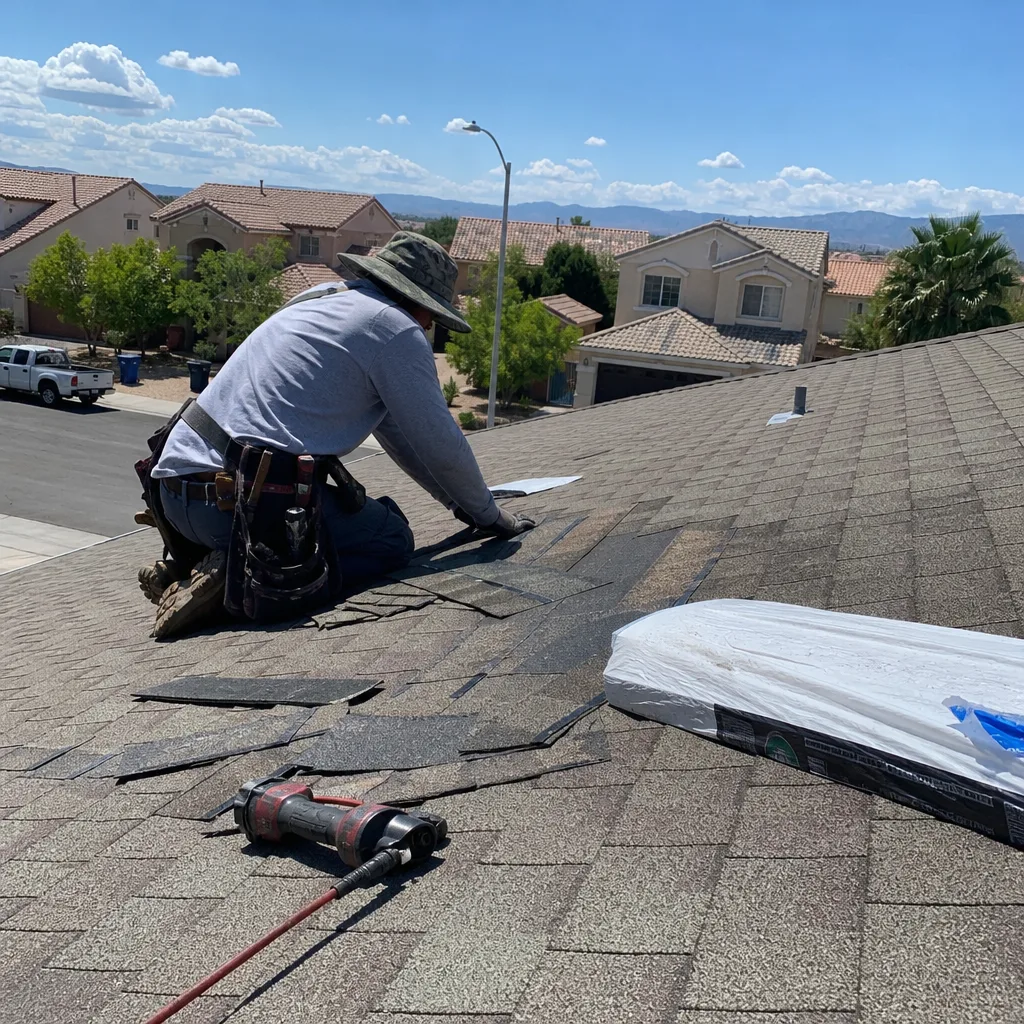
 Metal roofing
 Architectural shingles
 Tile roofing
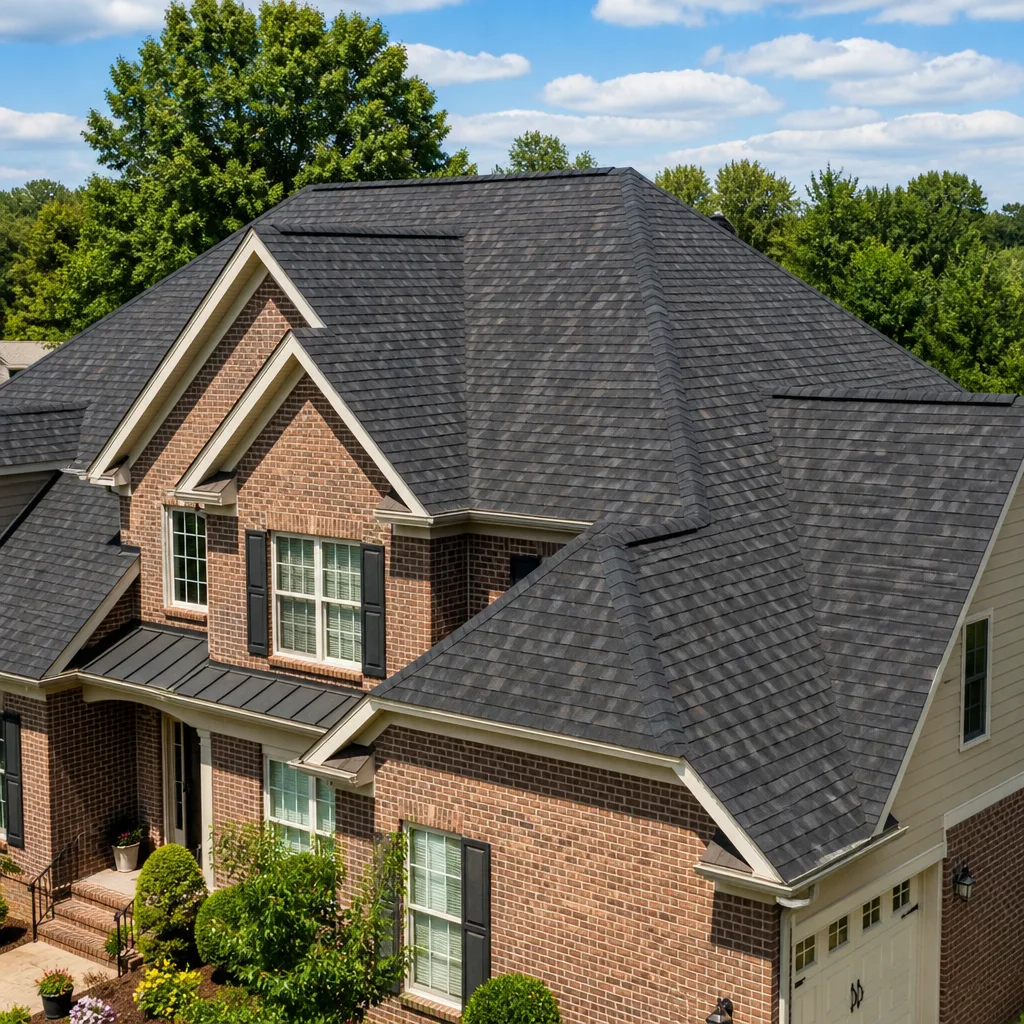 GAF
 Owens Corning
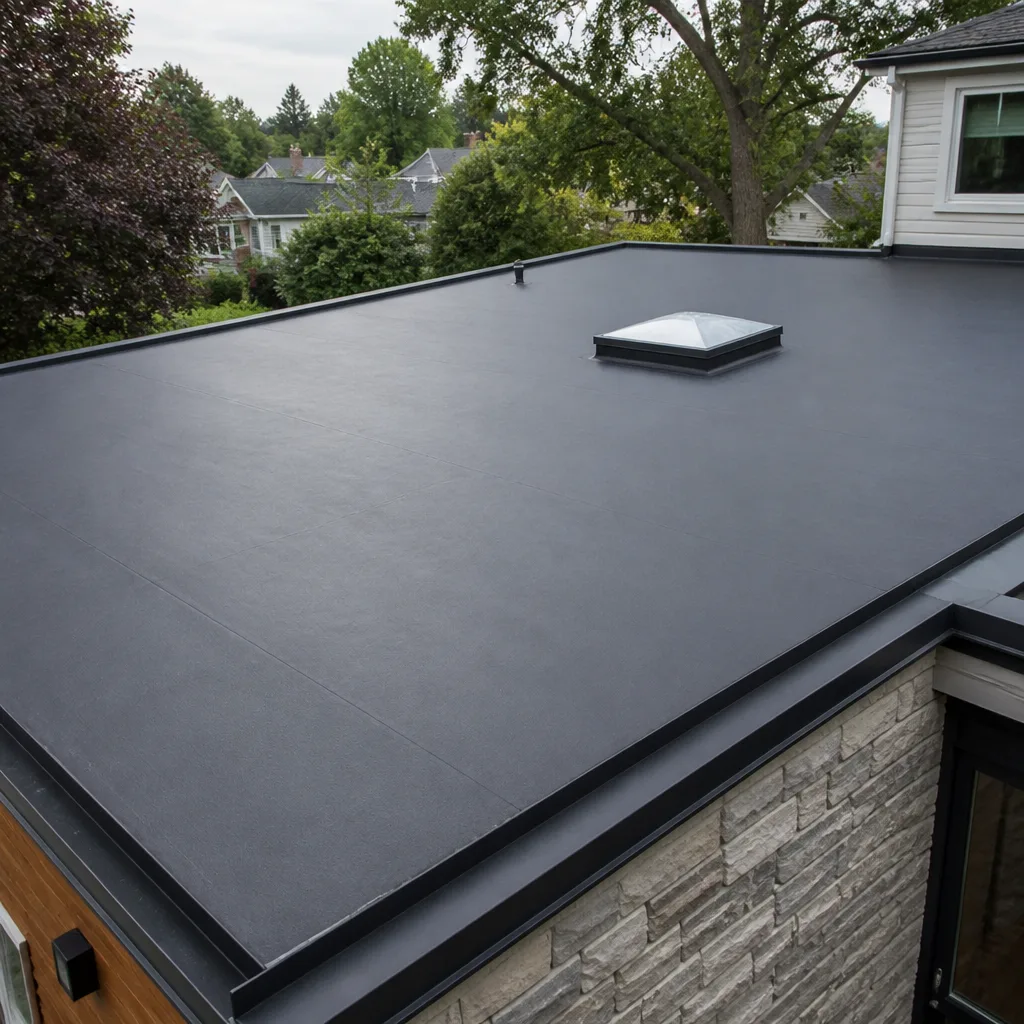 Flat & low-slope
Free roof inspection with deck photos before we talk money - GAF and Owens Corning certified installation
Seasonal Roofing Care for Sunrise Manor: Year-Round Homeowner’s Guide
A spring gutter cleaning that makes sense in Ohio is mostly irrelevant here. But the same homeowner who ignores their pipe boot flashings in June is gambling with the ceiling above their living room come August. Sunrise Manor doesn’t really have four roofing seasons. It has two that matter and two that are simply windows for getting work done. Most seasonal roof advice you’ll find online was written for a climate with a hard winter and a wet spring, and it lands at the wrong time of year for the Mojave. This guide maps the calendar the way it actually runs in Sunrise Manor, so you do the right task at the right point in the year.
Quick Answer
Roof maintenance in Sunrise Manor peaks in two windows: get your flashing, drains, and low-slope sections checked and sealed before mid-June, because monsoon rain arrives in July, then triage any damage in September and October while the weather holds. The real windows for repairs and replacements are October through November and February through March, when materials cure properly and schedules have room.
Styles & brands we work with
- Architectural shingles
- Metal roofing
- Tile roofing
- GAF
- Owens Corning
- Flat & low-slope
Table of Contents
- Why Sunrise Manor Runs on Two Roofing Seasons
- The Shoulder Seasons: Your Best Repair Windows
- Monsoon Prep: What Must Be Done Before June 15
- Post-Monsoon Recovery: Staining vs. Structural Damage
- Winter in Sunrise Manor: The Underestimated Freeze-Thaw Cycle
- Tracking Granules as a DIY Aging Indicator
- Common Mistakes to Avoid
- When to Call a Professional
Why Sunrise Manor Runs on Two Roofing Seasons
Sunrise Manor sits in the Mojave, and the calendar here is set by rain and heat more than by cold. There is a dry stretch that runs roughly from April through June, a monsoon window from July into September when rain can arrive hard and fast, a mild fall, and a winter that dips below freezing on enough nights to matter. Summer temperatures push the roof deck well past 150°F in the afternoons.
That pattern changes the maintenance logic. A northern climate grooves a roof with ice dams, snow loads, and repeated thawing. Sunrise Manor works on the surface differently. UV exposure and heat break down sealants and shingles over the long hot summer, and then a single monsoon season tests every seam, flashing, and drain on the roof. The tasks that keep water out are the ones done before the rain, not after.
So the year splits into four practical periods:
- February through March: a repair window. Cooler days, materials handle well, crews have room.
- April through June 15: monsoon preparation. Sealing, draining, low-slope checks. Last call before the rain.
- July through September: monsoon season. Watch, don’t schedule heavy work if you can avoid it.
- October through November: recovery and another repair window. The best time to fix what the summer tested.
If you want the higher-level picture of what we do across the area, our home page for Ridgeline Roofing Co. in Sunrise Manor covers it. This guide stays focused on timing.
The Shoulder Seasons: Your Best Repair Windows
October through November and February through March are the two stretches when a repair goes in right and stays in right. There are real reasons for it.
- Materials cure correctly. Sealants, adhesives, and roofing cement behave well in moderate temperatures. In a July afternoon they can skin over before they bond. In a cold snap they can fail to set at all. The shoulder months let a repair reach full strength.
- Your roofer is schedulable. Storm season and the peak summer heat both pull roofers in many directions. In the shoulder months, there’s room on the calendar for your job.
- You can see the roof clearly. No standing water, no extreme glare, no freeze. A technician can inspect an actual surface and photograph it, not squint through a screen of heat shimmer.
- You get ahead of the next season. A repair in October sits through the winter and into the spring, giving you a dry stretch to confirm it held before the next round of rain.
For anything more involved than a patch, the shoulder months are when a roof repair in Sunrise Manor should be on your list. We see it often: a repair done at the right point of the year lasts years longer than the same repair rushed during monsoon heat.
Monsoon Prep: What Must Be Done Before June 15
The monsoon runs July through September in Sunrise Manor, and by then it’s too late to prepare. The work needs to be finished before the rain starts. Three tasks do most of the protecting.
- Re-seal the flashings. This is the pipe boots around plumbing vents, the chimney flashing, the valley flashings, and the seals around any skylight. These are the joints where water finds the smallest entry. Every one of them deserves a look and, where the sealant has dried or cracked, a fresh seal before the rain.
- Clear the drains. Gutters, downspouts, and any scupper drains on low-slope sections need to be open. A clogged drain turns a manageable rain into a backup, and a backup finds the nearest weak spot. Palm fronds, dust, and wind-blown debris collect fast in this climate.
- Check the low-slope membrane. Any flat or near-flat section on the roof should be inspected for blisters, splits, or ponding marks. Low-slope roofing fails differently than shingles, and small membrane problems grow quickly once water gets under the edge.
Drive through any older Sunrise Manor neighborhood in June and you’ll see roofs going into the summer with pipe boots that have been baking for a decade. A pipe boot is a small, cheap part. When it fails, it fails directly above the living room. That’s why we treat the June inspection as the most important of the year.
If your envelope is aging on a flat or specialty section, our specialty roofing in Sunrise Manor work covers low-slope systems and the flashing detail that protects them.
Post-Monsoon Recovery: Staining vs. Structural Damage
After the rain, the question is what actually got hurt. The catch is that a water stain on your ceiling doesn’t tell you by itself whether the shingle surface took a hit or water got through. You don’t need to climb up to figure this out, and we’d rather you didn’t. Here’s how to tell the difference from inside.
Surface staining (cosmetic)
- A single, faint ring or brownish tint on the drywall.
- The ring doesn’t grow after the rain stops.
- No sagging in the ceiling, no soft spot to the touch.
- You can trace it to a known vent, fixture, or attic moisture rather than a path.
Compromised underlayment (structural)
- Stains that spread or multiply over days.
- A bulging or sagging ceiling line, or a spot that feels soft when you press near it.
- Paint blistering on the ceiling, or musty smell in the room.
- Dampness around the top plate of an exterior wall, or daylight showing in the attic.
When you see the second set, that’s a real signal. Underlayment that has been compromised lets water keep working into the deck and framing, and the problem gets more expensive the longer it runs. In that case the fix isn’t a coat of paint. It’s a proper inspection and repair, done in the fall window before winter sets in.
Winter in Sunrise Manor: The Underestimated Freeze-Thaw Cycle
Sunrise Manor isn’t a snow climate, but December through February still drops below freezing on enough nights to cause real trouble. The damage isn’t in the snow. It’s in the repeated freeze-thaw.
Water gets into a crack, a seam, or an old bead of caulk. At night it freezes and expands. In the morning sun it thaws and pulls back. Do that enough times in a season and a small caulk joint separates from the flashing it was sealing. Aging caulk around pipe boots, vents, and skylights is especially vulnerable, because it’s already dried out from the summer and holds less flex.
What we’ve seen in Sunrise Manor winter after winter: the joint looked fine going into fall and has a visible gap by spring. If the roof had a small leak in the fall, winter turns it into a bigger one silently. That’s why February and March are our recommended inspection window. It catches the freeze-thaw damage before the next monsoon cycle, and there’s time to get the repair done in reasonable weather.
Tracking Granules as a DIY Aging Indicator
The granules that coat an asphalt shingle are what shield the asphalt from UV. As a shingle ages, granules loosen and shed. You don’t need tools to track this. The splash blocks at the base of your downspouts tell you the story.
- Look under each downspout after the first rain of the season. The rain washes granules down the roof and out the downspout, and they collect in the splash block or at the base.
- Note the amount season to season. A handful after a hard rain is normal. A visible pile of granular sand, with the shingle surface showing dark patches or bald spots, is a sign the shingle is aging out.
- Compare across seasons. If the pile is growing each year, that’s the signal. It means more granules are releasing than holding, and the shingle is losing its UV shield.
- Walk the perimeter. Granules build up in gutters and wherever downspouts empty. A rhythm of “more each fall” tells you the roof is in the last quarter of its life.
This is the cheapest diagnostic a homeowner has. It won’t tell you where the roof is leaking, but it will tell you whether it’s time to start planning a replacement rather than another repair. When it does point that way, the roof replacement and installation page for Sunrise Manor lays out what the process looks like. We install products from GAF, CertainTeed, and Owens Corning and stand behind those materials with proper installation.
Common Mistakes to Avoid
- Doing monsoon prep in the wrong month. A June 20 gutter cleaning is mostly too late. The rain is already coming. Get the flashing, drains, and membrane checks done before mid-June.
- Rushing a repair in July heat. Sunrise Manor roof temperatures in mid-summer can push sealants and adhesives past the point where they bond correctly. Saving a week is not worth a repair that fails next spring.
- Reading a single ceiling stain as either “fine” or “catastrophe.” Learn the difference between a dry ring and a spreading stain with a soft ceiling. One is cosmetic; the other is underlayment.
- Ignoring the low-slope section because it “looks fine from the yard.” Flat and near-flat roofing is where monsoon damage hides. It fails under the surface before it shows on top.
- Assuming “it doesn’t snow here, so winter doesn’t count.” The freeze-thaw cycle on caulk around penetrations is the most underrated damage in Sunrise Manor. Inspect in February and March.
- Waiting for a visible leak to call. By the time water is dripping, the underlayment and deck have likely had weeks or months of exposure. A proactive fall inspection costs far less than the repair.
- Skipping the flashing re-seal because it “looks sealed.” Look for gaps at the edge of the bead, not the middle. Most failed flashing seals start at the edges, where they hide.
When to Call a Professional
Call a professional for anything that requires getting on the roof at height, anything involving work on the flashing or membrane around vents and skylights, and any leak you can’t trace to a specific fixture. The people who get injured on roofs are overwhelmingly homeowners trying to do a task that needs training and fall protection. That risk isn’t worth it for what is often a small repair to a trained technician.
Call, too, when you see spreading ceiling stains, visible attic daylight, or a soft spot above a room. And call for your June monsoon-prep inspection and your fall post-monsoon inspection. Our technicians photograph what they find, so you see what they see, and we’ll tell you plainly whether it’s a repair or time to plan for a replacement. Ridgeline Roofing Co. Sunrise Manor offers free estimates in Sunrise Manor. Call (844) 941-3509.
See the difference
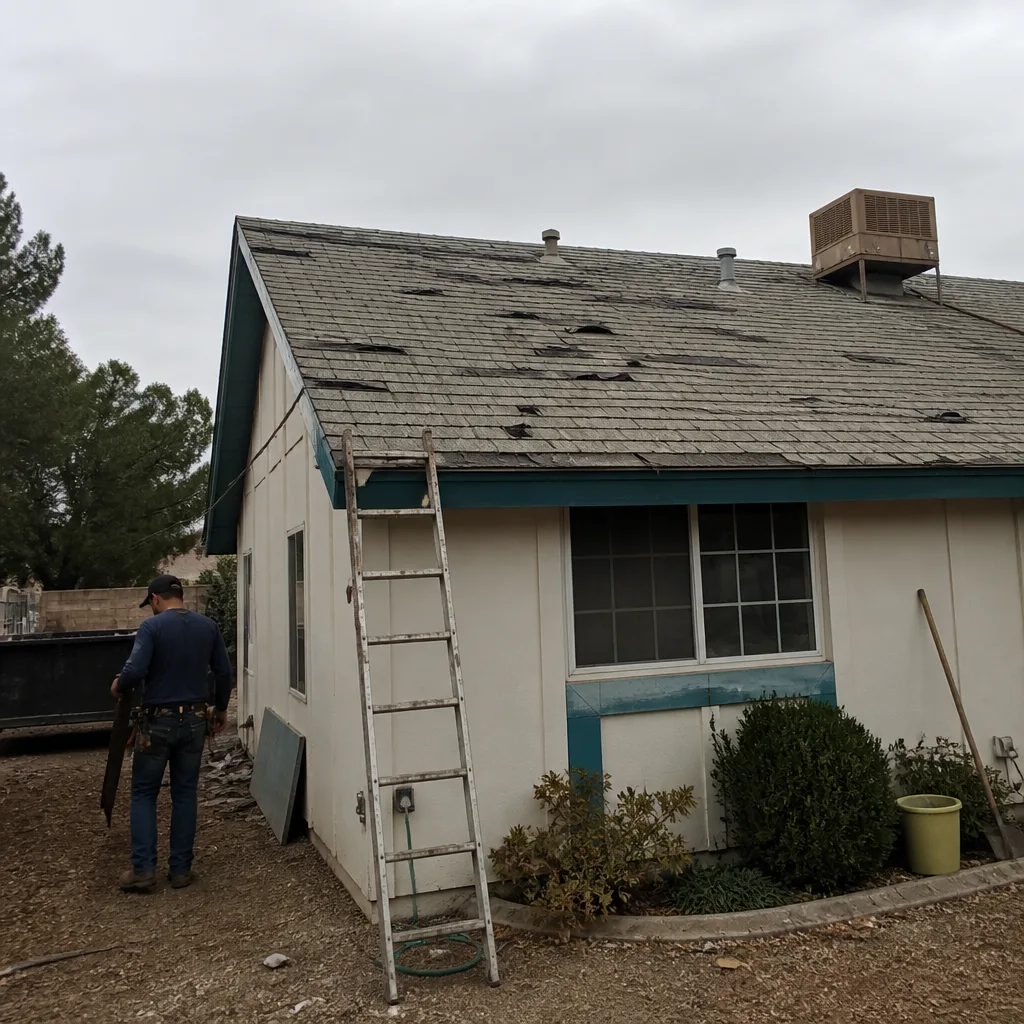 Before
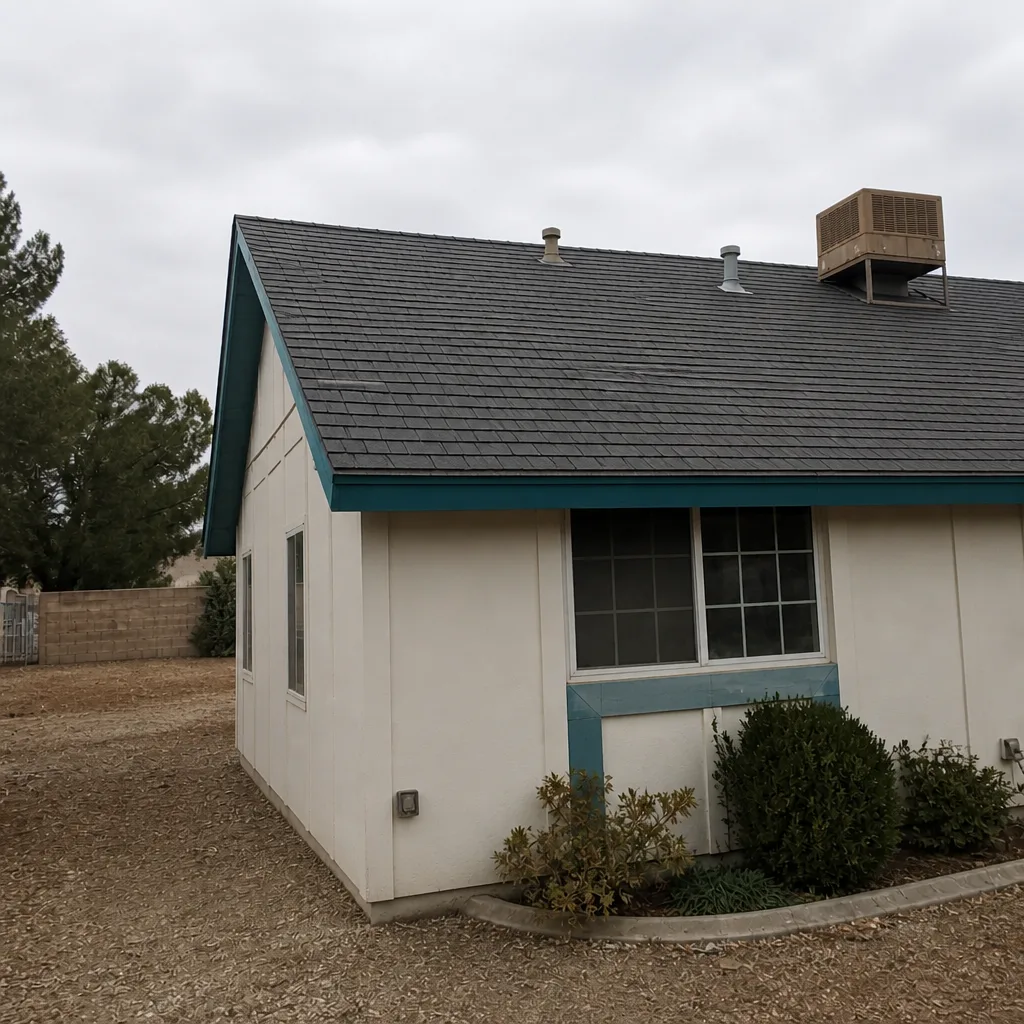 After
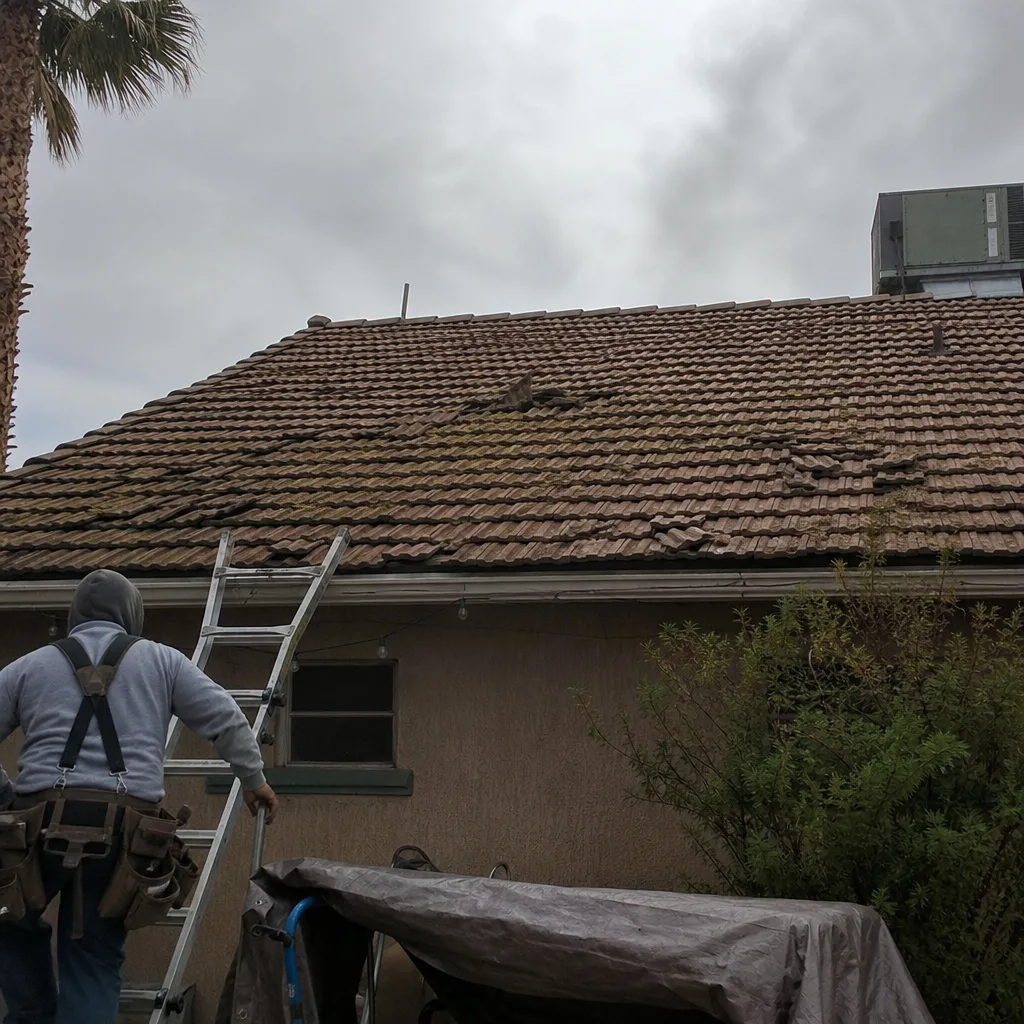 Before
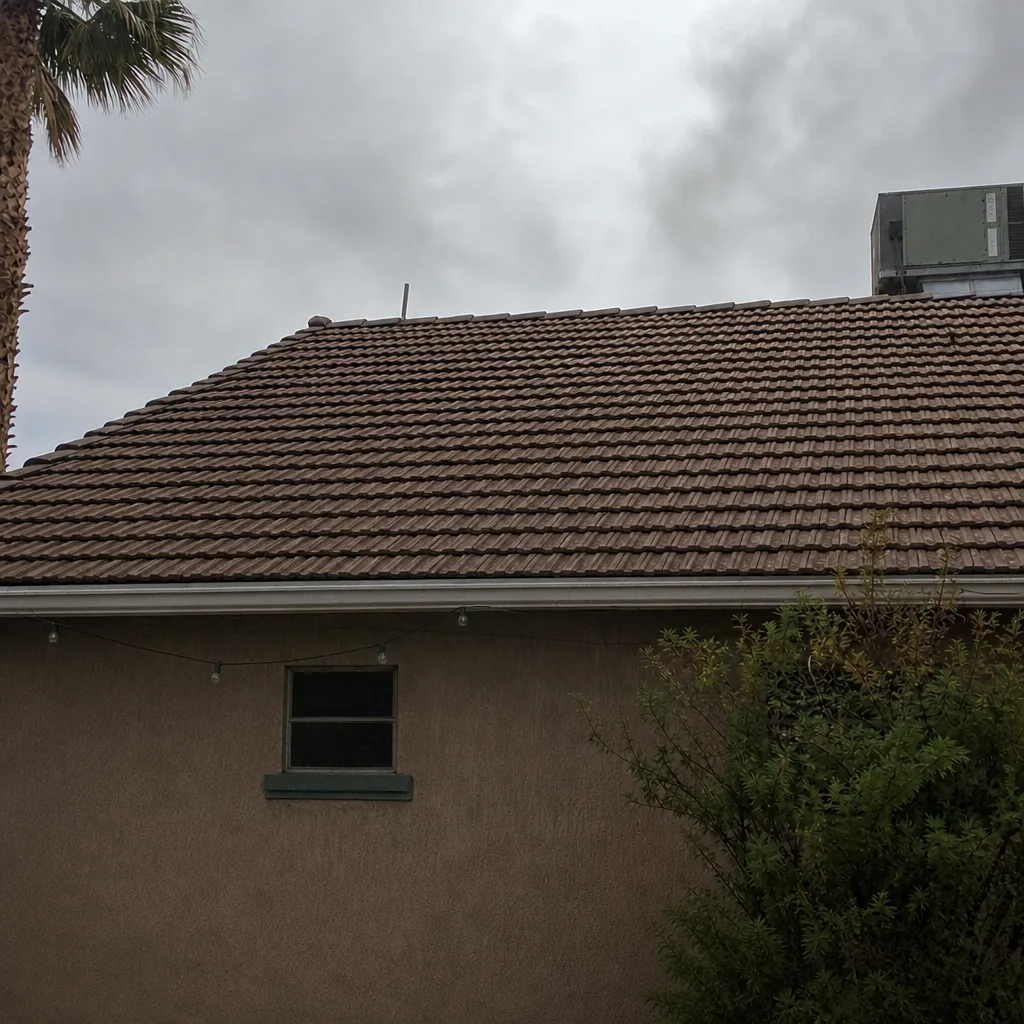 After
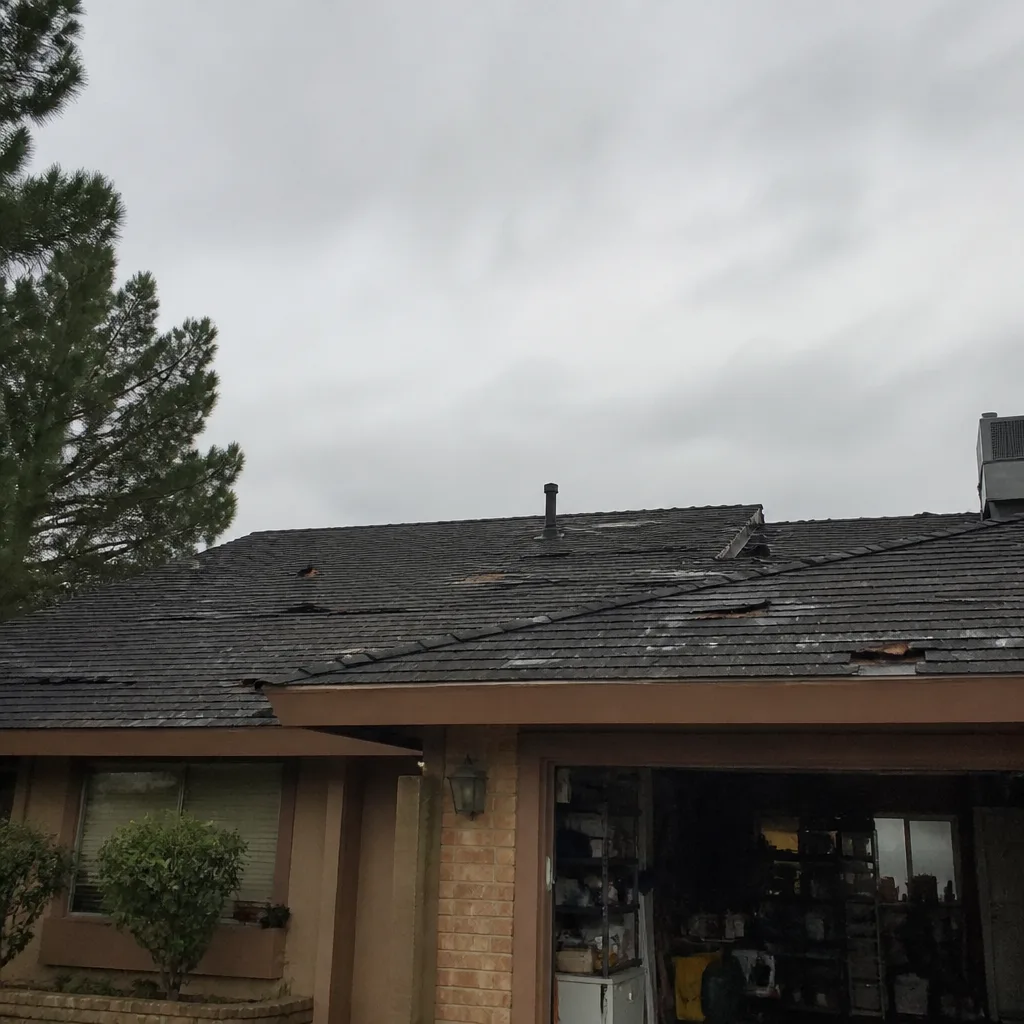 Before
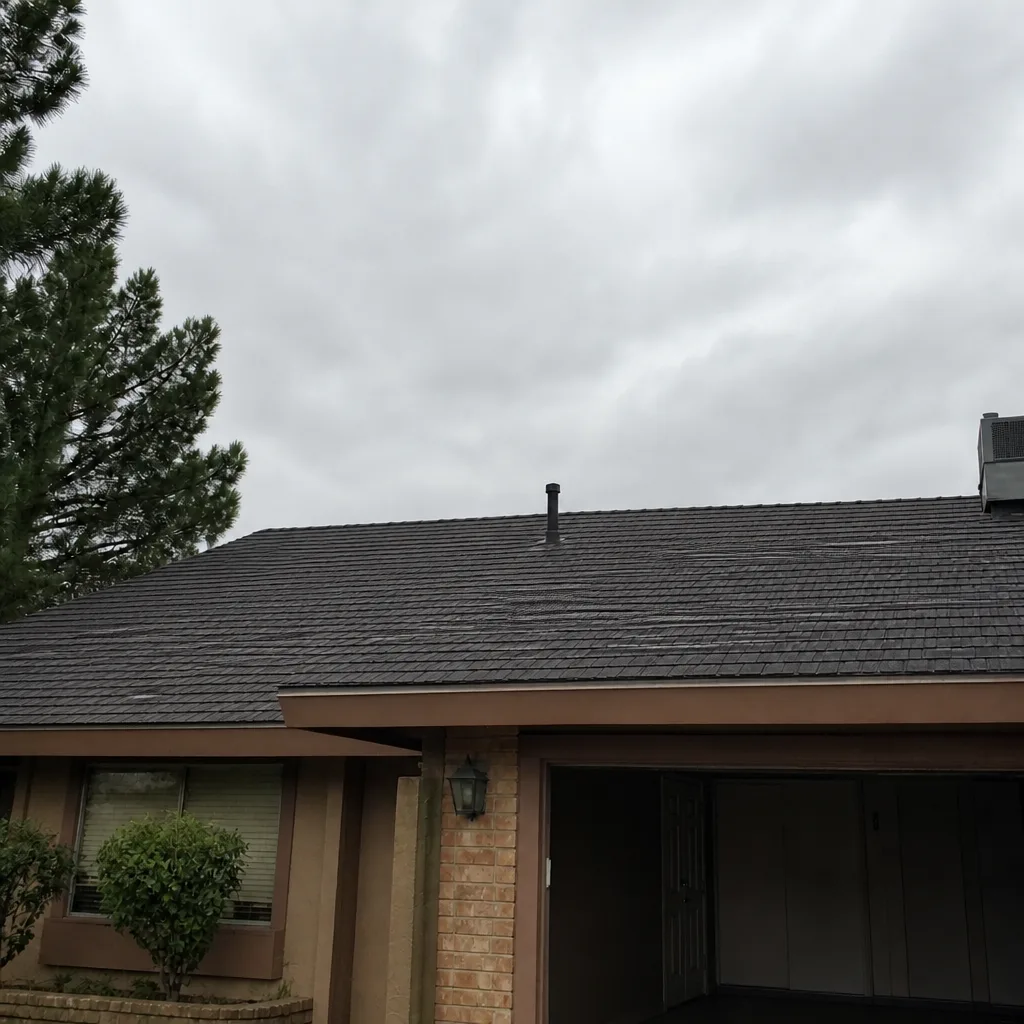 After
Frequently Asked Questions
The best months for scheduling maintenance and repairs in Sunrise Manor are October through November and February through March. The weather is moderate, sealants cure correctly, and roofers have room on the calendar. The June inspection is the exception, because it needs to happen before the monsoon arrives.
Pipe boot flashing fails often here because the climate stresses it on two fronts. The summer heat bakes the rubber boot and dries the caulk around it, and the winter freeze-thaw cycle cracks the seal that’s already dried out. The combination means a boot that was sound in spring may not hold by August.
No. A newer roof still needs a June inspection in Sunrise Manor. The risk isn’t usually worn shingles; it’s the flashing, drains, and low-slope membrane where the rain actually loads. Any roof, regardless of age, should have those three checked before the monsoon.
A stain is serious when it spreads, when the ceiling near it feels soft or sags, or when paint blisters and the room smells musty. A single faint ring that doesn’t grow after the rain is likely cosmetic. When in doubt, call for an inspection and let a trained technician trace it.
Yes, but through the freeze-thaw cycle rather than snow. Water gets into cracks and caulk seams, freezes at night, and expands. Repeated cycles separate the seal. Caulk around pipe boots, vents, and skylights is the most common failure point we see in Sunrise Manor each spring.
First, contain the damage inside: move furniture, place a bucket, and photograph the stain. Don’t climb onto the roof to inspect it yourself, especially when the surface may still be wet and slick. Call for an inspection. A technician will photograph the actual roof and tell you whether it’s a repair or something larger.
The Bottom Line
Sunrise Manor roofing runs on two seasons and two windows. Get the flashing re-sealed, the drains cleared, and the low-slope membrane checked before mid-June, because the rain is coming and it doesn’t wait. Triage damage in the fall. Use October through November and February through March to do the actual repair work, when materials cure right and schedules have room. Watch the splash blocks for granules as your aging signal, and don’t ignore the freeze-thaw cycle in winter. Do those things and the roof will hold. Call (844) 941-3509 for a free estimate and a proper inspection, done right, and if it isn’t, we make it right.
Written by the team at Ridgeline Roofing Co. Sunrise Manor.