
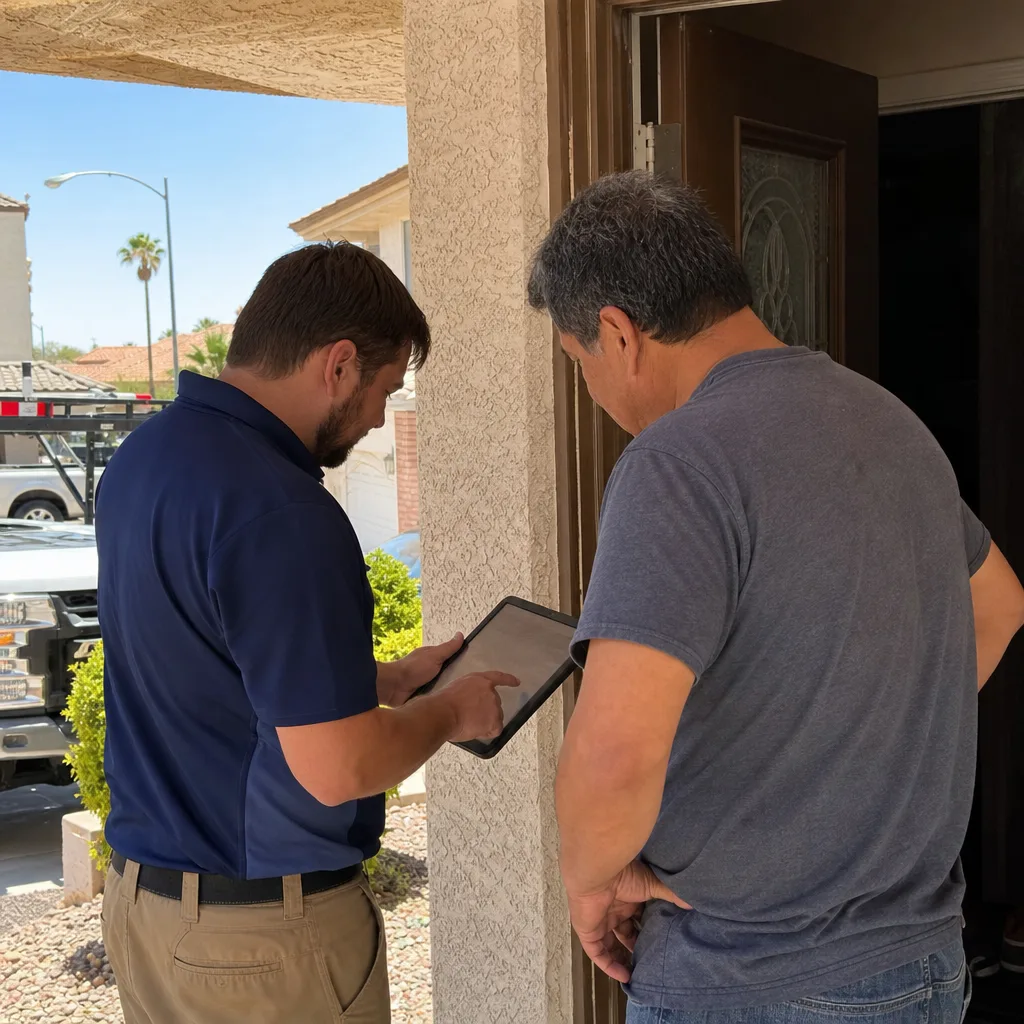
Last updated November 18, 2026
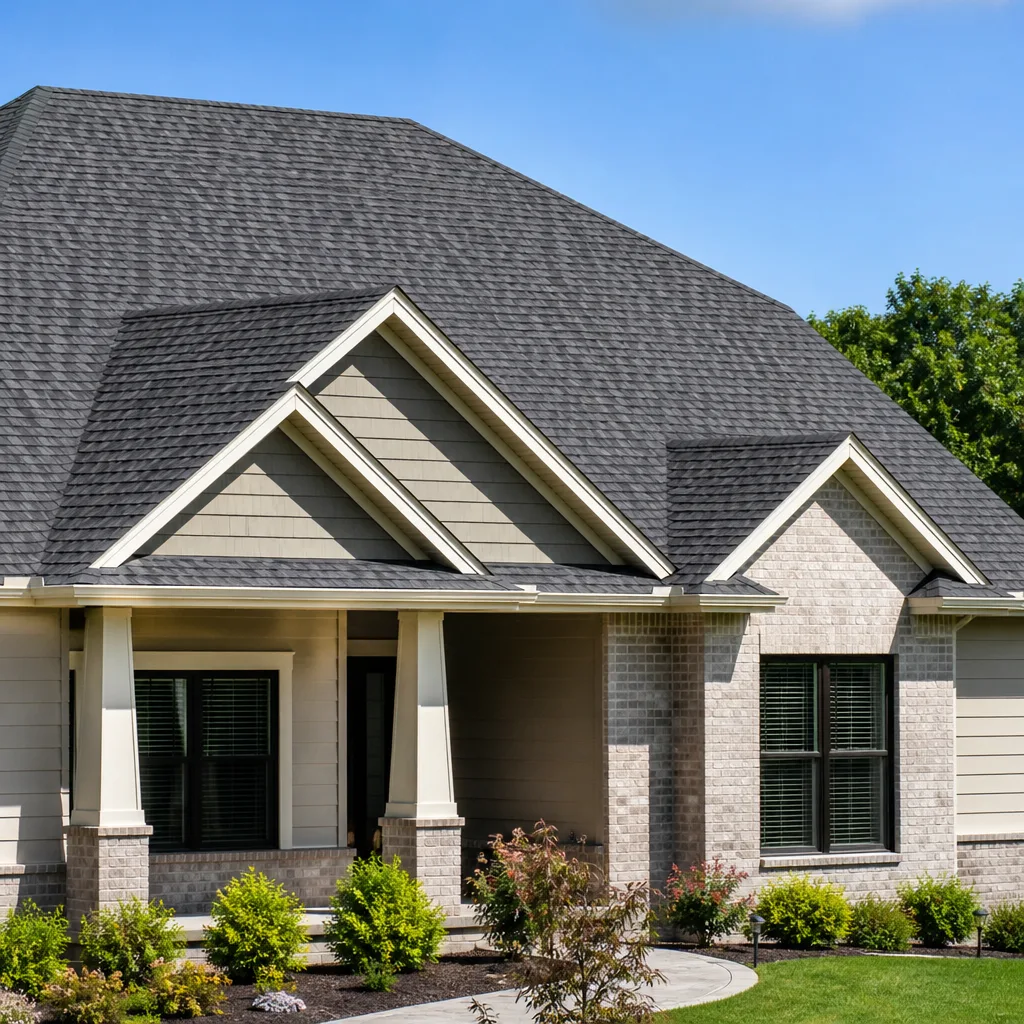
 Architectural shingles
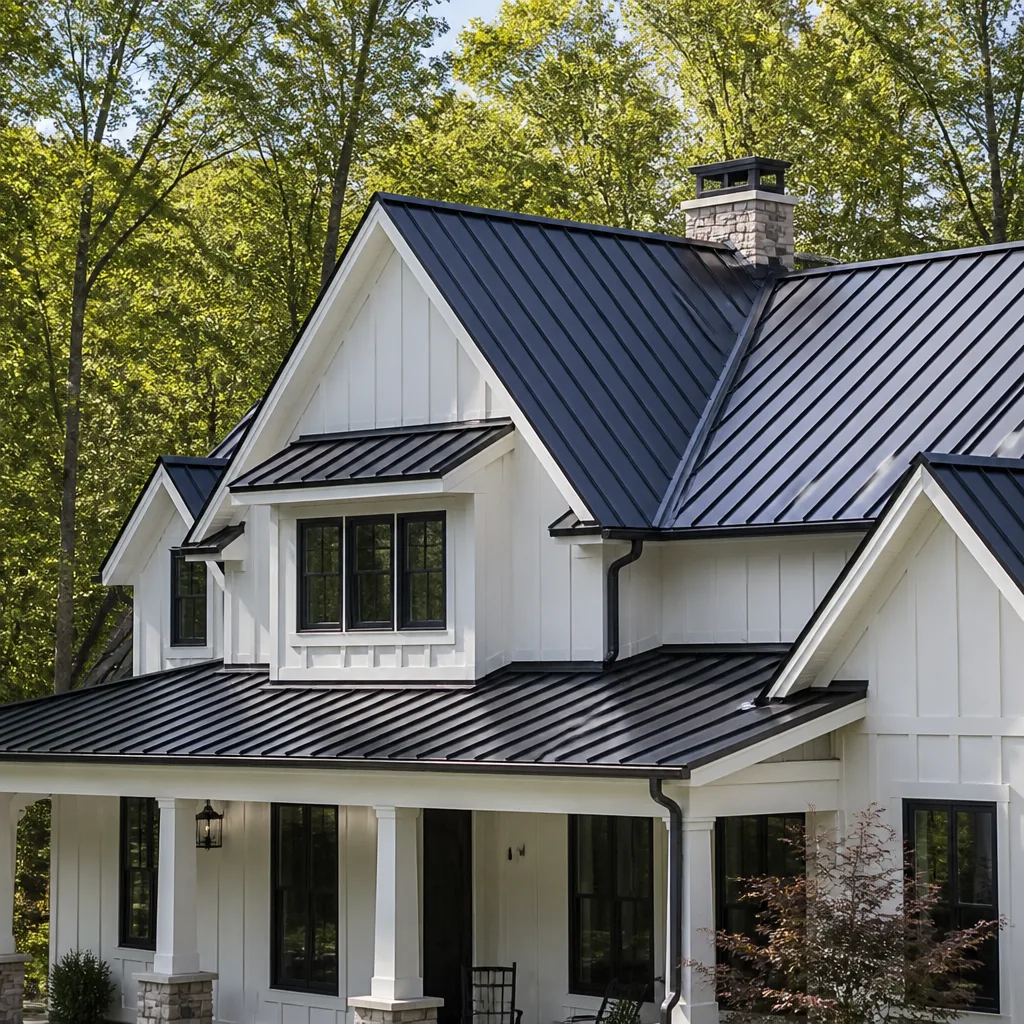 Metal roofing
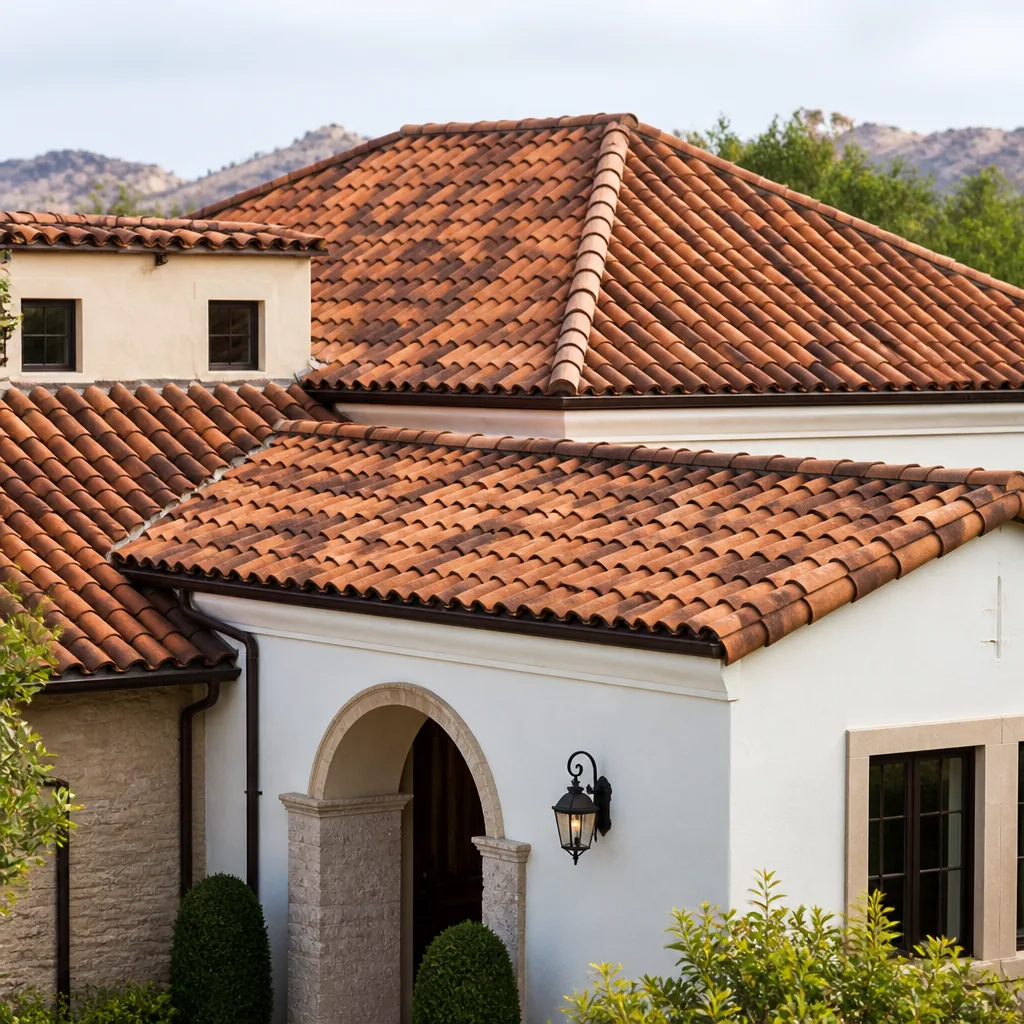 Tile roofing
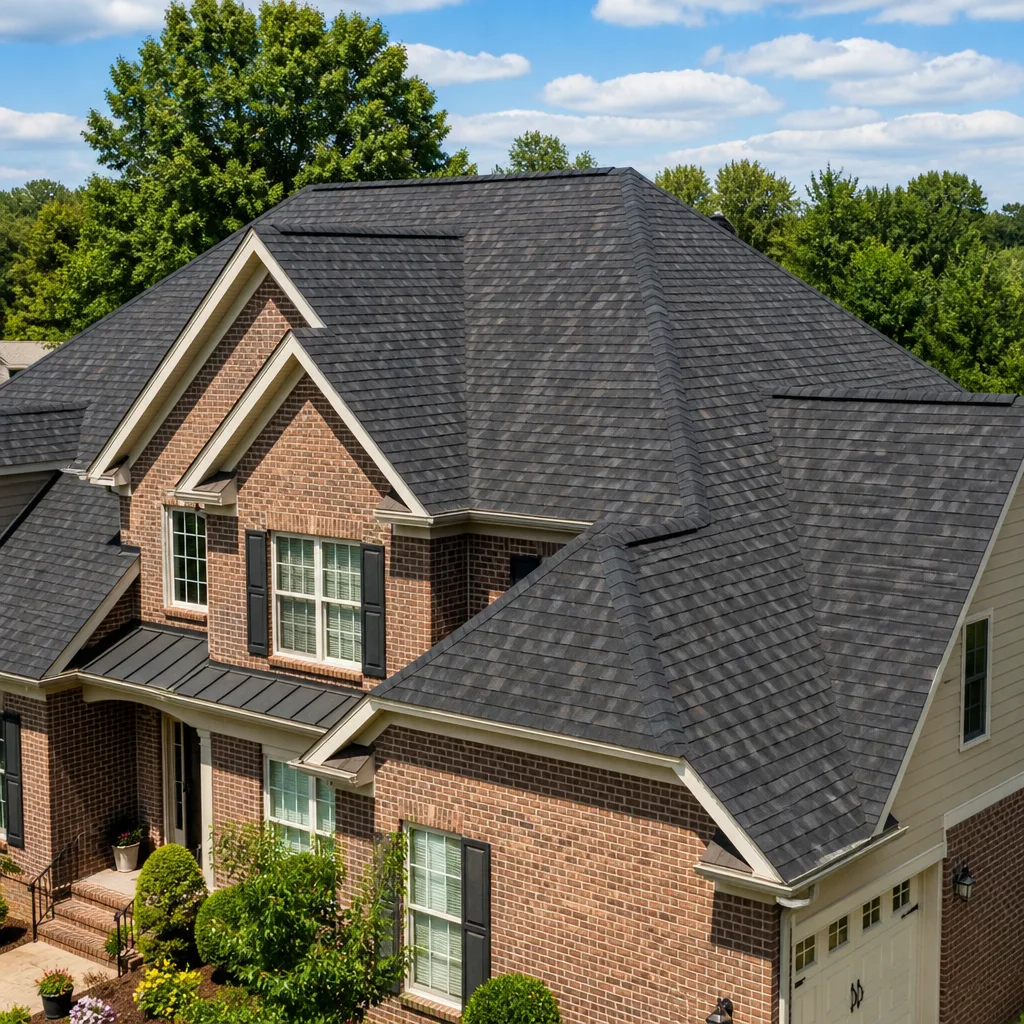 GAF
 Owens Corning
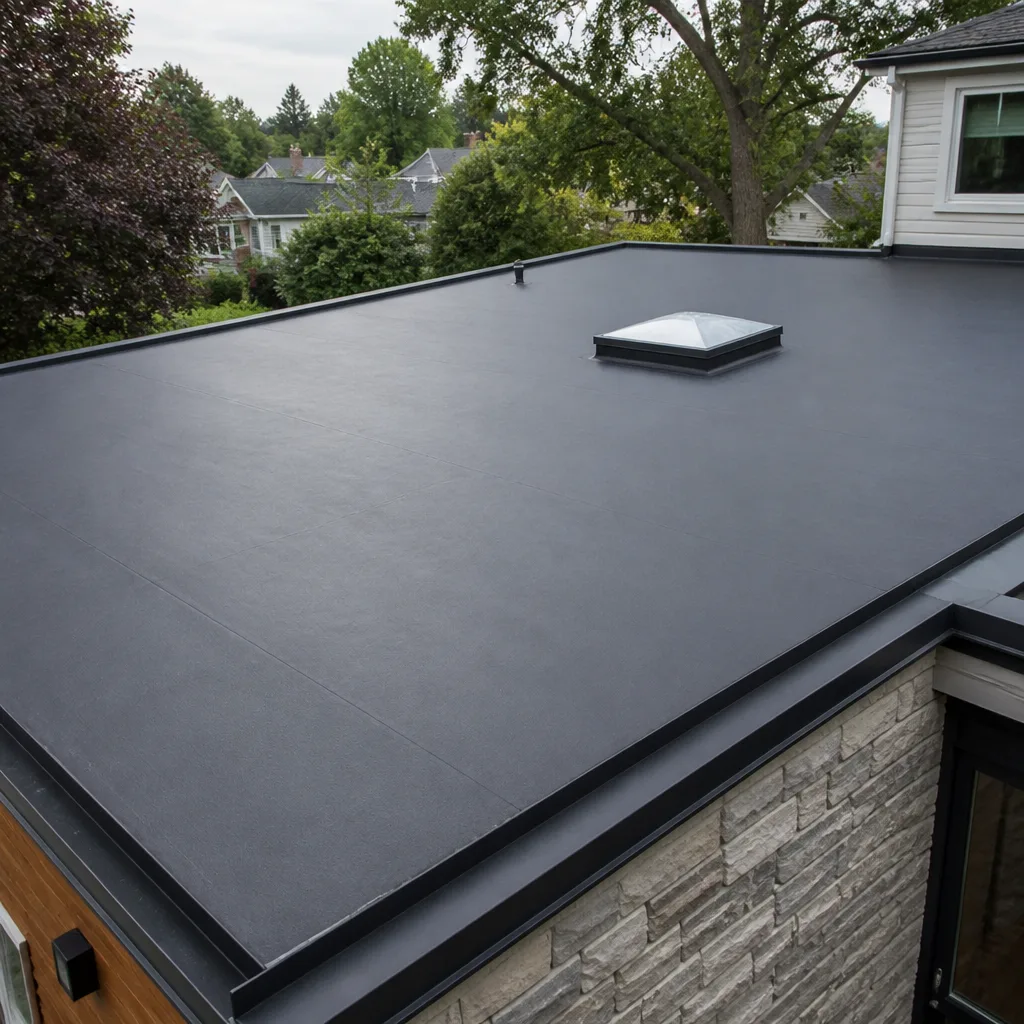 Flat & low-slope
Free roof inspection with deck photos before we talk money - GAF and Owens Corning certified installation
Roof Replacement & Installation Warning Signs Every Homeowner Should Know
Curling shingles get all the attention. The sign that most reliably predicts a catastrophic leak in a Sunrise Manor home is something you find with a flashlight in your attic on a sunny afternoon – not on the roof surface at all. We’ve climbed enough roofs in this valley to know that by the time shingles look obviously bad, water has often been finding its way in for a season or two already. This guide walks through the second-tier signals that actually predict failure: attic evidence, granule patterns, hidden flashing, and the age math that matters more here than almost anywhere else in the country. You’ll learn what you can safely monitor yourself and what needs a trained eye within the month.
Quick Answer
The clearest warning signs you need a new roof in Sunrise Manor are daylight showing through the roof deck from inside your attic, dark staining or water tracks on rafters and sheathing, compressed or damp insulation, and granule loss so heavy that shingle mat is exposed. Surface curling and missing shingles matter, but attic evidence and failing flashing around penetrations show up earlier and predict leaks more reliably. If you see any of these, get an inspection before the next monsoon season.
Styles & brands we work with
- Architectural shingles
- Metal roofing
- Tile roofing
- GAF
- Owens Corning
- Flat & low-slope
Table of Contents
- Start in the Attic: The Evidence Nobody Checks
- What Nevada Sun Does to a Roof: Granule Loss and Thermal Cycling
- The Invisible Failures: Flashing Around HVAC Curbs, Skylights, and Boots
- Cosmetic vs. Structural: What You Can Monitor and What You Can’t
- Age Math: Why a 20-Year-Old Roof Here Isn’t the Same as Anywhere Else
- Eaves, Valleys, and the Edges That Fail First
- A Twelve-Month Watch List for Sunrise Manor Homeowners
Start in the Attic: The Evidence Nobody Checks
If you do one thing after reading this, do it on a clear, bright afternoon with a flashlight and a notepad. Climb into your attic, turn off any lights, and look up. What you’re looking for isn’t dramatic. It’s pinpoint daylight coming through the roof deck, and it’s the single most honest test of a roof’s condition you can run yourself. A few scattered pinpricks in an older roof aren’t an emergency, but clusters of light, especially near valleys and penetrations, mean the deck is compromised and water is following.
Next, sweep the flashlight beam along the rafters and the underside of the sheathing. Look for three things:
- Dark staining or water tracks. Brown streaks on rafters usually run downhill from a leak source above. The streak tells you where water has been traveling, not necessarily where it’s entering.
- White chalky residue or efflorescence. This is mineral deposit left behind as water evaporates. It’s a fingerprint of repeated wetting and drying, which in Sunrise Manor often points to flashing failures rather than the field of the roof.
- Compressed or damp insulation. Insulation that’s flattened, matted, or darker than the surrounding batts has been wet. In our experience, homeowners overlook this constantly because it’s at eye level, not overhead.
One more attic signal worth naming: rust on nail points poking through the deck. It’s a small thing that tells a big story. It means moisture has been sitting against the fasteners long enough to oxidize them, which is exactly the condition that precedes rot in the sheathing. If you see rusted nails plus staining, the roof has been leaking for a while, whether or not you’ve seen a drip inside the house.
None of this is a substitute for a proper inspection. Our technicians document every inspection with photos taken from your actual roof, not from the driveway, so you can see what we see. If you’d like that second set of eyes, roof repair in Sunrise Manor starts with a free estimate and an honest read on whether repair or replacement is the right call.
What Nevada Sun Does to a Roof: Granule Loss and Thermal Cycling
Sunrise Manor sits at roughly 2,000 feet in the Mojave, and the sun here is not a mild weather feature. It’s a structural force. The UV load strips asphalt shingles of their protective granules faster than in almost any climate in the country, and the daily swing from a 105-degree afternoon to a 75-degree night puts the roof through a thermal cycle every single day of summer.
Granule loss is how you read that UV damage. Some granule shedding is normal, especially in the first year. What matters is the pattern and the pace:
- Even, light shedding across the whole roof is normal weathering. You’ll find grit in gutters after a windstorm, and that’s fine.
- Heavy loss concentrated on south- and west-facing slopes is UV degradation. Those slopes take the worst of the afternoon sun, and if the granules are gone, the asphalt underneath is baking.
- Bare patches where the fiberglass mat shows through is end-stage. That shingle has lost its weatherproofing layer, and the next hard rain is going to find it.
Thermal cycling is the quieter partner to UV. Every day the shingles expand in the heat and contract at night. Over twenty years, that’s thousands of cycles, and it works the fasteners loose, opens seams, and hairline-cracks the sealant strips. A roof can look intact from the ground and still be full of nails that have backed out a quarter inch. That’s why we don’t judge a Sunrise Manor roof by its surface alone. We look at the fasteners, the seams, and the deck, because the climate has been working on all three at once.
If you’re comparing options for replacement, it’s worth understanding which shingle lines hold up under this kind of exposure. We install products from IKO, Atlas, and Tamko among other manufacturer lines, and the right choice depends on your slope orientation as much as your budget.
The Invisible Failures: Flashing Around HVAC Curbs, Skylights, and Boots
Here’s a pattern we see over and over in Sunrise Manor: a homeowner points to a water stain on the ceiling and says “the shingles must be bad.” More often than not, the shingles are fine and the flashing failed. Flashing is the metal and membrane work around every place the roof is interrupted, and it’s where the majority of leaks we diagnose actually originate.
The usual suspects, in rough order of how often we find them failing:
- Plumbing boots. The rubber collar around a vent pipe cracks and splits from UV exposure in as few as ten to twelve years. It’s a small, cheap part that causes a large, expensive stain. In Nevada sun, these fail earlier than the national average.
- HVAC curbs. Every rooftop package unit sits on a curb, and the flashing around that curb takes wind uplift and thermal movement. Sealant dries out, cracks, and the unit that’s been quietly sitting there for fifteen years starts leaking into the closet below.
- Skylight seals. The glazing seal and the step flashing both degrade. A skylight that’s fogging between the panes is also often a skylight that’s leaking at the curb.
- Valley flashing and wall transitions. Where a roof plane meets a stucco wall, the counterflashing and kick-out detail has to be right. When it isn’t, water runs behind the stucco and shows up somewhere that makes no sense at all.
Why does this matter for replacement decisions? Because a roofer who only looks at shingles will miss all of it. If your flashing is failing, a new roof installed without replacing and re-detailing that flashing will leak on day one. Proper installation means the penetrations get new boots, new curb flashing, and new sealant as part of the job. That’s part of what roof replacement & installation in Sunrise Manor should include every time, and we write it into the estimate so there’s no surprise.
Cosmetic vs. Structural: What You Can Monitor and What You Can’t
Not every roof flaw demands a phone call today. Part of being a good neighbor is telling people which problems can wait and which can’t. Here’s the honest split.
Cosmetic issues you can monitor:
- Faded or chalky shingle color on sun-facing slopes
- Light, even granule accumulation in gutters
- A few popped or lifted shingle tabs after a wind event
- Minor moss or algae streaking (rare here, but it happens on shaded north slopes)
Structural issues that warrant a licensed inspection within 30 days:
- Daylight visible through the roof deck from inside the attic
- Active staining or water tracks on rafters or sheathing
- Sagging along the ridge line or in the roof plane
- Soft spots in the sheathing you can feel when walking the roof
- Water stains on interior ceilings or walls, even old ones
- Missing or torn shingles over a significant area
- Cracked or separated flashing at any penetration
The 30-day window matters because water damage compounds. A slow leak into a rafter in July becomes rot by October, and rot in a load-bearing member is a much bigger job than a roof. If you’re seeing any of the structural items, don’t wait for the “right time.” A free second opinion on any written estimate you’ve already received is a standing offer, and it costs you nothing but a phone call.
Age Math: Why a 20-Year-Old Roof Here Isn’t the Same as Anywhere Else
A 20-year-old architectural shingle roof in Seattle and a 20-year-old architectural shingle roof in Sunrise Manor are not the same roof, even if they came off the same pallet. The manufacturer’s warranty might say 30 years, and that number is real, but it was calculated against an average American climate. Sunrise Manor is not average.
What the local climate does to that math:
- UV dose. Our solar exposure is among the highest in the country. Granules that would last 25 years in a mild region are consumed faster here.
- Thermal cycling. The big daily temperature swing works the roof’s fasteners and seals far harder than a coastal climate with stable temperatures.
- Monsoon intensity. When rain comes, it comes hard and sideways. A roof with marginal flashing that sheds gentle rain fine will fail under a July monsoon downpour.
- Summer heat on the deck. Attic temperatures in a Sunrise Manor summer routinely push past 140 degrees. That cooks the underside of the sheathing and stresses the shingle from both directions.
What this means practically: a Sunrise Manor roof at 18 to 20 years old deserves a real inspection even if it looks fine from the street. We’re not saying every 20-year-old roof needs replacing. We’re saying the age itself is a signal, and appearance alone isn’t enough to override it. A roof in this climate that’s been quietly degrading for two decades can still look presentable from the curb while its fasteners, flashing, and deck are well past their service life.
Also worth knowing: if your home has a tile or specialty system rather than asphalt, the age math shifts again. Tile and metal hold up differently under UV, and the inspection approach is different. Specialty roofing in Sunrise Manor covers those systems if you’re not sure which category your roof falls into.
Eaves, Valleys, and the Edges That Fail First
Water doesn’t fail in the middle of a roof. It fails at the edges. The eaves, the rakes, the valleys, and the transitions are where the roof has to do actual work, and they’re where we find the earliest evidence of trouble.
Walk your property on a calm day and look at these specific spots:
- The eave line. Look for staining, peeling paint, or rot in the fascia board just under the roof edge. Water backing up behind a clogged gutter or a failed drip edge shows up here first.
- The valleys. These are the V-shaped channels where two roof planes meet. Look for granule loss concentrated in the valley, and for any visible rust or separation at the metal valley flashing.
- The rake edges. The gable-end edges take wind uplift. Lifted shingle tabs here are an early warning that the fasteners are working loose.
- The transition to stucco walls. Look at the seam where roof meets wall. A gap, a lifted counterflashing, or cracked sealant is a leak waiting for the next hard rain.
Sunrise Manor homes tend to have low-slope sections over patios and additions, and those are particularly prone to ponding after a monsoon. Standing water that takes more than 48 hours to drain is a drainage problem, and it will shorten the life of that section of roof no matter how good the shingles are. Gutter systems and proper slope both play a role here, and it’s worth having both checked at the same time as the roof.
A Twelve-Month Watch List for Sunrise Manor Homeowners
Staying ahead of roof failure here is less about vigilance than about rhythm. The climate gives us predictable seasons, and a simple annual routine catches most problems before they become replacements.
- March, before the heat: Get up in the attic with a flashlight. Look for daylight, staining, and rusted nails. Check that the HVAC curb and plumbing boots are intact.
- April, before monsoon: Clear the gutters and check the downspouts. Look at the valleys and eaves from the ground. This is the time to fix marginal flashing.
- June through September, during monsoon: After any significant storm, look for new interior ceiling stains and check that no shingles are missing. Watch for ponding on flat sections.
- October, after the heat: Repeat the attic check. Summer is when new leaks show themselves, and fall is when you can still address them before winter rain.
- Any time: After a wind event, do a quick visual from the ground. Lifted tabs and missing shingles are easy to spot and cheap to fix when caught early.
The pattern of a failing roof in Sunrise Manor is almost always a slow accumulation of small failures, not one dramatic event. A boot that cracked two summers ago, a curb sealant that dried out, a valley that’s been quietly holding water. Catching any one of them early is often the difference between a repair and a replacement. Given the age of many homes here, it’s also worth knowing what a roof replacement actually involves when the time comes.
Common Mistakes to Avoid
- Judging the roof only from the ground. Sunrise Manor roofs deceive from the curb. The real evidence is in the attic and at the penetrations, not in how the shingles look from the driveway.
- Assuming a ceiling stain means bad shingles. Most leaks we diagnose here trace back to flashing around a plumbing boot, HVAC curb, or skylight. Replacing shingles without fixing flashing leaks is money down the drain.
- Hiring a storm-chaser after a monsoon. Those out-of-state crews do their best work the first time and disappear the second. You want a local contractor who will be in town next spring, which is why Ridgeline hires local crews and has been standing behind local roofs since 1984.
- Ignoring the age of the roof because it “still looks good.” In this climate, a 20-year-old roof is a signal in itself. Appearance alone doesn’t override age math.
- Skipping the second opinion. If you’ve got a written estimate in hand and something about it feels off, a free second opinion costs nothing and can save you thousands. We offer one on any written estimate.
- Letting a small drip wait for “the right time.” Water damage compounds. What’s a repair in July is often rot in October, and rot in the sheathing is a much larger bill.
- Forgetting the downspouts. Gutters that drain onto the foundation rather than away from it undermine the very thing your roof sits on. In Sunrise Manor, that foundation is often on expansive soil, which makes drainage that much more important.
See the difference
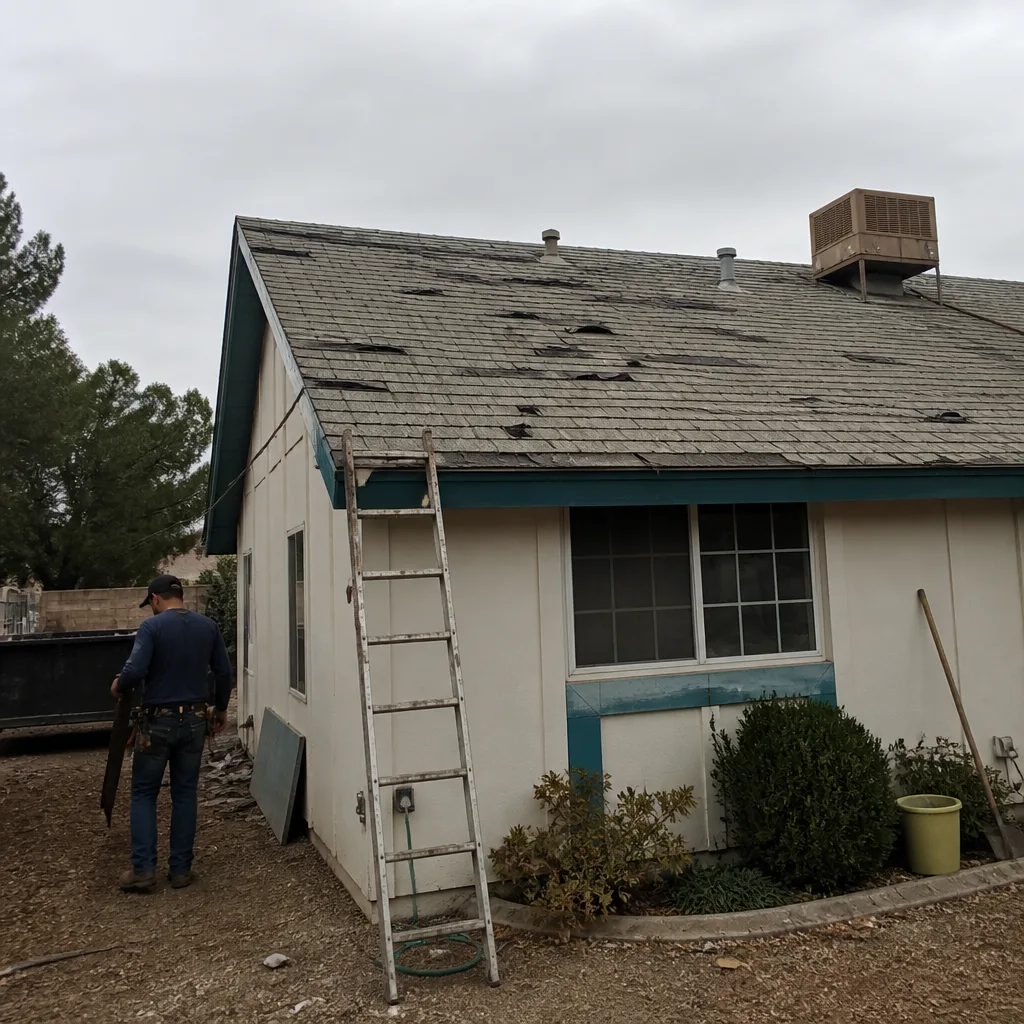 Before
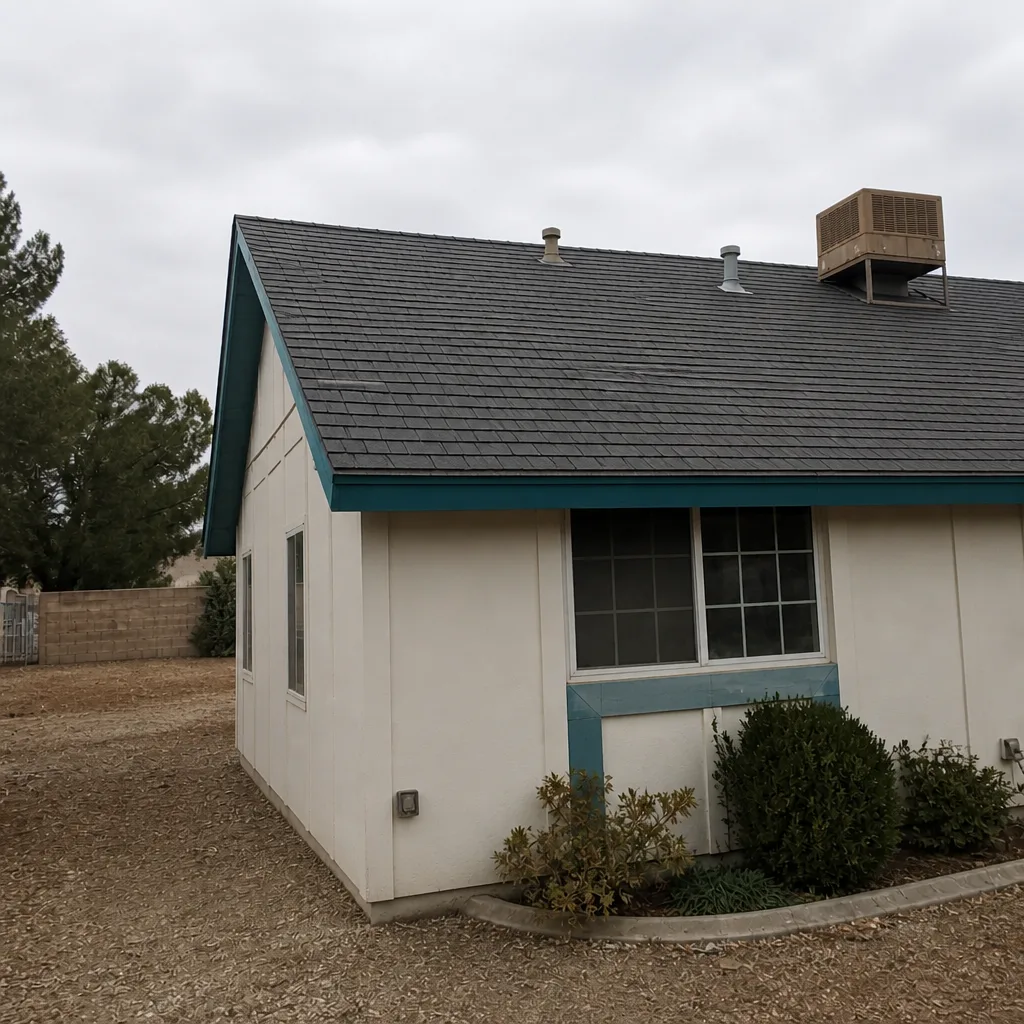 After
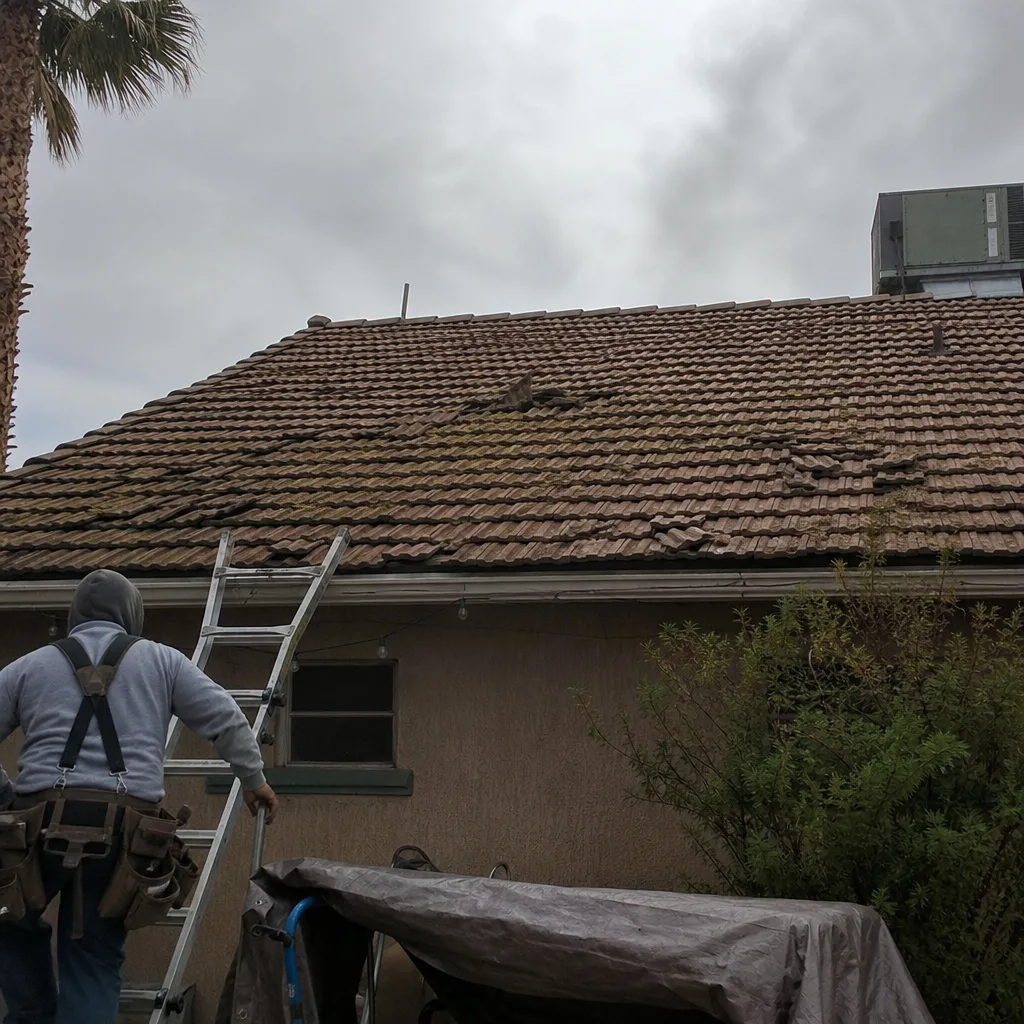 Before
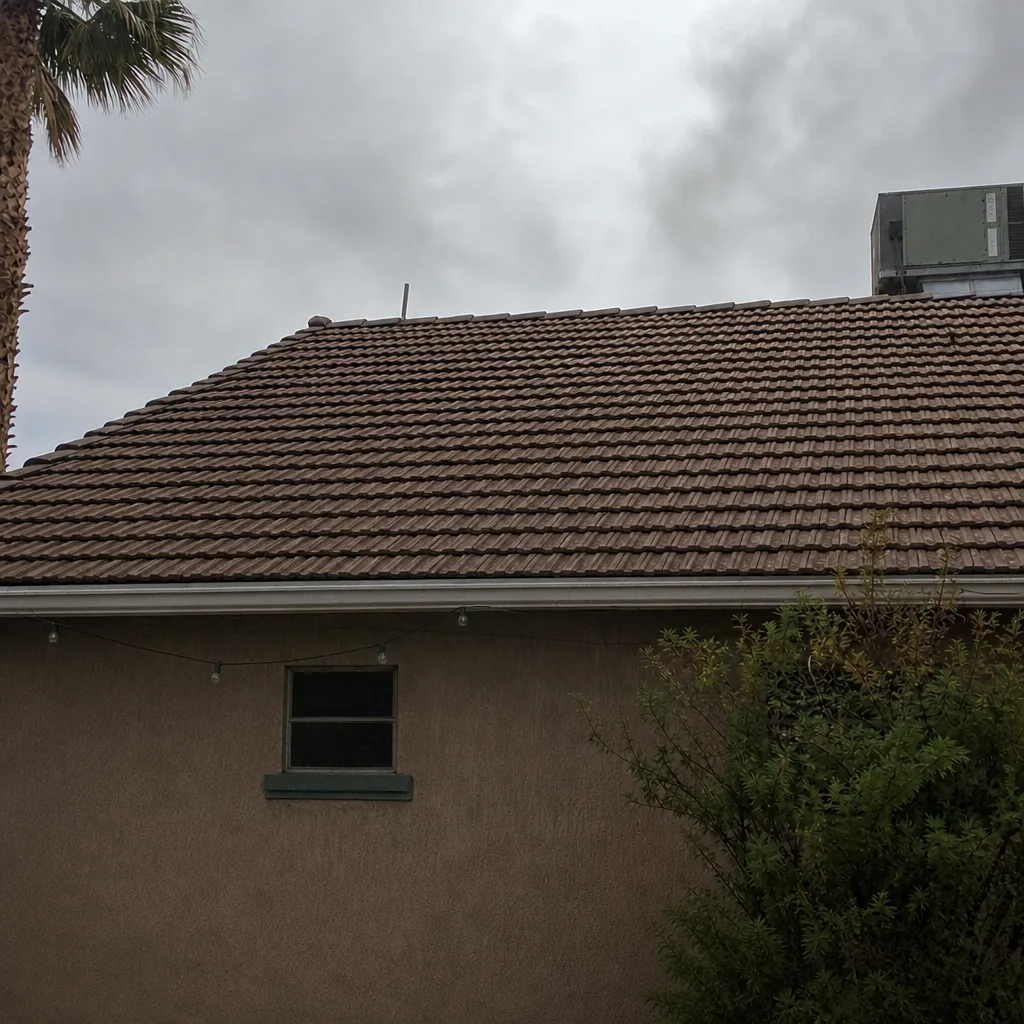 After
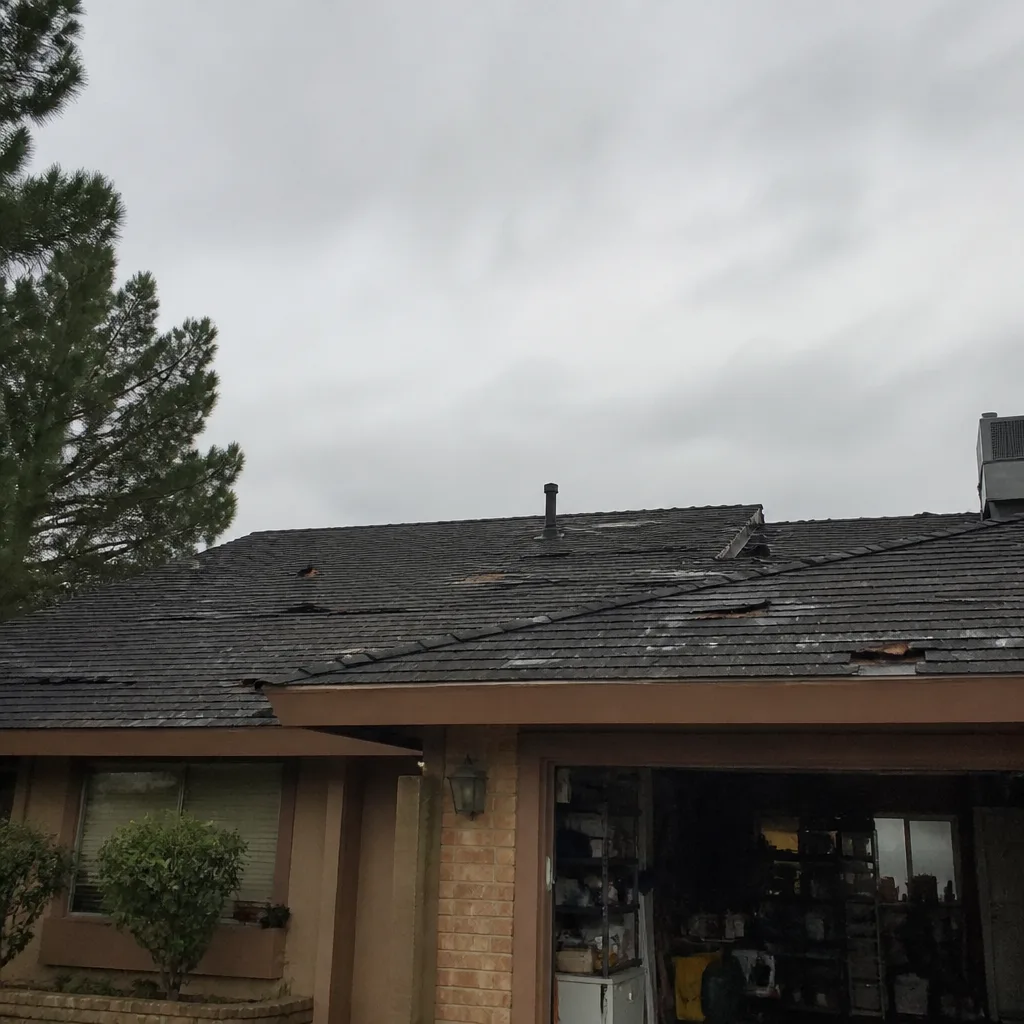 Before
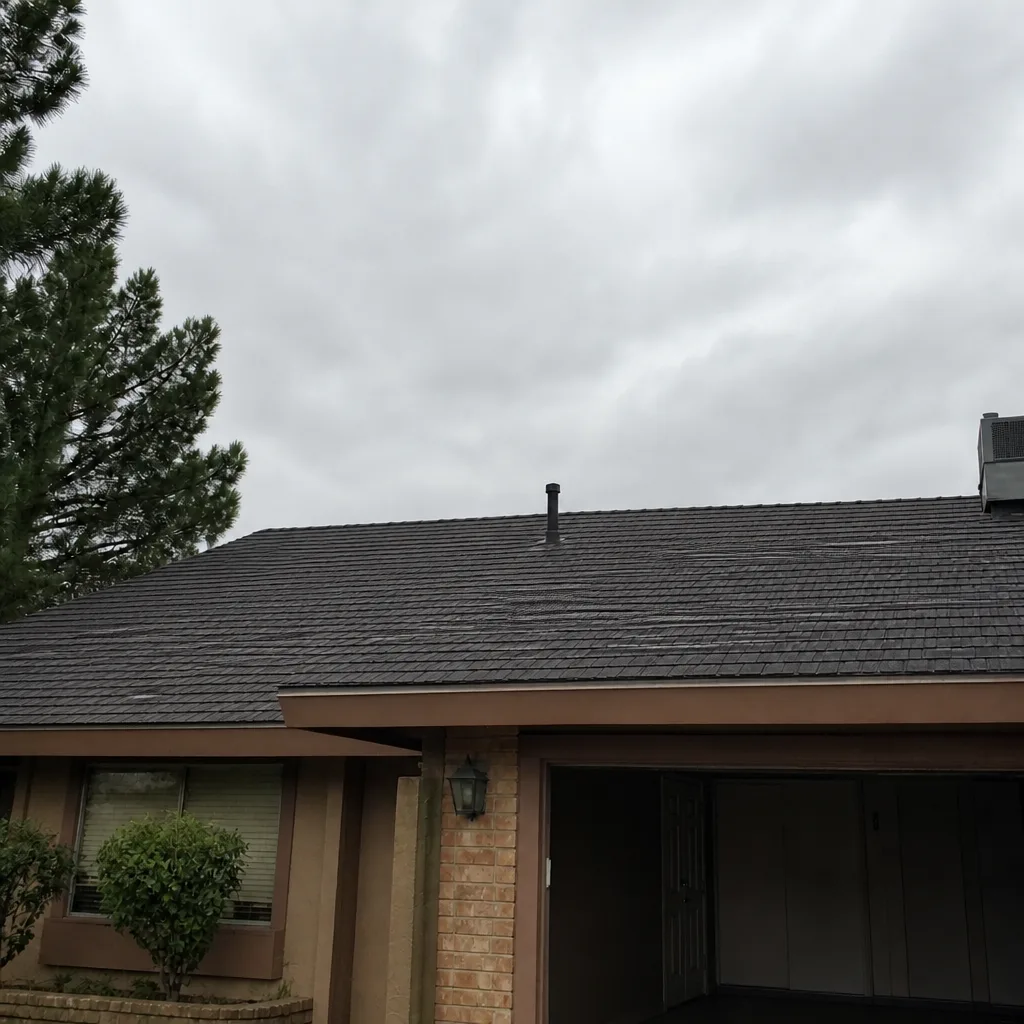 After
When to Call a Professional
Call a professional if you spot daylight through the roof deck, active staining or rusted nails in the attic, sagging along the ridge, soft sheathing, water stains on interior ceilings, or cracked and separated flashing at any penetration. Any of those puts you in the 30-day inspection window. If your roof is approaching 18 to 20 years old in the Sunrise Manor climate, an evaluation is worth having even if everything looks fine. And if you’ve already received a written estimate and want a second read before you sign, that’s a free service we offer. Ridgeline Roofing Co. Sunrise Manor offers free estimates in Sunrise Manor – call (844) 941-3509. A live person answers every call, day or night, and our technicians are background-checked and arrive in uniform to document every inspection with photos from your actual roof.
Frequently Asked Questions
If the damage is localized to flashing, a few shingles, or a single penetration, a repair is usually the right call. If you’re seeing daylight through the deck, widespread granule loss, sagging, or multiple leaks, replacement is generally the better investment. Age matters too: a 20-year-old roof in this climate with several problem areas usually tips toward replacement. Call (844) 941-3509 for a free estimate and an honest read on which way you should go.
Daylight showing through the roof deck from inside your attic on a sunny afternoon is the most reliable early sign. It means the deck is compromised and water is following, even if you haven’t seen a drip inside yet. Staining on rafters and rusted nail points come in a close second.
A well-installed asphalt shingle roof typically reaches the end of its reliable service life around 18 to 22 years here, shorter than the manufacturer’s 30-year rating because of UV exposure and thermal cycling. Tile and metal systems last longer but have their own maintenance needs. Your exact number depends on slope orientation, ventilation, and installation quality.
Insurance usually covers sudden damage from a covered event like a monsoon windstorm or hail, but not wear and tear or age-related failure. Get a professional inspection with photos before you file, so you have documentation of what actually caused the damage. Misattributing age-related wear to a storm event is the most common reason claims get denied.
Yes. A roof replacement permitted in Clark County includes an inspection, and we handle the permit and the inspection as part of the job. The written estimate you get from us is a line-item quote, so you’ll know exactly what’s included before work starts.
Most residential roof replacements on a standard-size Sunrise Manor home are completed in a single visit, typically one long day, weather permitting. Larger or more complex roofs can take two to three days. We’ll give you a realistic timeline in the estimate, not a sales number, and we’ll be there when we say.
The Bottom Line
The warning signs that predict real roof failure in Sunrise Manor are the quiet ones: daylight in the attic, staining on rafters, compressed insulation, granule loss on south and west slopes, and failing flashing around boots, curbs, and skylights. Surface curling gets the attention, but attic evidence and penetration failures show up earlier and lie less. Learn the cosmetic-versus-structural split, respect the age math in this climate, and keep a simple seasonal watch routine. If you see any of the structural signs, don’t wait. Every job we do is backed by our written 90-Day Done Right Promise, and if it’s not right, we come back and make it right. Call (844) 941-3509 for a free estimate.
Ready to have your roof looked at properly? Call Ridgeline Roofing Co. Sunrise Manor at (844) 941-3509 to schedule your free estimate. We answer the phone with a live person around the clock, including nights, weekends, and the middle of a storm. You’ll get a written line-item quote, a frank read on repair versus replacement, and a crew of background-checked, uniformed technicians who document every inspection with photos from your roof. Visit our Ridgeline Roofing Co. Sunrise Manor home page to learn more about how we work.
Written by the team at Ridgeline Roofing Co. Sunrise Manor.