
Last updated November 18, 2026
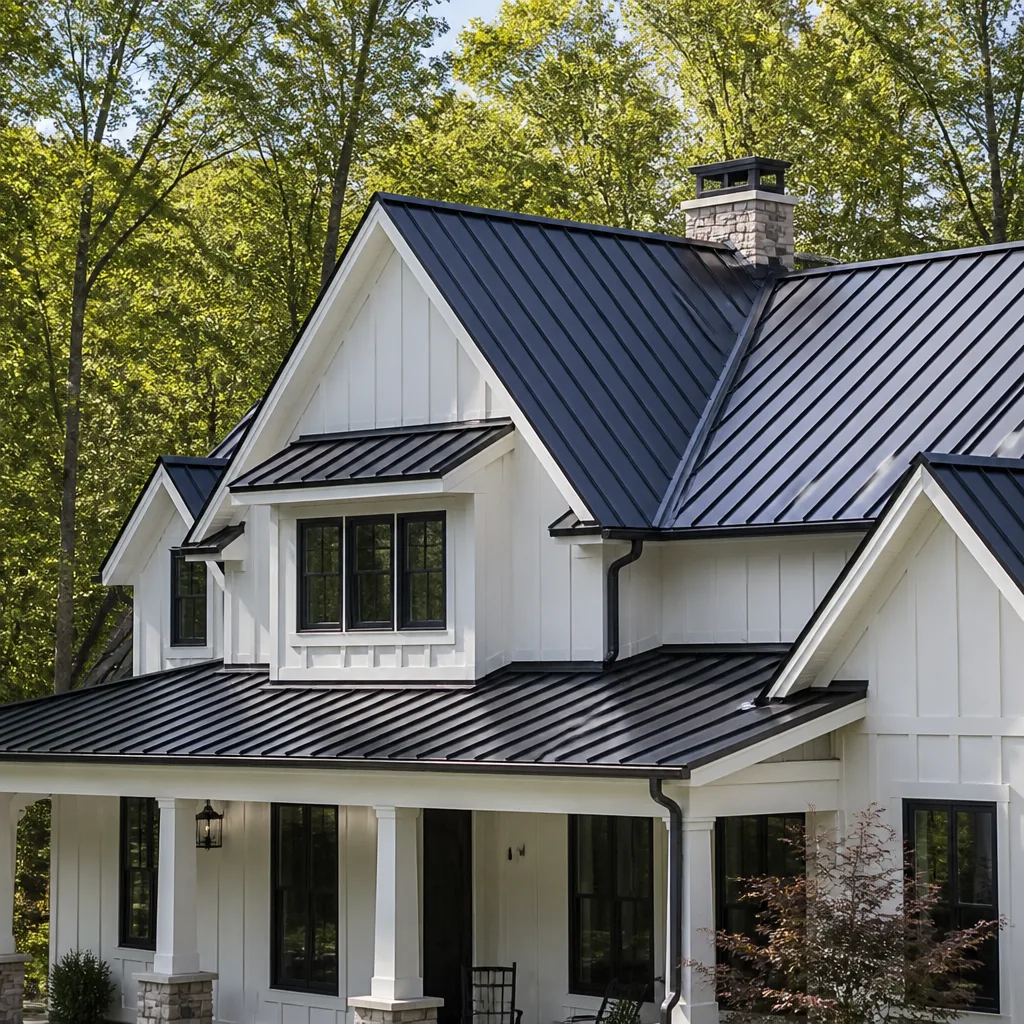 Metal roofing
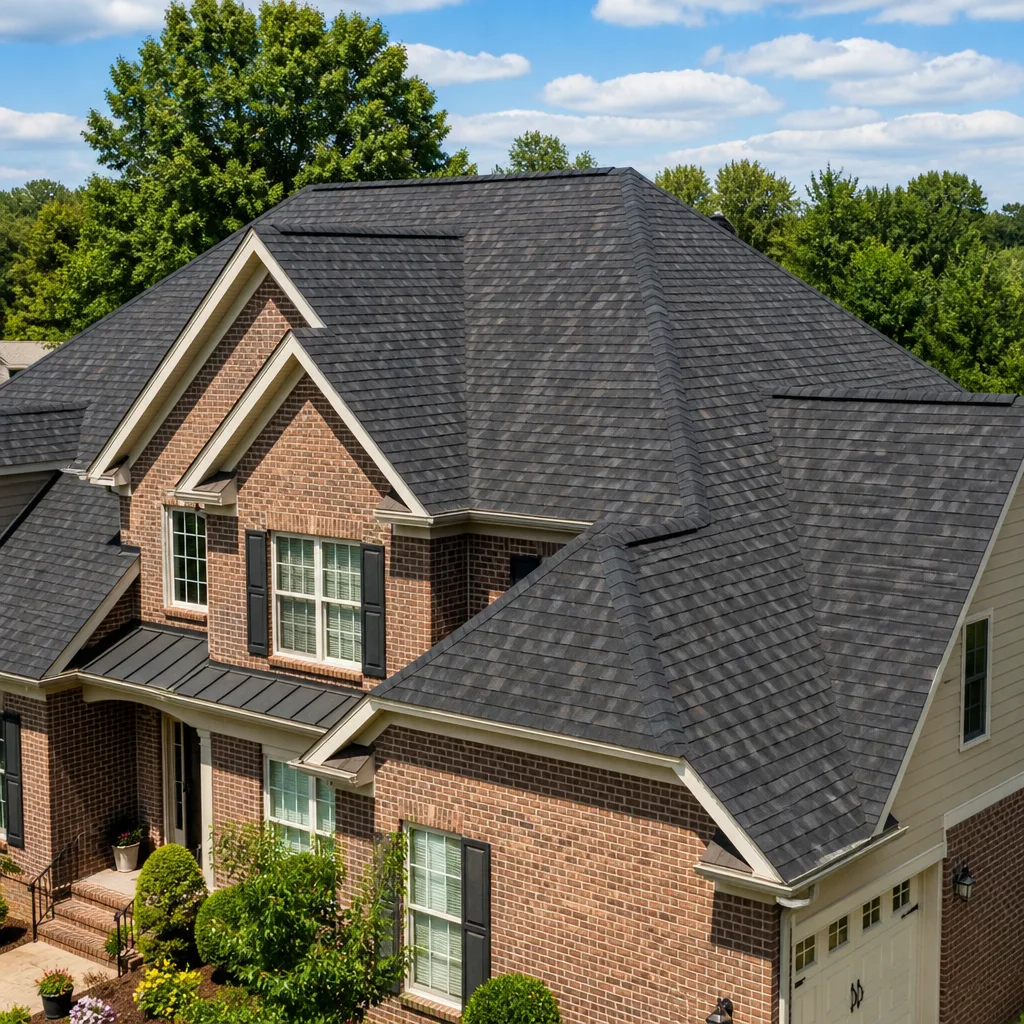
 Architectural shingles
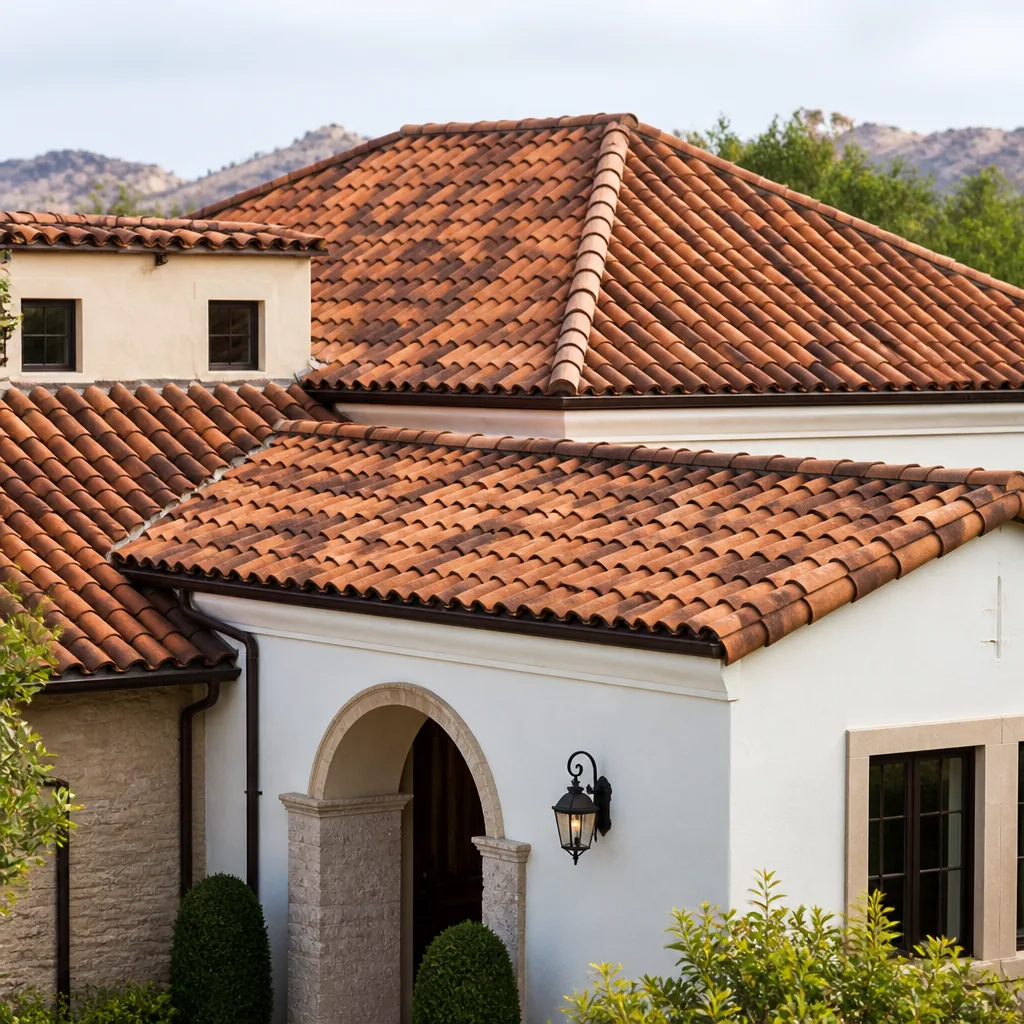 Tile roofing
 GAF
 Owens Corning
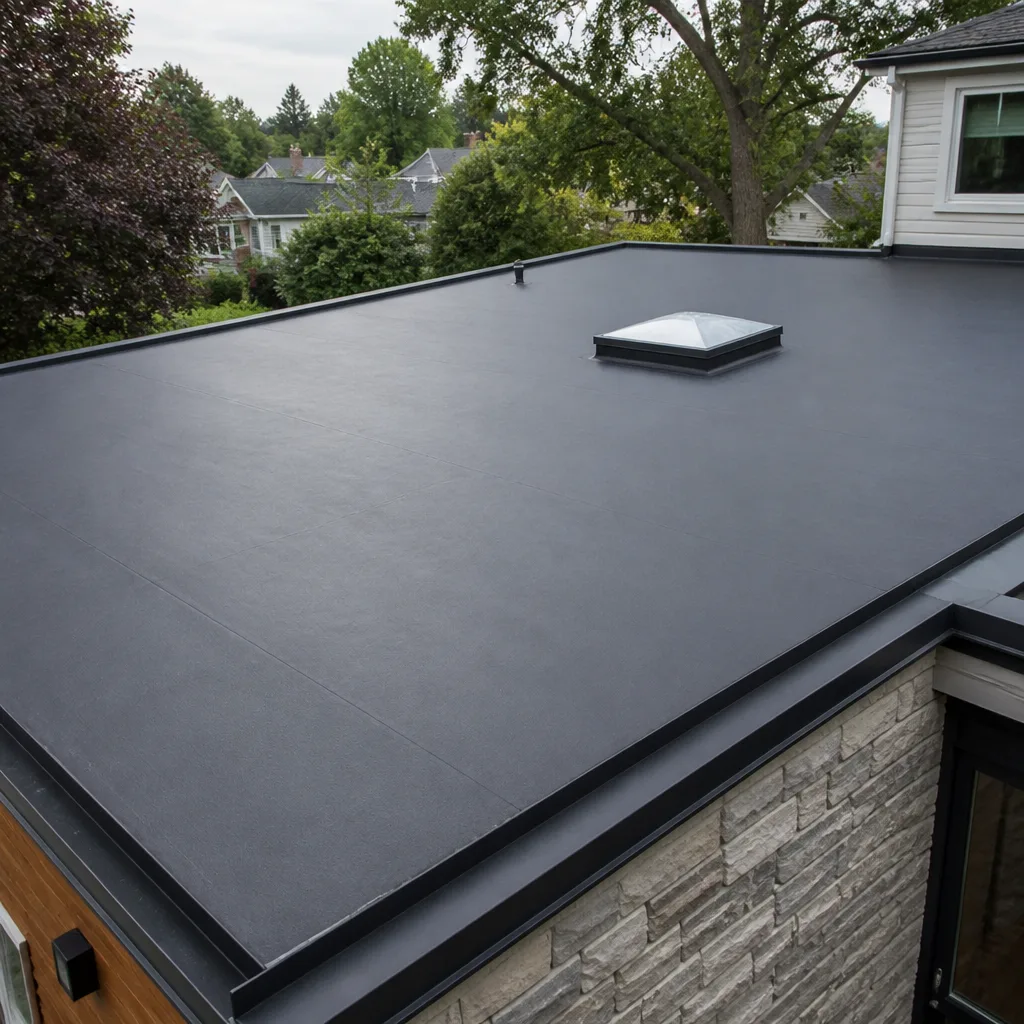 Flat & low-slope
Free roof inspection with deck photos before we talk money - GAF and Owens Corning certified installation
DIY vs Professional Specialty Roofing: What’s Safe to Do Yourself
You can legally and safely re-caulk a cracked pipe boot on a shingle roof yourself. Apply that same logic to a TPO membrane seam and you may walk away thinking the job is done while voiding the manufacturer’s warranty on the entire system – without breaking a single law or making an obvious mistake. That’s the trap with specialty roofing. The line between DIY and professional isn’t drawn at skill level; it’s drawn at liability. A careful homeowner with a ladder and a tube of sealant can do real damage to a flat roof system that costs more to replace than most people’s first car. In this guide we’ll walk through what’s genuinely safe to handle, what’s physically doable but warranty-suicide, and what should never be touched without a license and a crew – with specific notes for Sunrise Manor’s heat and housing stock.
Quick Answer
Homeowners can safely clear gutters, do ground-level visual checks, monitor interior ceilings for leaks, and replace a single cracked tile on a pitched roof. Anything involving a flat or low-slope membrane system – TPO, modified bitumen, EPDM – should be handled by a certified installer, because manufacturer warranties on those systems are voided by unapproved hands, not by bad workmanship. Re-bedding ridge and hip mortar is a skilled trade task, not a weekend project, and any repair on a 100°F Sunrise Manor afternoon carries burn and material-failure risks that most DIY guides ignore.
Styles & brands we work with
- Architectural shingles
- Metal roofing
- Tile roofing
- GAF
- Owens Corning
- Flat & low-slope
Table of Contents
- The Three Categories of Roofing Work
- What Homeowners Can Safely Do Themselves
- Physically Safe but Warranty-Risky: Caulk and Flashing Tape
- Why TPO and Modified Bitumen Warranties Void on DIY
- The Sunrise Manor Heat Problem
- Tile Work: What’s Achievable and What Isn’t
- How to Vet a Specialty Roofing Contractor
- Repairs That Require a Licensed Professional
The Three Categories of Roofing Work
Most roofing advice treats DIY as a single yes-or-no question. It isn’t. Specialty roofing breaks into three distinct categories, and only one of them belongs in a homeowner’s hands. Getting the categories straight is the whole game.
Category one: safe, useful, and yours to do. Gutter clearing, debris removal after a windstorm, ground-level visual inspection with binoculars, and watching interior ceilings for water stains. These tasks protect your roof without touching its waterproofing layer.
Category two: physically doable but warranty-risky. Re-caulking a pipe boot, applying flashing tape to a small gap, sealing a nail pop. A skilled homeowner can execute these correctly. But on certain systems, doing them yourself – even correctly – voids coverage you paid for.
Category three: licensed professionals only, regardless of skill. Flat membrane installation and repair, full flashing replacement at wall junctions, structural decking repair, and anything involving the waterproofing integrity of a low-slope system. A homeowner who’s handy with tools is still not an authorized installer, and manufacturers care about the distinction.
We’ve watched this play out across Sunrise Manor for years. The homeowner who clears their own gutters every fall never has a problem. The homeowner who “fixes” a TPO seam and feels proud of it is the one who calls us eighteen months later with a soaked ceiling and a voided warranty. Same person. Different category. Every time.
What Homeowners Can Safely Do Themselves
Here’s the work that genuinely belongs on your list. None of it requires climbing onto a steep pitch, and all of it extends the life of your roof without touching the warranty.
- Clear gutters and downspouts twice a year. In Sunrise Manor, the fall and spring wind patterns push desert debris and palm fronds into gutters faster than most people expect. Clogged gutters back water up under the eave, and that’s a repair you don’t want.
- Do a ground-level visual check after every major wind event. Walk the perimeter with binoculars. Look for lifted shingles, missing granules in the gutter, sagging lines, or anything visibly out of place.
- Monitor interior ceilings and attic sheathing. Brown rings, bubbling paint, or dark streaks on the ceiling tell you water is getting in somewhere. Check the attic underside of the roof deck after rainstorms for damp spots.
- Trim tree branches back from the roof. Branches that touch or overhang the roof abrade shingles during wind and give rodents a bridge. Keep at least three feet of clearance.
- Keep the roof clear of debris. Palm fronds, mesquite leaves, and anything else that collects in valleys holds moisture and blocks drainage.
- Clear the valley and low-slope drains. On a flat section, keeping the scuppers and drains free of debris is the single most valuable thing you can do for the membrane.
That list is not glamorous, but it’s the difference between a roof that reaches its expected service life and one that starts leaking five years early. If you want a deeper look at how we approach pitched-roof repairs on these same properties, that work sits squarely in our roof repair in Sunrise Manor service.
Physically Safe but Warranty-Risky: Caulk and Flashing Tape
This is where the DIY conversation gets genuinely interesting. Some repairs are within the skill of a careful homeowner. But on certain roofing systems, doing them yourself – even correctly – can void a manufacturer warranty you may not know you’re relying on.
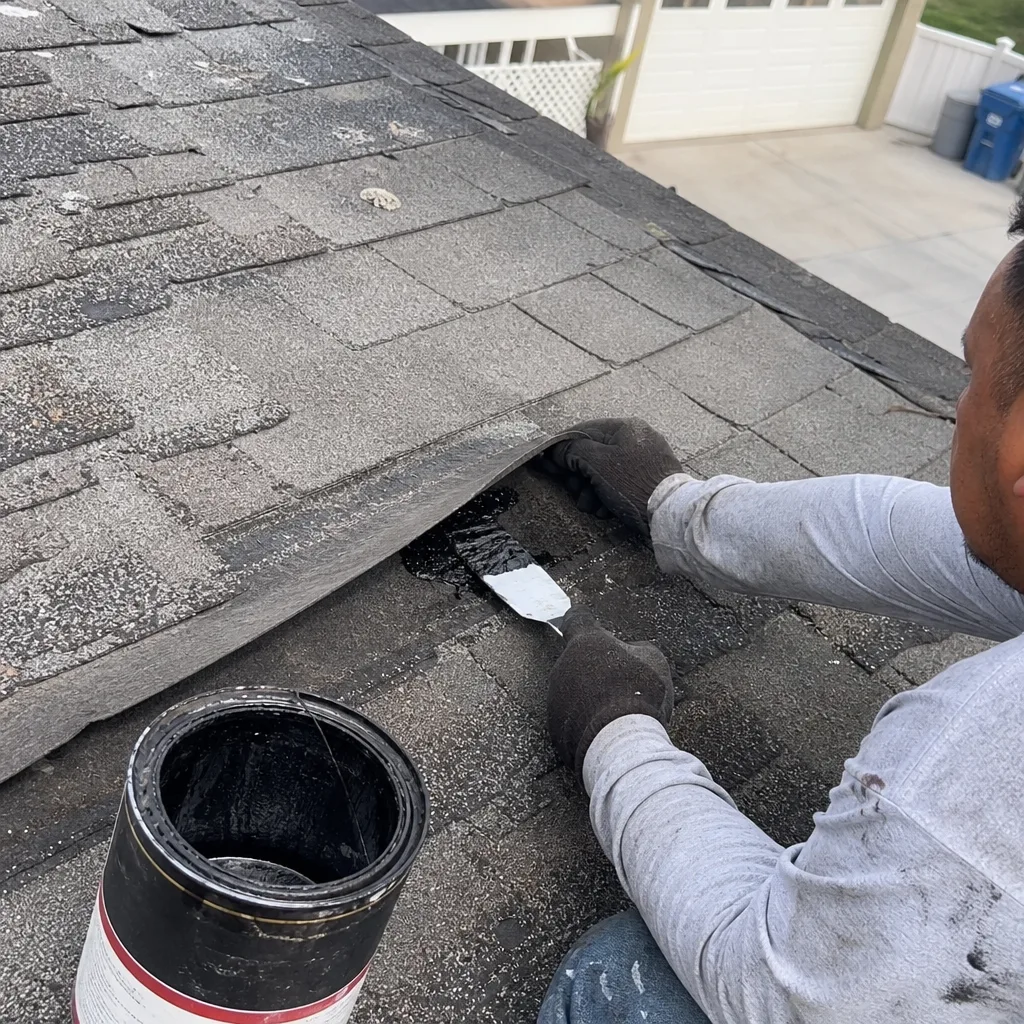
Take a simple pipe boot re-caulk on a shingle roof. A homeowner with a clean tube of roof-grade polyurethane sealant, proper surface prep, and a stable ladder can do that job correctly and safely. No issue. Now take the same homeowner, same caulk, and point them at the perimeter of a TPO membrane termination bar. The work is not much harder. But the moment an unapproved party touches the membrane, the system warranty can go away.
Here’s the practical test we recommend to every homeowner before touching anything:
- Is this a shingle, tile, or metal system on a standard pitched roof? You may proceed carefully, with the right materials.
- Is this a flat or low-slope system (TPO, modified bitumen, EPDM)? Stop. Do not proceed, no matter how simple the repair appears.
- Is this repair touching a seam, termination, or penetration on a warranted system? Stop. Check your warranty paperwork first.
- Did you buy a home with a transferable roof warranty? Read the conditions section before your first repair, not after.
The frustrating part is that you can do a perfectly correct repair, watch it hold water for two years, and still lose warranty coverage on an unrelated failure because the manufacturer’s inspector finds unapproved sealant on a seam they didn’t install. We’ve seen claims denied for exactly that reason.
Why TPO and Modified Bitumen Warranties Void on DIY
Manufacturer warranties on low-slope membrane systems are not general quality guarantees. They’re conditional agreements that hinge on one specific clause: the installer must be authorized by the manufacturer. Miss that clause and the coverage is void, whether the leak on your ceiling came from the installer’s work or not.
Practically, the “authorized installer” language works like this:
- The manufacturer trains and certifies specific contractors for specific systems. That certification is the warranty’s foundation.
- Any modification, repair, or penetration made by a non-certified party voids coverage on the system, or on the affected area.
- Some manufacturers void coverage entirely, not just on the repaired section. That’s the difference between losing a $2,000 partial claim and losing $15,000 in system coverage.
- Warranties are frequently transferable to a new owner – but only if they were never voided. Serious buyers ask. Ridgeline Roofing Co. Sunrise Manor sees this on pre-sale inspections.
- CertainTeed, Owens Corning, IKO, and Atlas all require their certified installers for their full-system warranties. The exact terms vary by product line, which is why you read the paperwork.
The cleanest way we can put it for homeowners: if the roof has a manufacturer warranty you’d want honored, don’t put unapproved hands on it. The cost of a certified repair is almost always less than the cost of losing coverage on a system replacement. For the full picture of what installation and replacement look like when the paperwork is done correctly, our roof replacement & installation in Sunrise Manor page covers the warranty side in more detail.
The Sunrise Manor Heat Problem
Most DIY roofing guides are written by people who’ve never stood on a black TPO membrane in July. In Sunrise Manor, a 100°F afternoon pushes surface temperatures on dark flat roofing to 160°F or higher. That’s not a comfort problem. It’s a safety problem and a material-behavior problem at the same time.
Here’s what actually changes on a hot Sunrise Manor day:
- Burns are a real risk. Bare skin on a dark membrane or exposed metal flashing can sustain a second-degree burn in seconds. Gloves and kneeling pads aren’t optional.
- Heat exhaustion hits faster than people expect. A homeowner who’s hydrated and feels fine at 3 p.m. can be dizzy by 3:30, especially on a roof where there’s no shade and no quick way down.
- Membrane behavior changes. TPO and modified bitumen soften and stretch at high temperatures. Sealants cure too quickly, seams don’t bond properly, and repairs made in the heat tend to fail once the material cools and shrinks.
- Caulk and sealant performance drops. Most sealants have application temperature ranges that top out around 120°F surface temps. Apply them hotter and they fail early.
- Pitched roof access is worse than flat roof access. A steamy afternoon on a pitched shingle roof in Sunrise Manor is dangerous even for professionals. We schedule our own crews for early morning for exactly this reason.
If you do any ground-level work, do it in the first two hours after sunrise. If you have an emergency that demands a roof visit, call a professional who knows how to work safely in this climate – not a neighbor with a ladder. Our Ridgeline Roofing Co. Sunrise Manor home page has contact details and hours if you want to reach someone directly.
Tile Work: What’s Achievable and What Isn’t
Tile is a genuinely common roofing material in Sunrise Manor, and it sits right on the DIY line. Some tile work is achievable for a careful homeowner. Some is not, and the consequences of getting it wrong are worse than most people realize.
What a careful homeowner can do:
- Replace a single cracked or slipped field tile. If you can match the profile and color, and if the replacement doesn’t require re-bedding the tile, a single-tile swap is achievable. Lift the broken tile, clear the channel, set the new one in the correct position, and secure it without disturbing neighbors.
- Clear debris from between tile courses. Palm fronds and leaves lodge between courses and hold moisture. Removing them is safe on lower sections with proper ladder setup.
- Reset a slipped tile that’s still intact. If a tile has slid out of position but isn’t cracked, a careful homeowner can often reset it in place.
What requires a skilled trade professional:
- Re-bedding mortar at hips and ridges. This is a skilled task. Improper mortar mix, wrong thickness, or poor adhesion creates water traps at the exact points the roof is most exposed. We’ve torn out more amateur hip work than we can count.
- Replacing underlayment beneath the tile. The waterproofing layer under tile is where leaks actually happen. If the tile has to come up, so does the judgment call about whether to check the underlayment.
- Ridge and hip tile replacement that requires breaking the mortar bed. Once mortar is broken, the ridge is exposed. Done wrong, water runs straight down the hip.
Specialty tile work is one of our focus areas. When in doubt, our specialty roofing in Sunrise Manor service covers the tile, membrane, and metal work that’s not cut-and-dry shingle roofing.
How to Vet a Specialty Roofing Contractor
The reason most homeowners end up with bad specialty roofing work isn’t that they tried to DIY. It’s that they hired a generalist who presented as a specialist. That problem is avoidable with a few targeted questions, asked before any contract is signed.
- Ask which systems they’re manufacturer-certified to install. A genuine specialist names products and certifications. A generalist gets vague.
- Ask for their warranty paperwork up front. If they can’t hand you the manufacturer’s warranty documents before signing, they aren’t the right contractor for a warranted system.
- Ask how they’ll handle permits. Sunrise Manor specialty work that involves structural changes or certain kinds of membrane installations requires permits and inspections. “We don’t bother with that” means walk away.
- Request a written photo-documented inspection. A real contractor climbs the roof and shows you what they found. A truck-side sales pitch is a warning sign.
- Confirm insurance and licensing without being asked twice. A specialty contractor carries the coverage for specialty work, which is not the same as a general construction policy.
- Watch for storm-chaser patterns. Knocking doors right after a storm, pressure for an immediate signature, no local address, or a phone number that rings to voicemail. That last one matters in Sunrise Manor, where roofs need attention when they need it.
Sunrise Manor has no shortage of contractors who’ll quote a specialty roof. Fewer of them actually hold the certifications that keep your warranty intact. The difference shows up years later when a warranty claim gets filed – and either pays or doesn’t.
Repairs That Require a Licensed Professional
Some roofing work is non-negotiable. Regardless of homeowner skill level, these tasks need a licensed, insured professional – both for safety and for the legal and warranty consequences of getting them wrong.
- Any low-slope membrane installation or repair (TPO, modified bitumen, EPDM). Not just warranty risk – safety and the actual waterproofing integrity depend on proper technique.
- Structural decking repair. Rot, sag, and compromised sheathing affect the entire roof system. Not a homeowner’s call.
- Flashing replacement at wall junctions, chimneys, and skylights. Flashing failures are the number-one source of roof leaks. Improper flashing makes a leak worse, not better.
- Full roof system replacement. Any job that involves removing and replacing multiple courses of roofing.
- Steep pitched roof work after age 60. Especially with heat involved. This is not a skills question, it’s a safety question.
- Skylight or rooftop penetration work. Skylight installations, HVAC penetrations, and anything else that involves cutting through the waterproofing layer.
- Repairs on any system with an active manufacturer warranty. Even if the work looks simple.
A note on safety: if a repair would put you on a steep pitch, on a hot membrane surface, near electrical components, or on a roof with any structural uncertainty, do not attempt it yourself. A fall from a single-story roof in Sunrise Manor on a hot afternoon is the kind of accident that ends a homeowner’s independence.
Common Mistakes to Avoid
- Touching a warranty-covered membrane to save a hundred dollars. We’ve seen homeowners void $15,000 system coverage over a $90 repair they did themselves. That math never works.
- Working a Sunrise Manor roof between 11 a.m. and 3 p.m. in summer. Surface temperatures and heat exhaustion risk are highest in that window. Early morning only, if at all.
- Using the wrong caulk for the job. Silicone won’t stick to a dusty membrane. Asphalt caulk will ruin a TPO seam. Every system wants its own sealant and mixing them is one of the most common reasons repairs fail.
- Re-bedding ridge mortar with pre-mixed concrete. Mortar and concrete are not the same product. Improper ridge mortar mix creates water traps at the exact points where water needs to shed fastest.
- Believing a “licensed” general contractor is a specialty roofing contractor. They are not the same thing. Ask for manufacturer certifications, not just a general license.
- Ignoring the interior evidence of a leak because the roof “looks fine” from the ground. Water takes the path of least resistance. By the time you see a ceiling ring in a Sunrise Manor home, water has usually been running behind drywall for weeks.
- Hiring the first contractor who knocks after a storm. Storm-chasers are not specialty roofing contractors. Every year we’re called in to fix work done by companies that left town after the job.
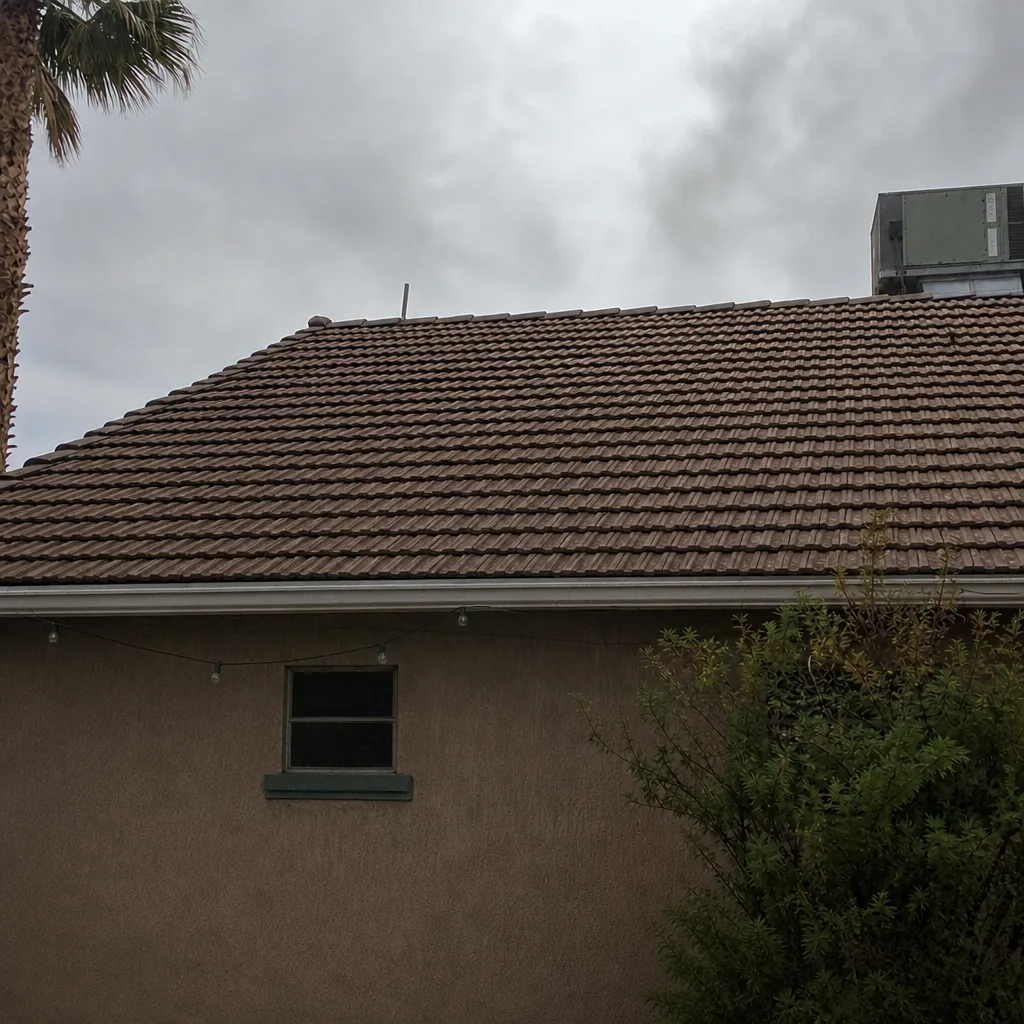
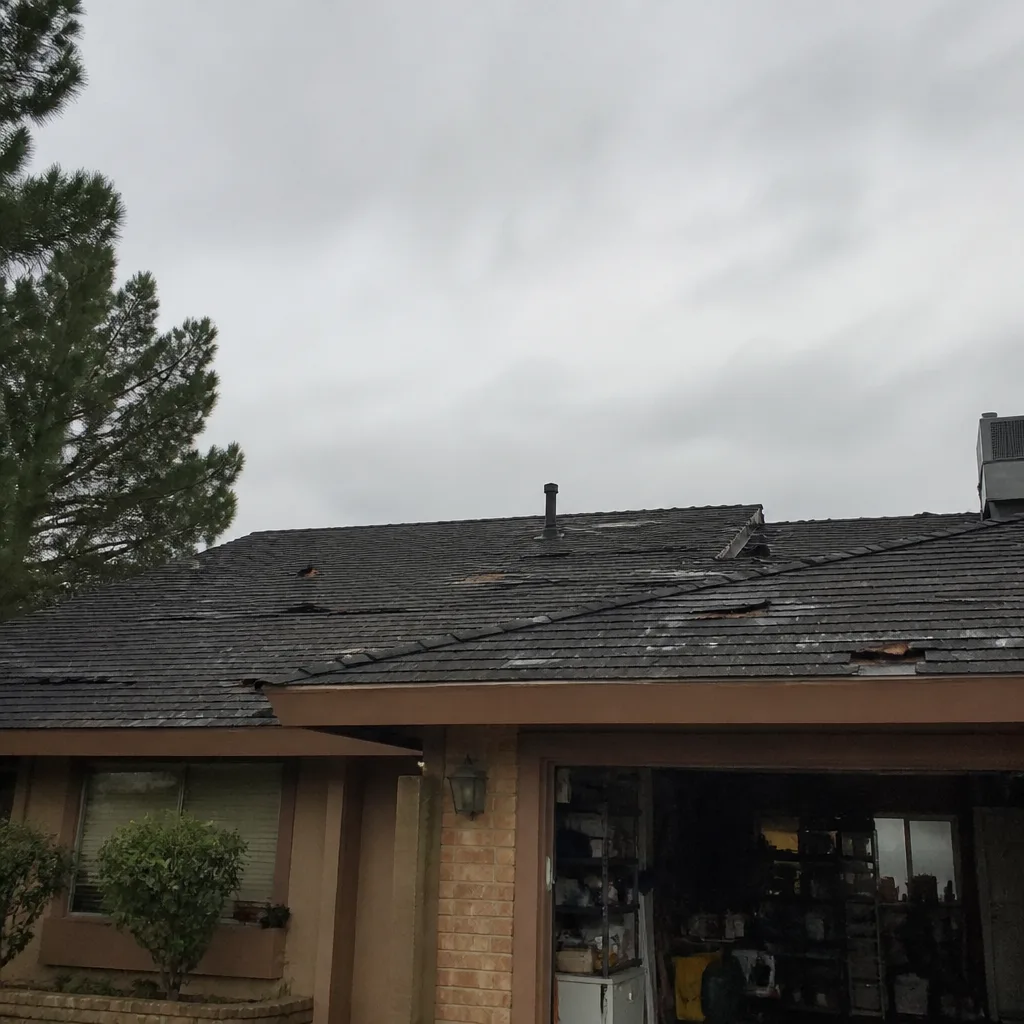
See the difference
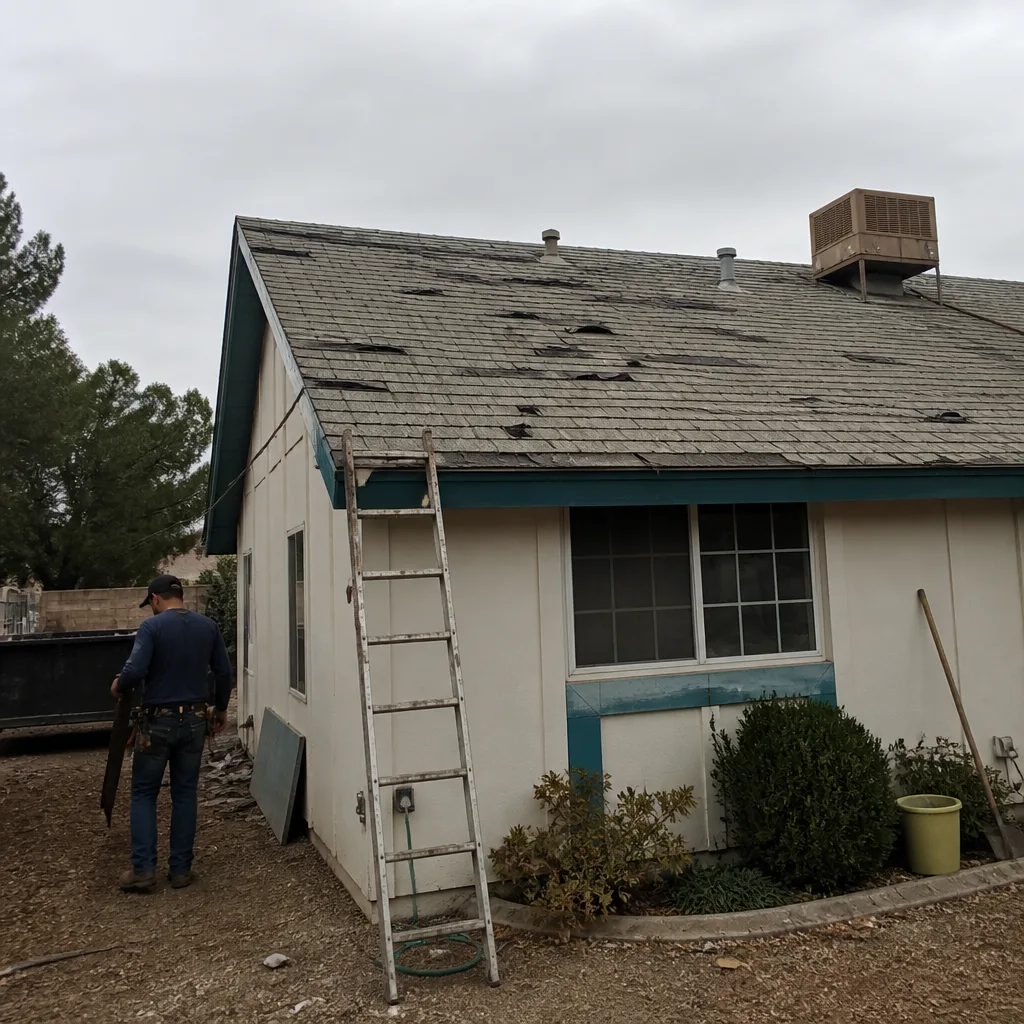 Before
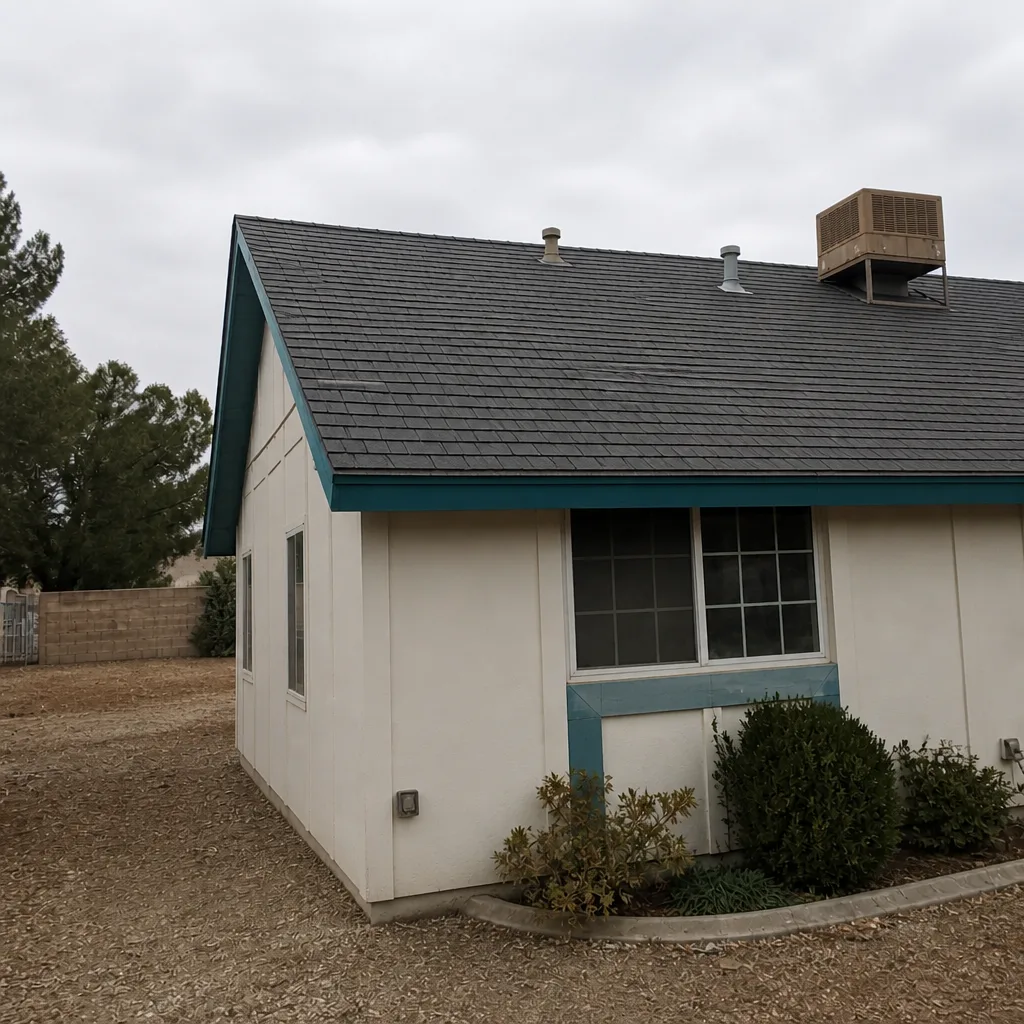 After
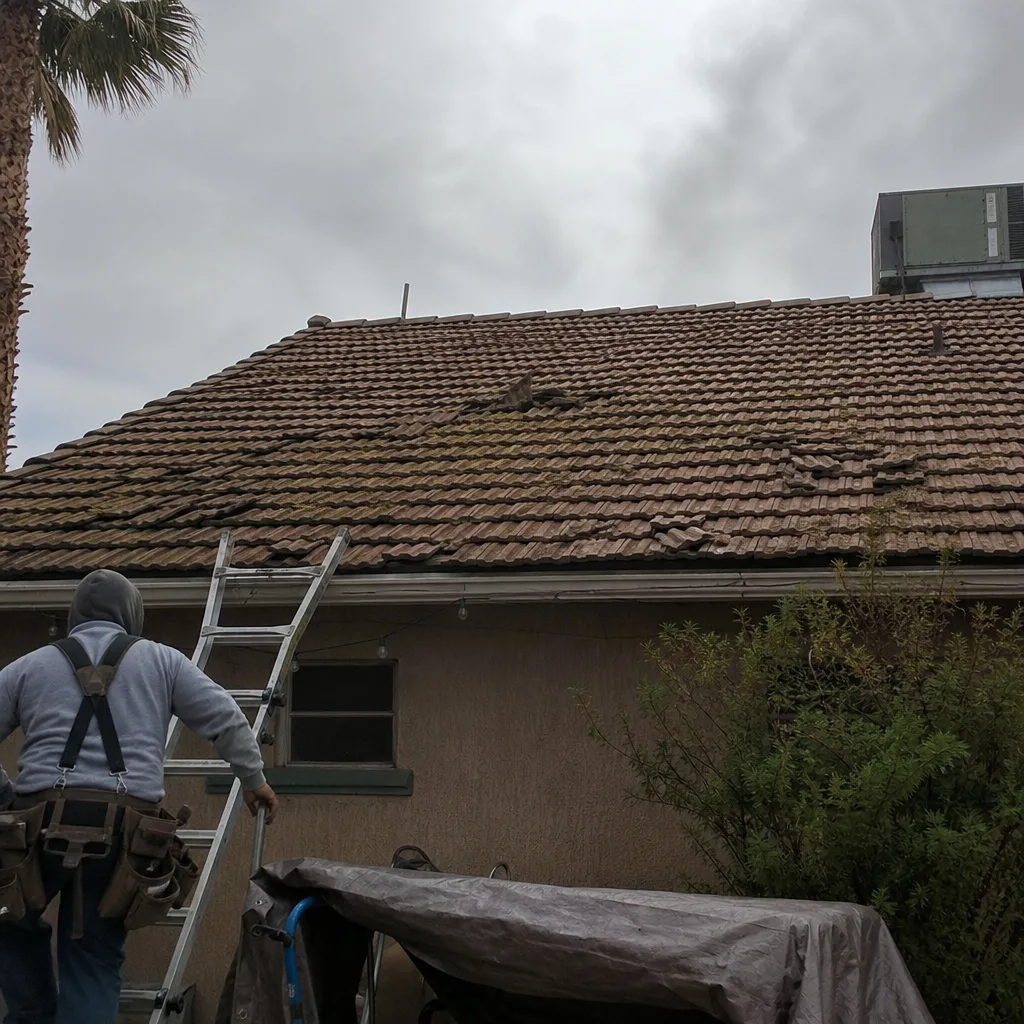 Before
 After
 Before
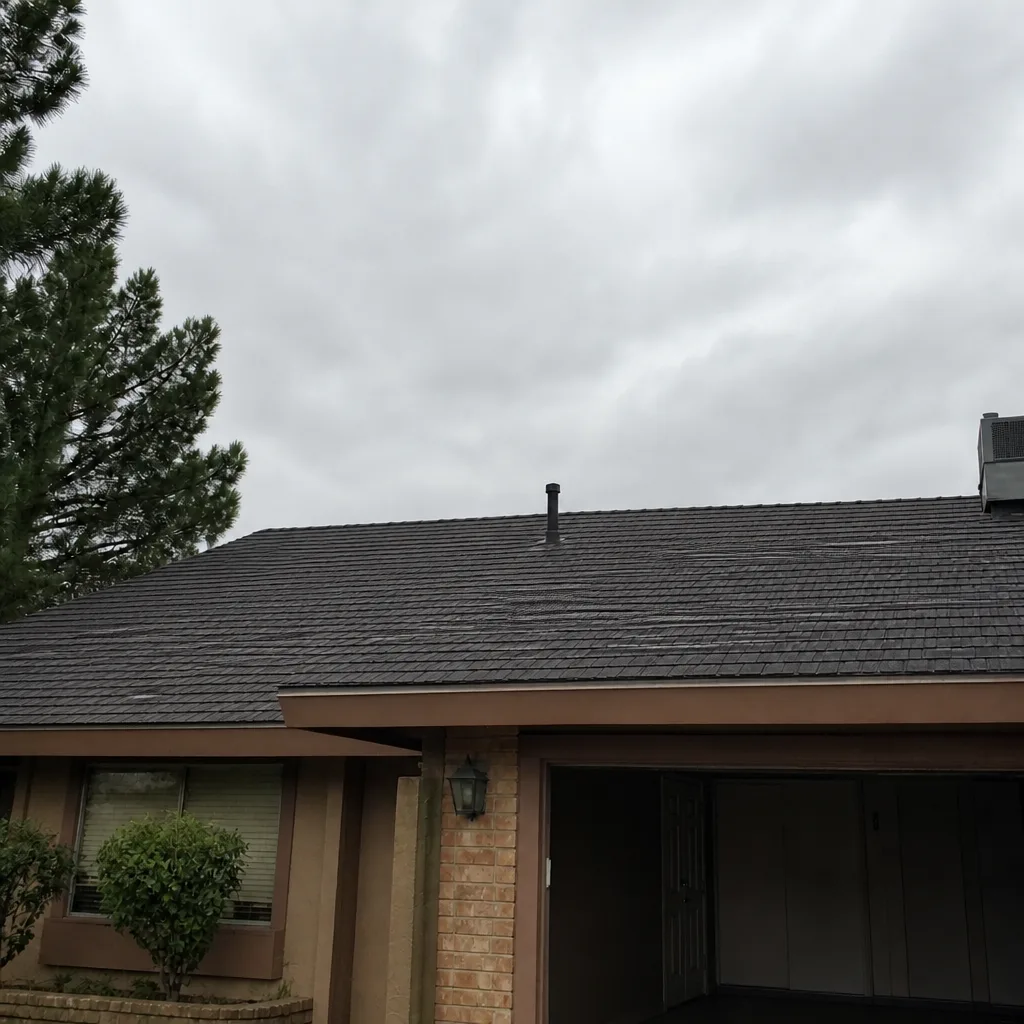 After
When to Call a Professional
Call a professional when any of the following is true: the roof is a flat or low-slope system; there’s an active manufacturer warranty on the roof; the repair is at a flashing point, penetration, or seam; the job requires removing more than a single tile; there’s structural damage anywhere in the system; or the roof is too steep or too hot for a safe DIY visit. Sunrise Manor heat and shingle weathering make even routine repairs faster and safer for a trained crew, and every repair we handle is documented with photos from the actual roof. Our technicians have up to 10 years of experience, and every job is covered by the 90-Day Done Right Promise – a written guarantee. If it’s not right, we come back and make it right, no arguing, no paperwork. Ridgeline Roofing Co. Sunrise Manor offers free estimates – call (844) 941-3509.
Frequently Asked Questions
Yes, on a standard shingle roof, a careful homeowner can safely re-caulk a cracked pipe boot with roof-grade polyurethane sealant after proper surface prep. Do not attempt it on a TPO, modified bitumen, or EPDM membrane system – the repair may void the manufacturer’s warranty even if the work is done correctly. Call (844) 941-3509 for a free estimate if you’re not sure which system you have.
Yes, on warranted low-slope systems like TPO and modified bitumen. Most manufacturer warranties require that all repairs be handled by an authorized installer, and unapproved work can void coverage on the affected area or the entire system. Read the conditions section of your warranty before touching anything. A quick call to (844) 941-3509 can confirm what your specific system covers.
Not between mid-morning and late afternoon. Surface temperatures on dark membranes in Sunrise Manor hit 160°F or higher on 100°F days, which causes burns and makes sealant and membrane materials behave unpredictably. If you’re doing any ground-level check or interior monitoring, do it early morning. For any roof access work, call in a professional crew.
Usually yes, if you can match the tile profile and color and the swap doesn’t require disturbing the neighboring tiles or the mortar bed. Re-bedding mortar at hips and ridges is not a DIY task – improper technique creates water traps at the most weather-exposed points of the roof. For tile work beyond a single-tile swap, call us at (844) 941-3509 for a free estimate.
Ask for their manufacturer certifications, in writing, before signing anything. A real specialty contractor can show you GAF, CertainTeed, Owens Corning, IKO, Atlas, Tamko, or Boral certification documentation for the specific system they’re proposing. General contractors who present as specialists often can’t. If they can’t hand over the paperwork, walk away.
Clear your gutters and drain scuppers twice a year, and do a ground-level visual check after every major wind event. In Sunrise Manor, palm fronds and desert debris clog gutters fast, and the water backup under eaves is one of the most common avoidable roof repairs we see. Everything else beyond that list is warranty-sensitive and safest in a professional’s hands.
The Bottom Line
The DIY line on specialty roofing is a liability line, not a skill line. If the work involves a flat or low-slope membrane, a manufactured warranty, or a flashing point, it belongs in a professional’s hands – no matter how confident you are. If it’s gutter clearing, ground-level inspection, or a single tile swap on a pitched shingle roof, you can safely do it yourself. The in-between category (caulk, flashing tape) is where warranties get voided and where a quick call saves money. In Sunrise Manor, heat pushes every repair toward the professional side – the surface temperatures and material behavior on a summer afternoon aren’t DIY conditions. When in doubt, get a free estimate and a written quote before touching anything.
Ridgeline Roofing Co. Sunrise Manor has been backing local roofs since 1984, and we’re not going anywhere. We install products from CertainTeed, Owens Corning, IKO, and Atlas among our authorized manufacturer lines. Every job is covered by our written 90-Day Done Right Promise, every inspection is photo-documented, and every call is answered by a live person, 24/7. Call (844) 941-3509 to schedule your free estimate.
Written by the team at Ridgeline Roofing Co. Sunrise Manor.