
Last updated November 18, 2026
 Architectural shingles
 Metal roofing
 Tile roofing
 GAF
 Owens Corning
 Flat & low-slope
Free roof inspection with deck photos before we talk money - GAF and Owens Corning certified installation
DIY vs Professional Emergency & Storm Damage: What’s Safe to Do Yourself
A homeowner who patches three missing shingles after a microburst and calls it done may have just covered the only visible sign of a displaced flashing section that’s routing water into the decking right now. That’s the part of storm damage almost nobody talks about. The problem isn’t that the work is too hard or that homeowners lack the ability to climb a ladder. The problem is that an untrained eye misses the specific failure signatures that determine whether you’re looking at a $300 repair or a $12,000 replacement. In this guide, we’ll walk through what’s genuinely safe to handle yourself after a storm in Sunrise Manor, what looks simple but isn’t, and where a professional visit saves money rather than costing it.
Quick Answer
After a storm, it’s safe to handle interior water mitigation, ground-level photo documentation, and debris clearing from downspouts and gutters you can reach from the ground. It is not safe to climb a steep-pitch roof, replace ridge caps, or re-nail lifted shingles yourself. And it’s a costly mistake to make any permanent repair before your insurance adjuster sees the damage, because a patched roof can erase the evidence of a compensable claim.
Styles & brands we work with
- Architectural shingles
- Metal roofing
- Tile roofing
- GAF
- Owens Corning
- Flat & low-slope
Table of Contents
- What’s Genuinely Safe to Do Yourself After a Storm
- What Looks Easy but Isn’t (and Why It Matters)
- How Wet Decking Changes Everything
- The Insurance Documentation Problem
- Foam Roof Membrane After Hail: The Sunrise Manor Blind Spot
- When a Professional Tarp-and-Document Visit Is Cheaper Than DIY
- Common Mistakes to Avoid
- When to Call a Professional
What’s Genuinely Safe to Do Yourself After a Storm
The instinct to act after a storm is a good one. In Sunrise Manor, the wind events that roll through in late summer and early fall can strip a ridge line in minutes, and homeowners understandably want to stop the bleeding. But there’s a line between safe action and action that creates a bigger problem than the one you started with. Here’s what stays on the safe side.
Interior water mitigation
If water is coming through a ceiling or running down a wall, getting it contained is a priority. Move furniture away from the wet area, set towels and buckets down, and do what you can to get air moving with a fan to slow the spread of moisture. This protects your floors, walls, and belongings, and it doesn’t require touching the roof. It’s also a good idea to note exactly where the water is entering, because that ceiling stain is a clue your adjuster and your roofer will both want to see later.
Ground-level photo and video documentation
This is where homeowners can actually save themselves money. Take clear photos and video of what you can see from the ground, from inside the attic through a crawl hatch if it’s safe to access, and from any window that faces the damaged area. Use your phone, date-stamp what you can, and back up the files. Specific damage signatures to capture: missing shingles, granule loss in the gutter tray, dented gutters, and any visible water intrusion on the ceiling. This record is worth more than most people realize when the adjuster arrives.
Debris and gutter clearing at ground level
If your gutters are reachable from the ground or from a low ladder, clearing debris helps water drain and reduces the chance of another overflow. Anything that requires a full climb onto the roof is out. Just get the leaves and granules moving so the water can move. The granule deposits you’ll see in the gutter are also a clue worth saving for that adjuster visit: they tell the story of hail impact.
What stays out of reach
- Any climb onto a steep-pitch roof, wet or dry
- Re-nailing a lifted shingle
- Replacing a ridge cap
- Probing decking or prying up underlayment
- Any permanent repair before the adjuster has seen the damage
If you have a trusted professional you already know in Sunrise Manor, that’s who you should be calling. The Ridgeline Roofing Co. Sunrise Manor home page outlines the kind of documentation-first response we bring to every storm-damaged home.
What Looks Easy but Isn’t (and Why It Matters)
There’s a category of storm damage that looks manageable from the ground and turns into a genuine problem once a homeowner gets up there. Ridge caps, lifted shingles, and flashing are the three we see most often in Sunrise Manor, and each one has a specific failure mode that a novice won’t recognize.
Ridge caps
Ridge caps are the shingles that run along the very top of the roof. After a wind event, some of them lift and curl, and it’s tempting to think a nail and a hammer will hold them down. The problem is that ridge caps bend, crack, and fail at the crease if they’re not replaced with the correct materials and the correct overlap. A patched ridge cap that lifts again on the next windstorm is a water channel, and water channels the ridge into the attic. On asphalt shingle roofs, proper ridge cap repair means lifting the surrounding courses, installing the correct hip-and-ridge, and re-sealing with the right mastic. This is a job best done by a professional, especially on the steeper pitches common in Sunrise Manor housing stock.
Re-nailing lifted shingles on a steep-pitch roof
On a steep-pitch roof, re-nailing a lifted shingle usually does one of two things: it either splits the shingle (creating a leak you didn’t have before) or it fails to seat the nail properly (leaving a fastener that will lift again within a season). Either way, the homeowner is up on a roof, at height, in the wind, working without fall protection. The risk-to-reward math here is bad. There are far better ways to spend a Saturday.
Flashing assessment
Flashing is the metal that seals the roof at walls, chimneys, and valleys. It’s hard to inspect without probing, and it’s hard to probe without displacing it. Flashing that’s been struck by storm debris, lifted by wind, or denteed by hail can look fine from standing height and be completely separated underneath. That separation is where the water gets in, sometimes weeks later after the shingles have already dried out and the homeowner thinks the storm is behind them.
If any of these three are on your list after a storm, have a professional look. Our Roof Repair in Sunrise Manor service covers all three and documents the findings with photos from your actual roof.
How Wet Decking Changes Everything
Here’s the failure mode that turns a $300 repair into a $12,000 replacement, and it’s the one no homeowner can detect from above. Decking is the wood sheathing that sits under the shingles and underlayment. When flashing fails or a shingle lifts in exactly the wrong place, water gets under the underlayment and into the decking. From the top of the roof, the shingles can look nearly perfect.
The only way to know if the decking is wet is to probe it, and probing means prying up shingles and underlayment to check for softness, staining, and movement. That’s a professional procedure. A homeowner who tries it risks creating a leak, damaging a shingle that was holding fine, or missing the wet spot entirely if they don’t know where to look. In our experience across Sunrise Manor, wet decking is what most often separates a repair call from a replacement call. When we find it, we document it with photos so the homeowner sees what we see and so the insurance adjuster has an accurate record.
If the decking is soft in more than a small patch, we’re no longer talking about repairing a few shingles. We’re talking about section-by-section decking replacement and, depending on the age of the roof, a full replacement conversation. That decision is worth professional eyes. Our team handles both paths and lays out the options clearly, in writing, before any work begins.
When replacement becomes the right call
- The wet decking spans more than a small, isolated patch
- The roof is over 20 years old and already showing widespread granule loss or curling
- The underlayment has failed over multiple sections
- Flashing damage affects more than one wall-to-roof transition
- A single repair leaves multiple other failure points untouched
None of those are decisions to make from a ladder. If the signs point toward replacement, the Roof Replacement & Installation in Sunrise Manor page walks through the materials, brands, and process we use.
The Insurance Documentation Problem
This is the section we most want homeowners to read twice. After a major storm, insurance adjusters are backed up. They might not be out to see your roof for several days, sometimes longer. That window is when a homeowner’s DIY instinct can quietly erase the evidence that determines the entire claim.
Here’s how it happens. A homeowner sees a missing shingle, grabs a ladder, and nails a replacement shingle in place. From their perspective, they fixed a small thing. From the adjuster’s perspective, they covered the only visible proof that the shingle was gone, and by extension that the underlying decking was exposed. The adjuster approves what they can see. They can’t approve what’s been repaired away.
What evidence gets lost
- Missing or lifted shingles patched before the visit
- Displaced flashing shifted back into place
- Debris cleared without photos
- Water intrusion stains cleaned or repainted before documentation
- Granule loss removed from the gutters or driveway
If your adjuster hasn’t been out yet, take photos, keep the damage visible, and let a professional document what’s on the roof before anything is touched. A professional tarp-and-document visit does exactly what the name suggests: it protects the home from further damage while preserving the evidence the claim needs. That visit is typically well under the cost of the claim adjustment the homeowner risks losing.
Foam Roof Membrane After Hail: The Sunrise Manor Blind Spot
Sunrise Manor has a substantial number of homes with spray-applied foam roofing, and this is a category where “what looks fine” and “what’s fine” are dangerously far apart. Hail damage on foam roof membrane often doesn’t show up as a visible tear. It shows up as a small gouge, a shallow dent, or a hairline crack in the elastomeric coating. From standing height, the membrane looks unbroken.
The problem is what happens next. A single pinhole in the coating lets water reach the foam underneath. Foam is porous, and moisture that gets into it doesn’t drain out. It spreads, and over the following seasons it can soften the deck, compromise the attachment, and create a slow-motion failure that the homeowner never sees because there’s no obvious interior leak until it’s already extensive.
This is one of the reasons we always recommend a professional inspection after a hail event in Sunrise Manor, even if the roof looks untouched. The inspection is photo-documented, and on foam roofs we look specifically for coating integrity, not just for visible damage. If you’re on a foam roof and you’ve been through hail, don’t skip the inspection. Our Specialty Roofing in Sunrise Manor page covers foam and the other specialty systems we inspect and service.
When a Professional Tarp-and-Document Visit Is Cheaper Than DIY
A temporary tarp-and-document visit is one of the best values in storm response, and homeowners often skip it because they assume a professional visit means a professional invoice. Here’s the math on why that assumption costs money.
What a tarp-and-document visit covers
- A professional inspection with photos from your actual roof, not the ground
- Temporary watertight protection over the damaged area, installed at height with fall protection
- A written summary of the damage and the likely repair path
- Documentation assembled for the insurance adjuster
- A clear quote for permanent repairs, valid so the homeowner can make a decision without pressure
What a DIY attempt puts at risk
- A fall injury from working on a wet or steep-pitch roof
- A new leak created by a well-intentioned nail
- A compromised insurance claim
- A short-term patch that fails within the next storm
- Lost time and money spent on a repair that has to be redone
When you add up the cost of any one of those outcomes, the tarp-and-document visit is rarely the more expensive path. In Sunrise Manor, where wind events can arrive on short notice and monsoon-season rain often follows within days, the window for a tarp is short. If you’re on the fence, call. We’d rather talk you into a ten-minute inspection than out of a bigger mistake later.
Common Mistakes to Avoid
- Patching shingles before the adjuster sees the roof. It’s the single most expensive mistake on this list. What looks like a harmless fix can eliminate the visible evidence your claim depends on. Wait for documentation first, then repair.
- Cleaning up the granule trail before you photograph it. Granules in the gutter tray and on the driveway are hail evidence, and they’re easy to sweep away. Take photos first, then clean.
- Climbing a wet or steep-pitch roof. Sunrise Manor homes often carry steeper pitches than people expect, and a wet roof is a slip hazard regardless of experience. The risk-to-reward math on this one never works out.
- Assuming a foam roof held up because it “looks fine.” Hail damage on foam membranes is often invisible from standing height and shows up months later as a slow leak. Have it inspected after any hail event.
- Re-nailing a single lifted shingle and calling it done. A re-nailed shingle commonly splits or lifts again, and it doesn’t address the flashing underneath that may have been the actual failure point.
- Skipping the free second opinion. If you’ve had one estimate and something about it felt rushed or vague, a second set of eyes is free. Our standing offer includes a free second opinion on any written estimate.
- Waiting through the next storm before deciding. A tarp installed now costs less than a water-damaged ceiling repair later. The dry window between storms is the cheapest time to act.
When to Call a Professional
Call a professional if water is actively entering the home, if any shingles are missing or lifted, if you suspect wet decking, if you’re on a foam roof and have been through hail, or if your insurance adjuster hasn’t been out yet and you’re tempted to patch something before they arrive. In any of those situations, a tarp-and-document visit is the right next step, and it’s better done sooner than later. Ridgeline Roofing Co. Sunrise Manor offers free estimates in Sunrise Manor. Call (844) 941-3509 and a live person will answer, day or night.
See the difference
 Before
 After
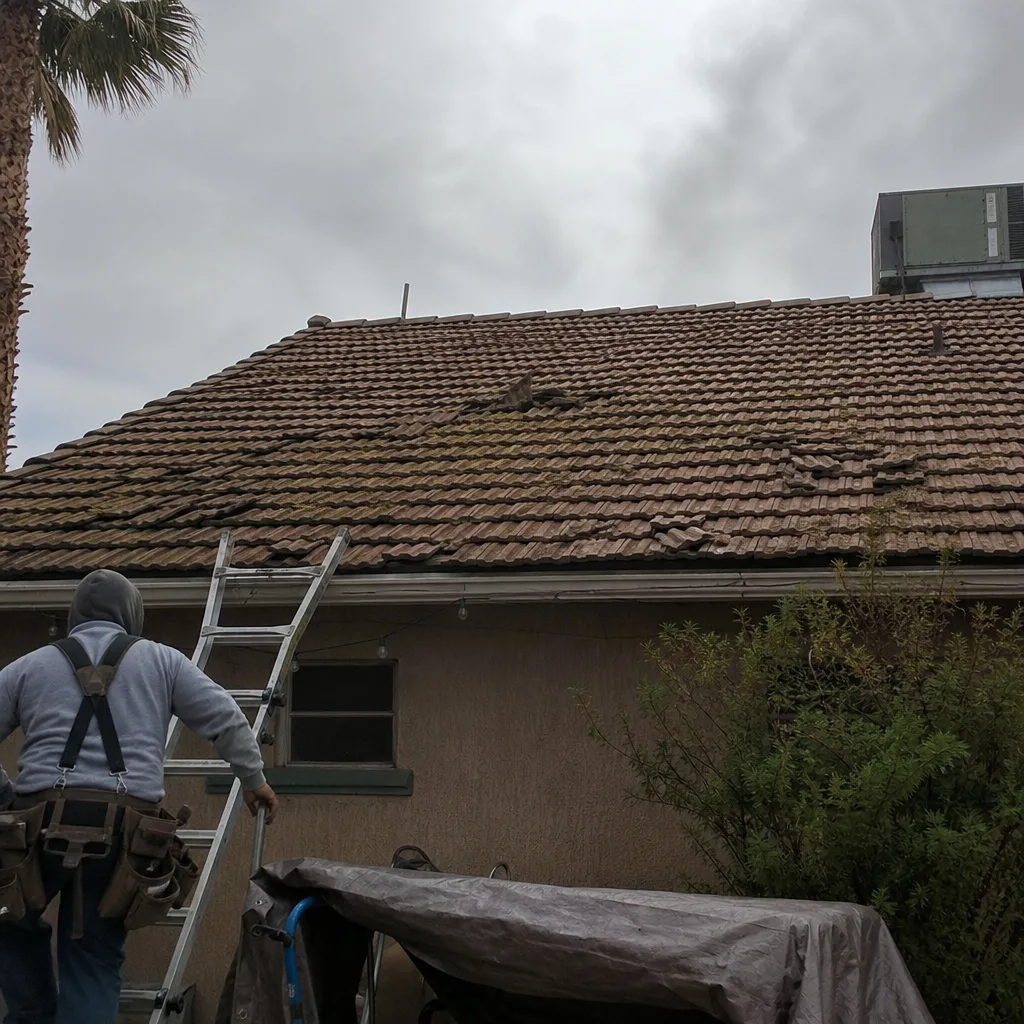 Before
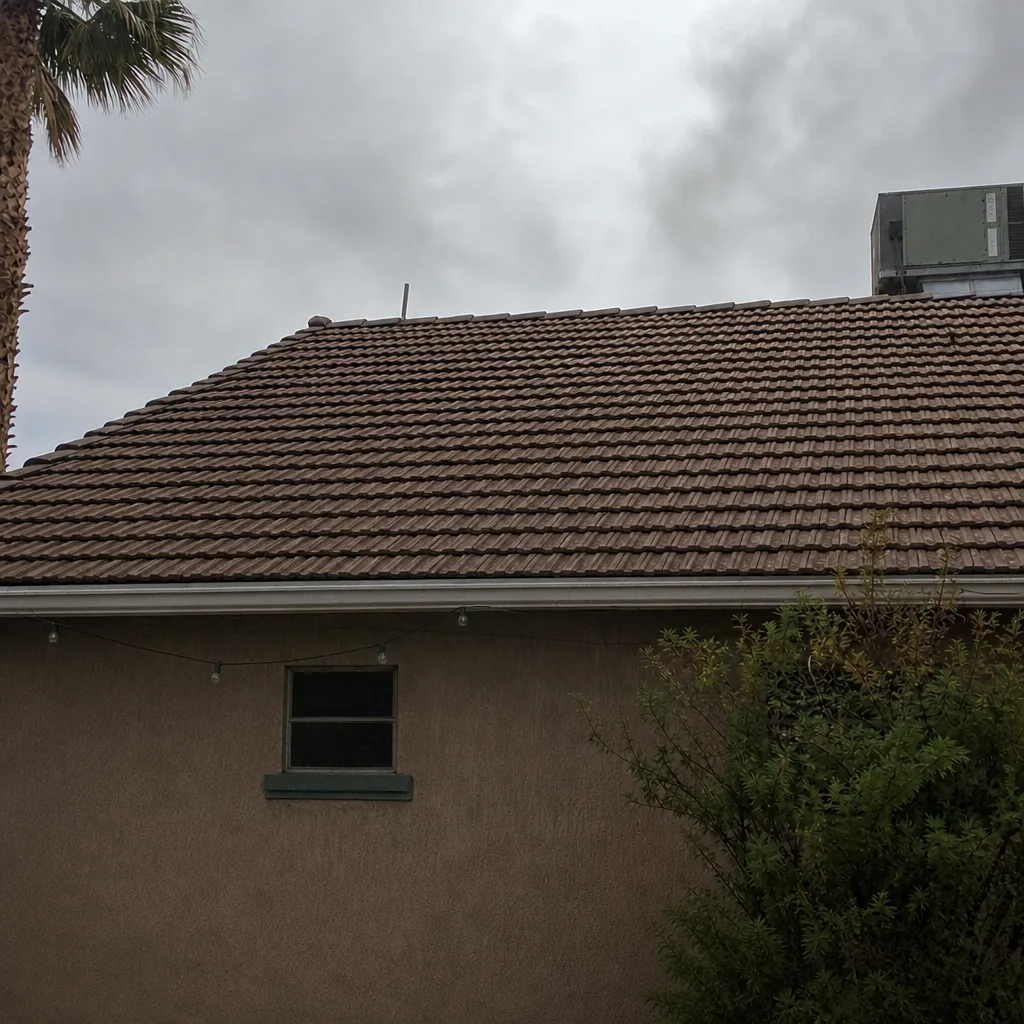 After
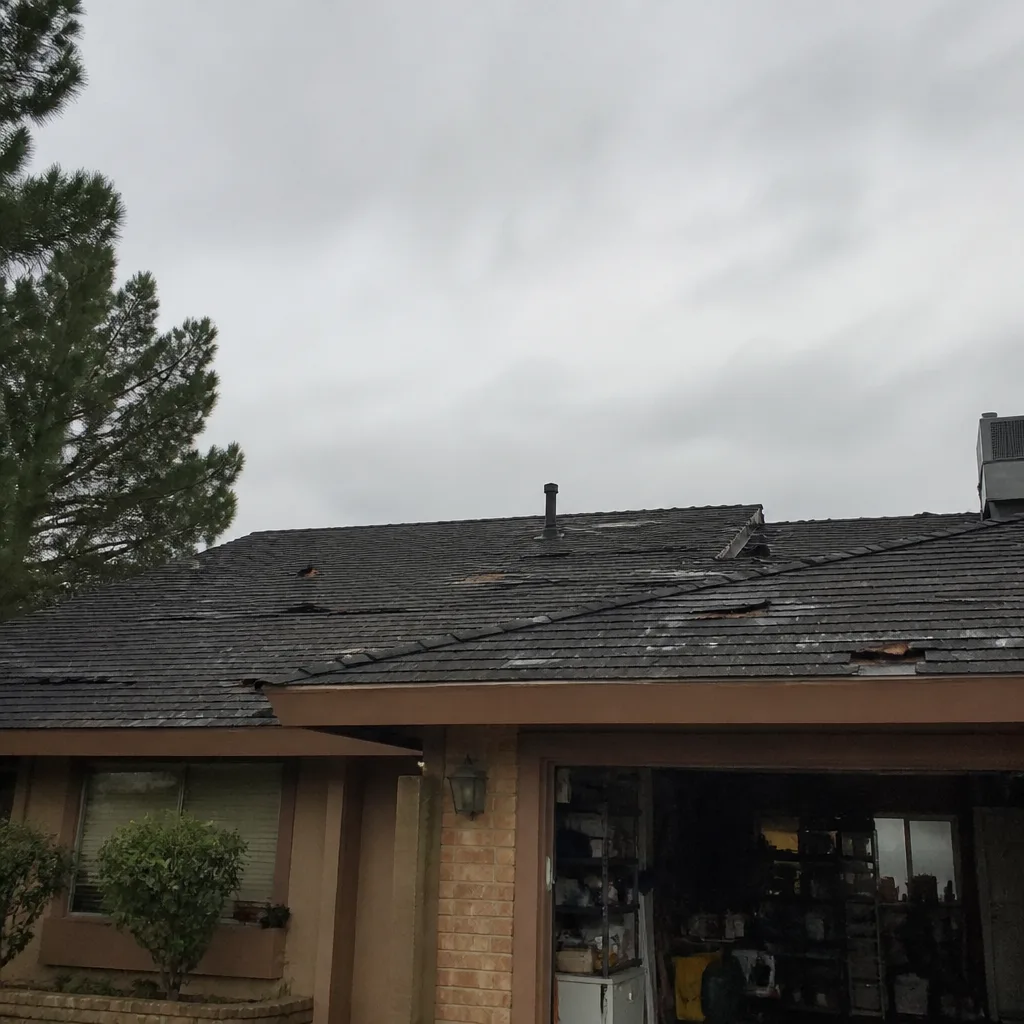 Before
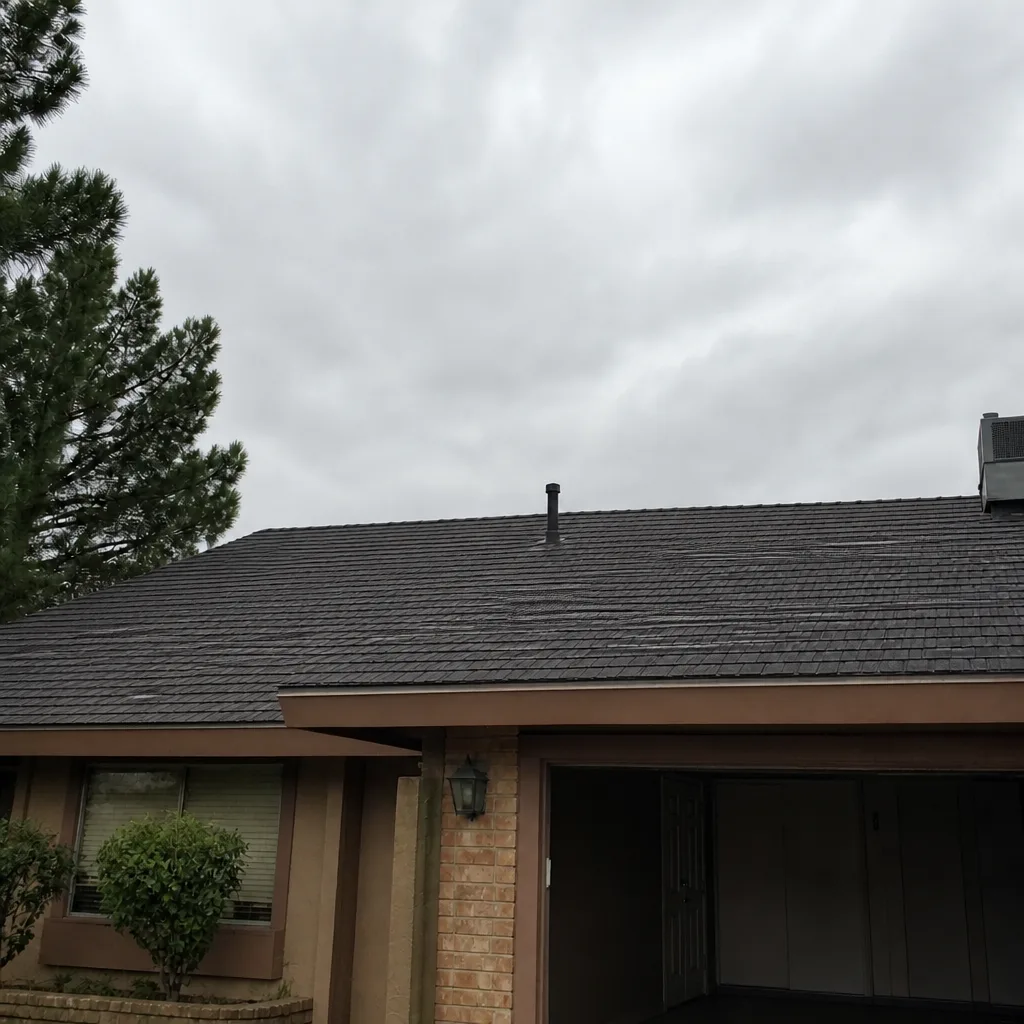 After
Frequently Asked Questions
No. Even experienced professionals wear fall protection and work in teams for a reason. A wet or storm-damaged roof is a genuine fall hazard, and the risk of serious injury outweighs anything you’ll learn from up there. Do your inspection from the ground, through windows, and from inside the attic, then call a professional for anything above that.
You can, but we’d recommend against it, especially before your insurance adjuster has seen the damage. A patched shingle often covers the only visible evidence of a compensable claim, and it may not address the flashing underneath. Call (844) 941-3509 for a tarp-and-document visit that protects the home without compromising the claim.
You can’t know without probing, and probing requires lifting shingles and underlayment. A professional inspection will tell you within the first visit whether the decking is soft, stained, or moving underfoot. If the wet area is small, we repair it. If it’s widespread, we lay out the replacement path in writing so you can decide with clear numbers in front of you.
Sunrise Manor’s monsoon window runs from roughly July through September, and it brings short, intense rain and wind that often follows a dry spring. The pattern matters because roofs dry out and shingles cure through the spring, and the first monsoon winds arrive just as the sealant is most stressed. Late-summer wind events are when we see the most ridge cap and lifted shingle calls in Sunrise Manor.
Yes, if they’re reachable from the ground or a low ladder. Clearing debris helps water drain and reduces the chance of overflow into the fascia. But photograph the granule deposits first, because they’re hail evidence your adjuster may want to see. Anything that requires climbing onto the roof is out.
Coverage depends on what the adjuster can verify. If a DIY repair covered or removed the evidence of the original damage, the claim can be reduced or denied for that portion. The best move is to document the damage with photos now, keep it visible, and let a professional tarp-and-document visit handle the protection and the paperwork before anything permanent is done. Call (844) 941-3509 to schedule one, free of charge.
The Bottom Line
After a storm, the urge to act is right but the target is often wrong. The safe work is interior water mitigation, ground-level photo documentation, and debris clearing you can reach from the ground. The dangerous work is climbing, patching, and probing, and the costly work is any permanent repair before the adjuster sees the damage. A professional tarp-and-document visit is almost always cheaper than a DIY attempt that compromises the claim or creates a new leak. Our technicians have up to 10 years of experience and a written 90-Day Done Right Promise behind every job, which means if something we touched isn’t right, we come back and make it right. If you’re not sure where your storm damage falls, call (844) 941-3509 for a free estimate in Sunrise Manor.
Written by the team at Ridgeline Roofing Co. Sunrise Manor.